
Last year, I made the decision to stop travel/teaching. It’s been a long journey since my first weaving in 1970, my first dyeing in 1972, my first teaching in 1976 and my committment to natural dye in 2008. This year I will turn 74 years old. I am also a grandmother for the first time and am actively involved in the unfolding life of a 18 month old little boy (who makes us smile every day).
What I have not done, is to stop learning, exploring, or asking questions about natural dye, dyeing, weaving, and/or how they might combine. Slowing some things down in my life is giving me to time to think more deeply about others, particularly indigo fermentation.
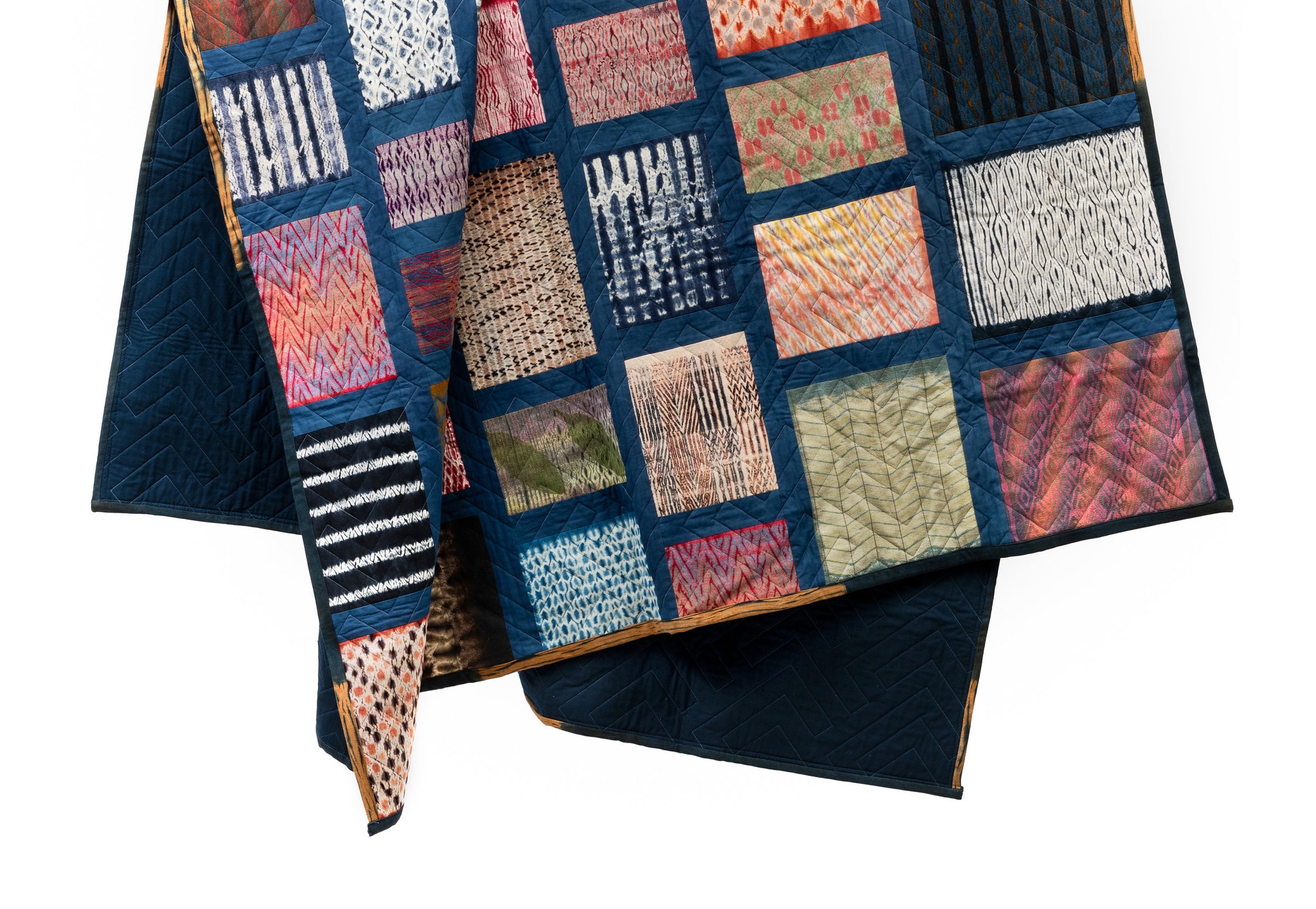
Some time ago, Joy Boutrup and I discussed the possibility of another dye book that would expand what we presented in The Art and Science of Natural Dyes (Schiffer, 2019). While contemplating this dilemma, I came across the following quote from Annie Dillard:
“One of the things I know about writing is this: spend it all, shoot it, play it, lose it, all, right away, every time. Do not hoard what seems good for a later place in the book or for another book; give it, give it all, give it now. The impulse to save something good for a better place later is the signal to spend it now.
Annie Dillard
Something more will arise for later, something better. These things fill from behind, from beneath, like well water. Similarly, the impulse to keep to yourself what you have learned is not only shameful, it is destructive.
Anything you do not give freely and abundantly becomes lost to you. You open your safe and find ashes.”
So now, Joy and I have together made the decision that I would share the information I have learned using blogposts, instead of writing another book.
Through a number of upcoming posts, I will discuss the process of indigo fermentation vats, the experiments I have done, and what I have learned about making, maintaining, and dyeing in those vats. I will explain, to the best of my ability, what is happening in those vats and why. Hopefully, this will encourage more of you to try fermented indigo vats and will provide enough information for a high likelihood of success. Each post will contain a link to a downloadable pdf version, which you are welcome to print and kept for studio reference. I would ask that you be respectful of this information though you are most welcome to share the link to my blog for reference.
 Natural Dye: Experiments and Results
Catharine this is exciting for us as readers and for you all. I look forward to the blogged book chapters!
But I also want to thank you for making these posts downloadable. I don’t think they were in the past and I love being able to keep them in printed form for reference.
Hi Catharine,
You, your work, and your efforts to share your knowledge are priceless, thank you!!
I tried liking your post and also commenting, but the link wouldn’t work, so I thought I would share my appreciation here.
What a fascinating and valuable area of study!
With Appreciation,
Mary Marvelli
>
Catherine.
Being on your email list is so pleasant. Your unexpected ‘Natural Dye: Experiments and Results’ messages arriving sporadically was/is a slight thrill so enjoyed snd informative and appreciated. Thank you so much for all past and future emails and posts.
I understand about being a new grand parent I am as well and recently retired so doing lots of thinking and smiling because of the two grand kids.
Please take good care of your self and thank you to Joy as well.
I love indigo and all the plants in my area that give colour. What fun it is to dye.
Thank you from British Columbia Canada
Sharon
Sent by Sharon
Catherine, thanks for all the teaching you’ve given the world—whether formatted as classes, book, interviews, blogging, it all works. : )
Thanks Sandra. That means a lot. And you have done so much to help spread the word!
(Gah, I see your name got autocorrected—curses. Apologies, Catharine. I do know how to spell it.)
Not a problem, Sandra. I spelled my name with an “e” unitl my mom finally corrected me in the 2nd grade!
Thank you!! I cherish the class I took with you at Shakerag and the binder we made. I am so happy to follow your blog and to continue to learn from you.
Rachel
Hello Catherine, this post has arrived at a perfect time. I had decided to try a fermented vat just a month ago and have been collecting as much information as I can. Thank you for making the posts downloadable- I know they will become an invaluable resource.
Catharine, this is so generous of you. This is a vat I tried once and failed. I didn’t have the same intuitive confidence I have with other vats so I never tried again. Thank you so much for this. I am very excited about this journey.
And we’re going to make one of these at the Folk School this summer!
Hi Catharine, you are so generous! Thank you so much for sharing your resourceful knowledge with others!!Warmly,Kayoko :o)Sent from my iPad