
© Catharine Ellis, as posted to the blog: Natural Dye: Experiments and Results
When working with quick reduction indigo vats, it is quite easy to achieve pale colors using a weak vat by controlling the ratios. A fructose vat is made by using a certain amount of indigo per liter, and the other ingredients (fructose and lime) are proportional to the amount of indigo: 1 part indigo, two parts lime, 3 parts fructose.
A fructose vat made with only 1 gram of indigo per liter will result in a much paler blue than a vat made with 8 grams of indigo per liter.
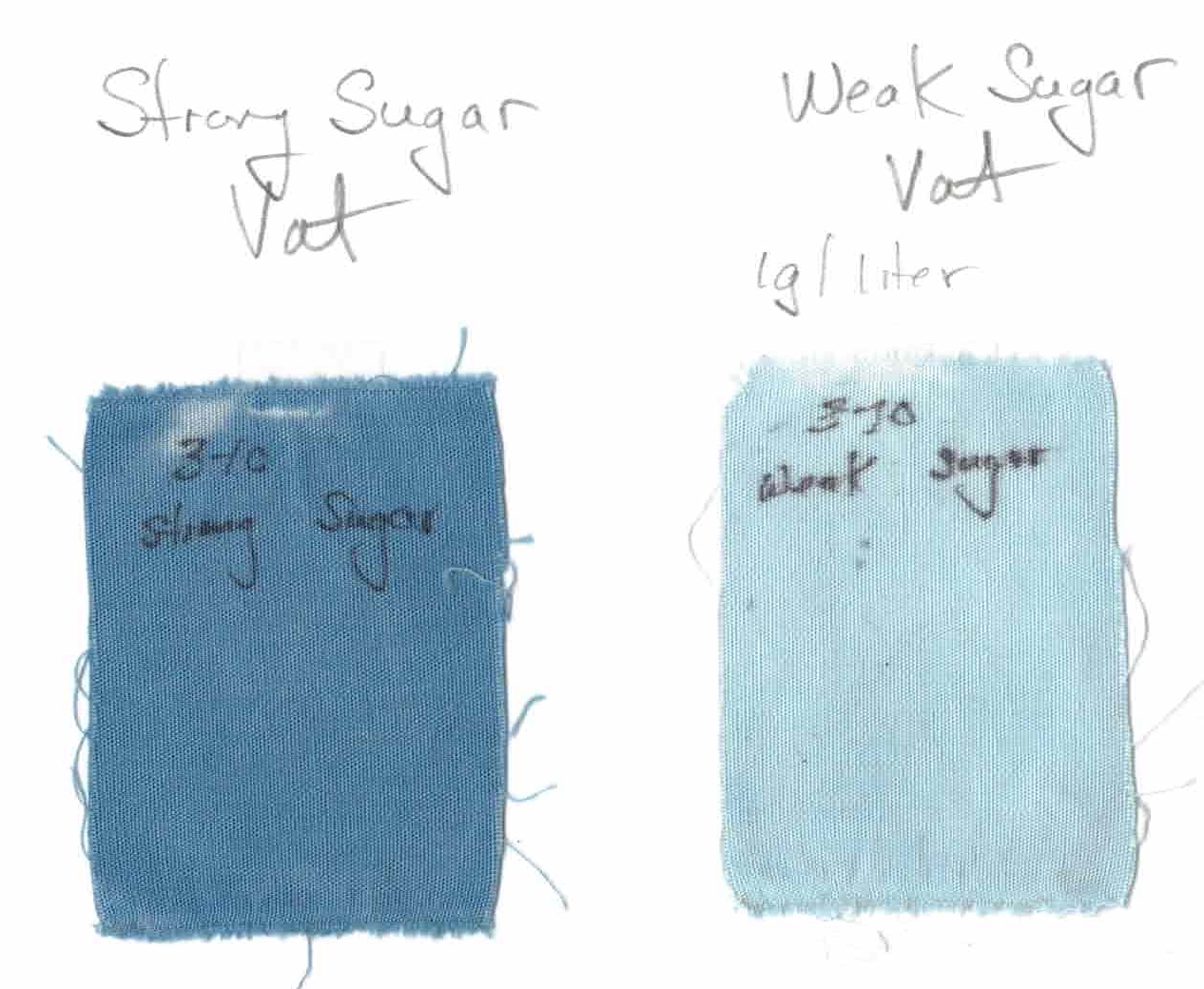
I have learned that the fermented vat does not work using that same logic, as was mentioned in Post #6. In order for the vat to work properly, there needs to be a certain amount of organic material to create adequatebacteria useful for fermentation. The fermentation seems to be very efficient at reducing the indigo present in the vat. When I tried to make a “weak” fermented vat by using only 2 grams of indigo per liter, it did NOT result in pale colors. In fact, the shade of blue that it produced was almost identical to a vat that was made concurrently with 8 grams of indigo per liter. The different concentrations of indigo in the two vats became obvious only over time. After several months of dyeing in each of the vats, the one with 2 grams/liter finally began dyeing pale blue shades.
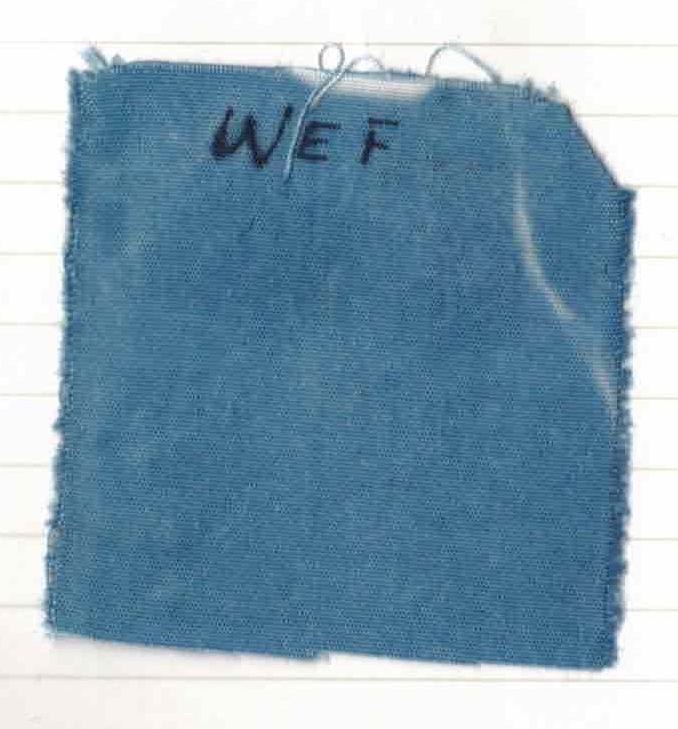
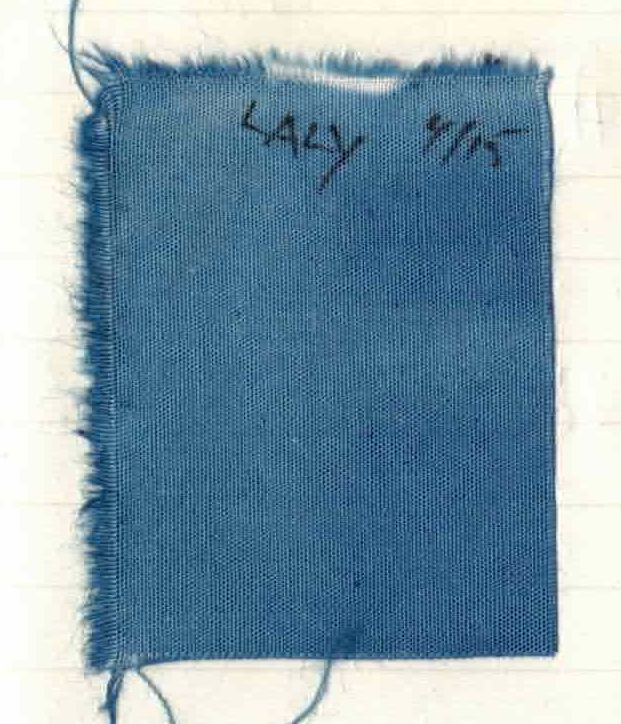
There is an additional reason why a weaker vat is valuable. A vat that dyes a paler blue will invite long dips in the vat, and ultimately more “even” color.
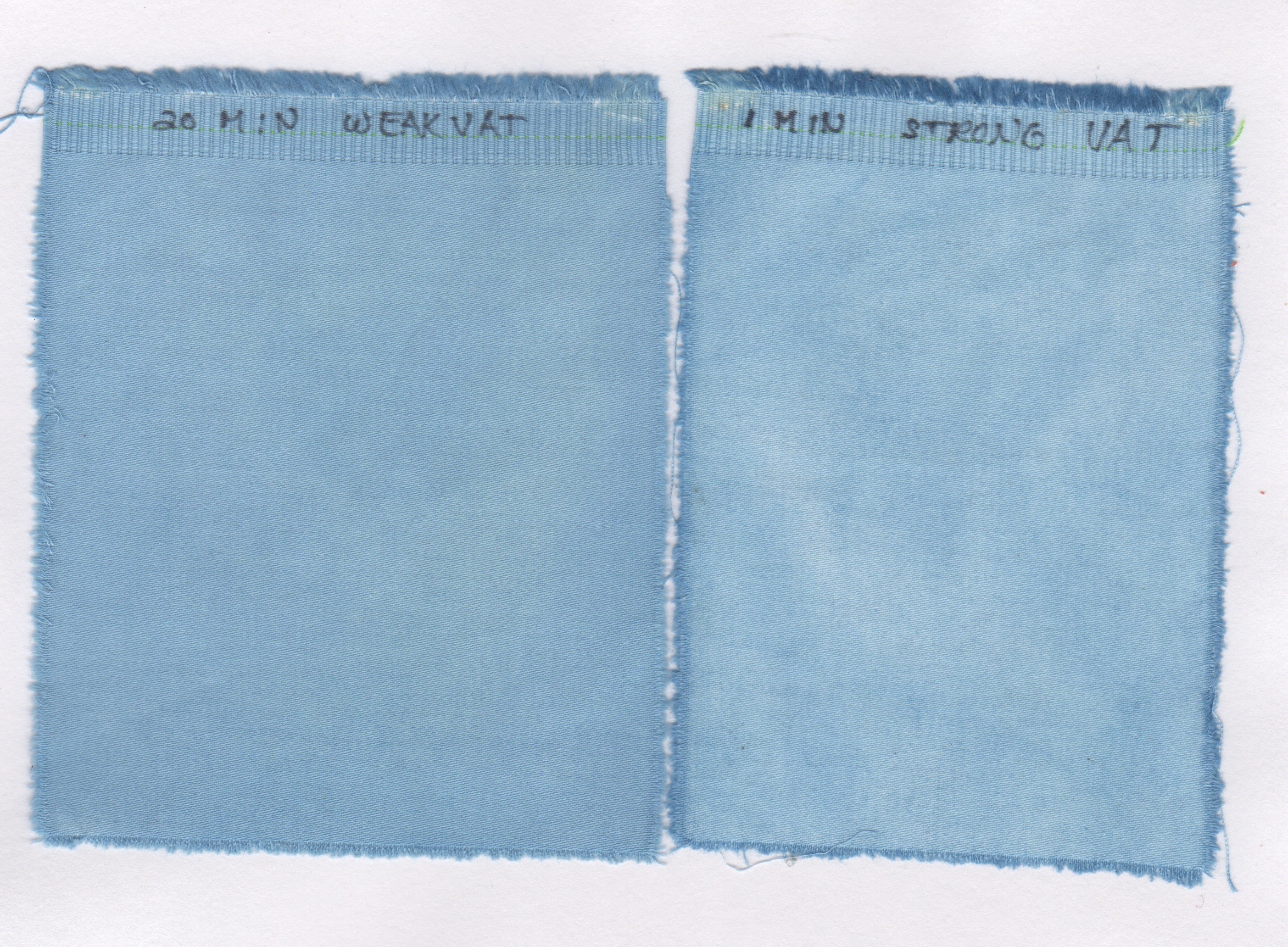
I believe that the time required to deplete the amount of indigo in the vat is directly related to the amount of dyeing that is done, or how quickly the indigo is used up or exhausted. If I had been dyeing a larger quantity of textiles, the pale colors would likely have “come on” sooner. If at all possible, the dyer might want to keep track of the amount/weight of textiles that are being dyed. That may not always be feasible for the casual dyer but a production dyer could more easily track this information.
The ability to dye pale shades of blue is important for any kind of color mixing. Think carefully about what you expect from your indigo vat when you establish it.
 Natural Dye: Experiments and Results
Hello Catherine,
Thank you for all the advice in your Fermentation Vat Blog, it has been extremely useful. My attempt with fermentation vats has not been very successful to date – I added too much lime when the pH fell and it hasn’t recovered yet. However, I’ll try again. If at first you don’t succeed……!