Digging Deeper into a Single Dye – Madder (Rubia cordifolia)

I’ve been using a lot of madder. I have madder roots from my own garden and extracts on the shelf,  but right now I’m focused on the fabulous ground Rubia cordifolia from India that I purchased from Maiwa. It’s ground very, very fine. Charllotte tells me that it’s ground on a mill stone.

P1080247
Madder (Rubia cordifolia) on linen

Because the particles are so small, the dye is extracted more easily than from chopped madder root. The color is redder than I would expect from a rubia cordifolia. I love it!

Once the fibers are mordanted correctly I’ve usually been content to make a full strength dye bath. There is always leftover dye in the bath, which most often  gets turned into a dye lake. I didn’t have a full understanding of how much dye was actually in the dye pot or what  remained after the initial dyeing. In order to control my colors and  mix them effectively I needed a clearer picture of dye strength and hue.

I embarked on a systematic observation of the dye. The fiber was linen. It was treated with tannin and mordanted with aluminum acetate. I weighed out the total amount of dye that was needed for my various samples.  Typically I do 2-3 extractions in order to make my dye bath but this time I decided to continue extracting until there appeared to be no more color coming from the ground root. This took SIX 20 minute extractions! I realized that I had previously been wasting some of the dye.

The fabric was dyed with the extracted liquid. The amount of dye ranged  from 6.25% w.o.f. to 100% w.o.f. I also did exhaust baths of the dye.

P1080249
Madder exhaust bath, linen

Madder is an interesting dye because it contains so many different colorants. The alizarin is what gives us the red, but it also contains other colorants: yellow, orange an brown. The initial dye at each depth of shade was dominated by the red. Exhaust baths contained less  red, while the orange dominated. The colors obtained from the initial dyeing at 50% w.o.f. and 100% w.o.f.were very similar but the stronger bath continued to give me red before the color turned more orange.

madder % 1
Dye % range and exhaust baths

The test was repeated  on wool with similar results.
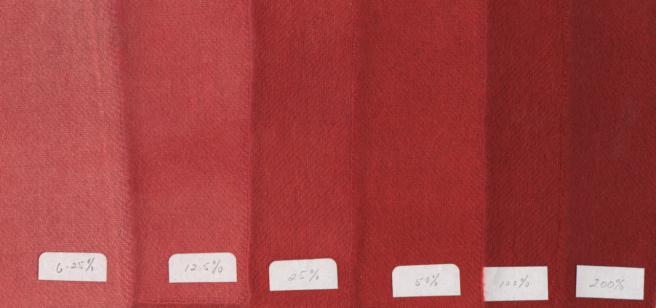
madder % 3
Madder % range on wool

Dye extracts are what drew me back into natural dyeing but I’m finding that working with plant material is far more compelling. Each plant and dyestuff is unique and since these are natural products they are subject to the changes in growing seasons and processing. Testing my dyes in order to understand the nuances is time well spent. It will make me a better dyer.
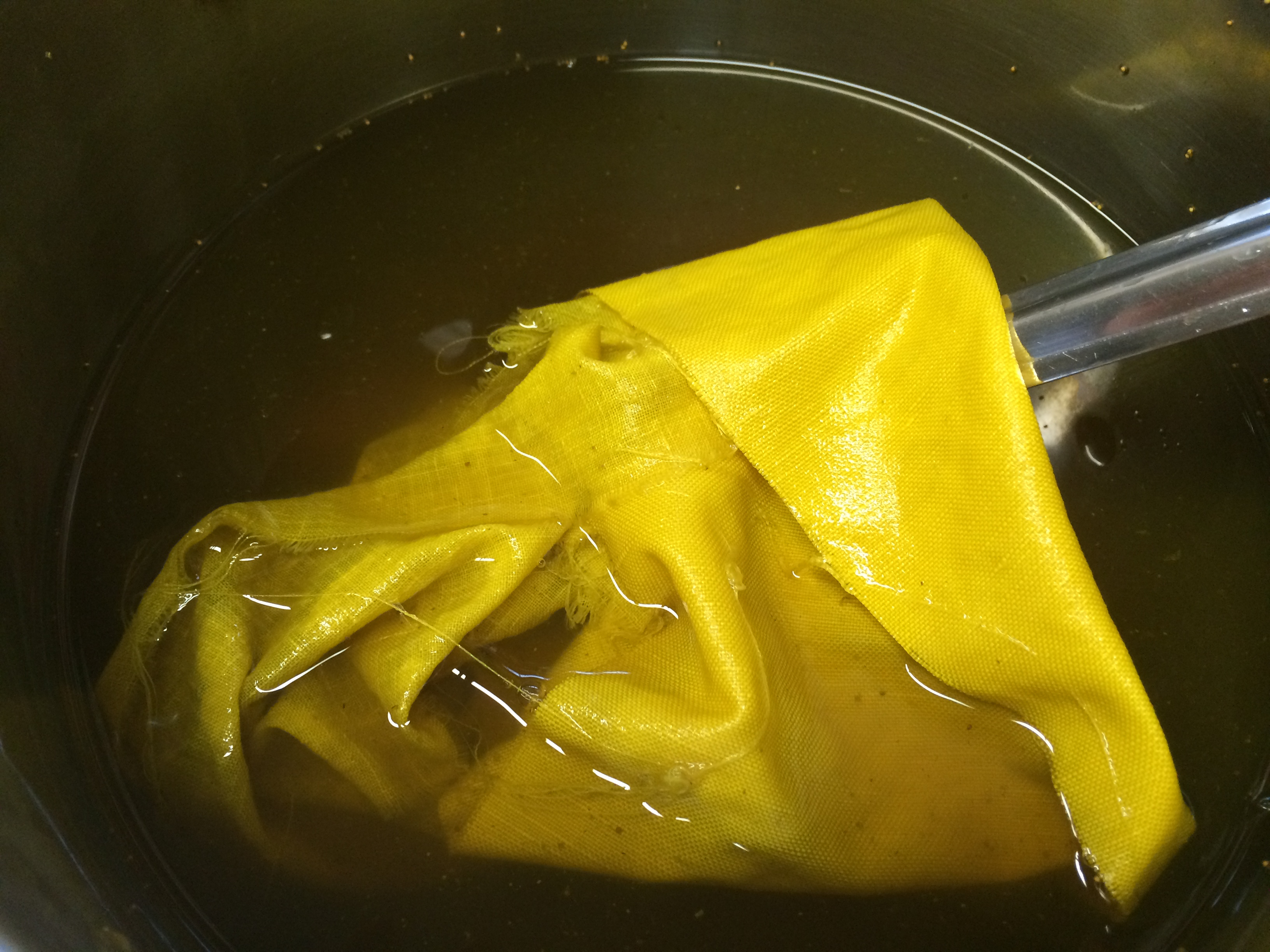
 

Weld (Reseda luteola)

I recently presented a program at the NC  Arboretum on weld (Reseda luteola). There is a growing interest in natural dyes in our local region and I was hoping to inspire dyers to begin growing their own. A few days before the program, I was asked by a local dyer why I was not talking about native plants such as broom straw or goldenrod, which were both seasonably available at that time. It was a good question. It question deserved some serious thought.

These are the reasons I chose to encourage dyers to use weld:

  • It is considered one of the “classical dyes”, that has been used by dyers for centuries. It is the oldest documented source of yellow and was used by both the Greeks and the Romans.

    Weld on cotton with tannin and aluminum acetate mordant
    Weld on cotton with tannin and aluminum acetate mordant
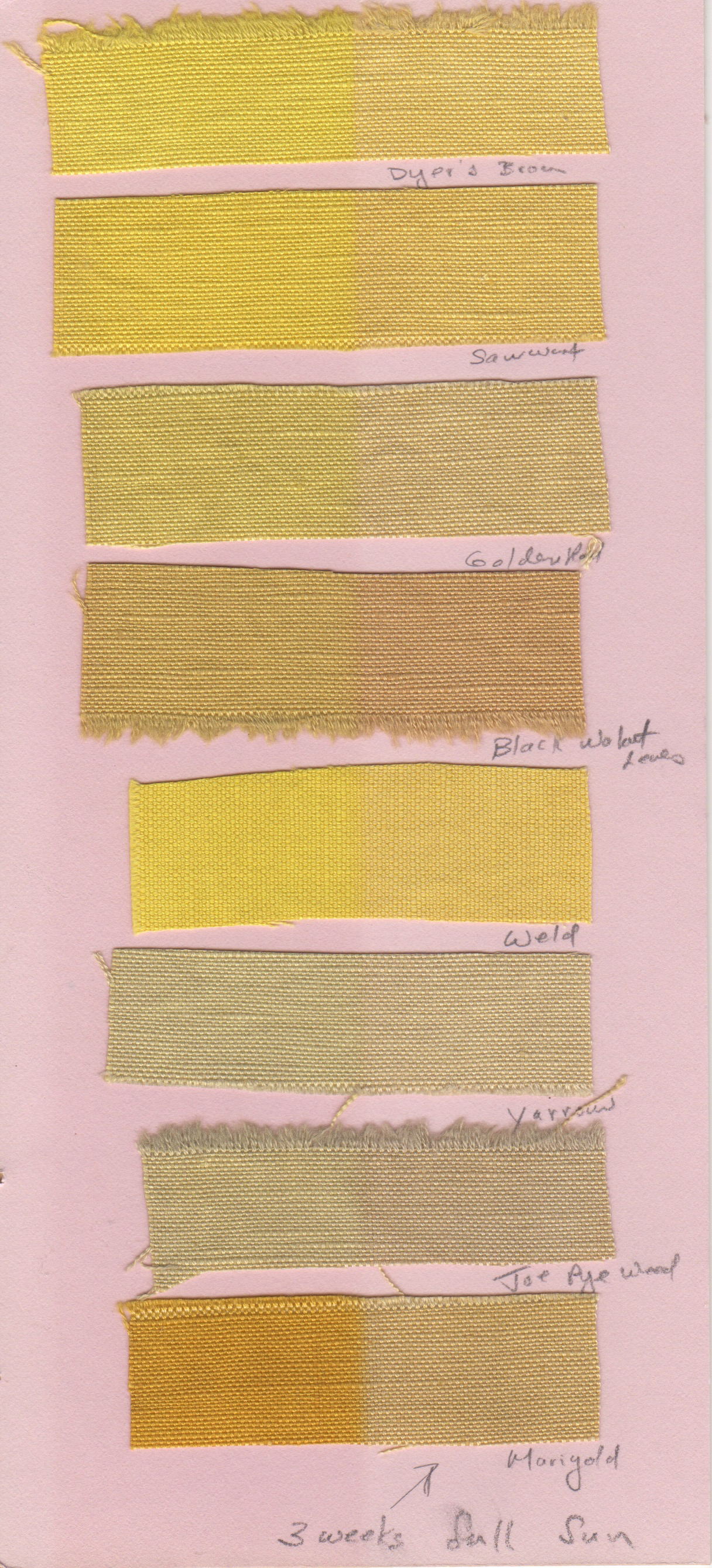
  • I have observed that it is more lightfast than any natural yellow dye I’ve used. I have performed lightfast tests and it has outperformed any natural yellow dye I have compared it to.
Recent lightfast tests using yellows harvested from my garden, August, 2015. Weld (Reseda luteola), Saw-wort (Serratula tinctoria), and Dyer’s broom (Genista tinctoria) all contain the same colorant, luteolin
Recent lightfast tests using yellow dyes on cotton. All were harvested from my garden, August, 2015. Weld (Reseda luteola), Saw-wort (Serratula tinctoria), and Dyer’s broom (Genista tinctoria) all contain the same colorant, luteolin
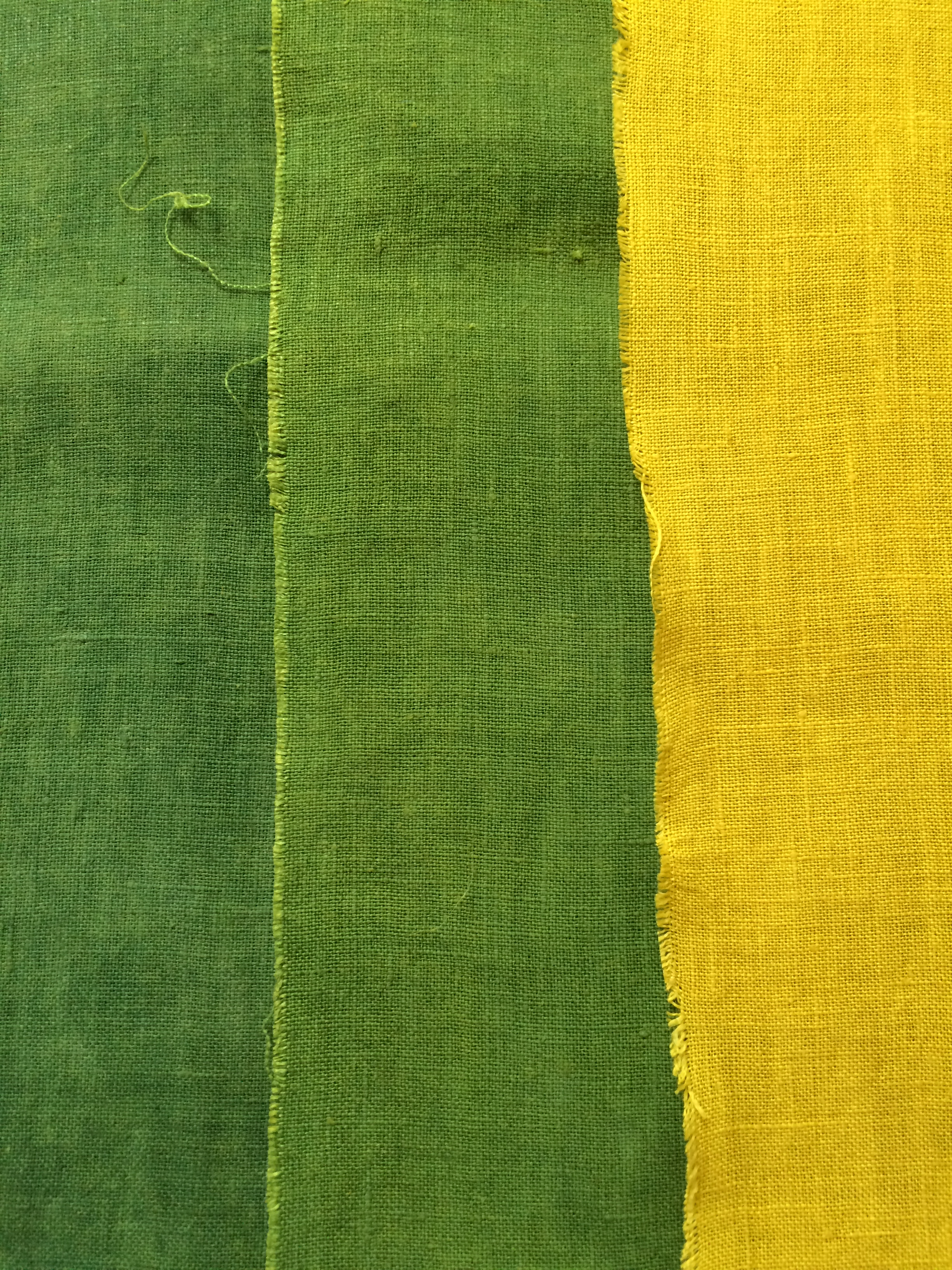
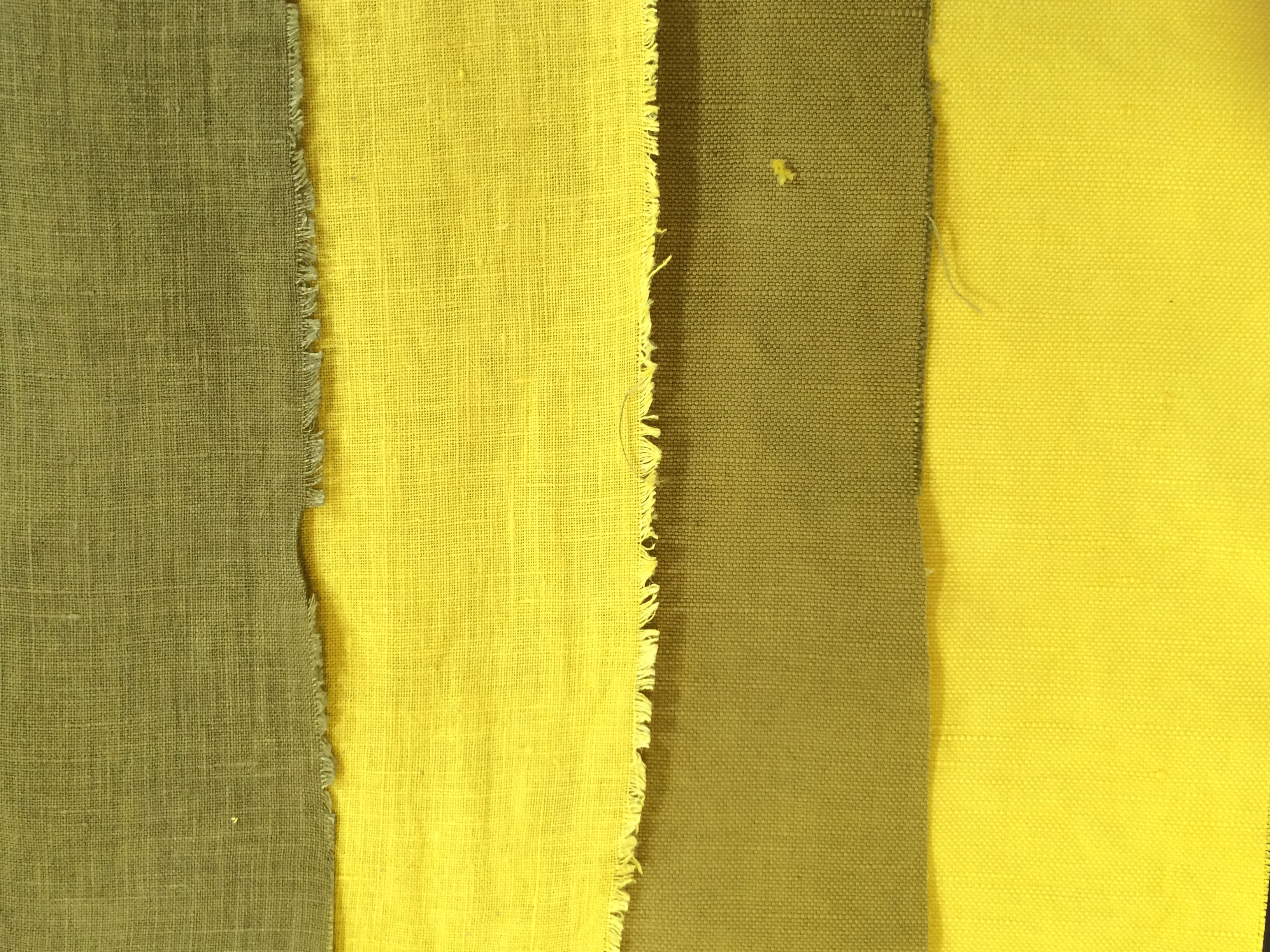
  • When combined with alum mordant it produces a brilliant, clear yellow. When combined with indigo it  results in lively, grassy greens. The smallest amount of iron will turn the color to olive green.
    IMG_6949
    Indigo + weld

    Weld + .5% iron on cotton and linen
    Weld + .5% iron on cotton and linen
  • Weld is native to Eurasia but it grows very easily in our NC mountain climate and region (zone 6). It has weathered both mild and very cold winters. I have grown a crop of weld for the last 5 years. Each year I harvest approximately 5-6 pounds of dry dye material from a 4’x8’ raised bed in the garden. That is plenty for my own work and enough to share with the classes I teach. There are also seeds to share.

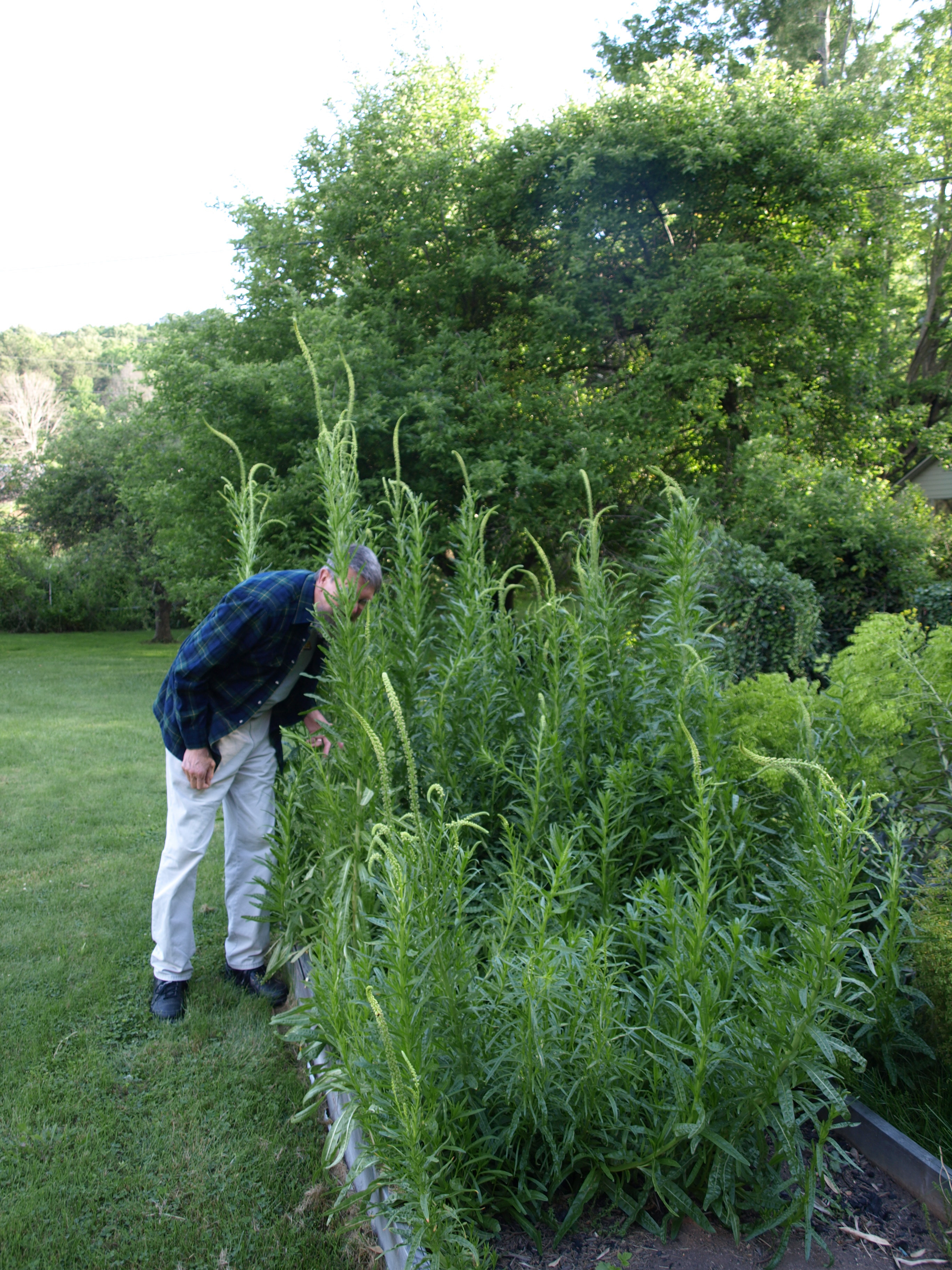
    Weld will grown over 6 feet tall the second year
    Weld will grown over 6 feet tall the second year
  • A small amount of weld goes a long way. Dried plant material is used at 50% weight of dry fiber and results in very strong color, with plenty of dye left in the pot for over-dyeing other colors.

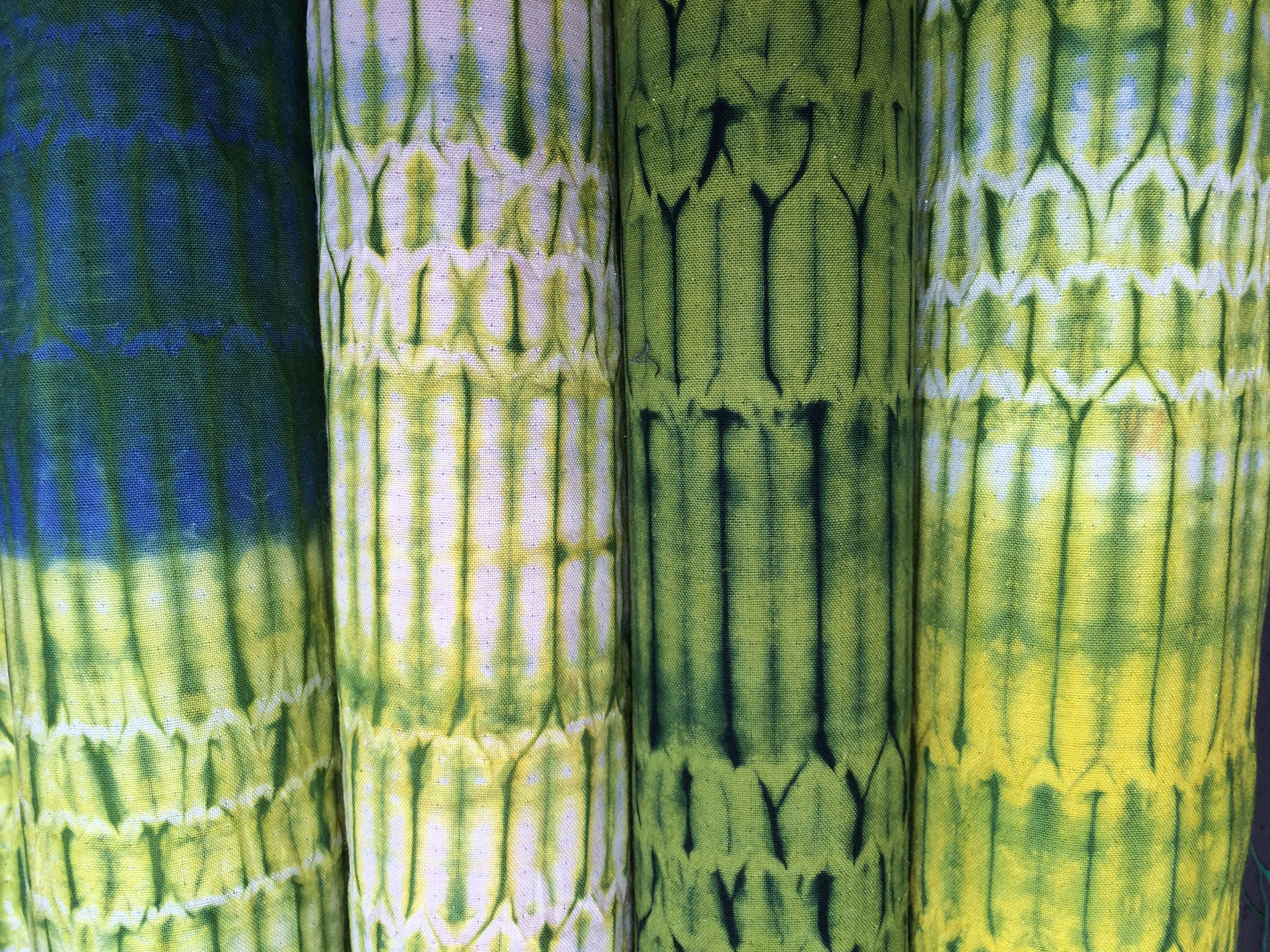
    Weld + indigo, used with woven shibori resists
    Weld + indigo, used with woven shibori resists
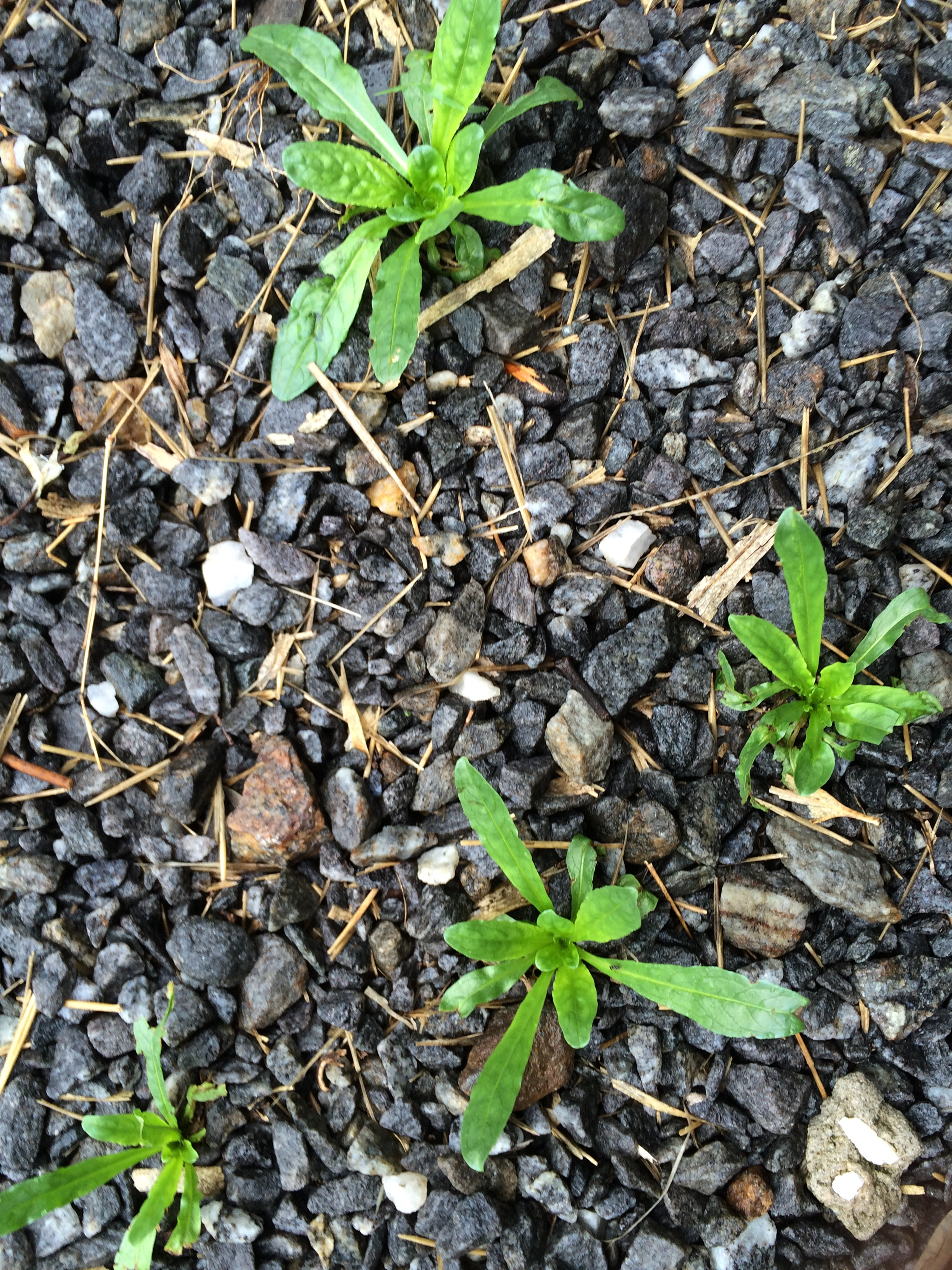
  • Weld is not fussy about its soil and will grown readily wherever the seeds land, though it is not considered an invasive plant.

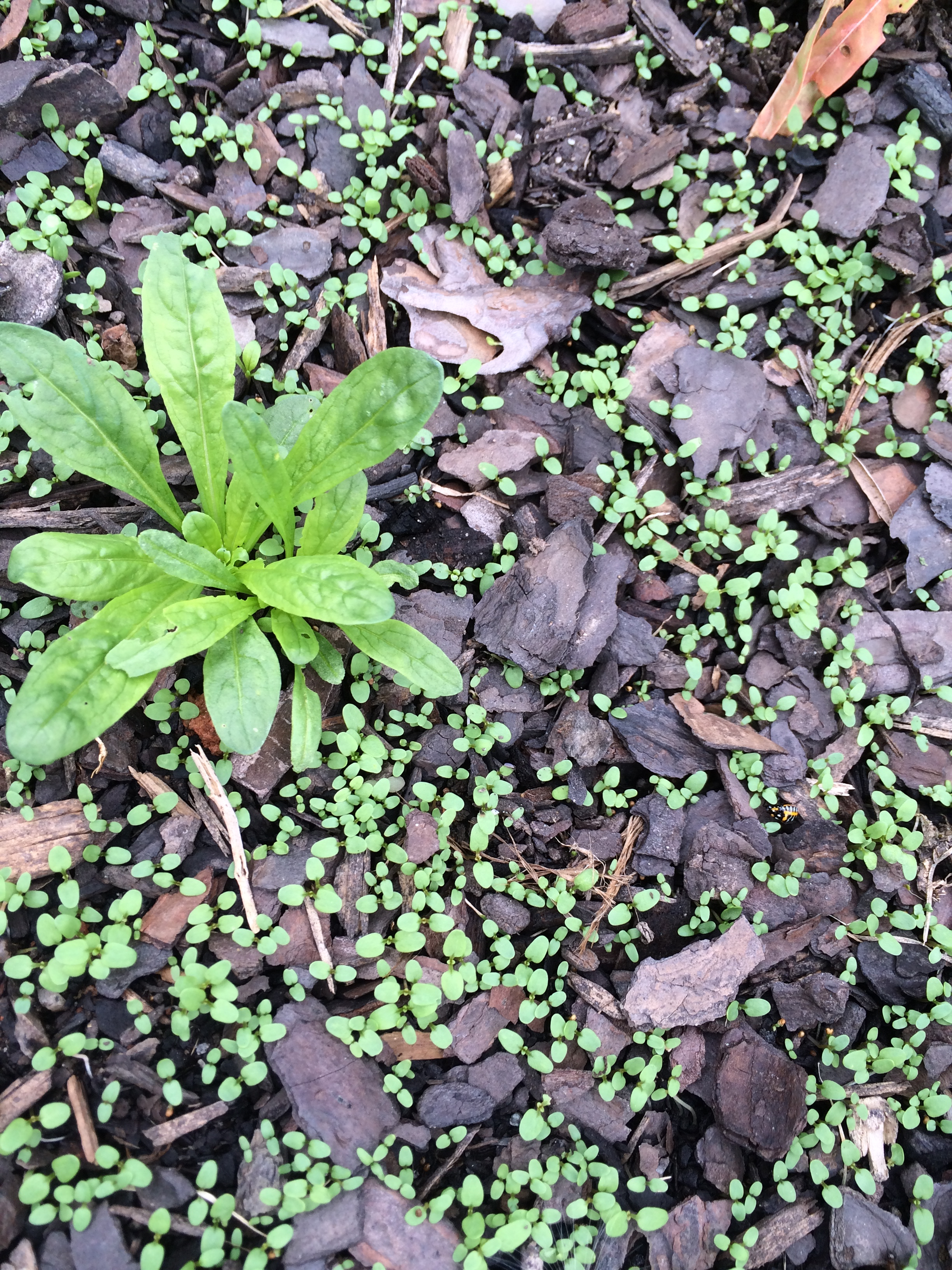
    Weld seedlings in the gravel outside my studio, where I strip the plants after drying
    Weld seedlings in the gravel outside my studio, where I strip the plants after drying
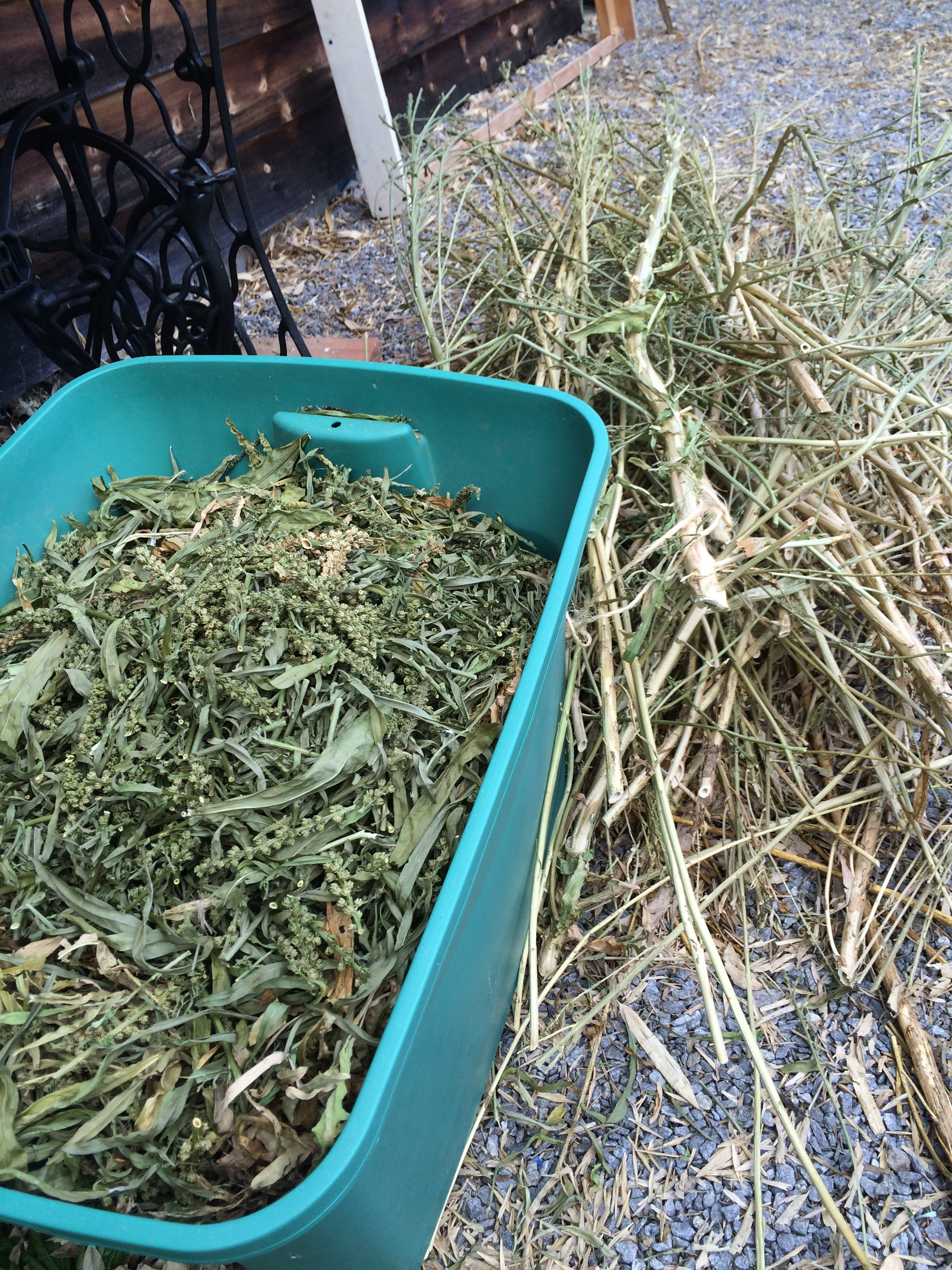
  • Weld can be difficult and expensive to obtain. There are not many sources where weld can be purchased, either in extract or plant form.  Growing and drying the dyestuff makes sense for the studio dyer.

    Dried weld (leave and flowers) stored for later use and the discarded stems, which don’t contain much dye.
    Dried weld (leave and flowers) stored for later use and the discarded stems, which don’t contain much dye.

All of the attendees at the program left with a small packet of weld seeds. I have already heard from several people that their seeds have sprouted. Weld is a biennial. the plants will establish themselves this fall and then grow to 6’ or more next summer when they go to seed. Then they will be ready to harvest and dry for future use. The seeds will self sow and others can be gathered from the plants

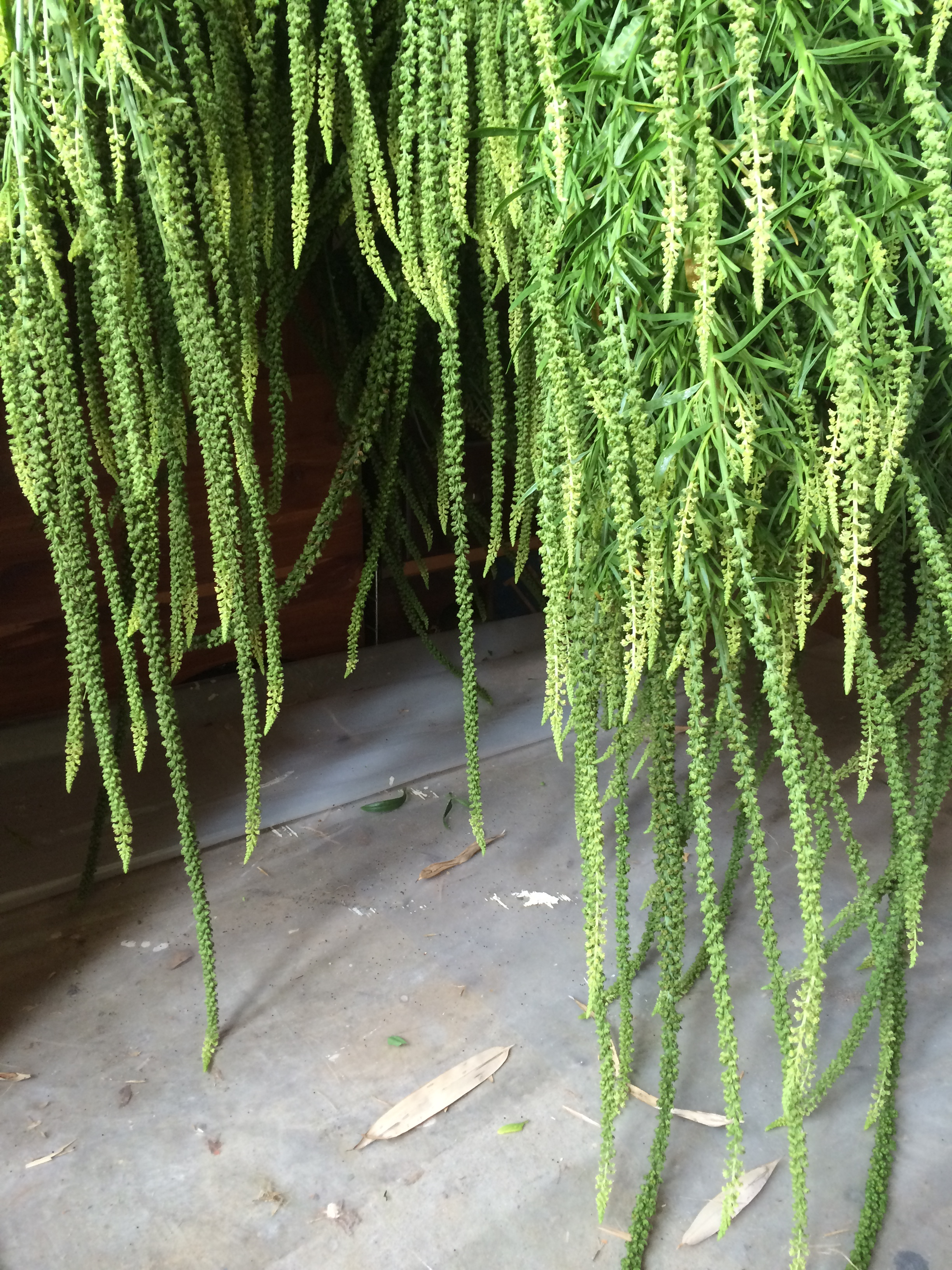
When plants are hung upside down to dry, it is easy to harvest seeds
Seedlings coming up in the garden today. These self sowed from the plants.

Broom Update

The Scotch broom (Cytisus scoparius) is gone. I appreciate all of you who warned me about the potential problem of letting it go to seed.

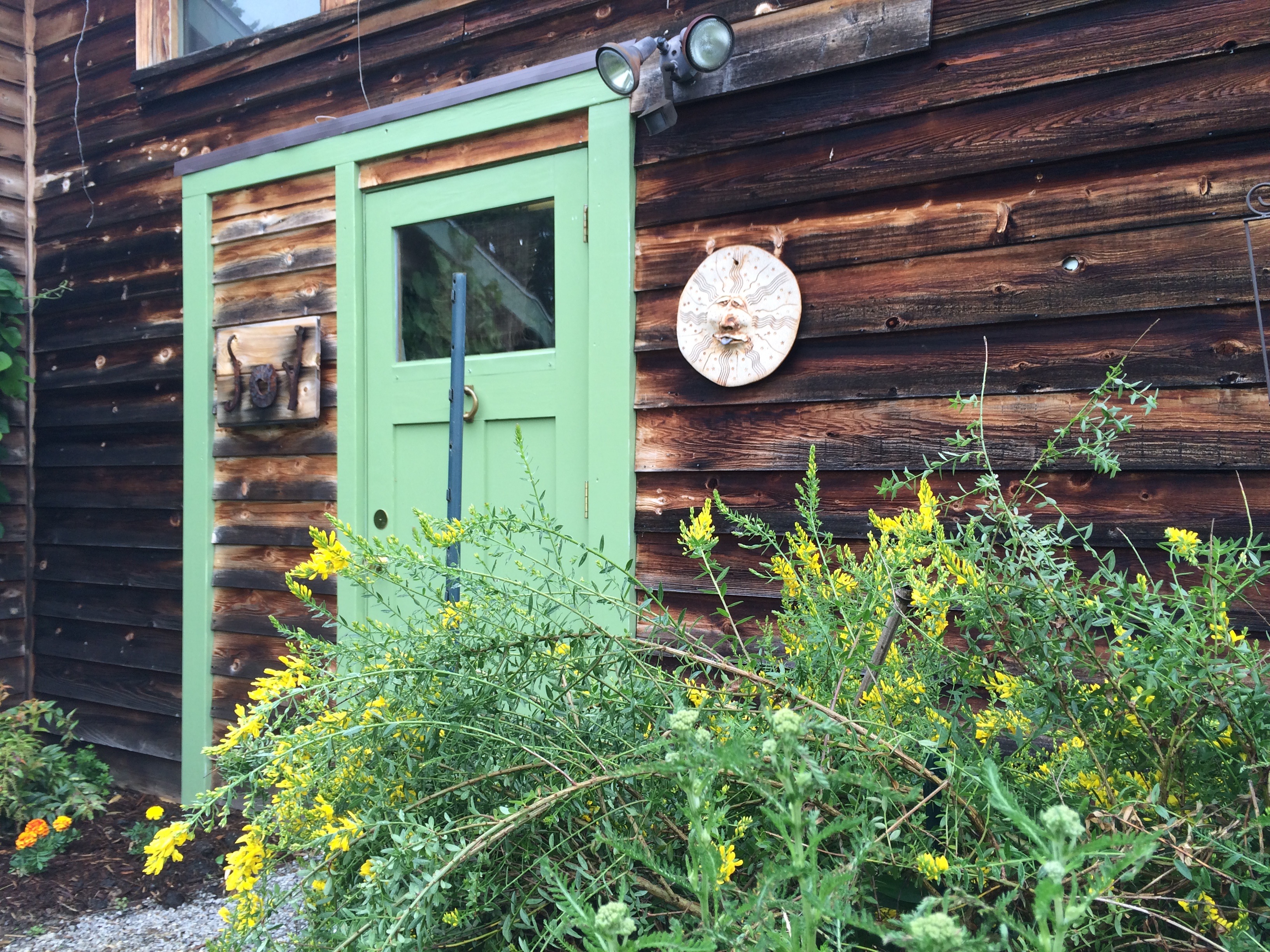
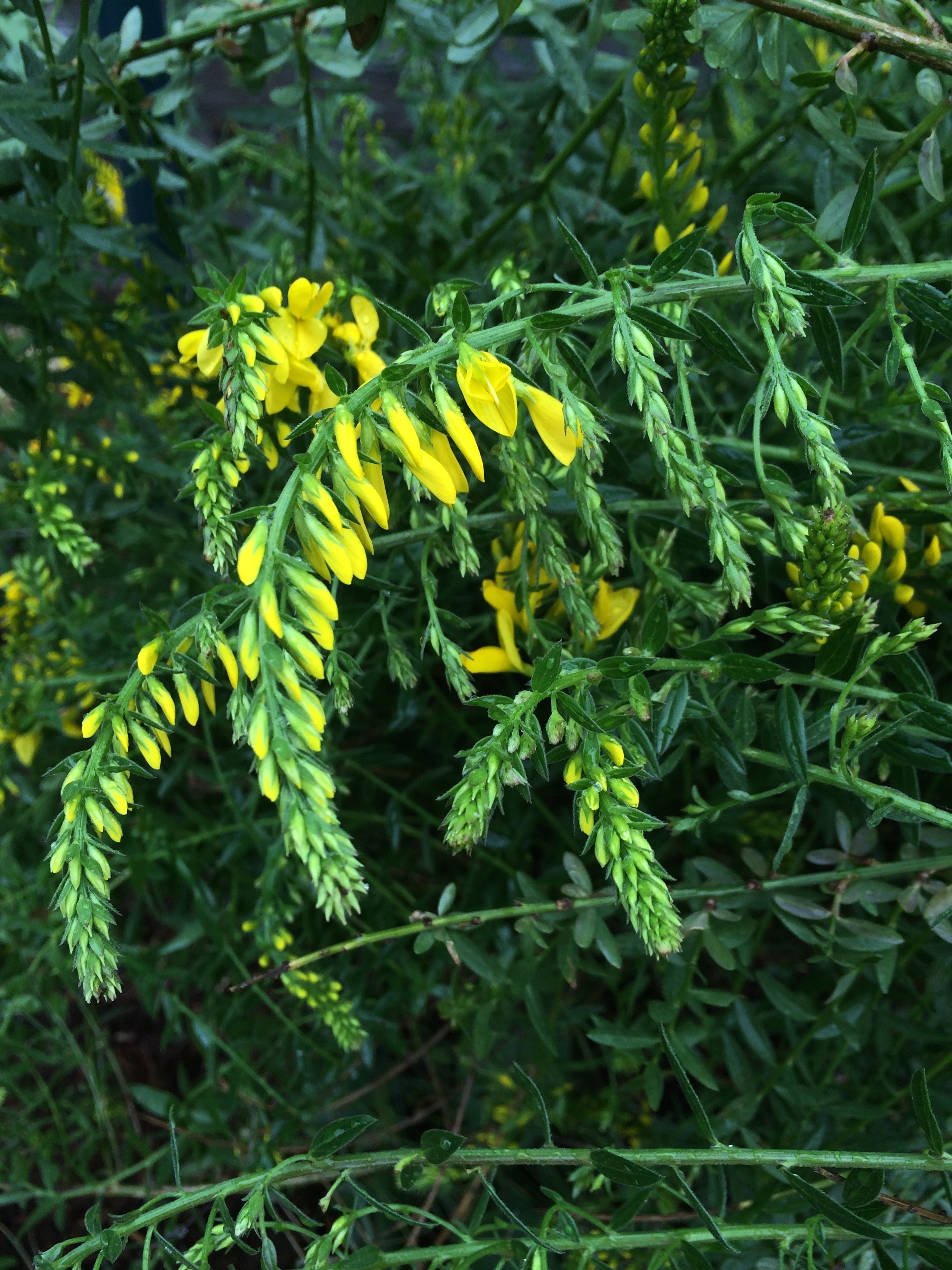
The dyer’s broom (Genista tinctoria) is now in full bloom and there is plenty of room for it to spread.

broom in bloom
broom in bloom
dyer's broom, detail
dyer’s broom, detail
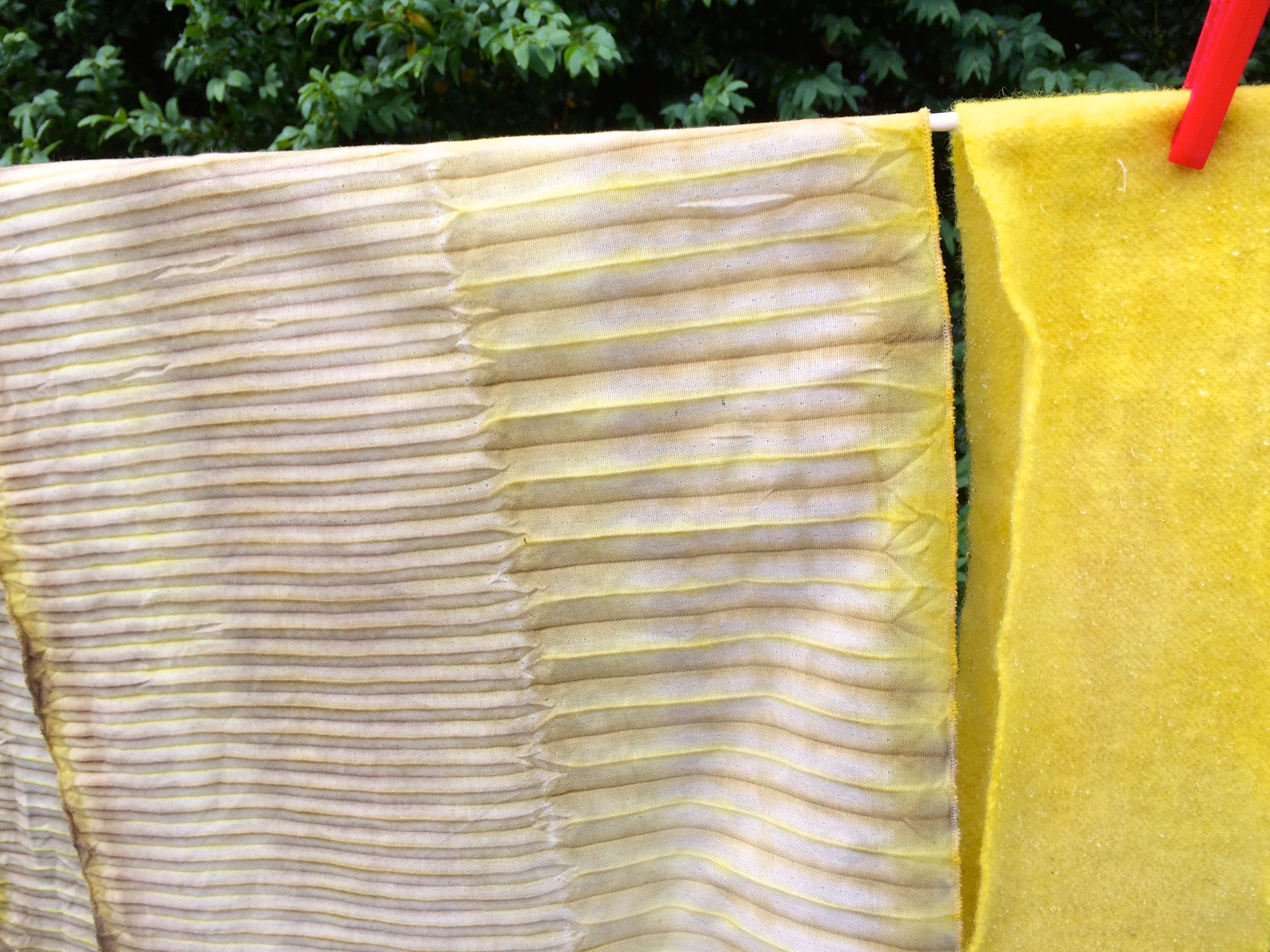
left, cotton woven shibori with various mordants, right, wool  with alum mordant. dyed with broom
left, cotton woven shibori with various mordants                                                                                   right, wool with alum mordant                                                                                                                        dyed with broom

A Lesson About Dye Plants: Broom

Several years ago, as a novice dye gardener, I was perusing dye books to determine which plants I could grow here in the mountains of North Carolina, and I found a mention of the plant called broom. I had never grown it before and had never dyed with it, so I ordered two of the plants that were specified in the book: Cytisus scoparius, otherwise known as scotch broom. I had seen this plant growing along the roadsides in the west and knew that this plant was very invasive. Were all of those plants a potential source of great color?

After the plant had been in the ground for a year, I did more investigation and learned that scotch broom (Cytisus scoparius) was NOT the great dye plant I thought it might be. The one I should have planted was dyer’s broom, (Genista tinctoria). Other names for this dye plant are dyer’s greenwood or woad waxen. It has a long and distinguished history as a plant used for dyeing. In fact the word “tinctoria” is the latin word meaning “used for dyeing” and any plant that has “tinctoria” in its name has been traditionally used for dyeing. All dye plants, though, do not contain the word “tinctoria” in their name.

I ordered two dyer’s broom (Genista tinctoria)  plants and put them into the bed outside my studio next to to the scotch broom. When both plants were large enough I did some dyeing and compared the samples. I needed to see for myself what, if any,  difference there was in the two plants. There was clearly “no contest” in the results obtained The dyer’s broom dyed both wool and cotton in brilliant yellows and yellow greens. The color is  very similar to the one I get from weld plants. In fact both weld (Reseda luteola) and dyer’s broom (Genista tinctoria) contain luteolin, which gives a clear yellow that is extremely fast to washing and light. The scotch broom (Cytisus scorpius) gave me a very pale yellow or beige color.

The scotch broom (Cytisus scoparius) in my garden is blooming this spring for the last time. As soon as the flower “show” is over I plan to  remove it in order to make additional room for the dyer’s broom (Genista tinctoria).

Last year I was able to harvest enough of the dyer’s broom (genista tinctoria) for several projects and dry some of the shoots and leaves for later use. Genista tinctoria has earned a place in my garden. I still have a lot to learn from this plant, such as when is the best time to harvest for dyeing or drying and how to keep it pruned properly. I have learned to do more research about my plants and ALWAYS to pay attention and use their latin or scientific names.

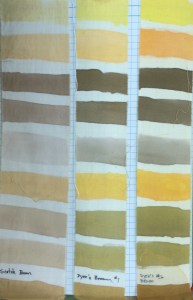
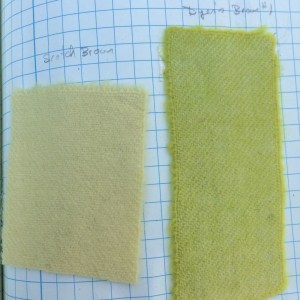
Cytisus scoparius, left Genista tinctoria, right
Cytisus scoparius, left. Genista tinctoria, right