Fermented Indigo Vat: Blog Post #4:  How Does Fermentation Reduce an Indigo Vat?  

© Catharine Ellis, as posted to the blog: Natural Dye: Experiments and Results

Fermentation is a biochemical process in which complex organic molecules are broken down into smaller molecules through the action of bacteria, yeasts, or other microorganisms.

In food production, it can broadly refer to any process in which the activity of microorganisms can bring about a desirable change to a foodstuff or beverage, such as the making of cheese, yogurt, sourdough bread, vinegar, fermented vegetables (pickles and kimchi), or beer, wine, or kombucha, in which sugars are transformed to alcohol.

In biochemistry (and specifically in indigo fermentation) fermentation is a process that occurs through the action of microbial enzymes under alkaline and anaerobic (in the absence of oxygen) conditions. The result is a reduction of the indigo dye molecule to make it soluble.  

Many microorganisms and bacteria thrive in this unique alkaline/anaerobic environment. The most important are Alkalibacterium sp., which produces lactic acid as a biproduct. The lactic acid will also bring down the pH.

Many grains contain this lactic acid bacteria. When grains are dry, those bacteria are dormant. But when soaked in water (or an alkaline liquid as in the case of indigo) the bacteria become active and produces enzymes that are useful to the reduction process. Wheat bran is a substance in which the indigo reducing bacteria/organisms live.  It is a key ingredient in the fermentation vat. Traditional recipes use wheat bran as an element of the vat, and it is added periodically to maintain the health of the fermented vat.

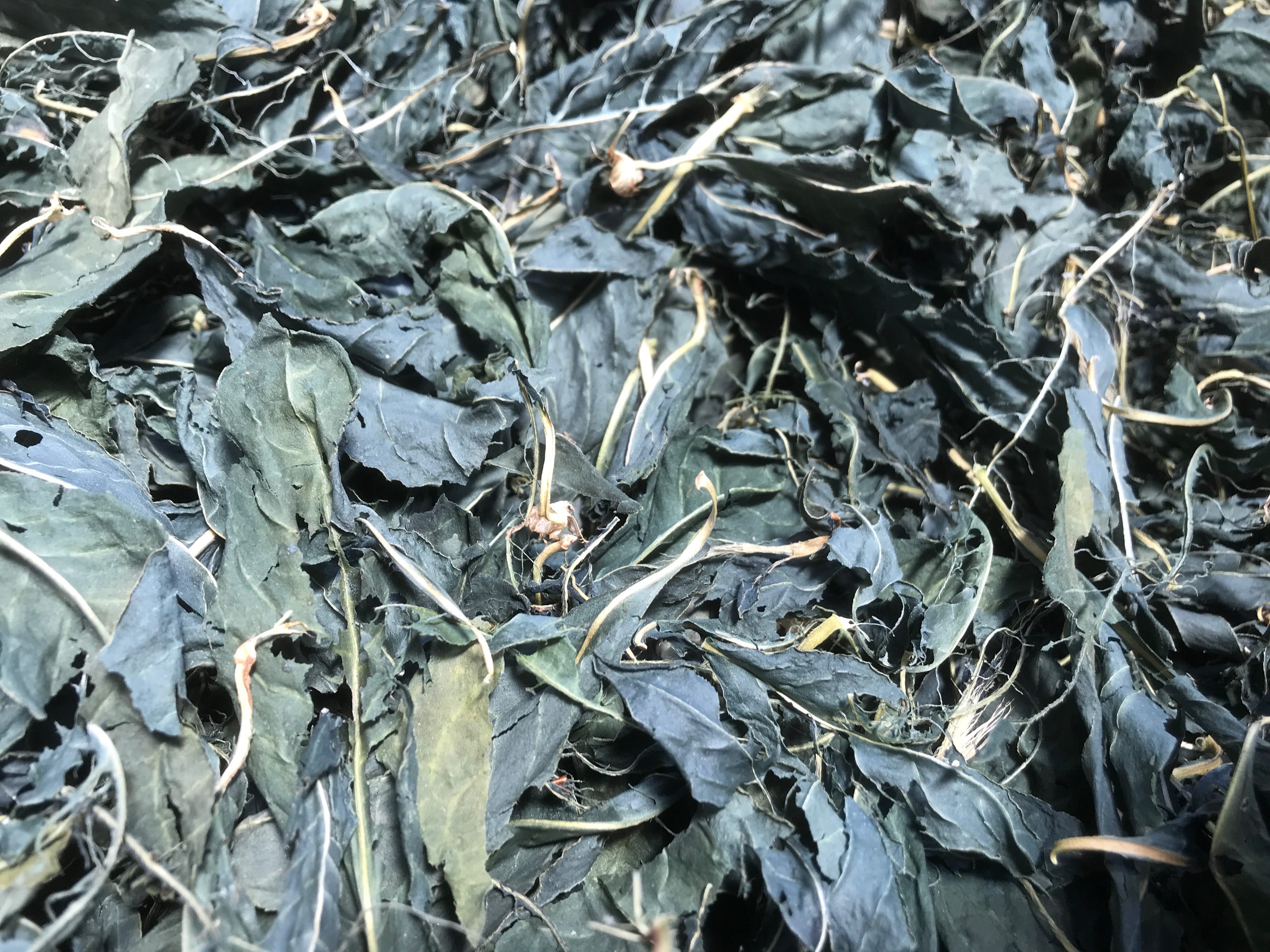
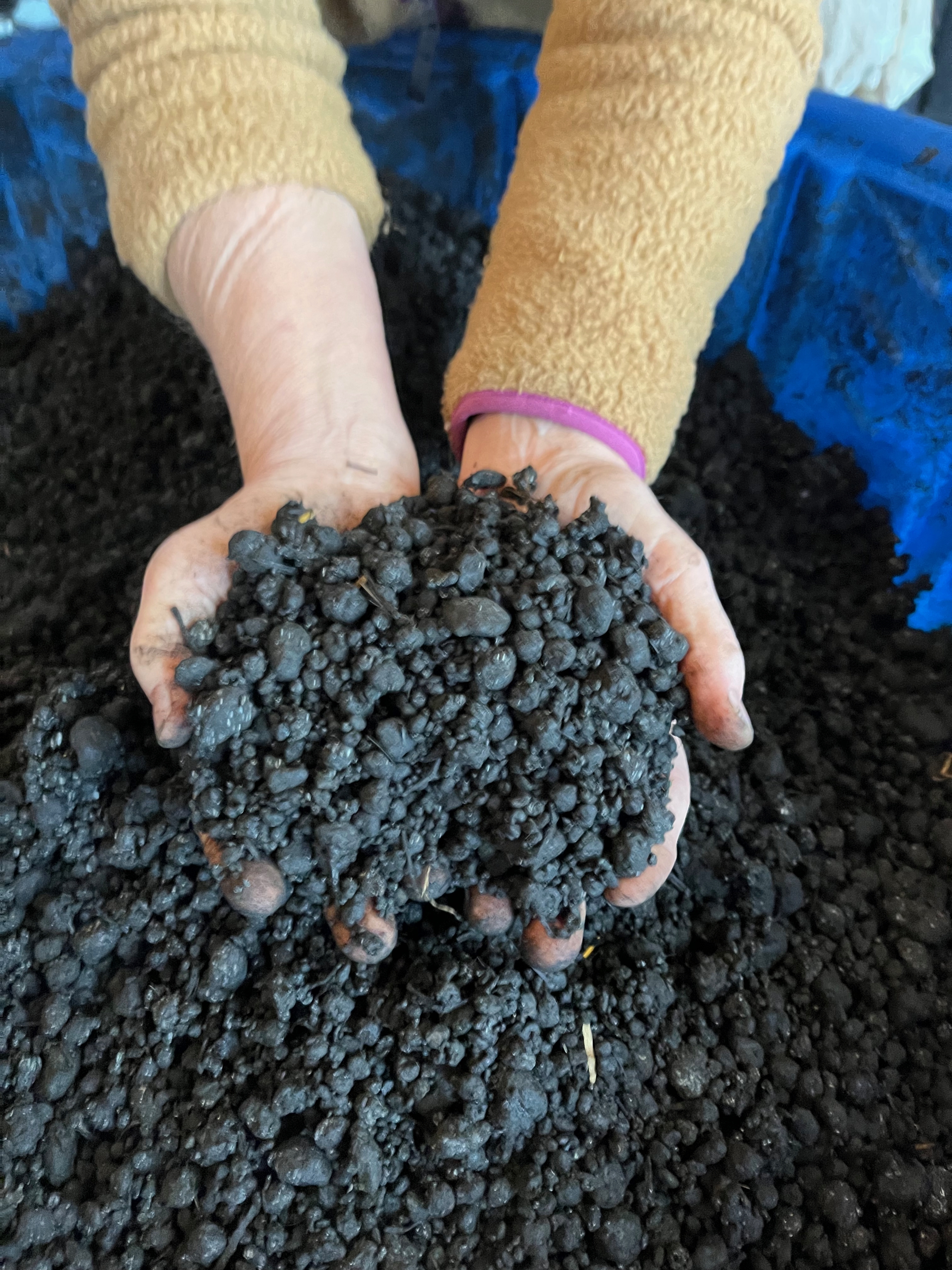
Sukumo is composted indigo (polygonum tinctorium) leaves. Though it might already contain some of the bacteria that are needed for fermentation, wheat bran is always added to this vat as well.  

Extracted indigo pigment lacks the microorganisms necessary to initiate the fermentation. This is especially the case of any pigment that has been dried. Organic material MUST be added to the vat to stimulate and maintain fermentation. Since medieval times spent madder root (Rubia tinctorium) was added to the vat to maintain fermentation. This “spent” madder was a waste product from madder red dyeing after the roots had been used to extract the red dye. The fermentation delivers a constant supply of glucose by breaking down starches and celluloses from the organic matter (madder root). 

Over the last few years, I have experimented with spent madder root and other organic substances to determine alternative plant materials that can be used in place of the madder root, or in addition to it. I have successfully used spent rhubarb root, dock root, and dried Indigofera tinctoria leaves.  
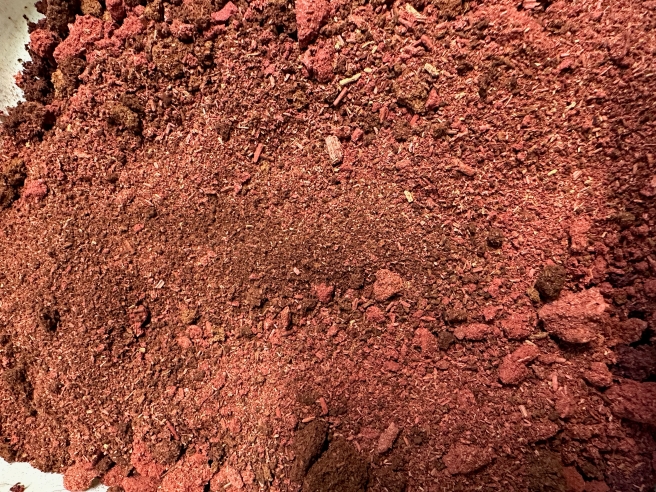
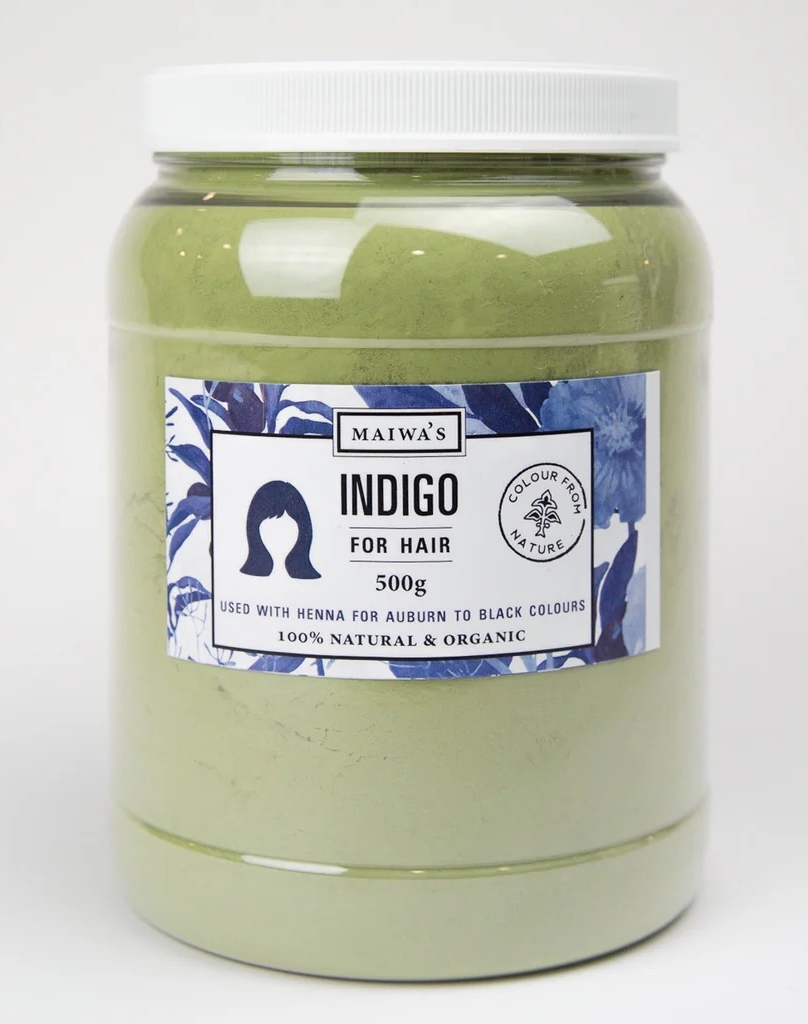
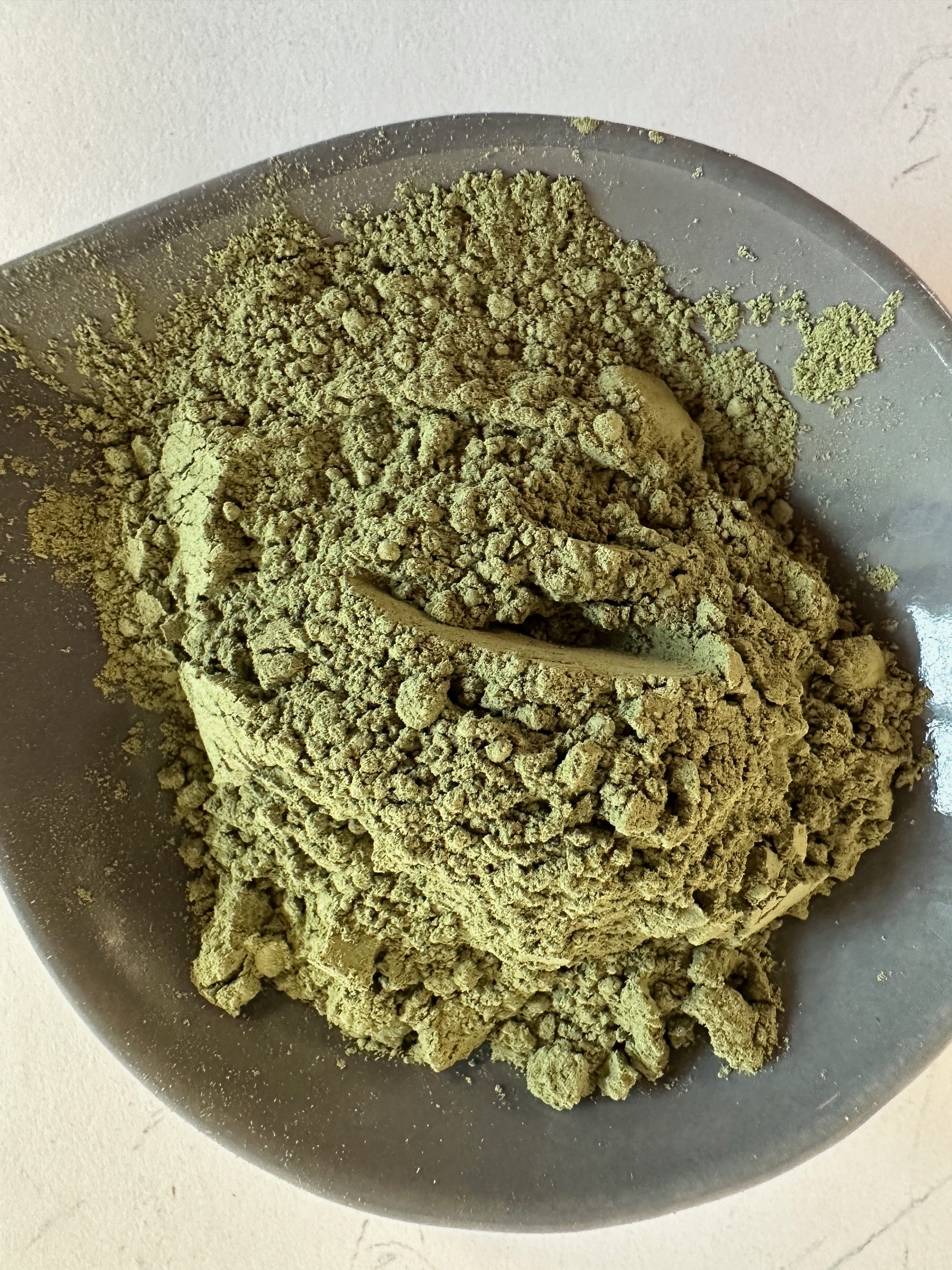
Ground madder root, which has already been used for dyeing, dried in a shallow tray. It will be stored and ready for use in an indigo vat.
Some bacteria in the vat create lactic acid as a byproduct, which is a major reason for the decrease in pH that will naturally occur in the vat. For this reason, the pH of the vat must be carefully monitored and maintained on a regular basis.  A fermented vat is a long-term investment. Be prepared to treat it as one and commit the time to monitor it by regular stirring, pH testing, feeding – and of course, dyeing in it!  

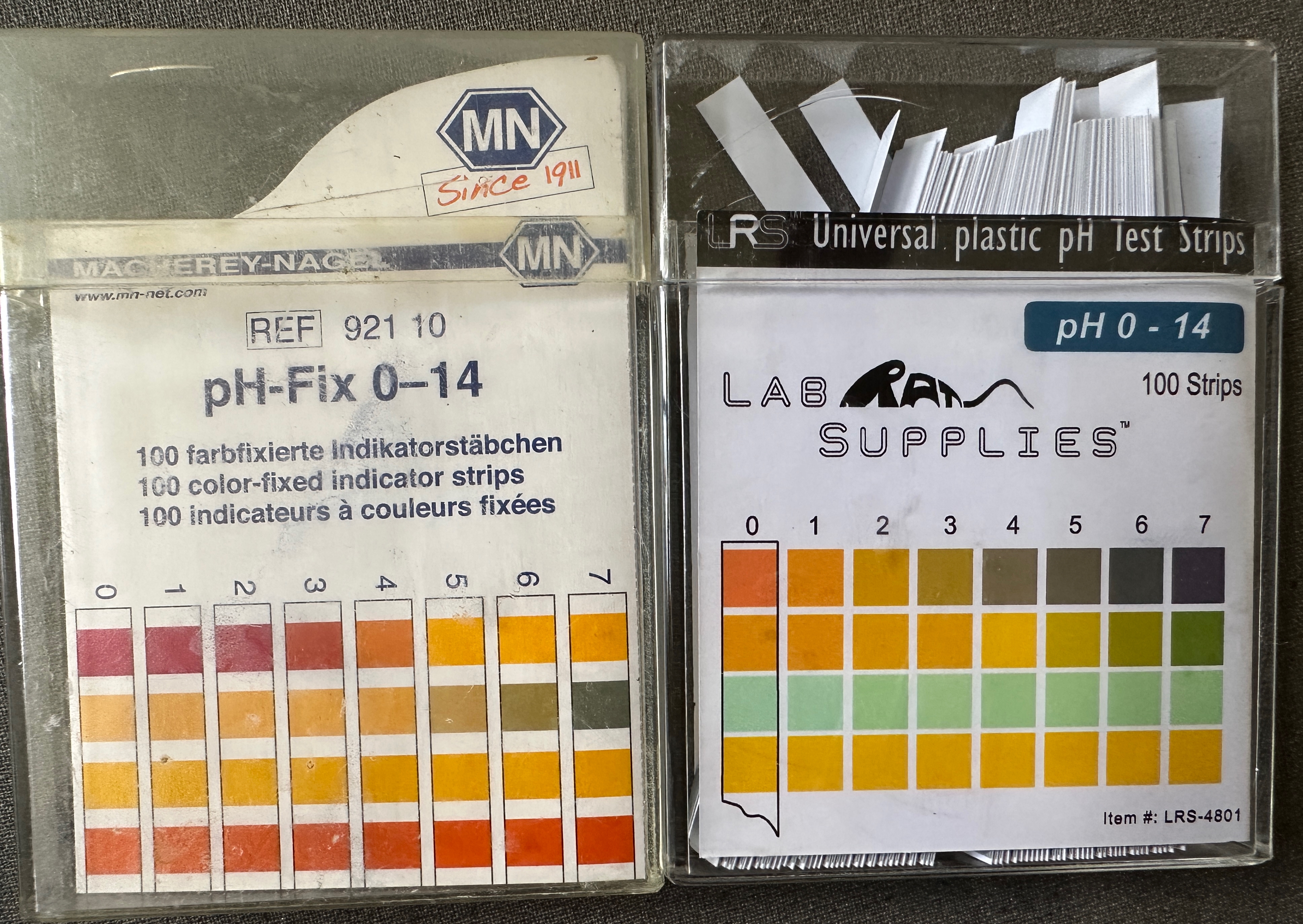
Having a good pH meter on hand is very helpful (This is the one I have) but pH papers with multiple pads for enhanced accuracy can also work well. 
 For further reading: This is a sampling of scientific papers (with links) that discuss the bacterial process of fermented indigo vats. 

Fermentation Blues: Analyzing the Microbiota of Traditional Indigo Vat Dyeing in Hunan
Analysis of bacterial flora of indigo fermentation fluids utilizing composted indigo leaves (sukumo) and indigo extracted from plants (Ryukyu-ai and Indian indigo)

Indigofera tinctoria leaf powder as a promising additive to improve indigo fermentation prepared with sukumo (composted Polygonum tinctorium leaves)
Fermented Indigo Vat: Blog Post #3:   What IS Indigo Reduction? (explained to the best of MY ability)  

© Catharine Ellis, as posted to the blog: Natural Dye: Experiments and Results

The chemical formula of indigo is C16H10N2O2

Why is reduction called “reduction”?

In the early days of chemistry, oxidation was defined as a gaining of oxygen atoms, and reduction was a loss of oxygen atoms. Indigo was said to be reduced because it lost an oxygen atom. 

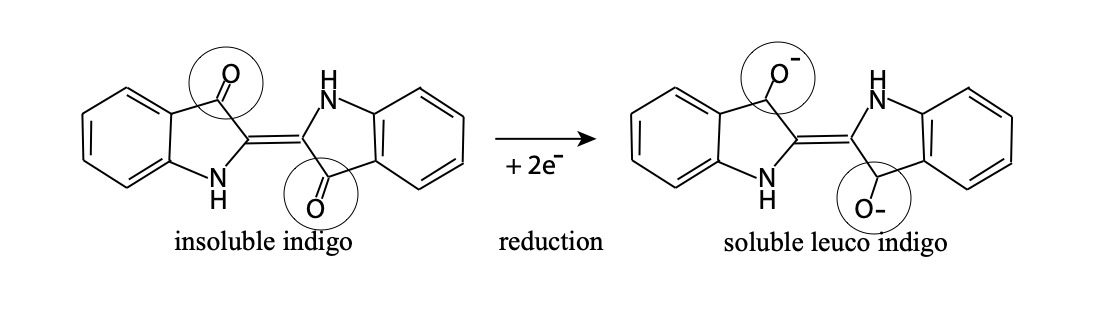
In actuality, there is no loss or gain of the oxygen molecule. The molecule of the insoluble indigo pigment contains double bonds to oxygen. During reduction, that molecule gains 2 electrons and, as a result, the bonds to the oxygen molecule become single bonds, thus making it soluble. This soluble indigo is referred to as leucoindigo or “indigo white”. Leucoindigo is the water-soluble yellowish molecule that soaks into and dyes the textile. 
This is one of the grand “mysteries” of dyeing and chemistry! 

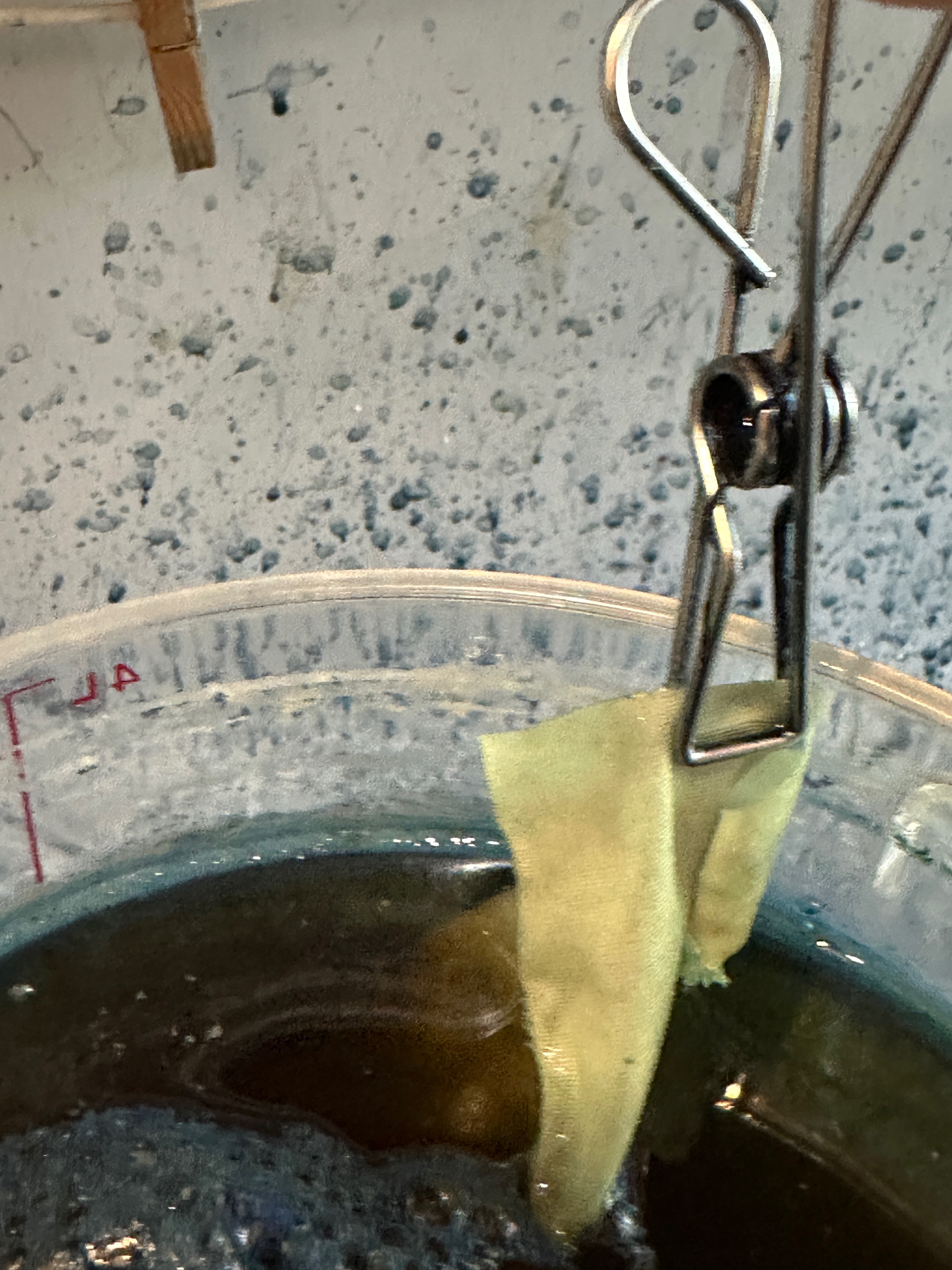
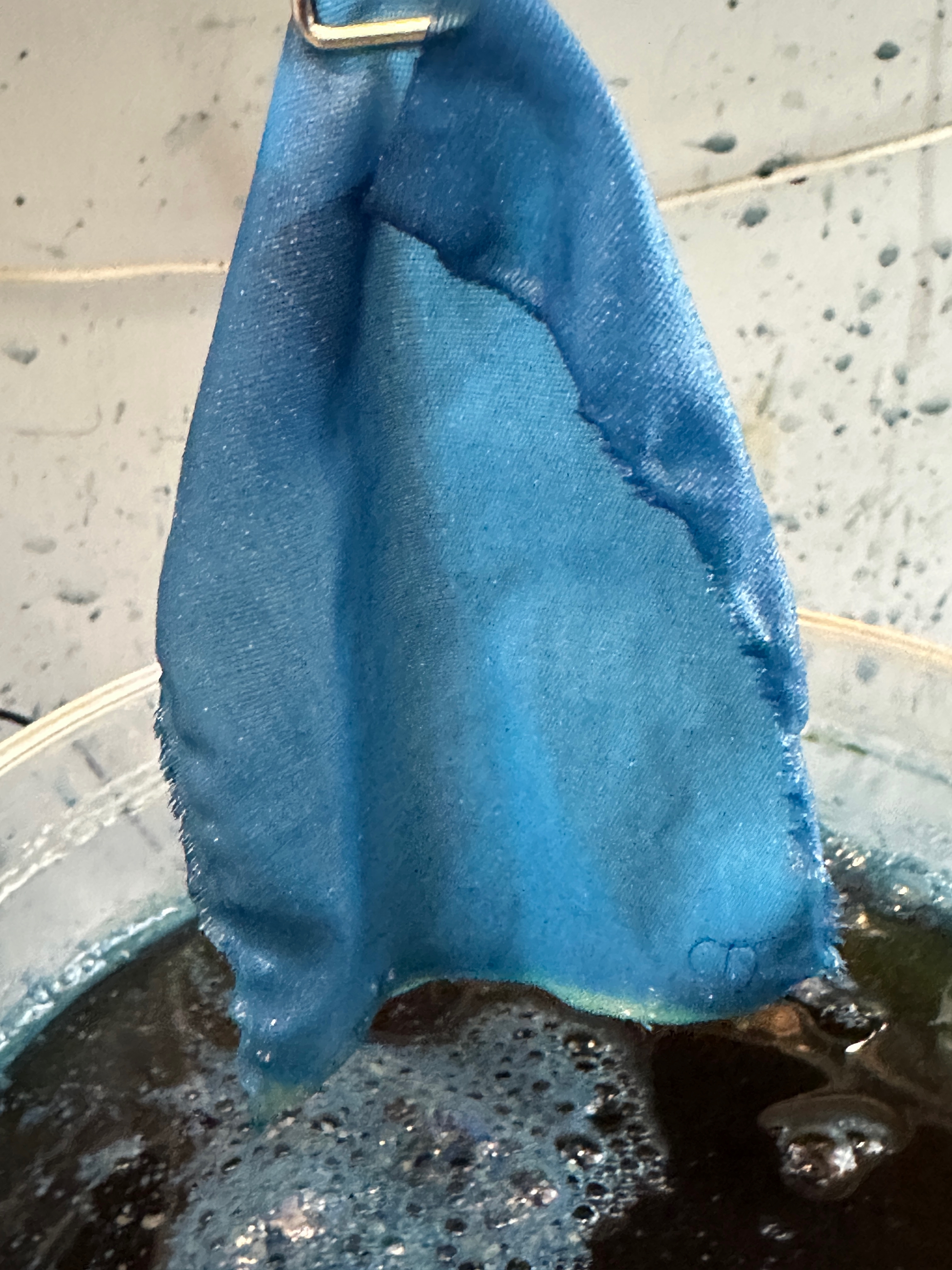
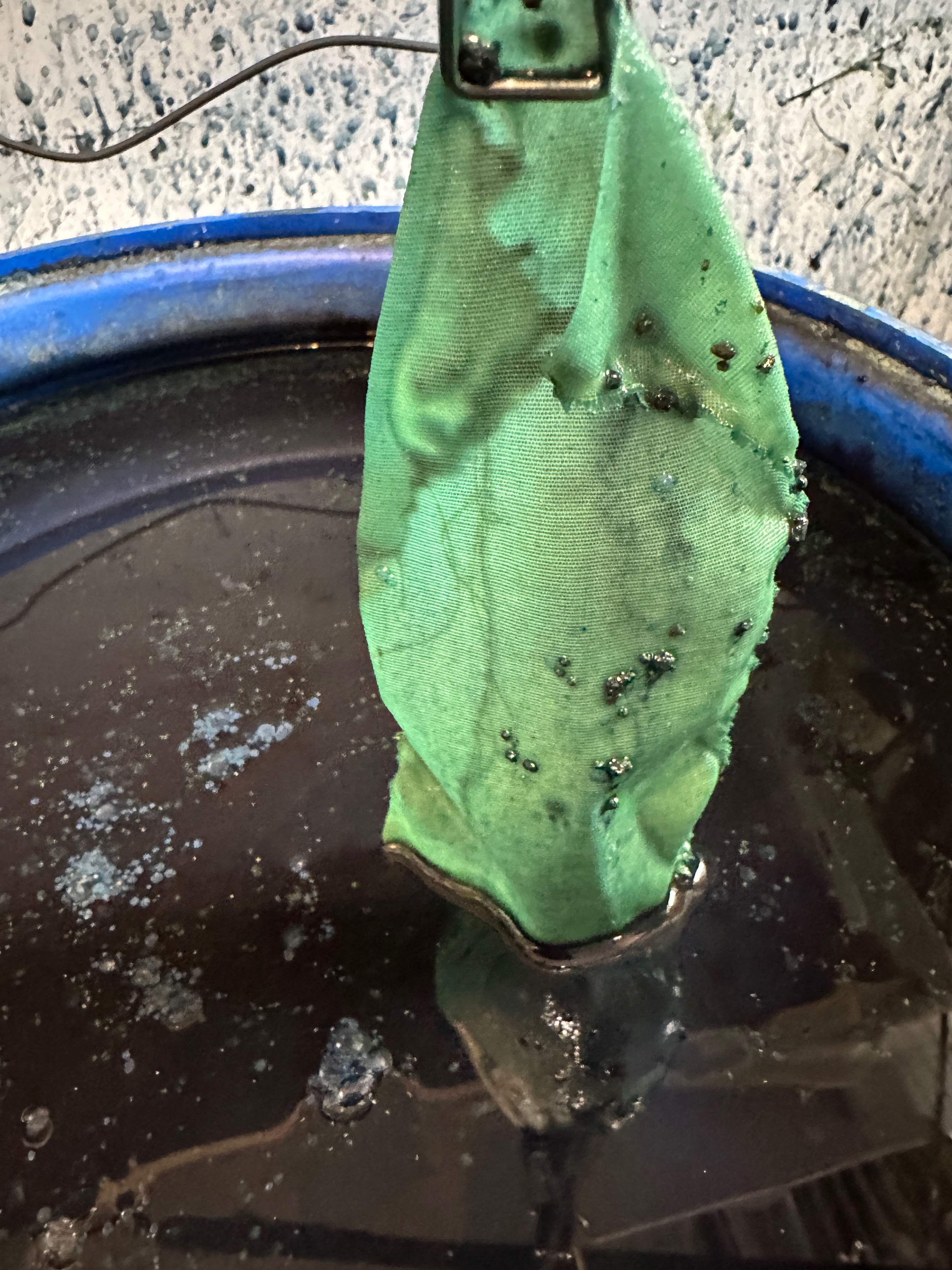
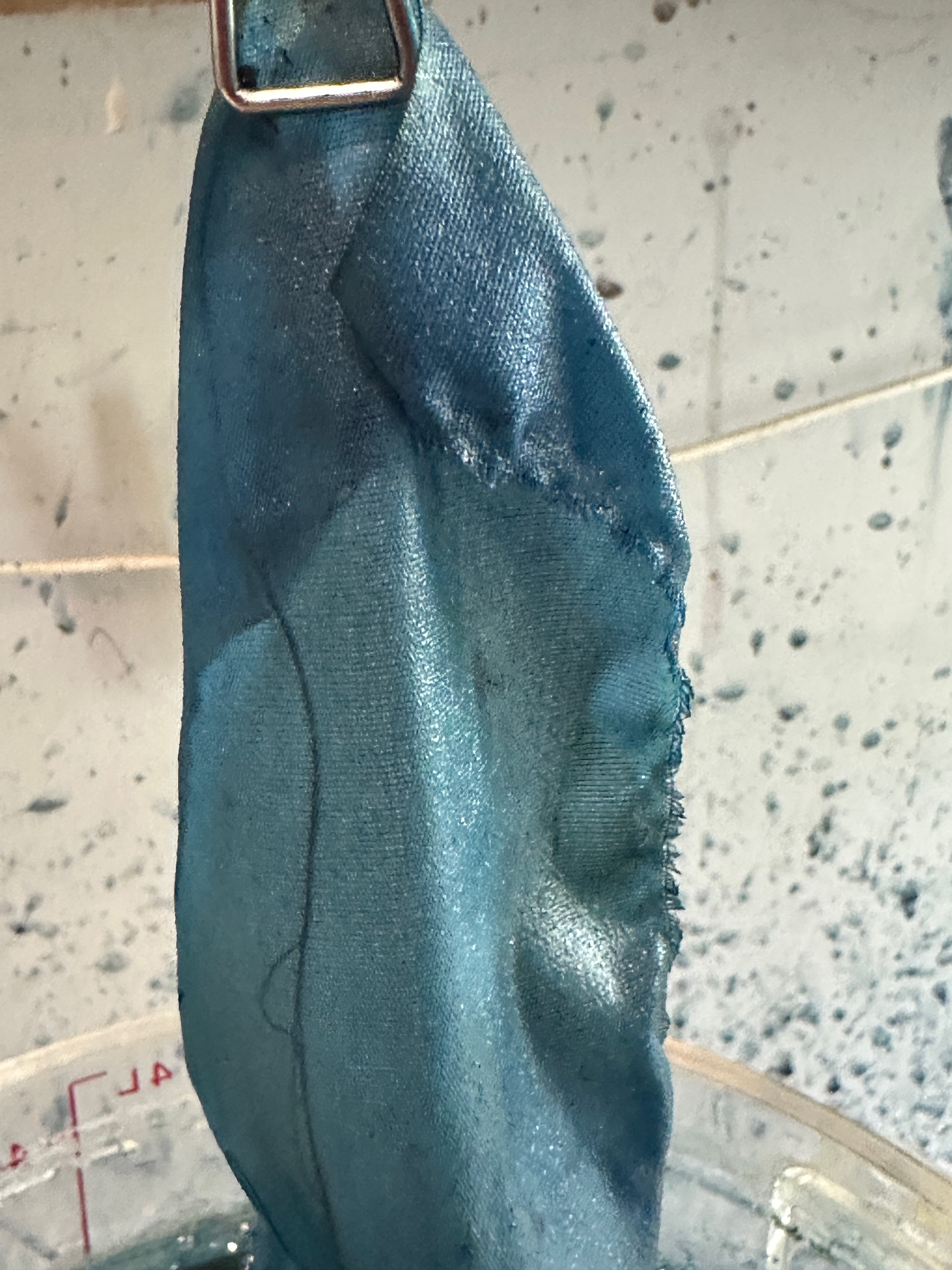
Leucoindigo is visible as the characteristic yellowish color below the surface of some vats. The leuco color of fermentation vat is more green than yellow. Once a textile is immersed in the vat it come out of that vat with the leuco color (yellow or green). The textile will turn blue through exposure to oxygen.  

What is Redox?
Redox is a chemical reaction that takes place between an oxidizing substance and a reducing substance. The oxidizing substance loses electrons in the reaction, and the reducing substance gains electrons. These two things happen simultaneously, and one does not happen without the other
 
All indigo vats require a high alkalinity (high pH) for proper functioning.  The plants, carbohydrates, sugars, or minerals used for the indigo vat are reductive, which means that they oxidize and give off electrons. In the alkaline environment of the vat, reduction is even stronger. 
The indigo molecule is forced to receive the two negatively charged electrons, which is a reduction; this influences the oxygen bonds of the indigo pigment, making the indigo molecule attractive to the positively charged portion of the water molecule. In this way the indigo becomes soluble (leucoindigo). Once it is soluble, the dye can penetrate the textile. After dyeing, oxidation (exposure to air) will once again make the indigo insoluble in the textile.


Fermented Indigo Vat: Blog Post #2: Fermented Indigo Vats vs. Quick Reduction Vats vs. Chemical Vats 

© Catharine Ellis, as posted to the blog: Natural Dye: Experiments and Results

Fermentation vats are the oldest method of reducing indigo. These vats rely on the effect of bacteria present in an alkaline environment to cause the reduction that will allow the indigo molecule to become soluble. The bacteria existing in an oxygen-free environment is referred to as anaerobic. An indigo vat is reduced in anaerobic conditions. 

A “sukumo” vat, traditional in Japan, is a fermented vat that uses composted indigo leaves from the polygonum tinctorium plant as a source of the dye plus cellulose plant material that will help feed the vat. A sukumo vat contains no added indigo pigment. The preparation of sukumo is a lengthy process requiring the composting of indigo leaves after they have been harvested and carefully air dried.  

For those of us who do not have access to sukumo, it is important to know that a fermented vat can also be made using indigo pigment. This is the approach that was often used by 18th century commercial dye workshops in Europe.  Since the pigment is inert, suitable sources of bacteria and “food” for that bacteria must be added to the vat. 

•       Advantages of the fermented vat: A fermented vat uses a lower pH (9.5-11) versus the quick reduction vats, which makes it suitable for both protein and cellulose fibers. The correct pH of a fermentation vat can be obtained using wood ash lye, soda ash, or potash. Only small amounts of lime are used throughout the life of the vat to maintain a correct pH. These vats are suitable for long-term use, provided they are maintained correctly. That is something that will be covered.

•       Challenges of the fermented vat: Typically, the vat requires 7 -14 days to reach full reduction, but I have seen it take as long as 30 days. The vats must be carefully monitored and maintained by making regular additions of lime and organic material to maintain appropriate pH levels and insure a continuous source of bacteria.

Quick Reduction vats, though used historically, were re-introduced to contemporary  dyers by Michel Garcia and have gained great popularity amongst contemporary practitioners. These are the vats that we presented in The Art and Science of Natural Dyeing. They are easy to make. They rely on the use of sugars, fruits, plants, or minerals and require a very alkaline environment (pH 11-13) to achieve reduction. This high pH necessitates the use of significant amounts of lime (calcium hydroxide) as an alkali.

•       Advantages: These vats reduce quickly – usually in a day (or less). They use no harmful chemicals, though they do require working with a very alkaline substance and solution. Vats made with reducing sugars can be kept for several weeks and, with careful and regular maintenance, can be used for several months.

•     Challenges: The high pH is not suitable for all fibers (a high pH will damage protein). The large quantity of lime (calcium hydroxide) used to achieve the pH builds up quickly in the vat. The lime is also very difficult to remove from the finished textile and can compromise the dye and color, possibly resulting in “unexplained” fading of the blue. 

Chemical Vats use either sodium hydrosulfite or thiourea dioxide to reduce the indigo molecule. This process is used extensively in industry, and I know that some hand dyers also use this process, as it is very predictable. 

•      Advantages: Complete reduction takes place very quickly – usually within minutes. The pH of the vat is 10-11. 

•     Challenges: Reduction chemicals can potentially have a very detrimental effect on the lungs and health of the dyer. When used in combination with a high pH, they can also damage the tactile qualities of wool fibers. Personally, I do not like the smell of the chemicals. 

Because reduction is so complete using reduction chemicals, it can be challenging to achieve pale colors when using chemical reduction.  It is also difficult to use multiple immersions in the vat to increase the depth of shade, as repeated immersions will re-dissolve the indigo already incorporated in the textile.    

Fermented Indigo Vat #1:  A Journey from Quick Reduction to Slow Fermentation

© Catharine Ellis, as posted to the blog: Natural Dye: Experiments and Results

On this blog site, I have previously written about the indigo fermentation vats in very general terms. I have been using these fermentation vats exclusively for over 5 years now and I feel strongly that it is the best approach to use for indigo dyeing. So, I have made the decision that I would like to share much more specific information regarding how to make and maintain these vats through a series of posts in coming weeks. I hope to roll a new one out every few days days or so.  

Since I began the transition to using ONLY natural dyes in 2008, I have continued to learn and to refine my practice. Dyeing with indigo has been one of the most rewarding, yet challenging adventures. Striving for, and practicing a level of mastery related to indigo dyeing, is necessary to achieve a full palette of color using natural dyes and having the ability to control shades of indigo blue is a necessary skill. 

In the 1970s, I did my first indigo dyeing using sodium hydrosulfite as a reduction agent for my vat. I never liked dealing with the reducing chemicals, such as sodium hydrosulfite or thiourea dioxide. The smell was off-putting and, more importantly, I had concerns regarding the safety of such chemicals.  I abandoned their use (and indigo dyeing) until many years later.

I was thrilled when I learned from Michel Garcia that indigo vats could be made using benign substances such as  sugars, plants, ferrous sulfate, and lime (calcium hydroxide) which I was able to purchase in the grocery store as “pickling lime”. Vats made this way are considered to be, or described as,  “quick reduction” vats. They reduce and are ready for dyeing within hours and can be maintained for an extended period with proper attention. I was very happy. These are the vats that Joy and I included in our book “The Art and Science of Natural Dyes”.  I believe that these are still the best vats for short term dyeing workshops and other situations where a working vat is required quickly.

Over time, though, I observed that there are issues and challenges with these vats.

Crocking (the rubbing off of color) was a problem, despite proper finishing and  washing, and especially when dealing with knitting or weaving yarns, which are handled a great deal.  All indigo dye seems to exhibit poor resistance to rubbing to some extent, but the quick reduction vats seems to crock more. What I understand is that excess calcium may react with the reduced indigo and makes it into insoluble compound. These vats depend on the use of large quantities of calcium (calcium hydroxide). I am now thinking that it is possibly the reason for the bad rubbing fastness or crocking.  

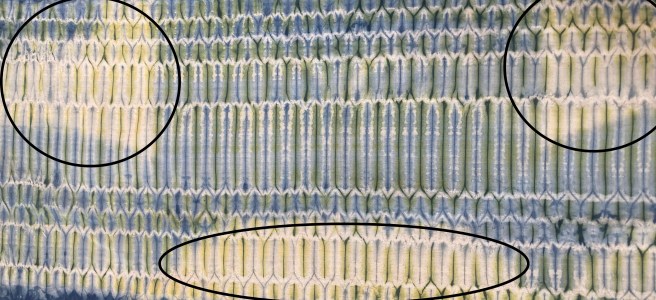
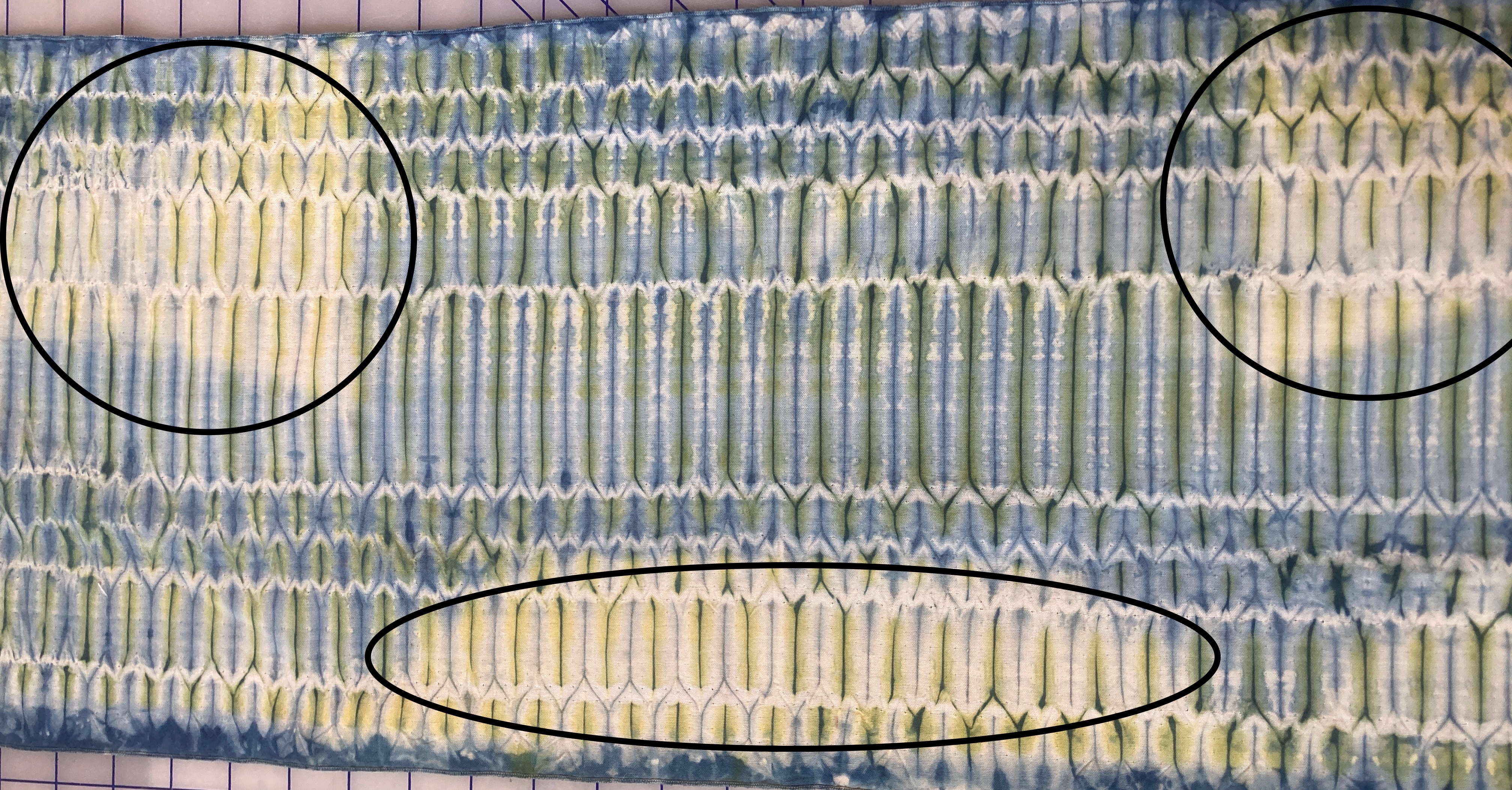
This shows the “fading” which occurred on the folded cotton cloth that was stored in a dark place for a number of months. The indigo blue has nearly disappeared in some places. The fading mirrors the actual folds that were in the cloth. It is NOT an intentional design element.

The color often faded inexplicably, turning pale and displaying washed out areas, or just completely disappearing.  I have observed this occurred where cloth was folded and put away on the shelf.  Even when a textile was rolled up and stored in the dark, I would find that the blue had literally disappeared in some parts of a textile despite careful finishing and neutralization. I’ve had discussions with other dyers who have also experienced this same phenomenon, so I know I am not the only one who took note. I always do lightfast test on the dyes that I choose to use for my work but this was something else entirely

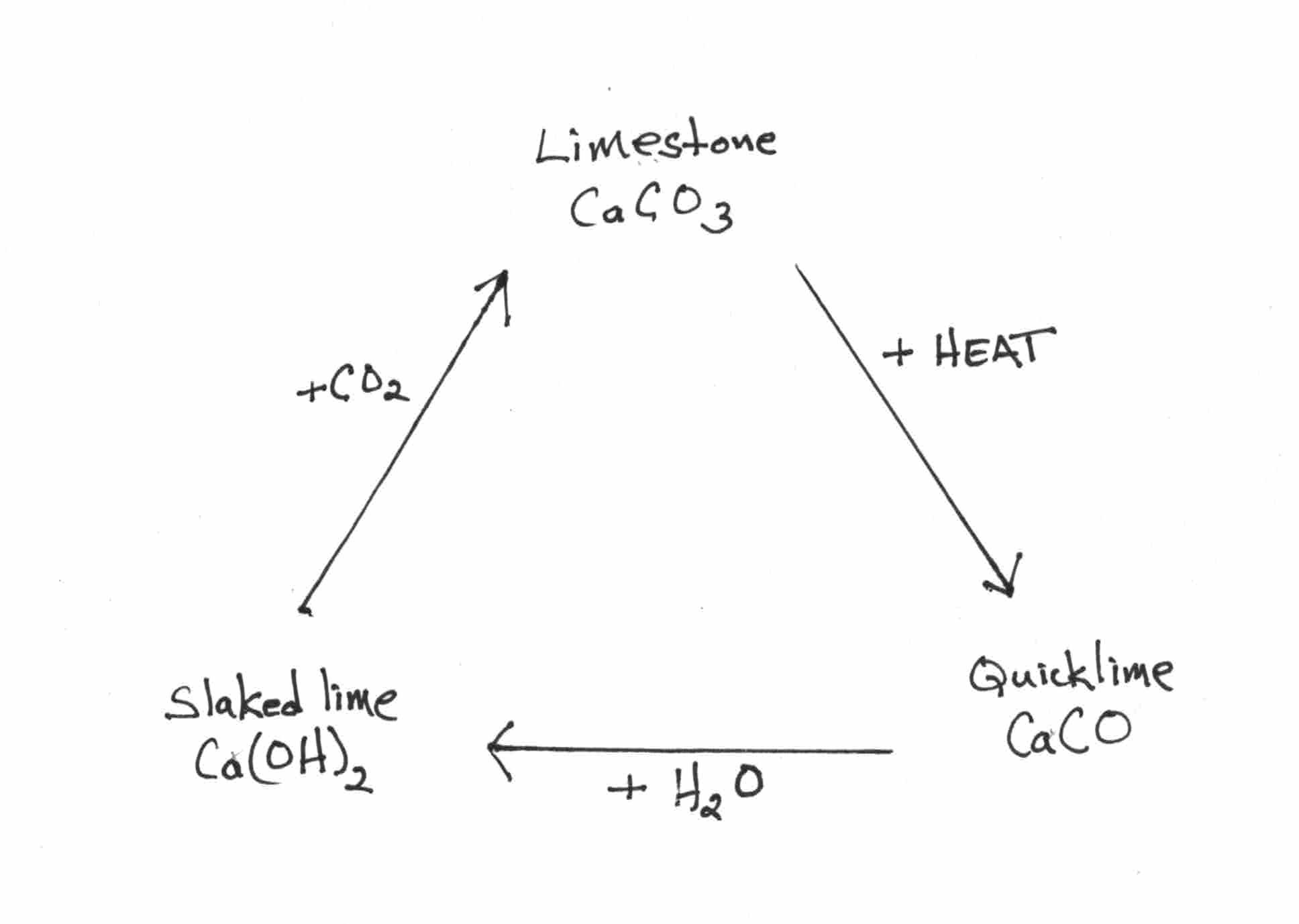
The “lime cycle” illustrates how limestone is heated to create quicklime. Water is added to make slaked lime. Does exposure to air/carbon dioxide turn the lime back into limestone again?

In 2017 I began my journey using indigo vats that reduce by the activity of fermentation  after meeting Hisako Sumi, Japanese indigo dyer and researcher. Hisako encouraged me, guided me, and even put together and gifted me a small “kit” which she mailed from  Japan, so that I could start my first fermented vat.  I began experimenting, testing, dyeing, observing, and never looked back. Hisako generously ‘coached” and mentored me from from her home in in Hokkaido and provided me with a much deeper understanding of my vats.

The COVID pandemic kept many of us home for long stretches of time, and during that period many of us learned new skills or honed old ones. That time provided me the opportunity and focus to tend indigo vats and to develop and refine an understanding of the fermentation process. My indigo dyed textiles have never been better! I no longer fret over potential “unexplained” fading. The quick fermentation vats require high alkalinity (pH 12). The fermented vats are able to be maintained at a lower pH than the quick reduction vats (pH 9.5-11). This is accomplished by the use of wood ash lye, soda ash, OR potash to achieve the correct pH. I have used all of these alkaline sources  successfully. Lime (calcium hydroxide) is used in very small amounts and only to “tweak” the pH maintain desired levels. The lower alkalinity of the fermented vats is more suitable for all fibers.  I will likely never return to quick reduction vats, unless specific circumstances require their use.        

In some of my previous blog posts, I have written about this process in general terms and also have given credit to Cheryl Kolander, whose online recipe was a good starting point for me, but until this time, I was not ready to publish anything definitive of my own. In fact, I have never published an “actual” recipe on my blog: Natural Dye: Experiments and Results

I am not a trained scientist/chemist, but through experimenting and multiple observations I have done my best to understand what happens in the fermented indigo vat so that I can use and maintain the vat. And now it is time to share that specific information and information about the process I have used. Over the coming weeks (and about a dozen blog posts) I hope to “walk through” the planning/making/maintaining of a fermented vat and to encourage and guide dyers to explore on their own. And, as we approach summer in the northern hemisphere, it is a good time to try these vats. But do keep in mind, fermentation vats may not be the best for a beginning dyer or for someone who does not have the time and focus for it.

One does not do this alone. I owe much to Hisako Sumi, Michel Garcia, Joy Boutrup, Dr. Kim Borges of Warren Wilson College, and to all my colleagues and students who have been willing to experiment with me. 

As a dyeing community, perhaps we can all help each other to learn, understand, and to work through the process of indigo fermentation. Your comments are most welcome. My goal is to start that process with a series of blog posts that might help you begin your own journey. By all means, if you have a “dye mentor”, do consult them! I don’t have all the answers but maybe we can get there together.

The Fermented Indigo Vat: an Introduction

Last year, I made the decision to stop travel/teaching. It’s been a long journey since my first weaving in 1970, my first dyeing in 1972, my first teaching in 1976 and my committment to natural dye in 2008. This year I will turn 74 years old. I am also a grandmother for the first time and am actively involved in the unfolding life of a 18 month old little boy (who makes us smile every day).

What I have not done, is to stop learning, exploring, or asking questions about natural dye, dyeing,  weaving, and/or how they might combine. Slowing some things down in my life is giving me to time to think more deeply about others, particularly indigo fermentation.  

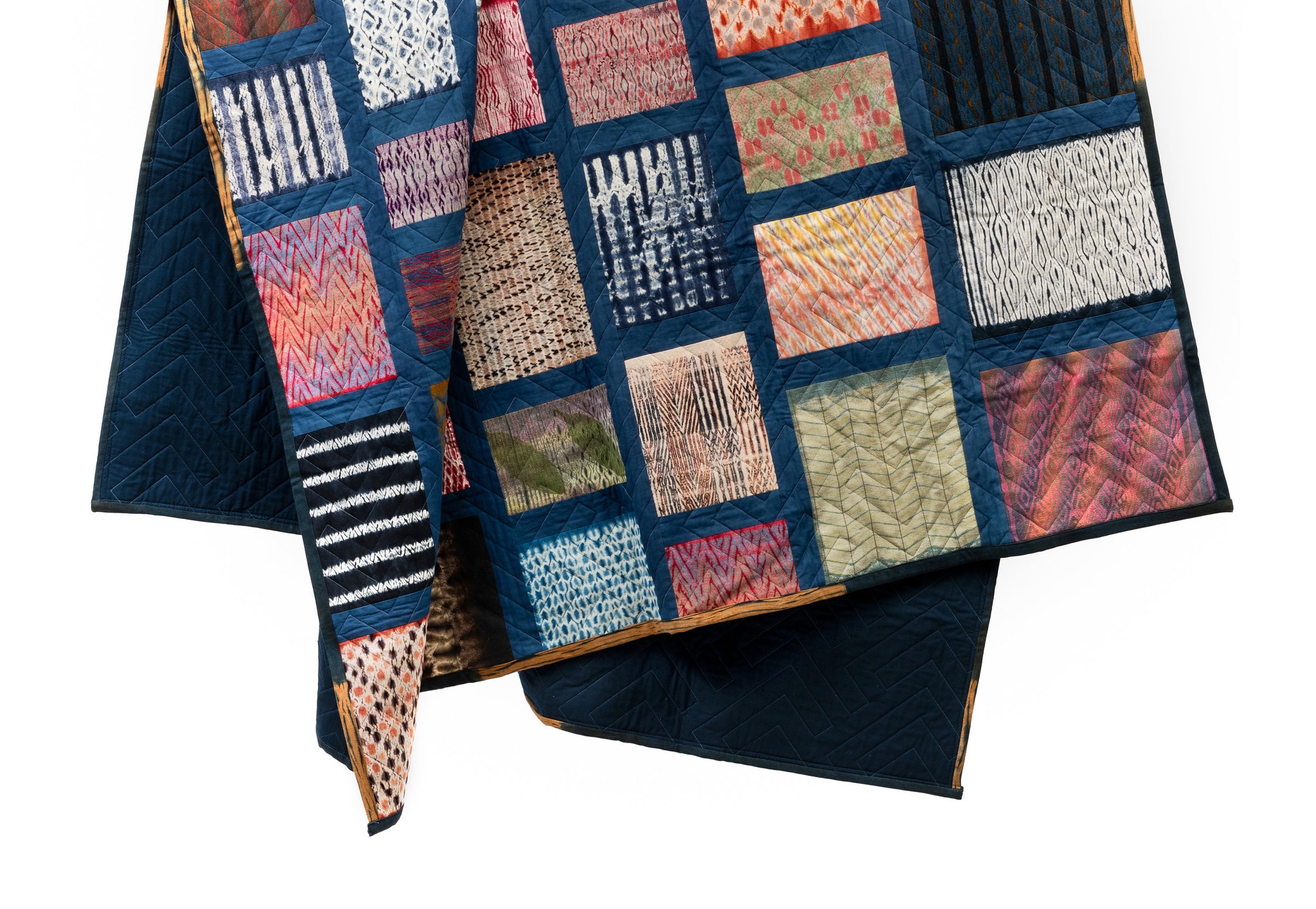
“Lessons”, a queen size quilt by Catharine Ellis using early woven shibori samples. Border fabric has been dyed with indigo using a fermentation vat.

Some time ago, Joy Boutrup and I discussed the possibility of another dye book that would expand what we presented in The Art and Science of Natural Dyes (Schiffer, 2019). While contemplating this dilemma, I came across the following quote from Annie Dillard:

“One of the things I know about writing is this: spend it all, shoot it, play it, lose it, all, right away, every time. Do not hoard what seems good for a later place in the book or for another book; give it, give it all, give it now. The impulse to save something good for a better place later is the signal to spend it now.
Something more will arise for later, something better. These things fill from behind, from beneath, like well water. Similarly, the impulse to keep to yourself what you have learned is not only shameful, it is destructive.
Anything you do not give freely and abundantly becomes lost to you. You open your safe and find ashes.”

Annie Dillard

So now, Joy and I have together made the decision that I would share the information I have learned using blogposts, instead of writing another book.  
Through a number of upcoming posts, I will discuss the process of indigo fermentation vats, the experiments I have done, and what I have learned about making, maintaining, and dyeing in those vats. I will explain, to the best of my ability, what is happening in those vats and why.  Hopefully, this will encourage more of you to try fermented indigo vats and will provide enough information for a high likelihood of success.  Each post will contain a link to a downloadable pdf version, which you are welcome to print and kept for studio reference.  I would ask that you be respectful of this information though you are most welcome to share the link to my blog for reference. 

Experiments with Turkey Red

Turkey red is a process of dyeing cotton with madder. It uses oil to treat the textile before mordanting and dyeing to increase the brilliance of color and its ability to withstand washing. It was widely used in the 18th and 19th centuries.

A few years ago, Joy Boutrup and I did some quick tests together. We treated cotton with Turkey Red Oil. But the results were not good and so I abandoned it. Admittedly, I did not do further research at that time.

Following Maiwa’s online class, Natural Dyes: Alchemy Chemistry Craft, a small group of colleagues and I began a “study group”. Both the class and the study group have been a catalyst to delve a little deeper into some processes, including Turkey Red. Here are some of the results of my own testing and observations. This time I prepared myself better, did lots more reading and research and have been quite intrigued by the results.

 My starting point was Julie Wertz’s new book: Turkey Red (Bloomsbury, 2024). In this book Wertz does an excellent job of presenting its history, some chemistry, and the series of steps involved.

Turkey Red Dyeing is a process by which cottons were treated with oil prior to mordanting and dyeing (or printing) using madder. It was practiced regularly in the 18th and 19th centuries in Europe and, I believe, some in the US. The result is a brilliant red dye color that is very fast to washing. It was an important discovery in the textile industry, though its roots likely go back much further to madder dyeing in India where oils were commonly used centuries ago to treat cotton textiles. Oil is also used in Indonesia prior to mordanting and dyeing cottons with Morinda bark (Morinda citrifolia).

It is believed that the oil combines with the mordant and then with the dye, making a compound that is faster to washing and light. All the literature refers only to its use with madder red. To the best of my knowledge, no other dyes are ever mentioned relative to the oiling process.

Turkey Red Dyeing was usually done on unbleached, and non-mercerized cotton. These cottons do not have an affinity with mordants and thus are more difficult to dye with deep, saturated red colors.

Jim Liles, in the Art and Craft of Natural Dyeing discusses the Turkey Red process in some detail and includes recipes. My other resources include old industrial dye manuals* from the early 20th century. These are the same manuals that Joy and I used to develop some of the recipes in The Art and Science of Natural Dyes.

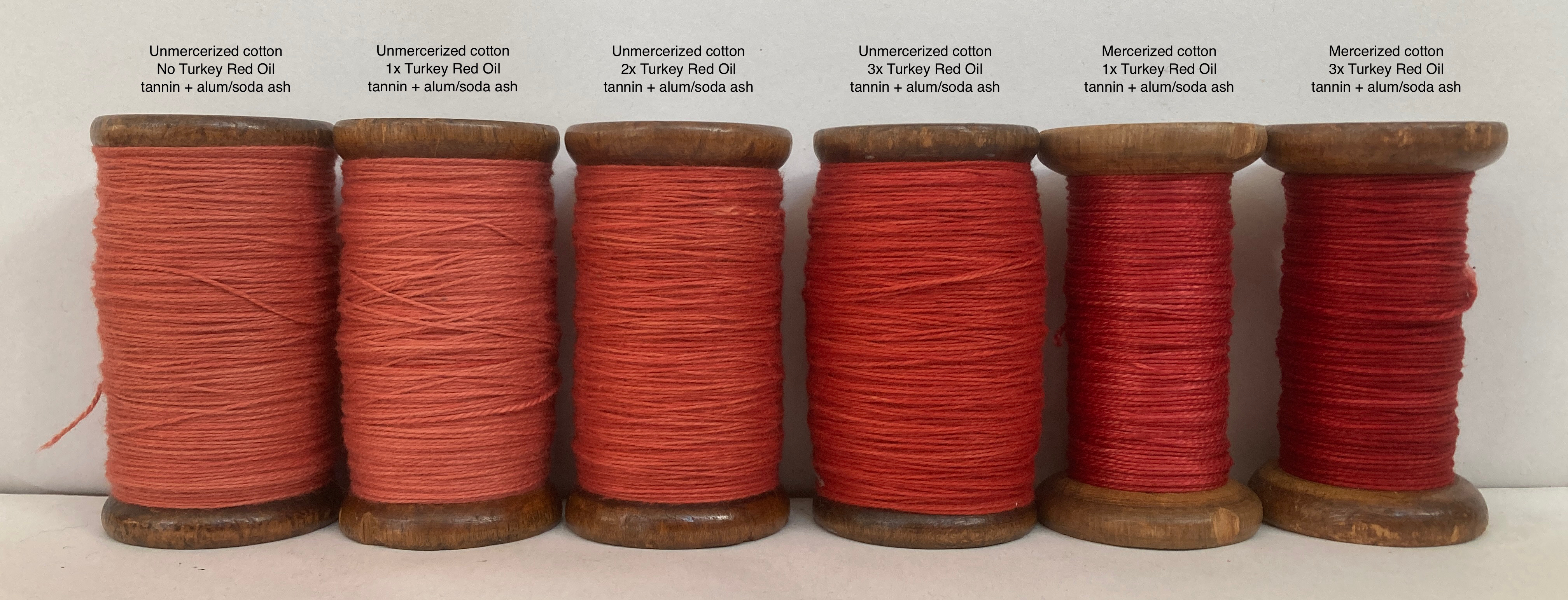
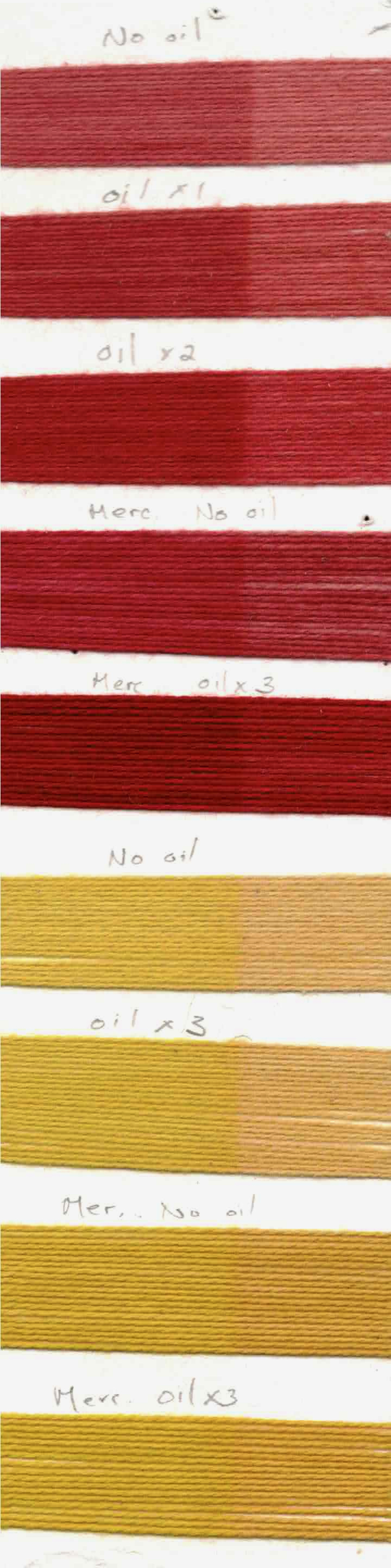
The Process: Un-mercerized cotton yarn was scoured thoroughly and allowed to dry. The dry yarn was then immersed in a 50% solution of Turkey Red Oil and water, then dried again. Multiple oil treatments are recommended, drying in between each. I oiled and dried the yarn up to 3x.

All samples were dyed using ground madder root @ 50% weight of dry fiber. I did not use oil in the dye bath or as an after treatment, as some recipes recommend.

My initial tests do indicate the effectiveness of the oil treatment. A deeper red color results after the treatment with oil. A single oil immersion resulted in a slightly deeper shade of red, but three oil immersions in the oil (drying in between each) resulted in a much deeper color. What would happen if it was oiled 4-6 times – which is recommended?

Oil applied to mercerized cotton yarn also illustrated the effectiveness of the treatment. Mercerized cotton always takes up mordant and dye more readily without any additional treatment. Clearly, the oiling did increase the dye take up even more.

An interesting fact: John Mercer, who invented the mercerization process in 1844, also has his name on the patent for Turkey Red Oil. Mercerized cotton always dyes more easily and results in deeper colors with any type of dyeing.  Perhaps, when mercerization became common, the need for the labor intense process of oiling was no longer necessary or financially viable.

Follow-up question: All references to Turkey red dyeing use madder as the dye.  Is there a bond made only between the oil and the mordant? Would oiling of the textile prior to mordanting and dyeing with weld or another dye also result in a deeper color?

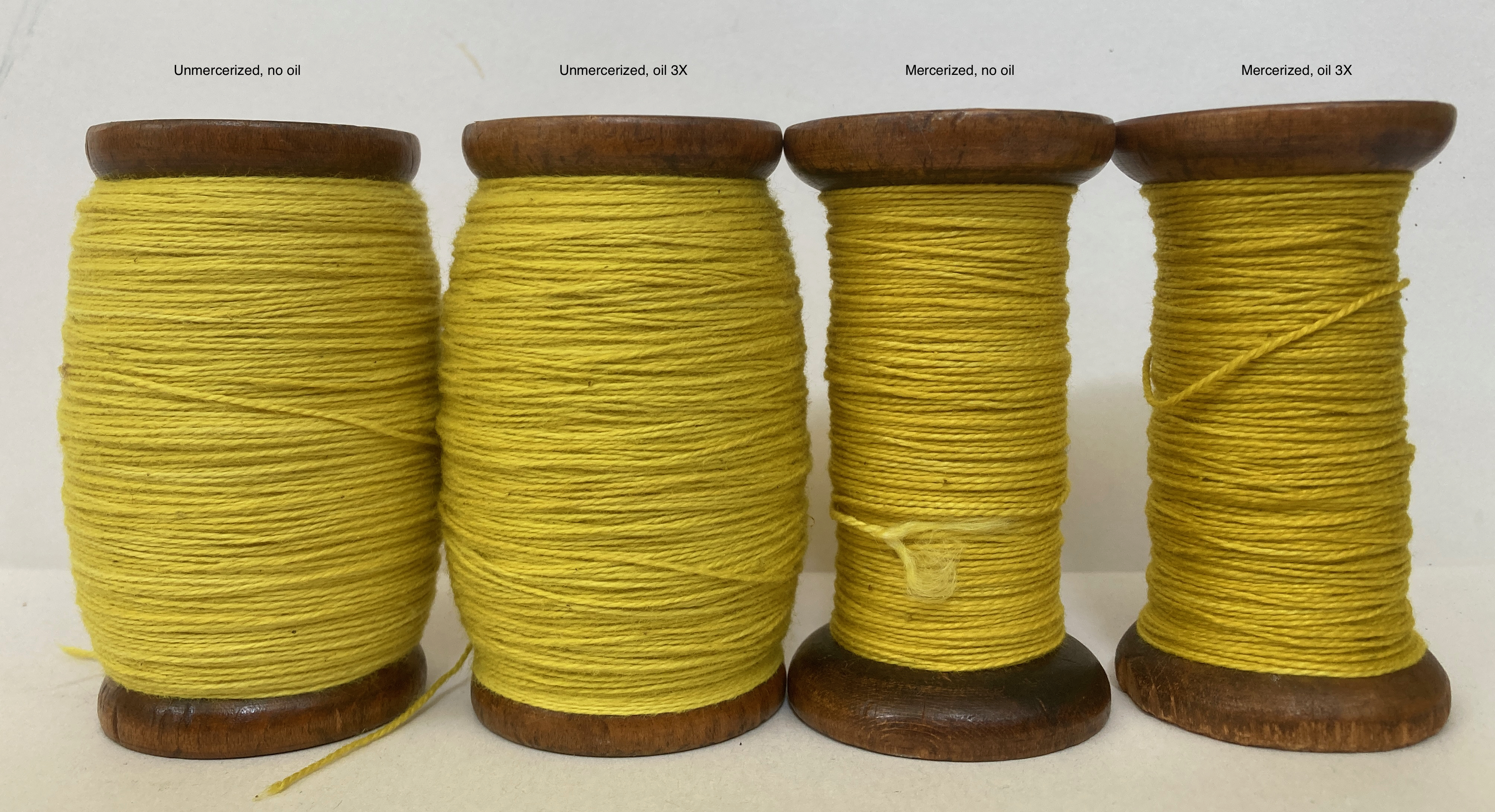
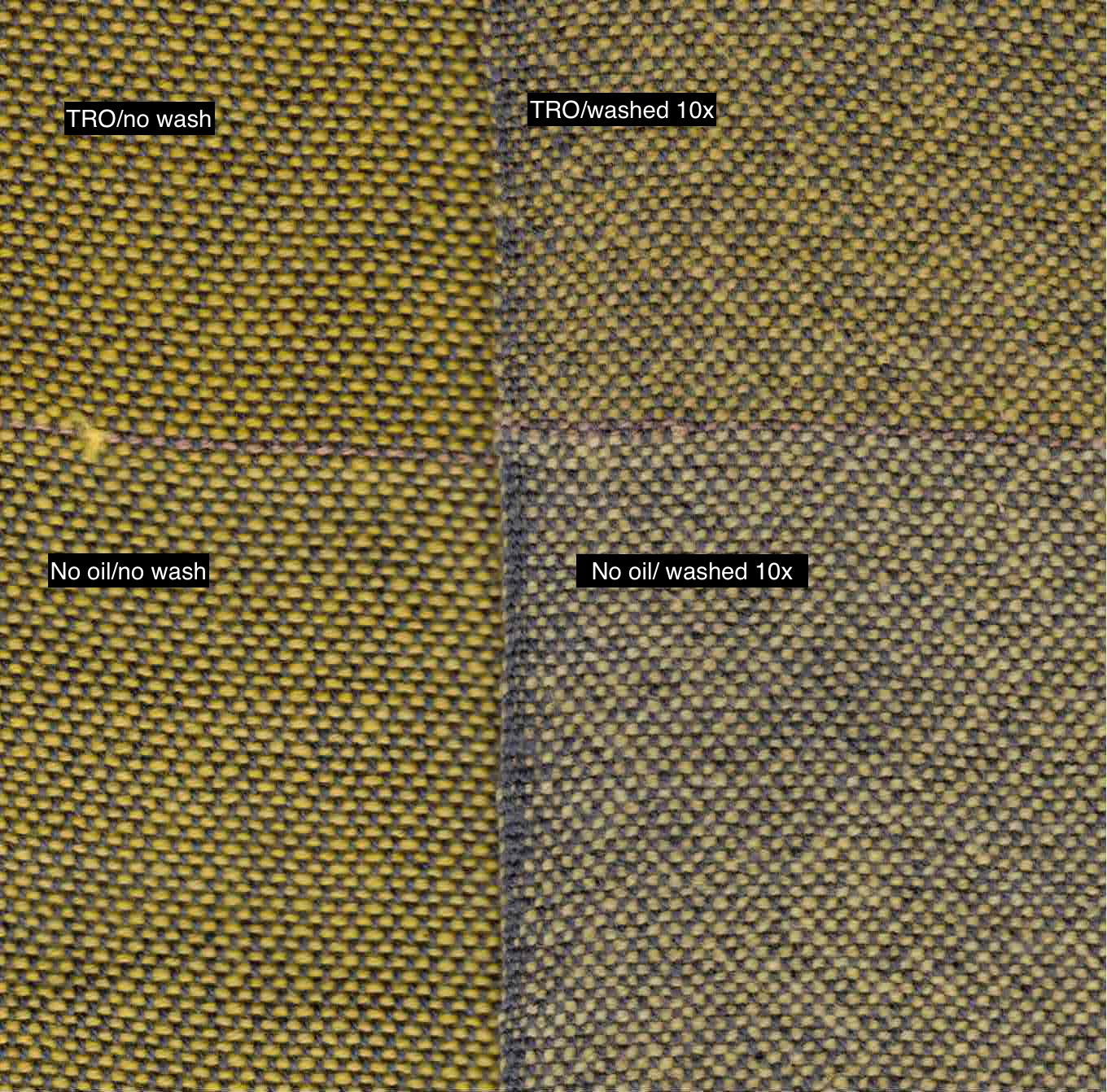
Initial testing indicates that the oiling of cotton prior to dyeing with weld results in a slightly deeper color but it isn’t nearly as dramatic as the madder dyed textiles.

After completing lightfast tests with both dyes, I observed a subtle difference in the way they reacted to light, taking into consideration the relative “before” and “after” of each dyed yarn following 3 weeks of exposure to direct sun.

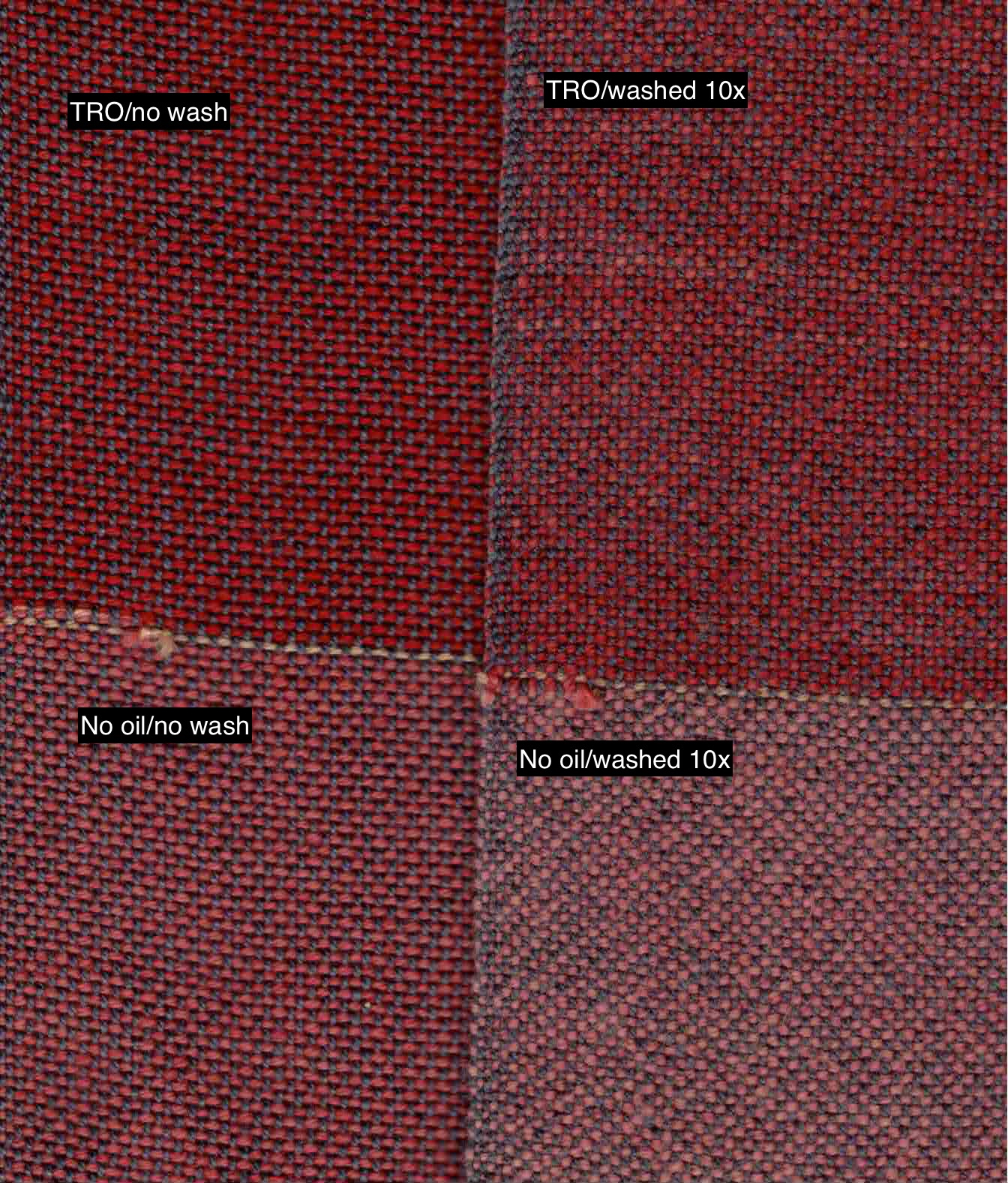
Wash fast tests, on the other hand, were much more dramatic. I used yarns that had been dyed both with and without the turkey red oil treatment. The yarns were then woven into a cloth with a dark grey warp. After only 10 regular wash cycles in my machine (along with the rest of my laundry), I observed a significant difference in the color loss of the dyed yarns with both the madder and the weld.

Once again, I am humbled by the research of dyers who came before us. I will seriously consider using the oil treatment when making textiles that could be laundered frequently.

*General Dyestuff Corporation, Manual for the Dyeing of Cotton and Other Vegetable Fibers (1936)

Kneckt, Rawson, Lowenthal – Manual of Dyeing, Volumes 1 & 2 (1893)

Saying Goodbye to an Old Friend: Donna Brown (1954-2024)

I met Donna in 2004 at Convergence,  a hand weavers’s conference in Denver CO. This was the very beginning of my own immersion into natural dyes and Donna helped me to jump-start that journey with natural dye extracts. At that time she was co-owner of a company that sourced and sold natural dye extracts.  Donna was a skilled dyer and was generous in providing information and guidance to me.  As I went deeper into the natural dye world, we spent time together at her home in Denver, CO and at mine in North Carolina. We puzzled over process, asked questions, did lots of dye testing,  and relished our times together.  

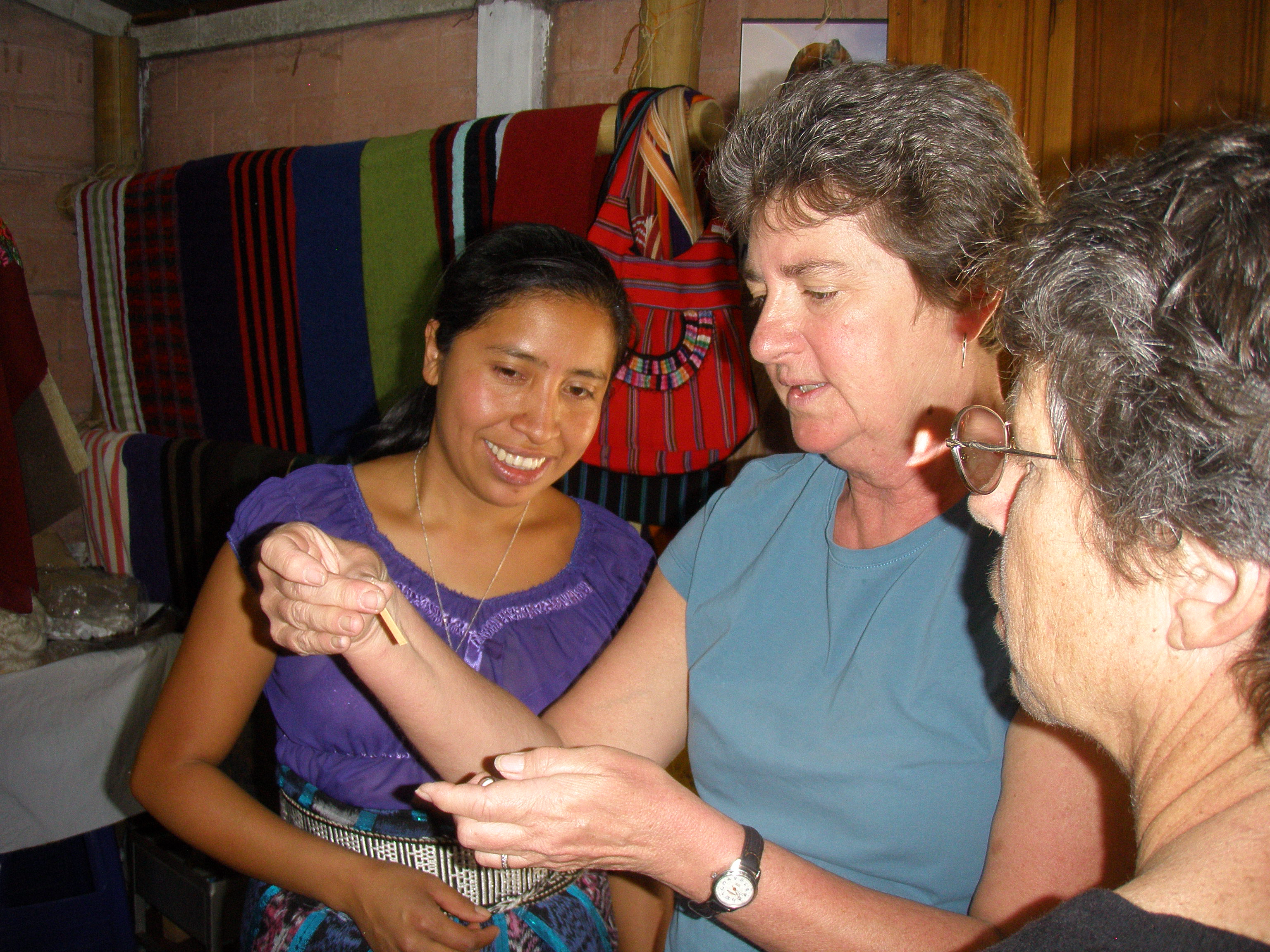
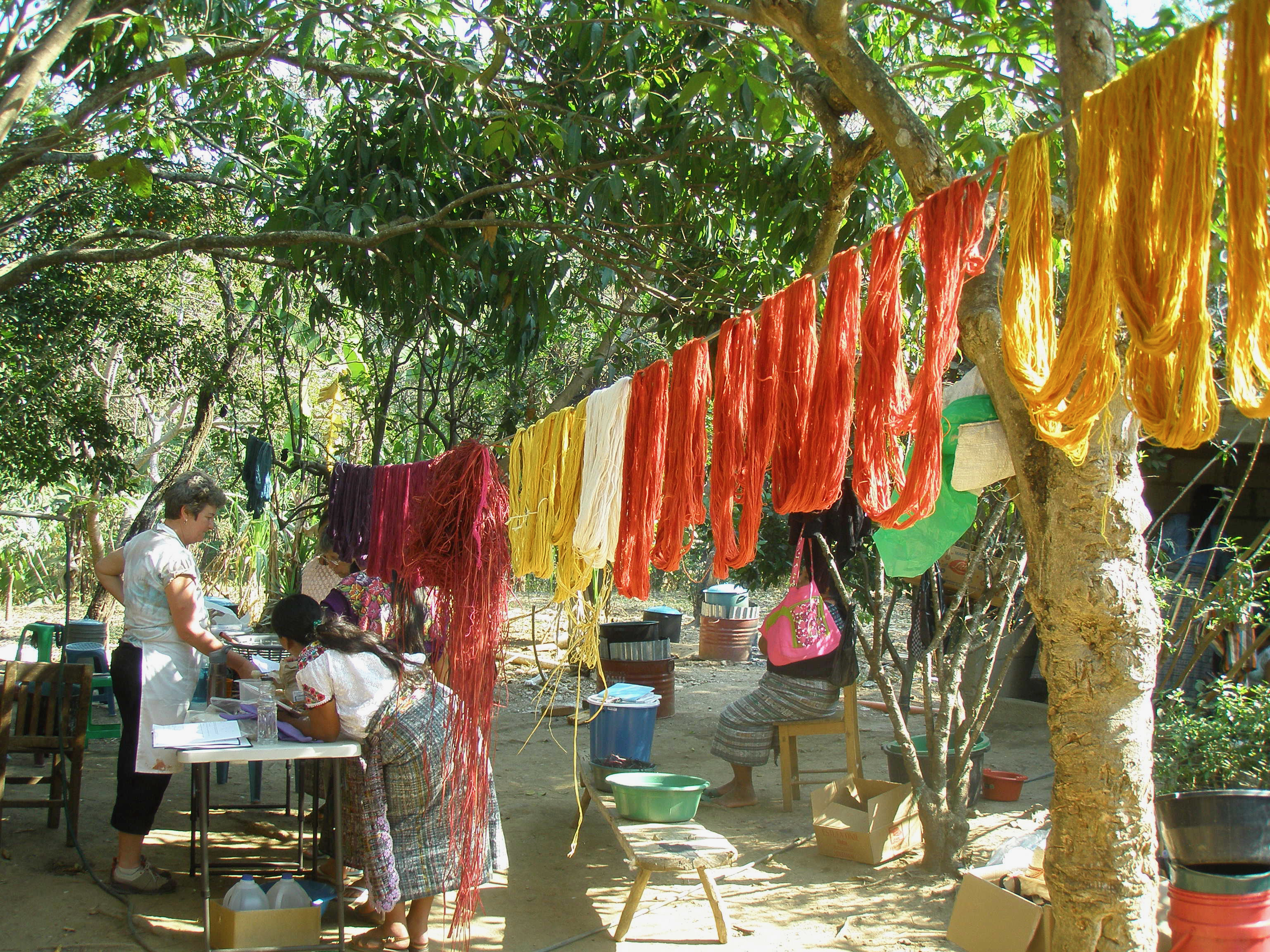
In 2013 Donna and I were invited to Guatemala to teach a natural dye workshop, in partnership with Mayan Hands. We taught cotton mordanting processes to a group of women who were skilled back-strap weavers. They were looking to diversify their own work and increase their revenue stream.  We were very conscious of demonstrating processes that were sustainable in their remote mountain location. And the colors needed to be bright! We accomplished that! 

Aways referring to objective scientific methods, Donna is demonstrating the use of pH papers. (Deborah Chandler in the foreground)

Bright colors achieved on cotton yarns using accessible plants and a simple tannin/alum soda ash mordant process.

Eventually, Donna and I both evolved in our approaches to dyeing and embraced the source of those dye extracts: the dye plants themselves. I began growing plants in my own garden but Donna had a larger vision: a community garden project that would inform, inspire, and engage. 

The Janice Ford Memorial Dye Garden was begun in 2014 at The Denver Botanic Gardens Chatfield Farms location in Littleton, Col. It was formed as a collaboration between the Botanical Gardens and the Rocky Mountain Weaver’s Guild. Under Donna’s tutelage, a community of volunteers have worked together year round: planning, researching, planting, weeding, harvesting, drying plant materials, and dyeing. This garden has brought hands-on dye experiences and education about sustainable practices to community members of all ages. It is a testament to what an individual with a vision can do. Donna was a beloved community leader. She will be dearly missed. 

In 2019, Donna and her husband, Cliff, began another dye garden with the The Corey Brown Memorial Dye Garden at the John C. Campbell Folks School in North Carolina. Donna taught classes at the Folk School many times and always cherished her time there.  At this time of year, in July, that garden is full of color, possibilities and memories.  

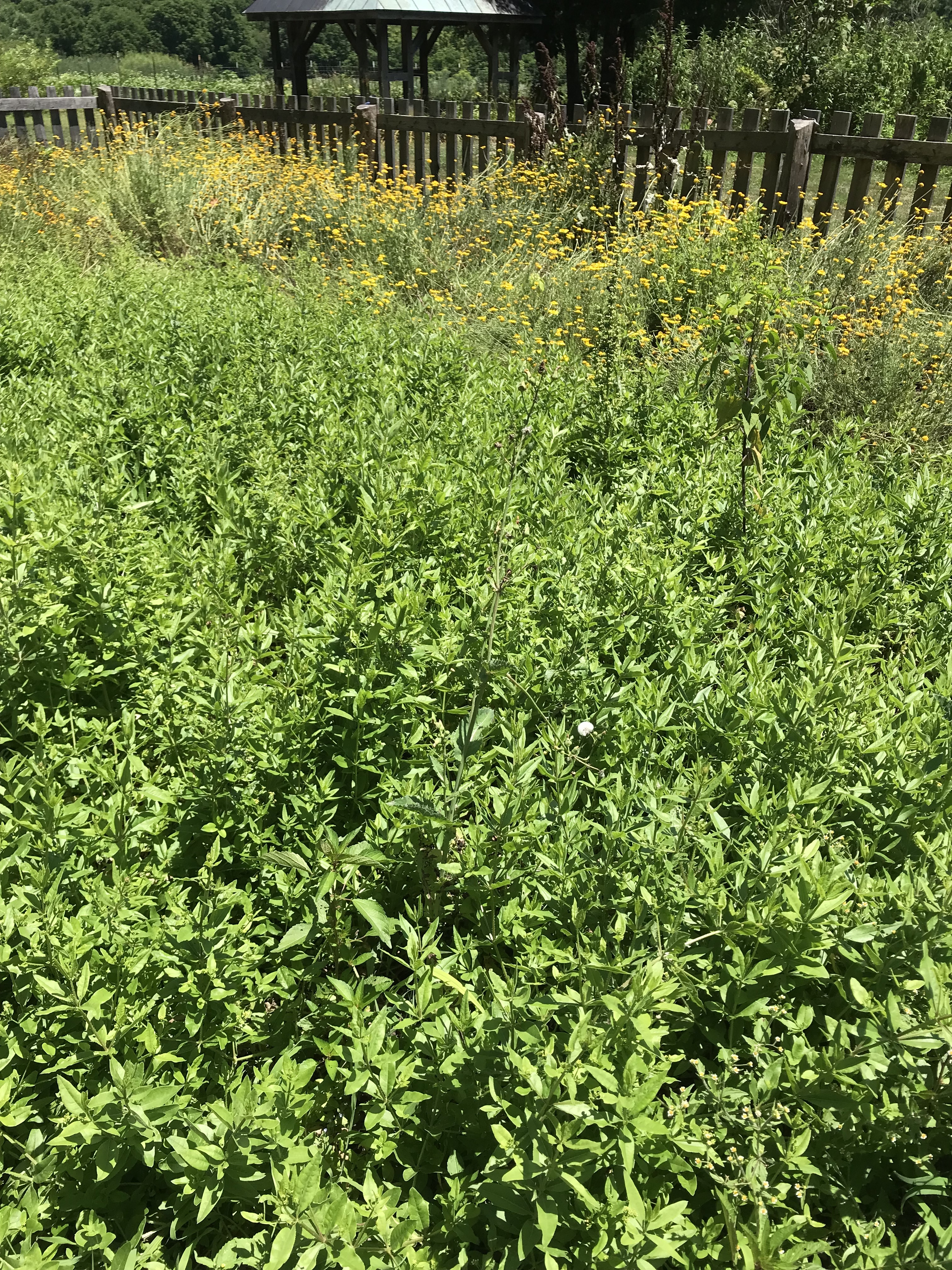
Cory Brown Memorial Dye Garden at the John C. Campbell Folk School. Madder (rubia tinctorium) and chamomile (Cota tinctoria) plants ready for harvest.

Next July (2025) It will be my privilege to teach a class at the Folk School: Growing Color: In Honor of the Legacy of Donna Brown, where we will use plants from that garden and celebrate the life and work of Donna Brown. 

Dyeing as Chemistry

I am always trying to learn more about the natural dye process.  Mostly, this is to become a better dyer, but there is also an intellectual curiosity that keeps me asking questions, testing, and observing. Joy Boutrup, my co-author of The Art and Science of Natural Dyes, is a textile chemist and engineer. She has generously explained so much to me over the years, giving me a glimpse of the logic behind all of our dyeing processes, but never overwhelming me with the technicality of the chemistry. 

Last summer, Joy and I were  teaching at Penland School of Crafts at the same time as Tim McLaughlin and Charllotte Kwon of Maiwa. It was there I learned of the chemistry class for dyers that they had been developing. In a desire to learn more and expand my ability to understand process,  I enrolled in the class, Natural Dyes: Alchemy Chemistry Craft when it was offered for the first time. The class is presented in 18 separate  modules, each a seriously “deep dive” into electrons, molecules, acids, bases, and the nature of plants that we use in our processes. Each lesson is presented in video format by Tim and Charllotte with printable notes that link directly to the video script.

To be honest, much of it was over my head, as I do NOT have a chemical background.

The class is not a practical “how-to” of dyeing, but instead, a serious look into the principles behind the process.  As the lessons progressed, I found myself making connections and the processes that I know well were explained even further. There is a reason for each of the steps we use in the dye process, whether we see them, understand them, or not. 

Several of my colleagues also took the class. Early this year, when the class was offered for a second time, several other colleagues enrolled. So, a small group of 7 serious and curious dyers decided that we would go through the class together. This would give us an opportunity to discuss, compare notes, and work through the class together.  An enrolled student has three years to access the videos but the printable notes are yours forever, making them a valuable studio reference.

Our “Study Group” members are located all across the US.  We opted to do our watching/reading separately and come together once a week via zoom to discuss a single module.

We tried this for a few weeks, but then decided that we needed a deeper focus to smaller parts of each module. Each of us now takes on the responsibility to further explore, research, and understanding one (or two) aspects of a module. This allows for more in-depth research, more focused questions, and possible dye/process testing and observing. When we complete this series of modules, I do believe that we could start all over again, and still learn more about the dye/chemical process. 

Understanding and practicing natural dye is a never ending process. Learning WHY we do things is key to being our best as dyers. 

During the first chemistry class in the fall of 2023, we received the shocking and sad news that Tim McLaughlin had passed away very suddenly. No one in the Maiwa family or in our larger community of dyers was prepared for this. It made continuing with the class difficult at that time, but now I feel that we are honoring Tim by continuing to learn from what he has created. We miss him dearly.

I am awe of the work that Tim and Charllotte put into this class – in order to make all of us better dyers. 

Maiwa is offering the dye chemistry class once again this spring…. Serious dyers should consider taking this class and I would highly recommend working with a group of colleagues in the process. 

Link to Maiwa Teachable: Natural Dyes: Alchemy Chemistry Craft

Tim and Charllotte taught an ink making class at Penland School of Crafts in the summer 2023. At the same time, Joy and I were teaching a weaving and natural dye class together. We had so much to discuss after long days in the studios! This is where I first learned of Maiwa’s upcoming science class for dyers. 

Using My Studio Formulas Set of Cards

It’s been a busy summer, but it’s time to follow up on my earlier post about the recently released Studio Formulas Set dye recipe cards. I received my own set of dye and recipe cards from Schiffer just before Joy Boutrup arrived from Denmark for a class we taught together at Penland School of Crafts in June. Teaching together was a great opportunity to receive some feedback about the set. 

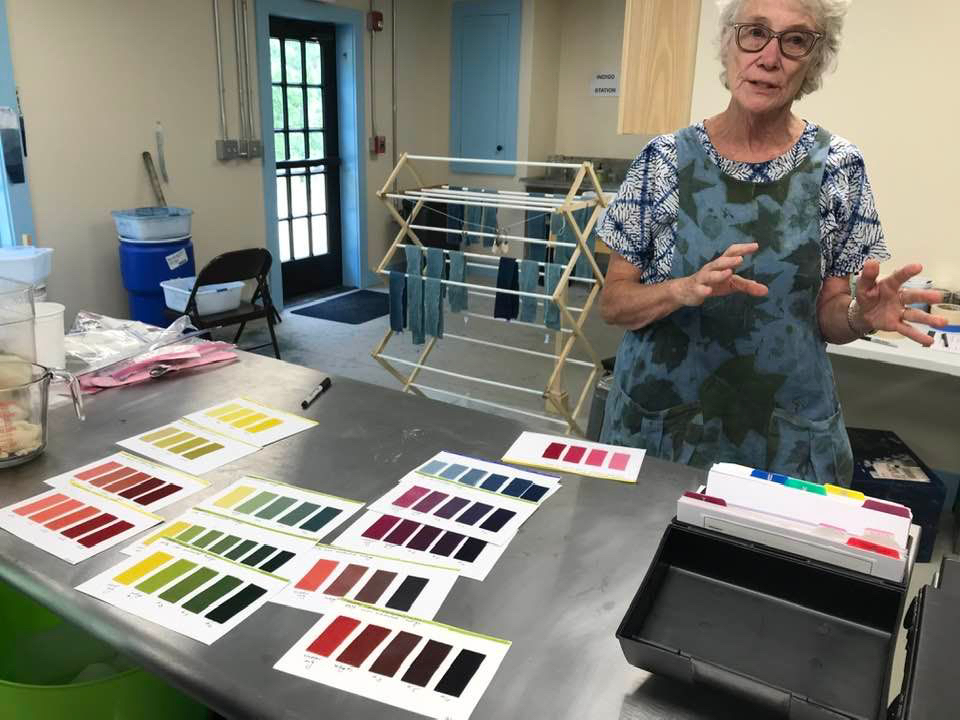
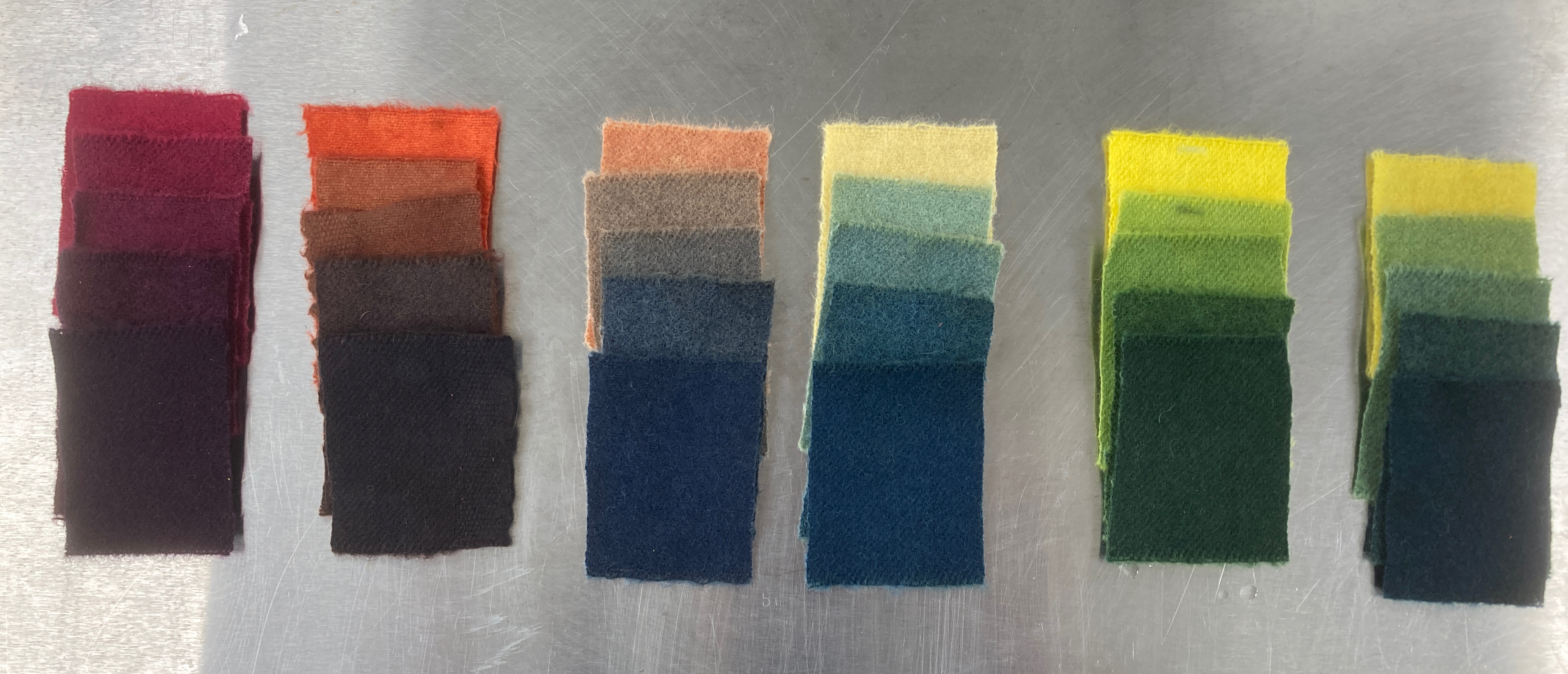
Every recipe from the book is represented by a single card. Additonal colored cards illustrate individual dyes and color mixing. We opted to use wool as “the fiber of choice” when creating the initial printed cards as it such a commonly used fiber. The dye cards in the collection document the most important dyes: indigo, madder, cochineal, and weld along with a couple other tannin based dyes.

The dye color cards are beautiful and just as I had imagined they would be. Schiffer did a superb job of reproducing my dyed wool samples in print. Color matching is perfect! I was told that it took several tries to get it just right. I can appreciate that kind of care and accuracy – the same care and precision that I put into my dyeing.  Although the cards are durably coated, it is easy to write on them with a ball point pen or ‘Sharpie” and there is room for personalized notes on the back of each card.

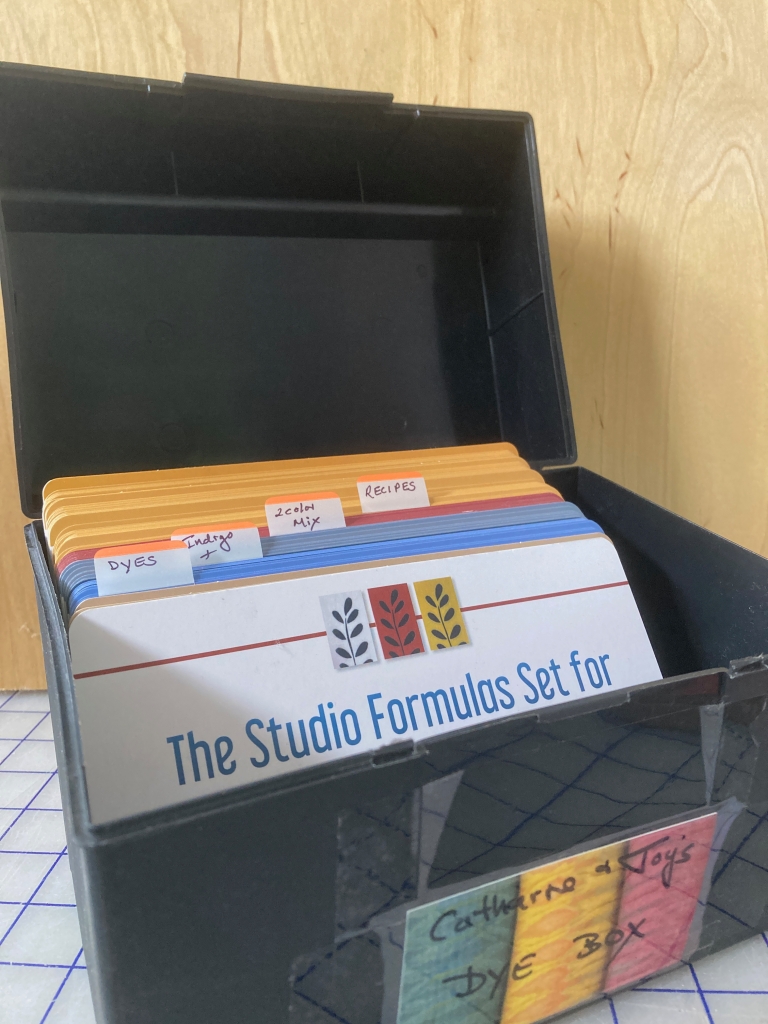
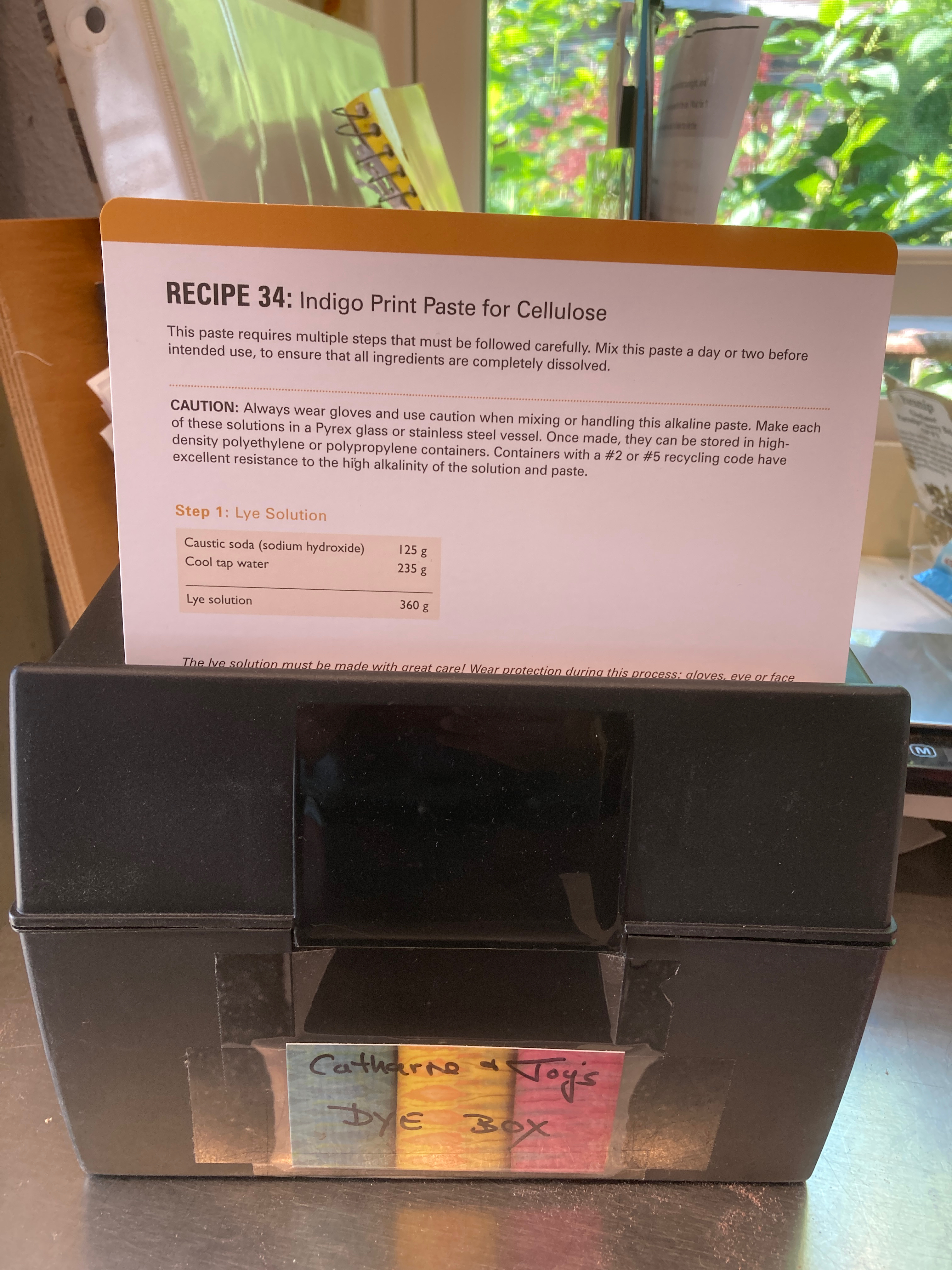
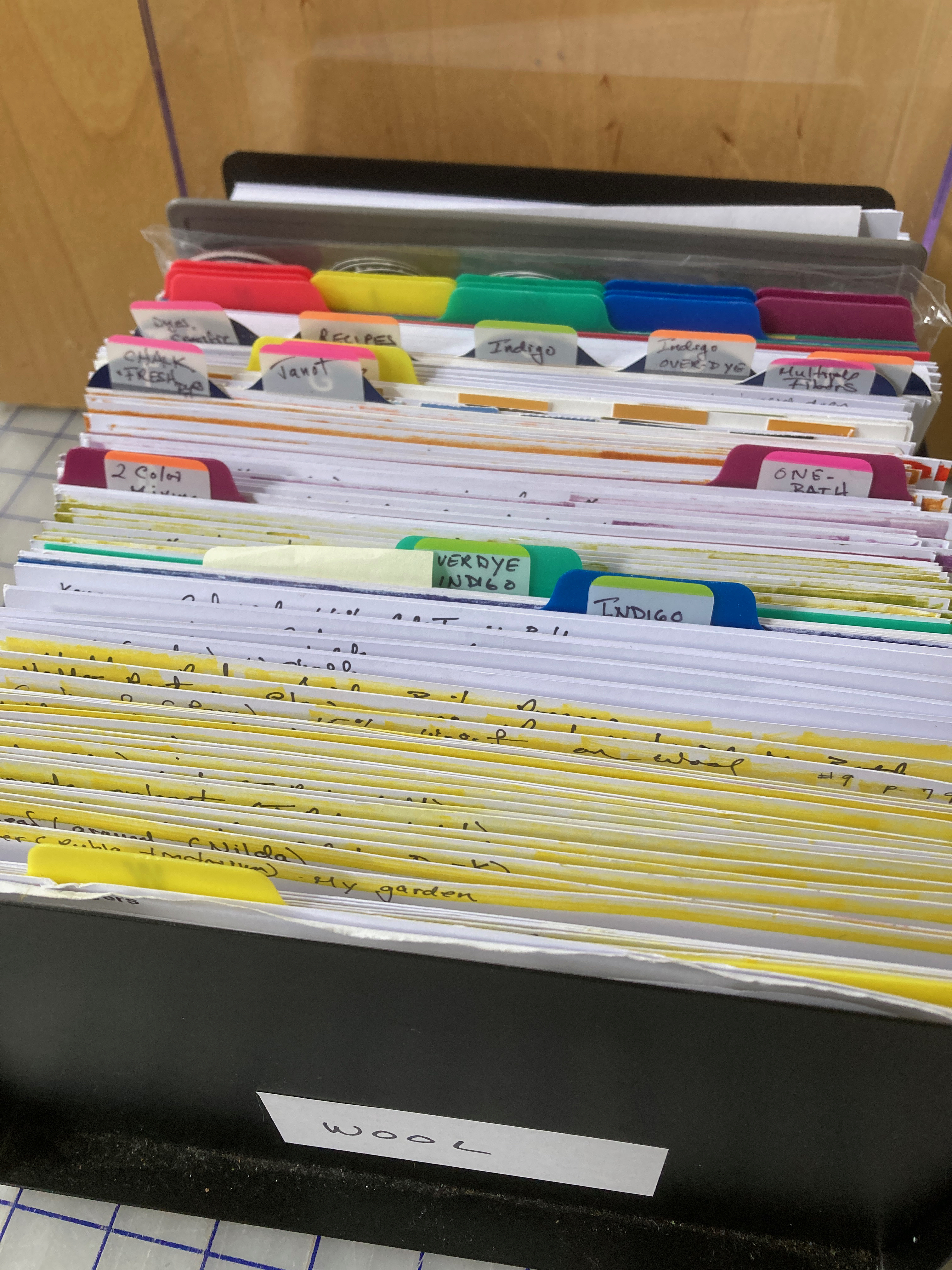
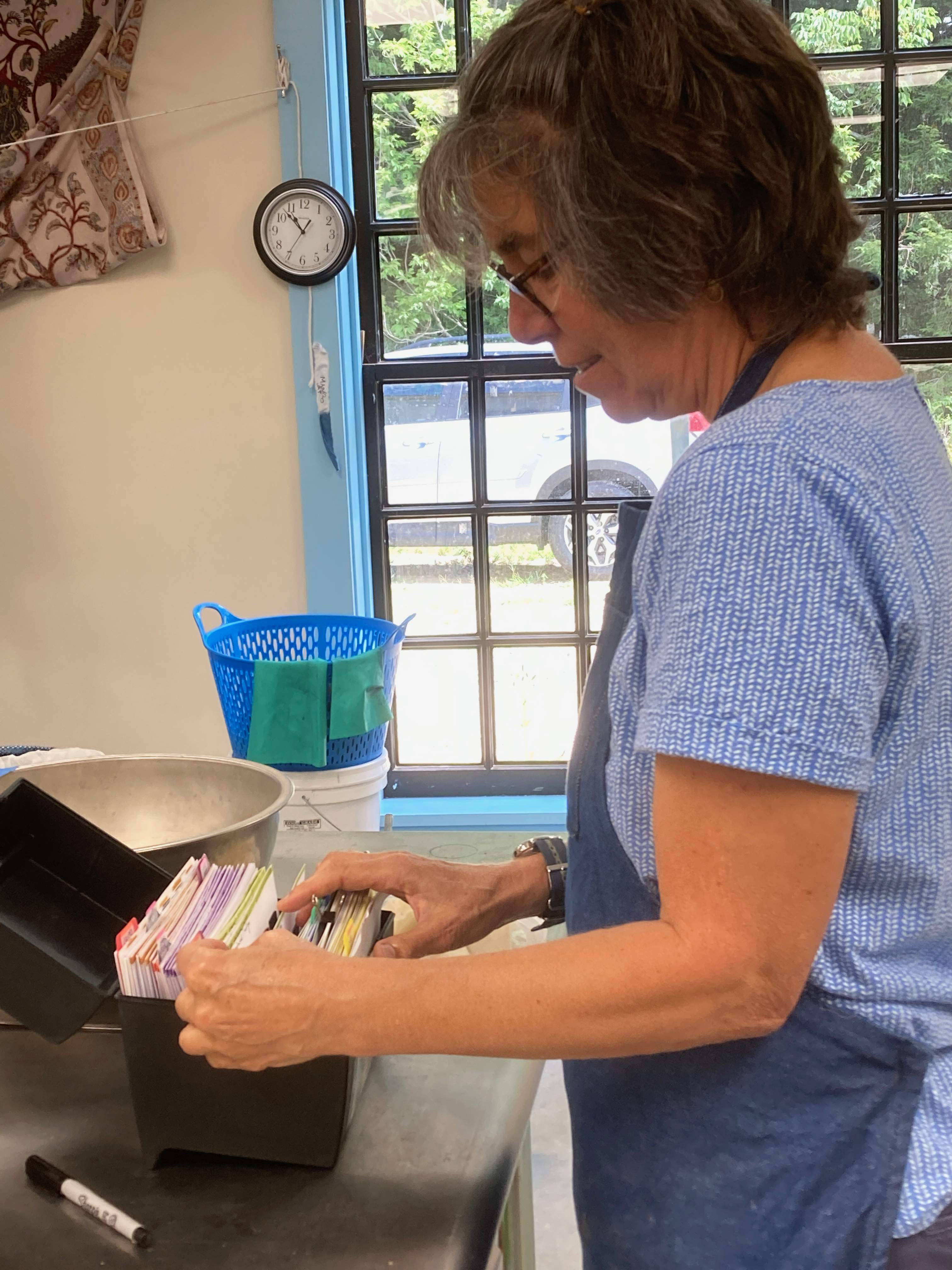
The cards come in a box that is custom made for the set.  It even has a magnetic clasp to keep it closed. BUT for me to get the most use out of the cards,  I removed the cards from the original box and placed them into a much larger file box. This allows plenty of room for flipping through the various recipe cards, adding tabs for easy reference, AND for adding my own customized cards to the collection. You might want to do the same.

Studio Formulas Set moved into a plastic file box, purchased for less than $10, with lots of room to expand. 

Having individually printed recipe cards is proving to be very convenient in my own dye studio. Instead of dripping dye all over my book, I now can pull out the required card and work from that. And, YES, I do use the recipes from the book and I don’t have every one of them memorized!

The use of cards containing easily referenced materials and samples has changed the way I work over the last several years. As you know, I am seemingly always testing dyes and process. Once I complete an initial set of tests (recorded in detail with samples in my lab notebook), I then mount the final samples on a card, filed for easy access and reference. 

Here is a great example of how useful this process can be: 

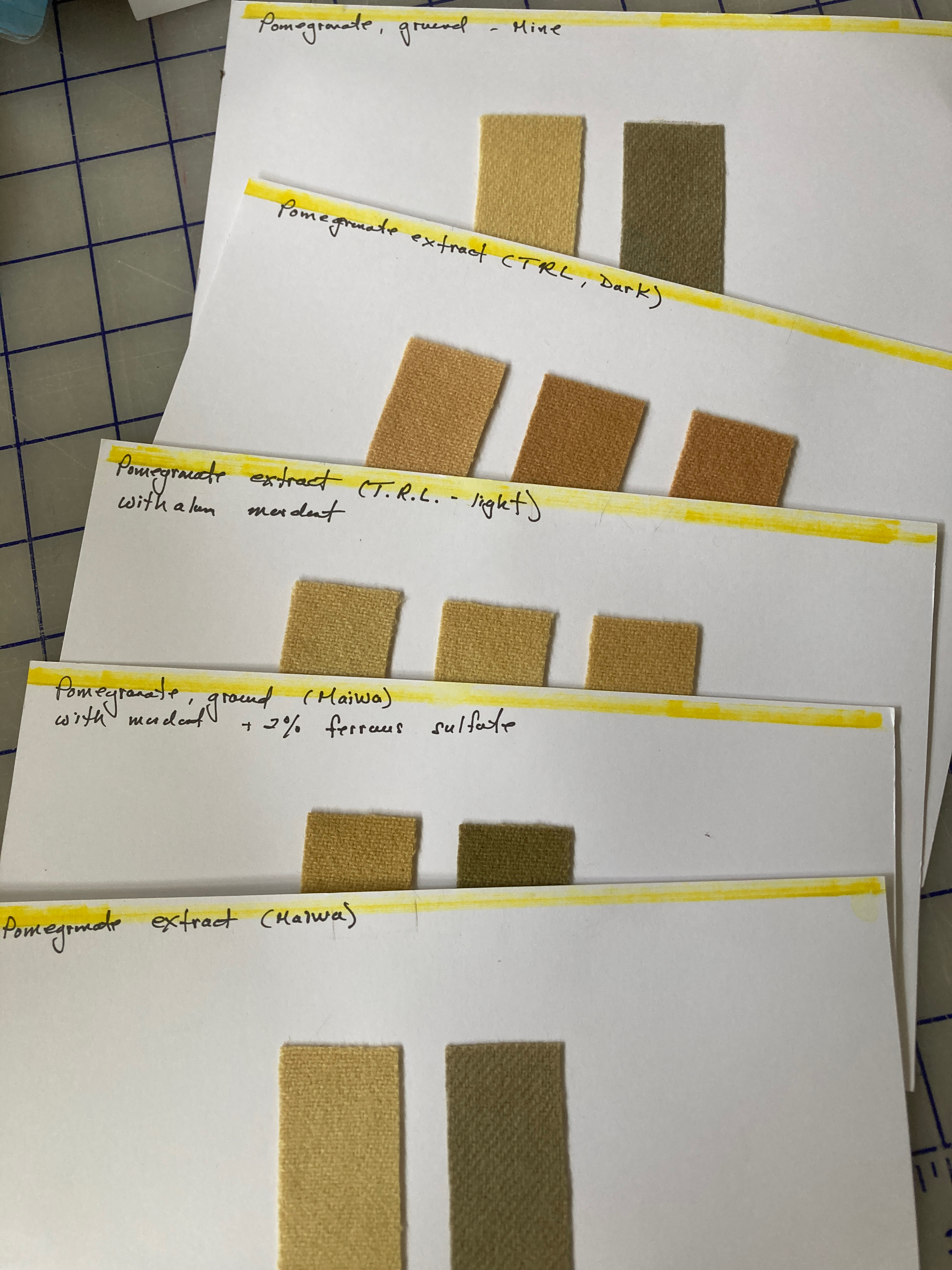
I recently I went to my dye shelf to look for pomegranate rind for a specific dye project. I found that I had 3 different extracts and two jars of ground pomegranate rind (including one that I had ground myself). Were they different? the same? After making samples of all the various pomegranate dyes (on both cellulose and wool)  I can now objectively see the subtle differences between each of these dye sources and make a better informed decision.

Having of a record on hand of the dyes in the studio is an essential discipline that takes the guess work out of the dyeing process. Whenever I obtain a new dyestuff (purchased or grown myself) my goal is to complete a test dye on the appropriate textile material. Sometimes that means dyeing several samples as I explore various depths of shade on different fibers. 

Documentation of the various pomegranate dyes on wool.

If one chooses to add actual cloth/fiber samples to the box, available space fills quickly. Thus, a larger, file box quickly becomes a necessity. Currently I have one box earmarked for documenting protein fibers and am building another that is dedicated to cellulose.

My personal (and expanding) box of dye samples on wool

Careful measurement of the dye used per weight of textile can result in greater control over the palette of color and discourages wasting of  dye. It has the potential of bringing natural dye to a level beyond experiment and discovery: controlled color. 

When Joy and I taught together at Penland in June, we used the cards throughout the session as a quick reference for dyeing in the class. By seeing (and understanding) the function of color mixing with natural  dyes, students were better able to predict the colors that they would ultimately achieve. I am sure that you will also find them a useful tool in your personal studio practice. 

Student experiments in weaving and dyeing at “Show and Tell” on the last day of our class at Penland.

Dye Cards in a Box!

It has been a while since I have posted here, but I assure you that I am staying busy, still learning, and have been developing some new projects and ways of working. 

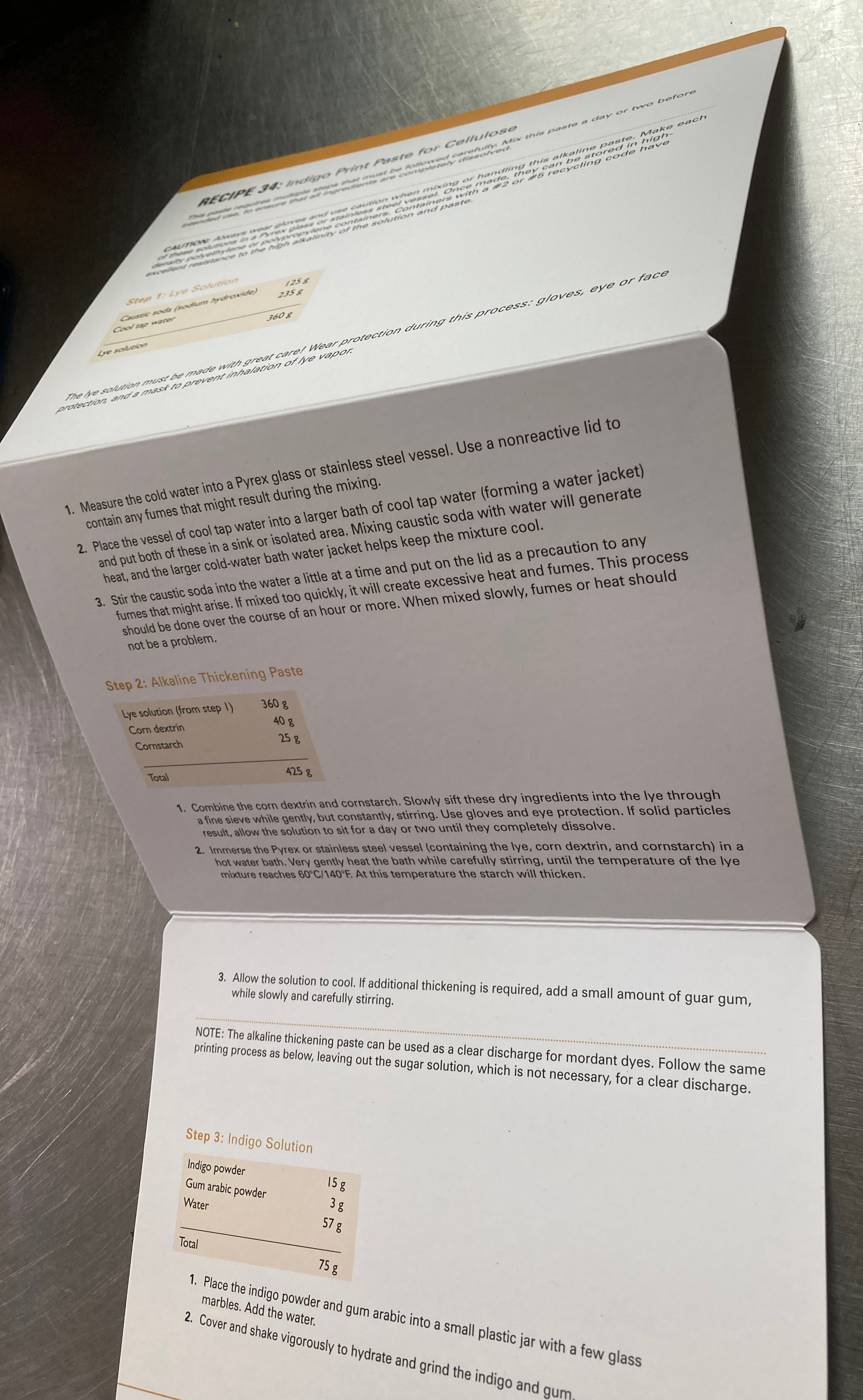
Last year, Schiffer Publishing Co. approached Joy and me about making the the recipes that are included in The Art and Science of Natural Dyes more accessible to the user. A we thought about how to accomplish this, I was reminded that in my household kitchen, I use the same recipes over and over again and used a recipe box and cards regularly. Maybe this would be a good idea for the dye kitchen as well. 

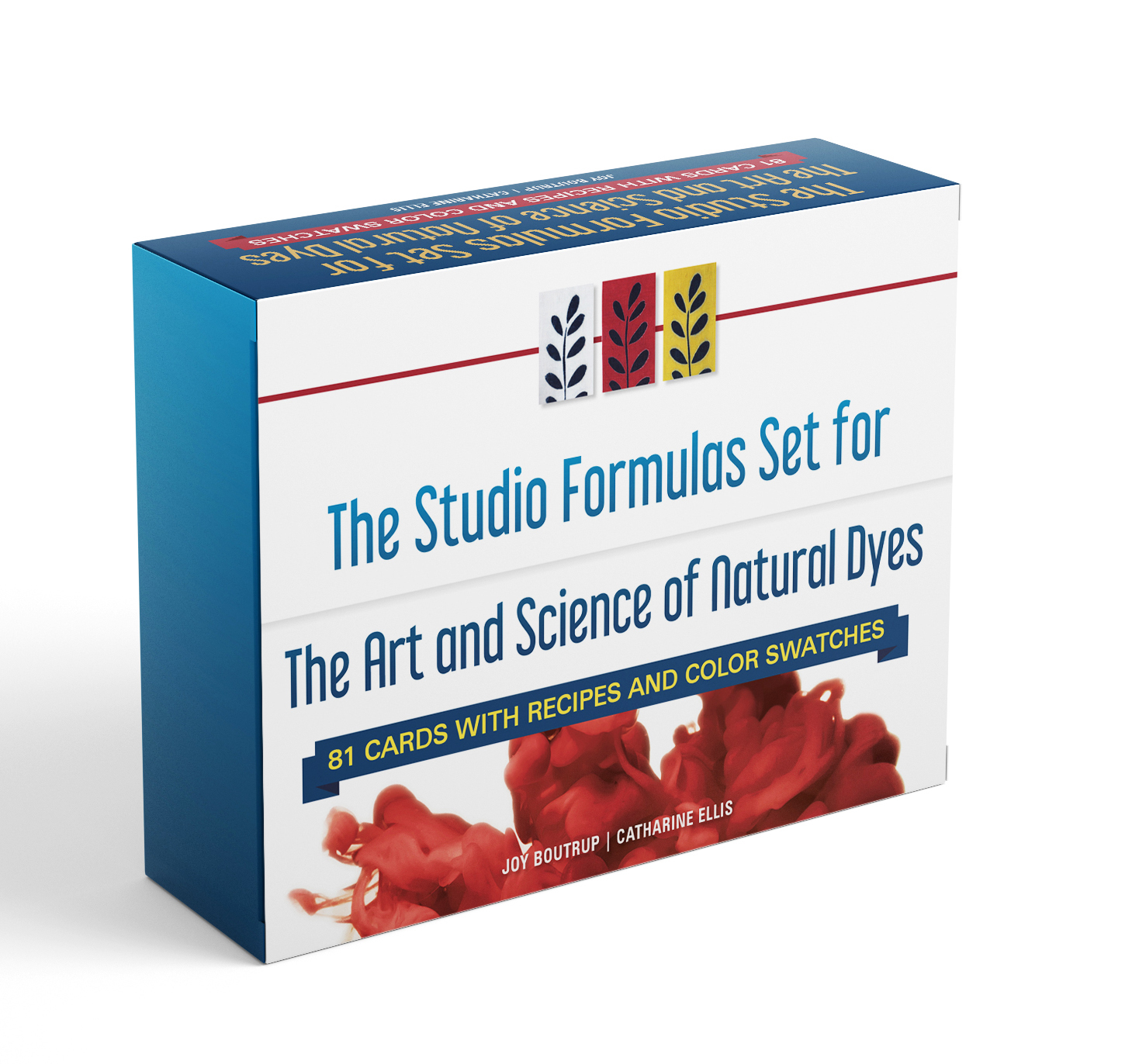
This invitation to increase the usefulness of the recipes seemed like a perfect opportunity to share the dye color work that I had been developing for many months in the studio and has finally resulted in The Studio Formulas Set for The Art and Science of Natural Dyes: 84 Cards with Recipes and Color Swatches. It is scheduled to be released by the end of June.

In 2020 I posted about Dominique Cardon’s newly published Workbook, Antoine Janot’s Colours. This little book has been a great inspiration to me. It was surprising and enlightening to find that Janot’s full palette of  55 colors was made with only 4 dyes: indigo, madder, cochineal, and weld. That bit of information has mostly changed the way I am now thinking about dyeing and color. 

When I first began using natural dyes I thought it was important to have/use/stock every dyestuff and dye extract that I could get my hands on; I didn’t want to miss any opportunity! The large number of dyes on the shelf always led to confusion when I got ready to dye. At some point,  I finally did lightfast tests on all the dyes on my shelf , making fastness to light a criteria for selection. Ultimately, I ended up with a much smaller number of dyes I was willing to use. Those are the dyes that we include in The Art and Science of Natural Dyes

The documentation in Janot’s workbook helped me to take color and color mixing to the next step, which was truly learning to master my dye colors. 

The first thing that I felt I needed to do was learn to control the various shades of indigo. Janot used 8 different shades of blue, each with its own name. I had to learn how to consistently achieve different shades with my fermentation indigo vats. My goal was 6 different values.  Dyeing consistent blues is like capturing a moment in time, as the vats change over their life span. My first fermentation vat was over 2 years old before it finally gave me the pale blue that I needed for some of the color mixes. 

The 8 shades of indigo blue used by Janot

The 6 values of indigo blue chosen for use on the cards and subsequent color mixing

So, I began dyeing a series of predictable, repeatable color using indigo and a handful of other dyes using various depths of shade.


Various shades of yellow from weld

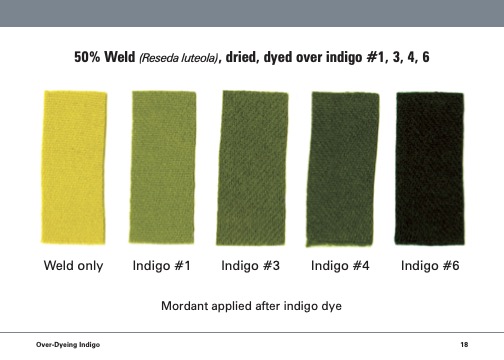
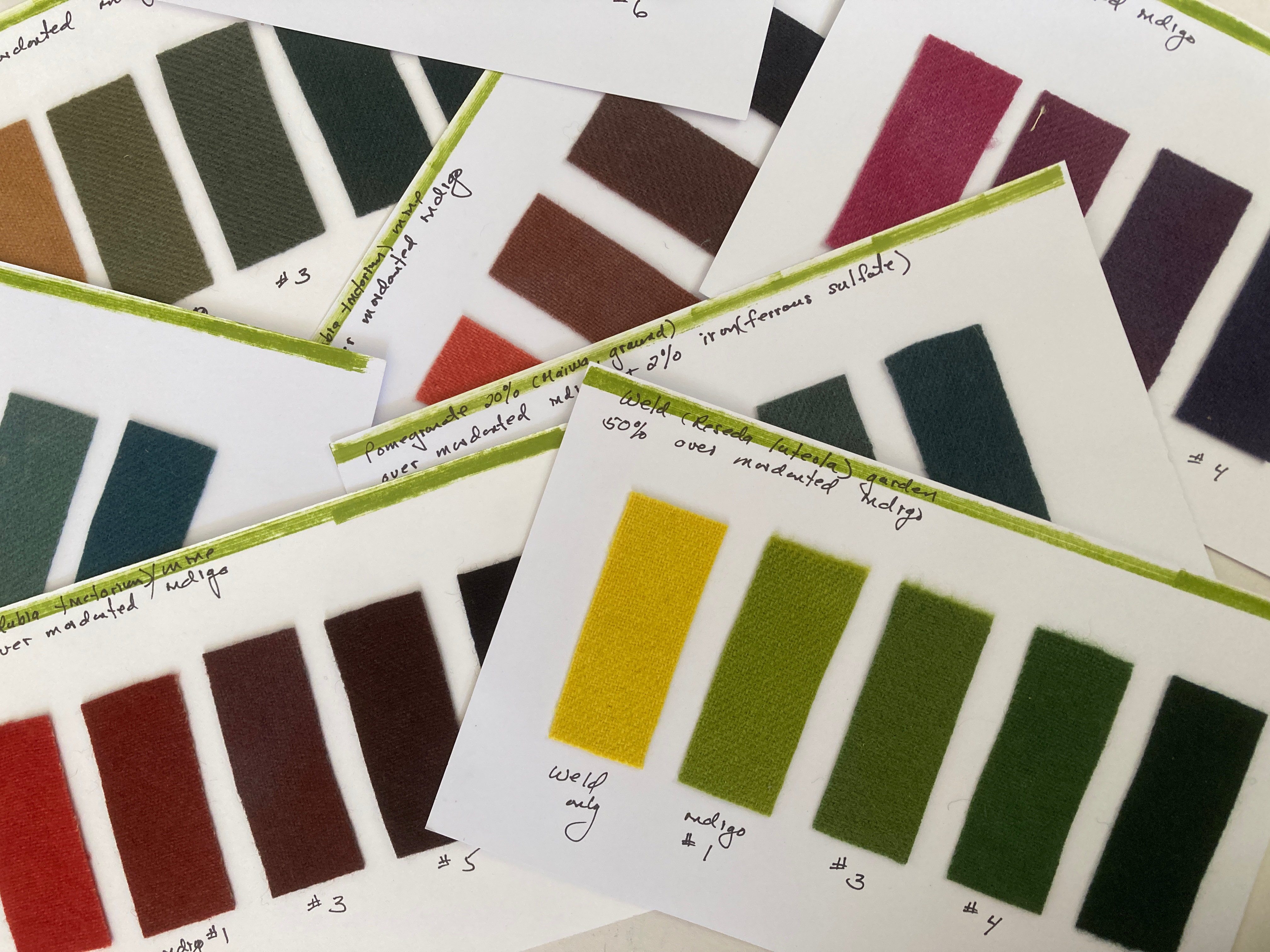
Various shades of indigo + a strong weld result in one set of green colors

The same shades of indigo with a weak yellow results in a different set of greens.

My lab notebooks are fabulous repositories of all of my testing (I am now on volume #10) but they are not always the most convenient place to go for a quick color reference. So, I began putting my color mixes and repeatable dye colors on cards – the  kind that you can file in a box for easy reference. And then I began USING that reference. It was at my fingertips and ready to look at whenever needed

My own first set of studio dye cards

I realized that this was also a perfect opportunity to combine the recipes from The Art and Science of Natural Dyes with a set of color mix cards, that will give the dyer some basic color mixing information. 

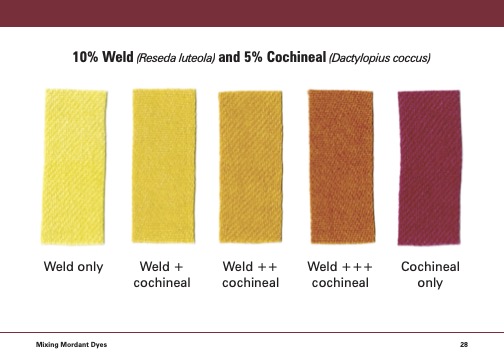
The dyes included in the color mix box are: indigo, cochineal madder, weld (and a little bit of the tannin dyes: pomegranate rind and cutch )

I have used my “box of colors” in teaching over the last months. It is rewarding to see students refer to the cards, make their own color choices, and their ability to achieve very similar results. 

To follow soon: ideas of how to best use your own set of “Box of Cards” in your own studio dye practice.