The Surface Design Association News Blog just published a piece I wrote on dyeing. Here is the link. The transition from synthetic to natural dyes and ingredients took some time, a lot of thought, and some real determination. I have reached the point of no return…..
Sodium hydrosulfite or thioruea dioxide was both the reduction agent for indigo/vat dyes and a discharge agent for fiber reactive dyes. Now I use plants and sugars to reduce the indigo vat and citric acid or lemon juice to discharge mordants.
Yoshiko I. Wada wrote the follow comment in response to the latest blog post. She was a very important part of this experience and I thought her words, with additional insight, deserved their own spot and thus the following:
“This is a friend of Catharine’s, Yoshiko I. Wada from slowfiberstudios.com and naturaldyeworkshop.com, where we re-blog Catharine’s blog in our Dye Nerds’ Blog. Since the person in charge of our blog is on vacation until the end January and I was g Japanese to English translator for Dr. Yamazaki I am jumping in for some additional thoughts and information.
The Jinze Art Centre in Shanghai and Slow Fiber Studios in Berkely, CA organized the workshops with Japanese masters working with my colleague Edith Cheung who is in charge of the textile program there.
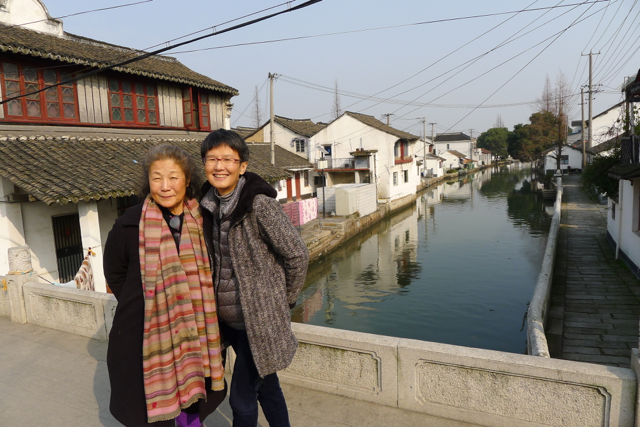
Yoshiko Wada and Edith Cheung in Jinze Town.
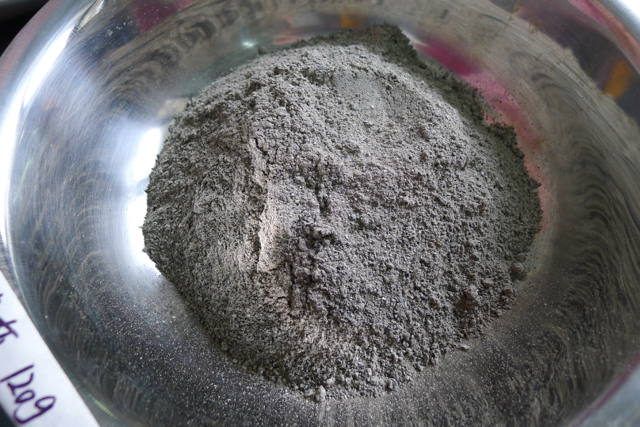
RE: Camellia ash (椿灰汁) since the Asuka Period (538 to 710 ) and Nara Period (AD 710 to 794) documents recorded that the Japanese dyers used the liquid strained from the camellia ash as a vehicle to shift pH and at the same time to access its alum as a mordant. Camellia is a plant which is called bio-accumulator of aluminum similar to symplocos, lycopodium and miconia. Those plants have been used as mordants in Southeast Asia, northern Europe, and Mexico respectively. The anthology of poems Man’yōshū 万葉集 literally means “Collection of Ten Thousand Leaves” contains many poems associating with purple colors (murasaki) and gromwell roots (shikon) and madder as well as camellia ash. The collection contains poems ranging from AD 347 (poems #85–89) through 759 (#4516), the bulk of them representing the period after AD 600.
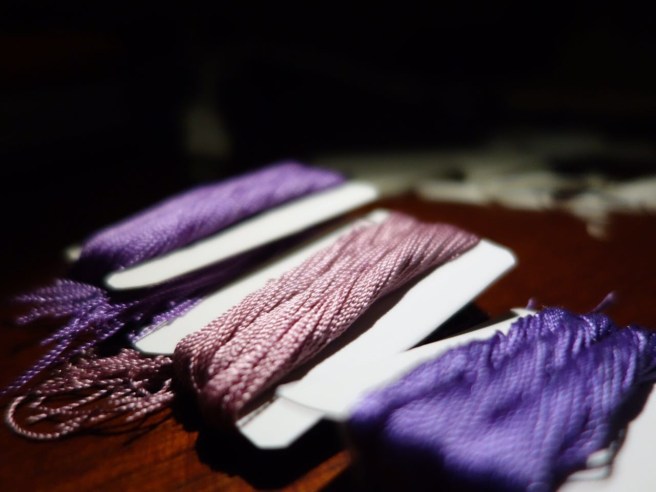
Gromwell on silk
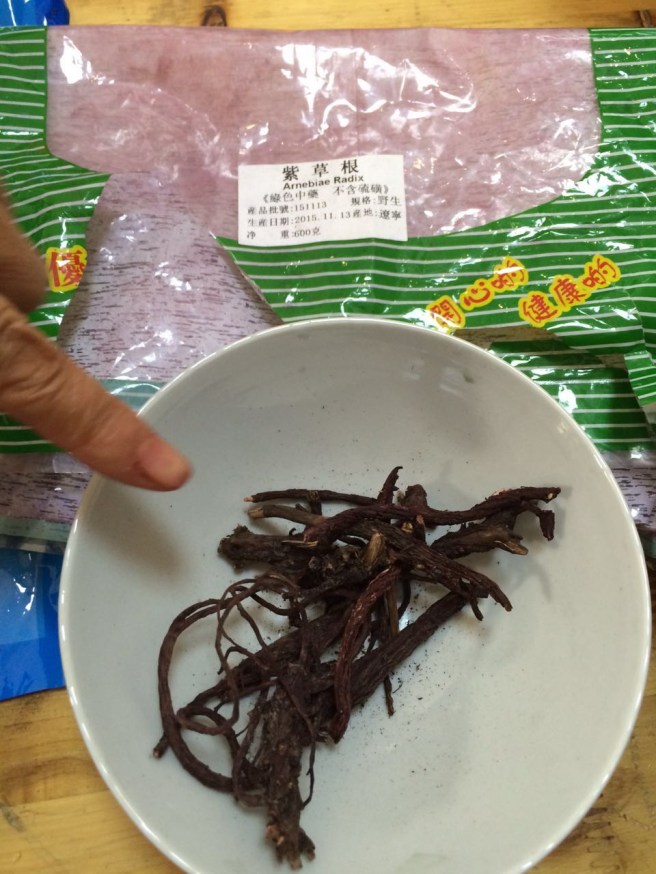
Catharine: At the bottom is the love poem by Princess Nukata I told you about. And it starts with madder (akane) as a pillow word but scene is the gromewll field (known to belong to Tenchi Emperor). Murasaki is purple and the plant was a precious medicinal herbs. From the poem, the guarded field may have hosted wild gromwell plants like the Super Gromwell Roots that Edith found in Hong Kong where herbalist told her “only the very best is found in Hong Kong.”
Purple Gromwell roots (Arnebiae radix)
The wild purple roots were so strange looking compared to the ones imported from China that Dr. Yamazaki uses in Japan that it gave him such worries during the class. He thought after making the students knead the soaked roots for 2 hours on their knees on the floor, only grey pale purple is achieved.
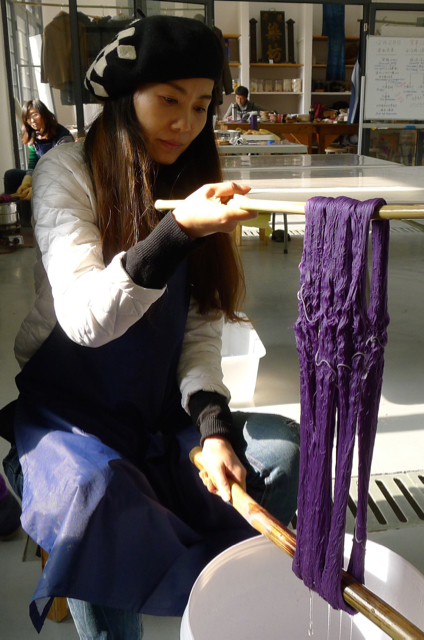
On the contrary, we achieved the most beautiful purple even with limited time we had to process it all. Did he mention that in his studio, he kneads the roots a few times in the morning and some more in the afternoon to get maximum colorants from the plants? And he repeats dyeing, middle mordanting, and dyeing, many times in a few days to get saturated deep purple? He did say the purple dye extracted in this way has much more complexity and depth than the easy extraction with alcohol.
Yoshiko I. Wada
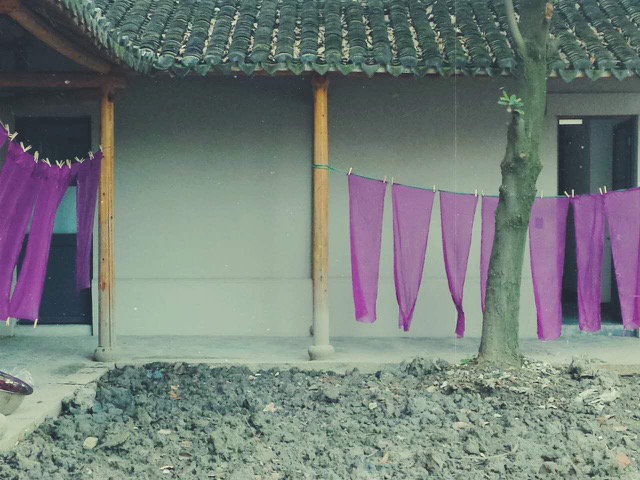
Gromwell on silk with extraction by kneading and camellia ash mordant
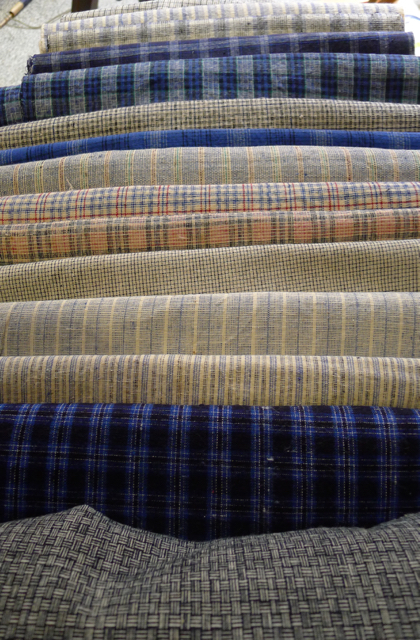
I just returned from several weeks in China, where I did an artist residency at the Jinze Art Center near Shanghai. The residency was focused on weaving and the study of Chinese local “tubu” cloth from the 1950’s and 60’s.
Cotton tubu fabrics
I also participated in a natural dye workshop with Japanese dye master, Dr. Kazuki Yamazaki. Dr. Yamasaki is a 3rd generation natural dyer and his family has specialized in the traditional dye processes, which they have meticulously researched from the Japanese Heian Dynasty (about a thousand years ago). He is a well-respected practitioner, author and teacher.
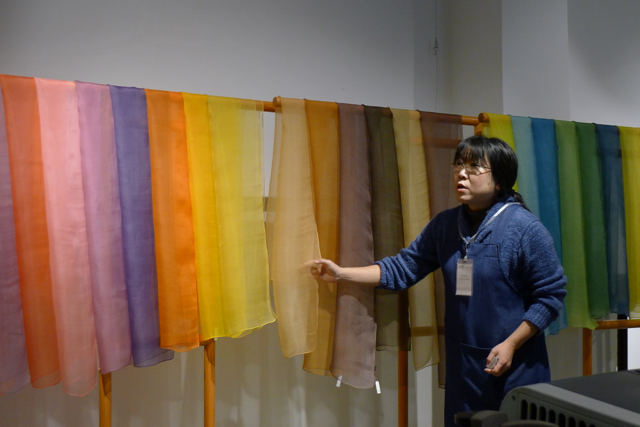
Dr. Tomoko Torimaru with silks dyed by Dr. Yamazaki
Each day we explored a different red dye on silk yarns and fabrics: Sappanwood (Caesalpinia sappan), Madder (Rubia Cordifolia), Lac (Laccifer lacca), Safflower (Carthamus tinctorius), and Purple Root/Gromwell (Lithospermum purpurocaeruleum). These are all special colors that would have been used by nobility (the commoners used mostly indigo and a lot of mousy browns). All of the dyestuffs we used were locally sourced in China.
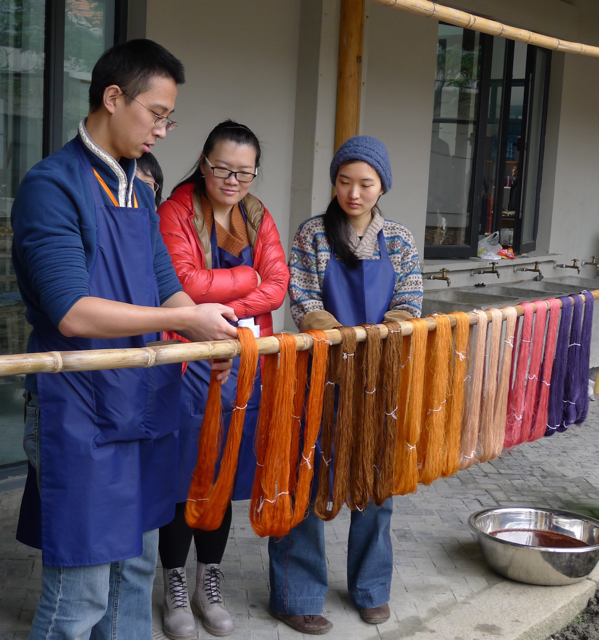
Silk yarns dyed with Sappan wood and Madder
Although our procedures every day were similar, each dye required special treatment. Dr. Yamazaki has a deep knowledge of botany and chemistry of the dye process so we learned “why” right along with the “how”. It’s rare to find this approach in the dye world. For instance, the color is drawn out of each plant differently and by tweaking pH the hues can be made to shift dramatically. I very much appreciated his willingness to explain each step clearly.
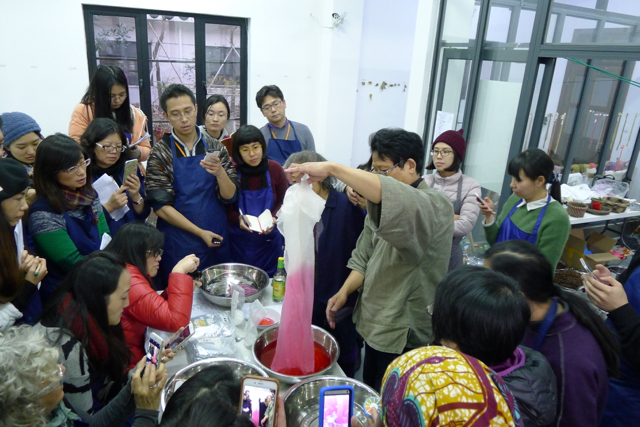
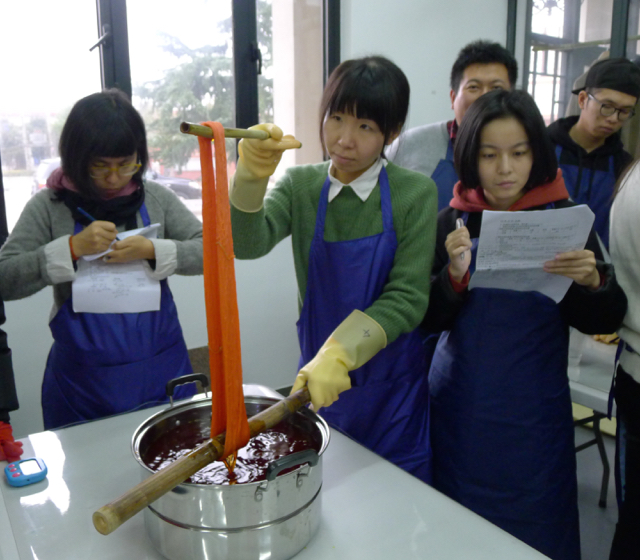
Dr. Yamazaki demonstrating one of the steps of safflower dyeingCamellia ash used as mordant and pH adjustor
Dyeing originated in China and spread to Japan many years ago but without the continued use of dye plants in Chinese medicine, there would be no dye industry to speak of in Japan. Most of the plants we used have medicinal properties in Chinese medicine. There was a young traditional Chinese doctor in the class who wanted to learn about the plants as a source of color, although she uses them regularly in her medical practice.
Silk dyed with lac
Our class comprised of
1 Japanese teacher
5 assistants
2 translators (Japanese to Chinese, Japanese to English)
3 Americans
20 Chinese
So, as you can imagine it was quite a noisy classroom! Everything was written in Chinese characters, Japanese characters, and English. The Chinese and Japanese characters are similar but not always interpreted the same way.
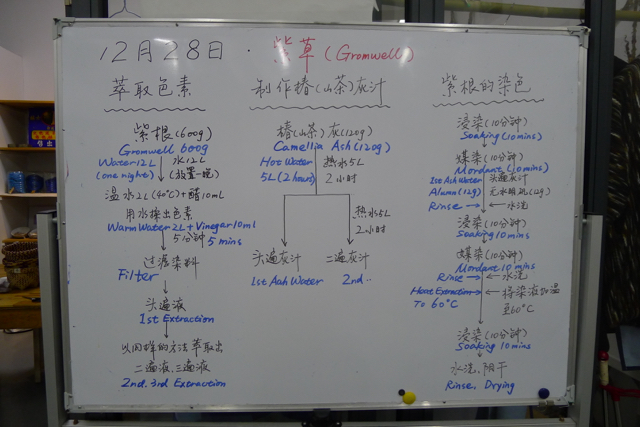
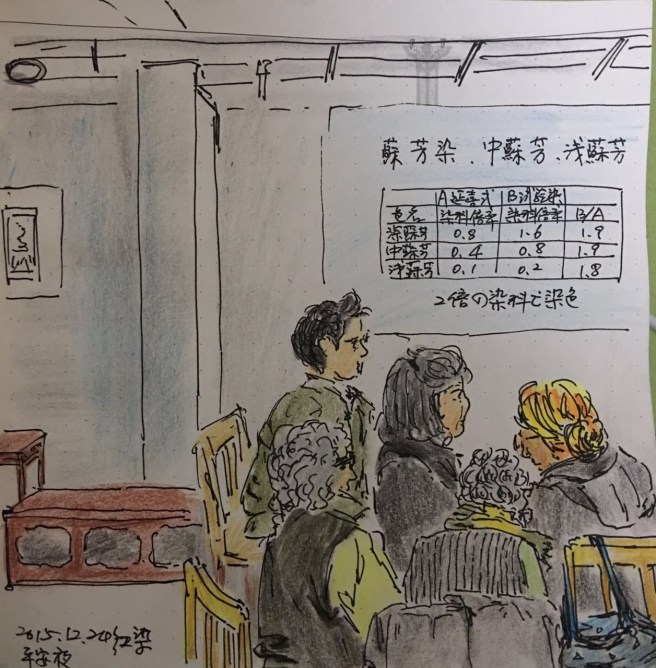
The daily instruction boardJapanese to English translation “huddle”. Sketch by workshop participant, Wang Dan
The 20 Chinese students were all young – in their 30’s or so. They were bright, inquisitive, and interested in their own traditions and history. It was a rich mixture of people and process.
Perfecting the process of dyeing silk skeins
In the west we typically use a European pre-mordant approach to dyeing: mordant first, then dye. But the Japanese approach to dyeing silks is quite different. The mordant comes in the middle: dye first, then mordant, and back to dye. The mordant and dye steps can be repeated many times to build up a greater depth of color. I have known about this approach for a long time but it never quite made sense to my western sensibility. I now see some genuine advantages to dyeing silks in this way and I’m anxious to explore this approach in my own studio dyeing.
There is always more to learn about plants, dyeing, chemistry, and process. Life and learning continues…
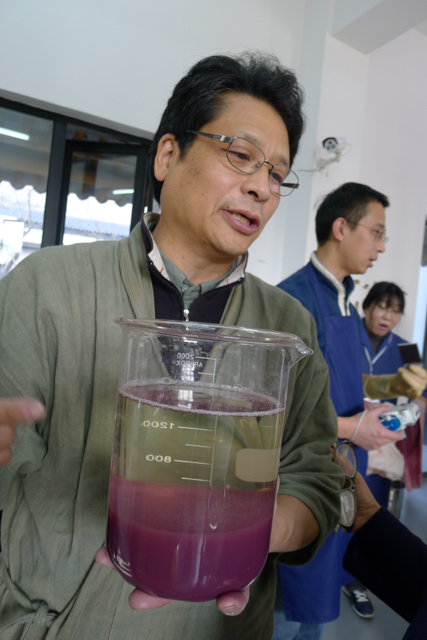
Dr. Yamazaki with lake made from lac dye bath
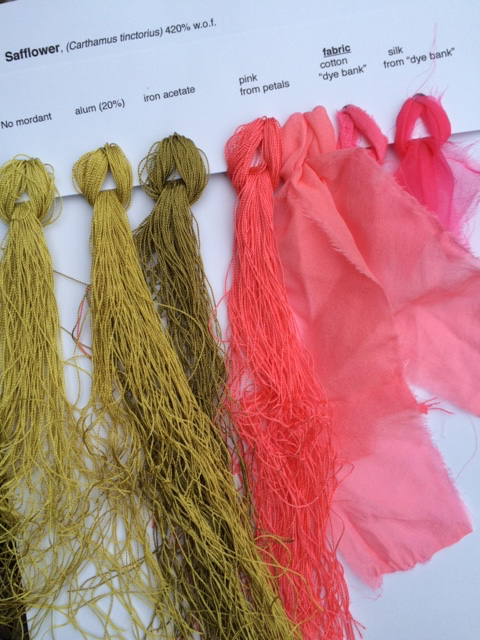
Colors obtained from safflower petalsSafflower pink on cotton, ready to use for silk dyeing
I just returned from a remarkable trip to Peru with a group from the Center for Textile Research (CTR) in Copenhagen, Denmark. It’s worth looking at their website. This center pursues the study of textiles from an interdisciplinary perspective that includes geology, history, archaeology, conservation, language and craftsmanship. There are parallels between the bog mummies preserved in Denmark and those preserved in the desert of Peru. It was an honor to travel and observe with this group of people. We saw a small amount of natural dyeing but there were other elements, even more compelling, during this trip so I’d like to share some of that.
What is it that compels a craftsperson to excellence? To go beyond what is necessary and to work in cooperation with others?
Early in my own weaving career I learned 4 selvedge weaving from Navajo rug weavers. This experience has stayed with me and done more to sensitize my appreciation and understanding of the textiles we saw in Peru than any other preparation I could have done.
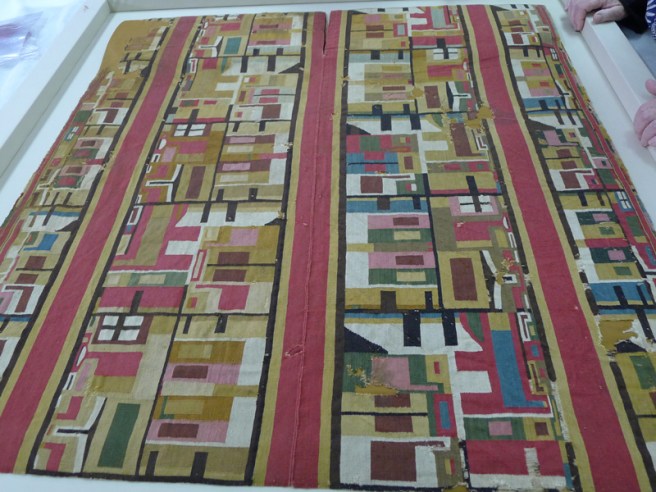
Wari tapestry, Museo de Arqueologia y Antropologia, Universidad de San Marcos
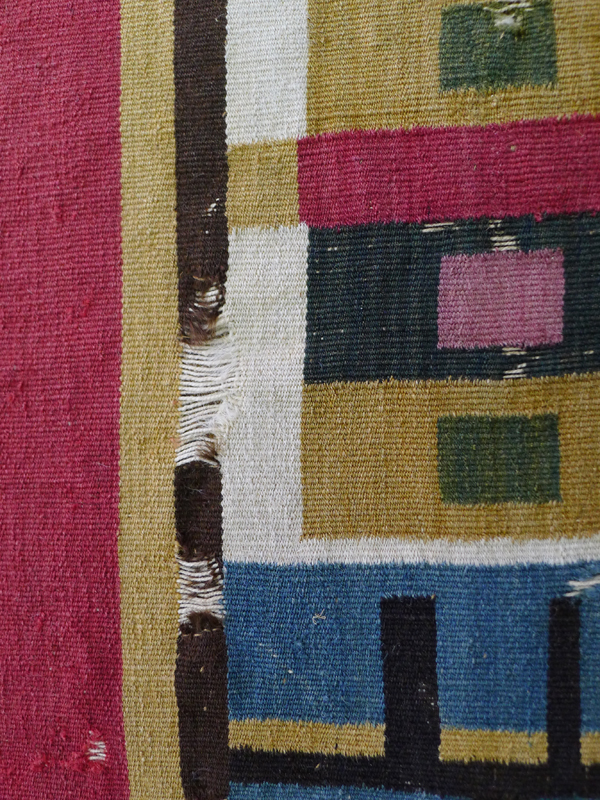
The Wari (Huari) tapestry tunic that we saw at Museum of Archaeology and Anthropology, was my first indication that things are not always as they first appear. When examining this piece of cloth, I was astounded to realize that the warp actually ran in the horizontal direction of the tunic. This means that this piece of cloth was woven more than 2 meters in width and only a half-meter (approx.) tall. As I am more familiar with the back strap weaving of Guatemala, I had always incorrectly assumed that an individual weaver wove these fabrics as long, narrow panels. The wide cloth indicates that several people could have woven on this cloth at one time, making it a communal effort that might be accomplished more quickly. The repeating patterns with subtle color and motif variations suggest that each weaver had the freedom to interpret and vary the pattern. Yet the overall palette and design were completely harmonious.
Wari tapestry detail, Museo de Arqueologia y Antropologia, Universidad de San Marco
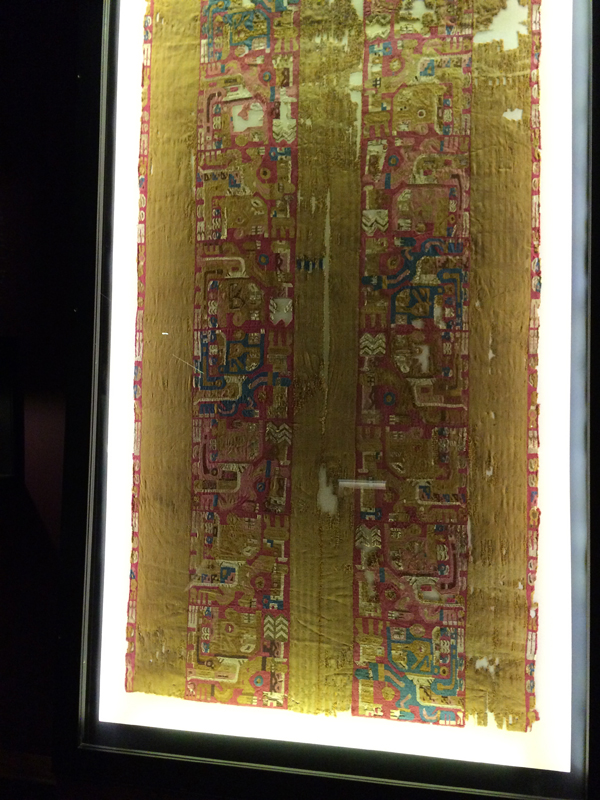
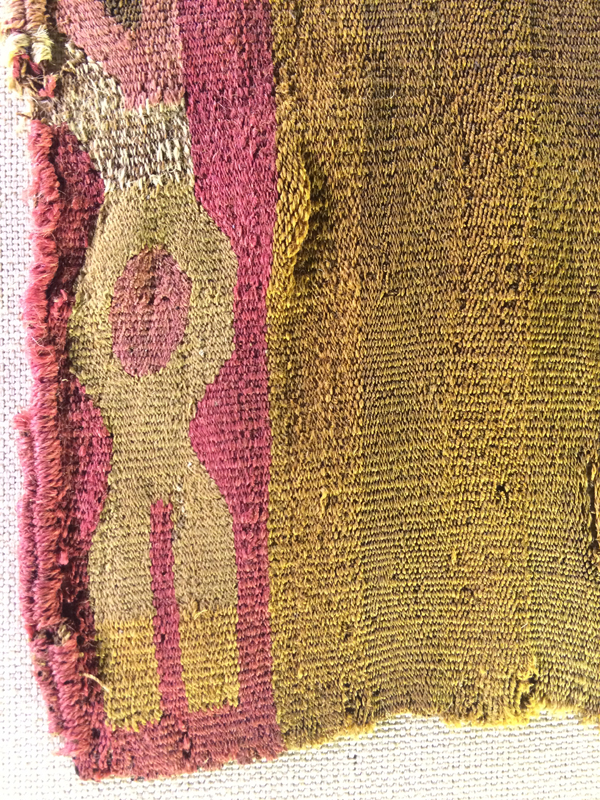
On the last day of our trip, I re-examined a similar piece at Museo Amano. This one was woven even wider – over 3 meters I would guess – and displayed a similar rhythm of pattern and variation, not unlike that of a piece of jazz music.
Tapestry, Museo Amano, Limatapestry detail, Museo Amano, Lima Peru, showing selvedges on two sides
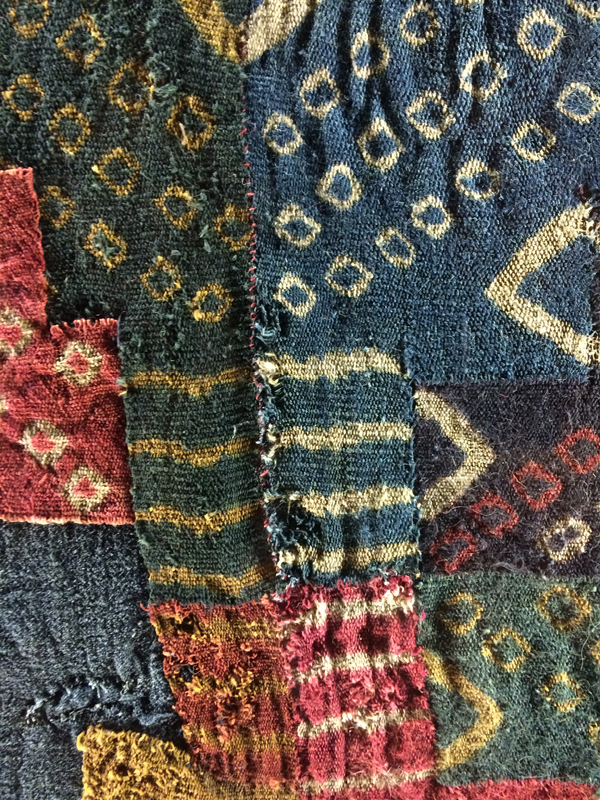
The large tie-dyed piece from the same period at the Museo Amano likely represents another type of cooperation. Many years ago, I was involved in an exploratory weaving project in collaboration with art historian, Jane Rehl. We attempted to duplicate this type of scaffold weaving, creating multi-selvedged pieces that were later resist dyed and then sewn together to achieve the larger textile. Initially we made the assumption that large blankets of these pieces might have been woven together as one large blanket and dyed while still connected. After setting up scaffold looms, we realized that only two pieces need be woven at one time. These small weavings, when done with a group of people, resulted in a cooperative spirit of building something together. After the individual pieces were dyed in different colors, the entire textile was sewn together.
Wari tie dyed textile, Museo Amano, Lima PeruWari tie dyed textile, detail, Museo Amano, Lima PeruSketch for multi-selvedged, scaffold woven reproduction
At the Weaving Center in Chinchero we saw fabrics that were handspun of either wool or alpaca, naturally dyed, and woven on backstrap looms. The natural dyes have been recently re-introduced here. When synthetic dyes were brought in the natural colors were abandoned until Nilda Callañaupa Alvarez took on the responsibility of learning the local plants and teaching the women to work with them. They do lightfastness tests in the strong sun of the Andes and use only dyes that perform well in these tests. I was not familiar with many of the dye plants since they were particular to this region. They included roots, lichens, indigo, cochineal, and beautiful greens from plants of the Baccharis family.
Natural dyes, Chinchero
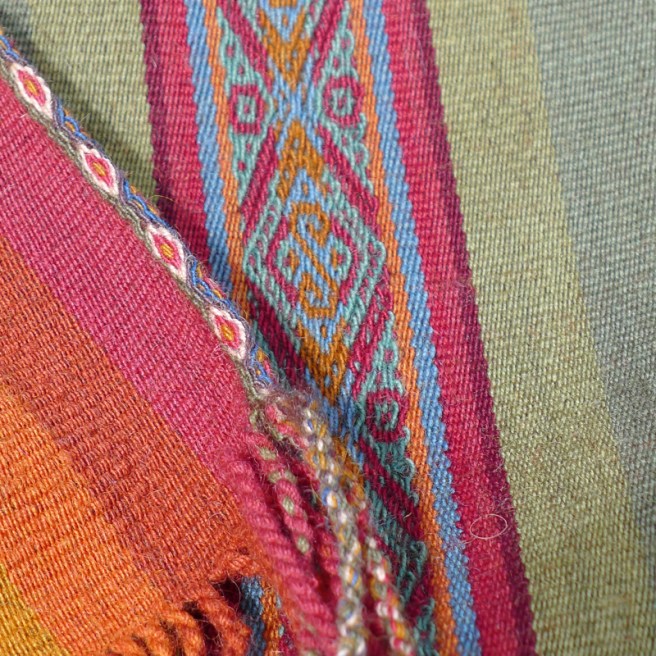
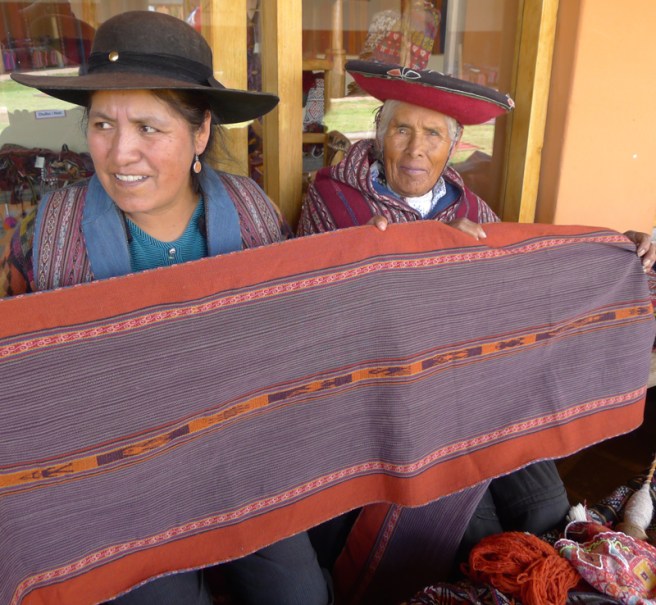
We watched two women preparing a warp. I was struck by how these two women (one older, one young) tossed the balls of yarn back and forth in the rhythmic dance of warping. Nilda told us how each woman wove her own individual textiles, but was helped along the way in the spinning, warping, and dyeing processes. I have the honor of bringing home a textile that Nilda warped and her mother wove. And it wasn’t enough to weave a piece with 4 excellent selvedges. Each piece of cloth was finished with an additional woven binding that completely encased the selvedge, strengthening the cloth and adding another element for its complexity and beauty.
Detail, woven edging on textileNilda Callanaupa Alvarez and her mother, Guadalupe Alvarez De Callanaupa with their collaborative weaving
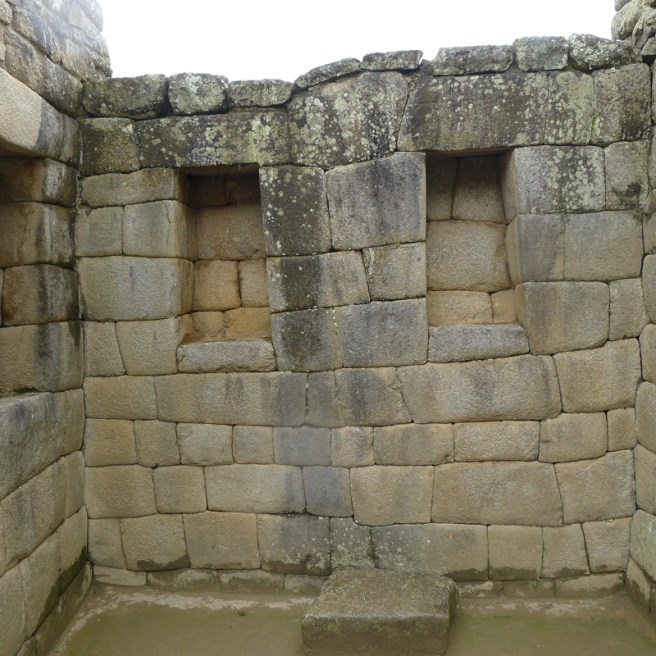
We saw astounding Inca dry stone masonry at Machu Picchu. What is it that compelled these architects/craftsman to carry, cut, and fit stone with such precision and mastery? Rocks that weighed tons were cut and fitted like small Legos. It required large communities of people working together. Even walkways and water channels required the work and precision of many.
Dry stone construction, Machu PicchuStone work, Machu PicchuMarket walkway, Pisac
In our western countries, we are most apt to work alone, mastering our craft and accomplishing the work as individuals. We tend to put emphasis on MY work, MY process. We witnessed a different approach amongst the craftspeople of Peru, both past and present. Several years ago, while working with weavers in India, I observed them working together, always with many hands on the same piece of cloth. The spirit of cooperation that we saw in Peru was similar. The Peruvian craftsmen shared their labor, yet also shared the experience.
I’m on Cape Cod right now, taking a retreat of sorts at our family home to finish work on a new edition of Woven Shibori, focused on natural dyes.
Wool and cotton cloth, dyed with indigo and lichen
I’m a great fan of the local public radio station here, WCAI. This week I listened to Robert Finch, a naturalist and nature writer who I admire a lot. He does a regular broadcast: A Cape Cod Notebook. The topic this week was “When did you decide you wanted to be a writer and why?” It was quite relevant since I’ve been sitting at the computer for hours each day working out all of the myriad details of the book. Finch told us that his reason for writing was “to play” and to “keep play at the center” of his life.
I could identify. Textiles and dyeing have been a passion, a career, a livelihood, but it really does feel like “play”. I get up in the morning, go to the studio, and discover something new through experimenting, thinking, observing and “playing”. It’s serious play, but that’s why it is so satisfying. How fortunate I am!
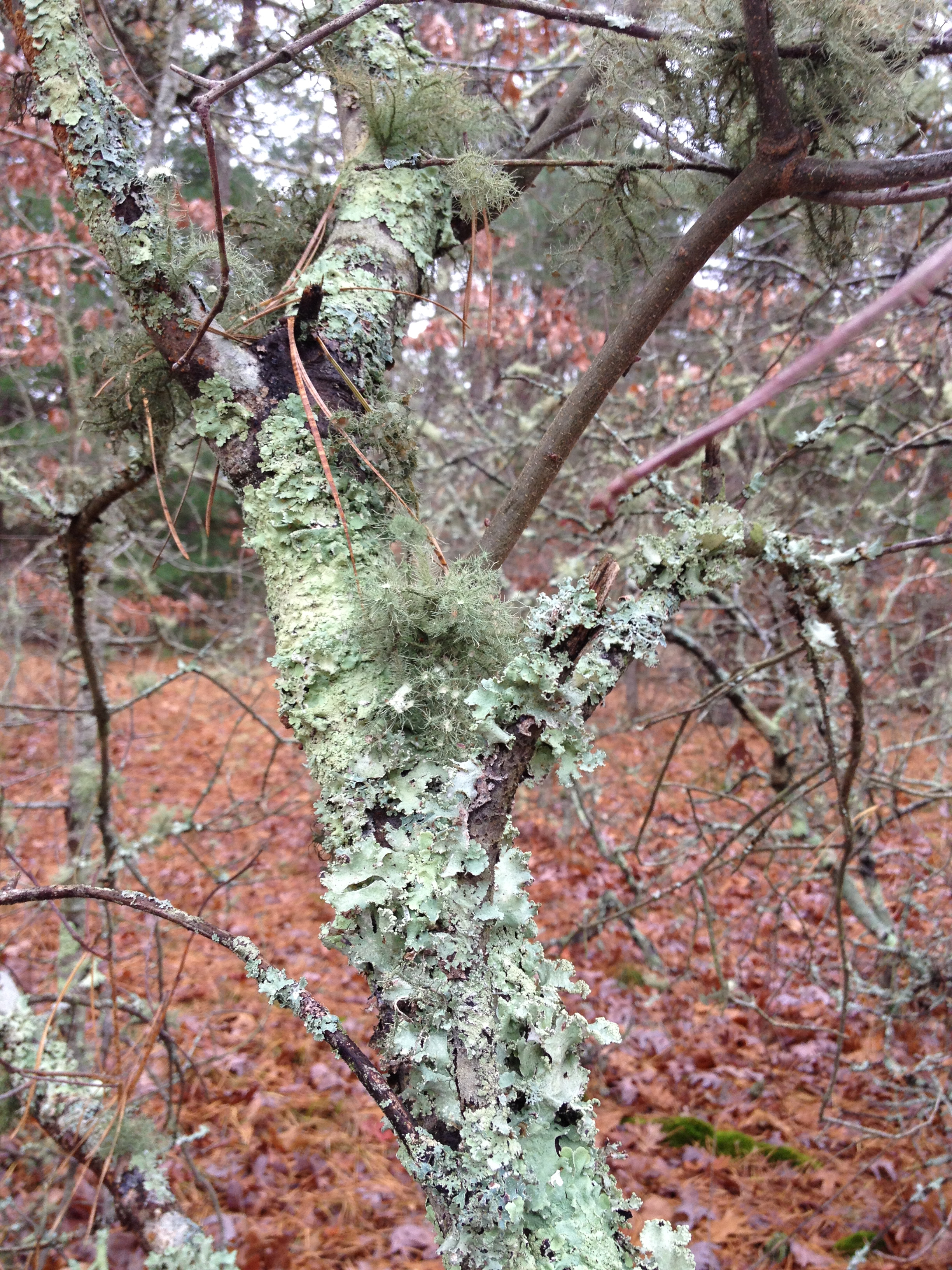
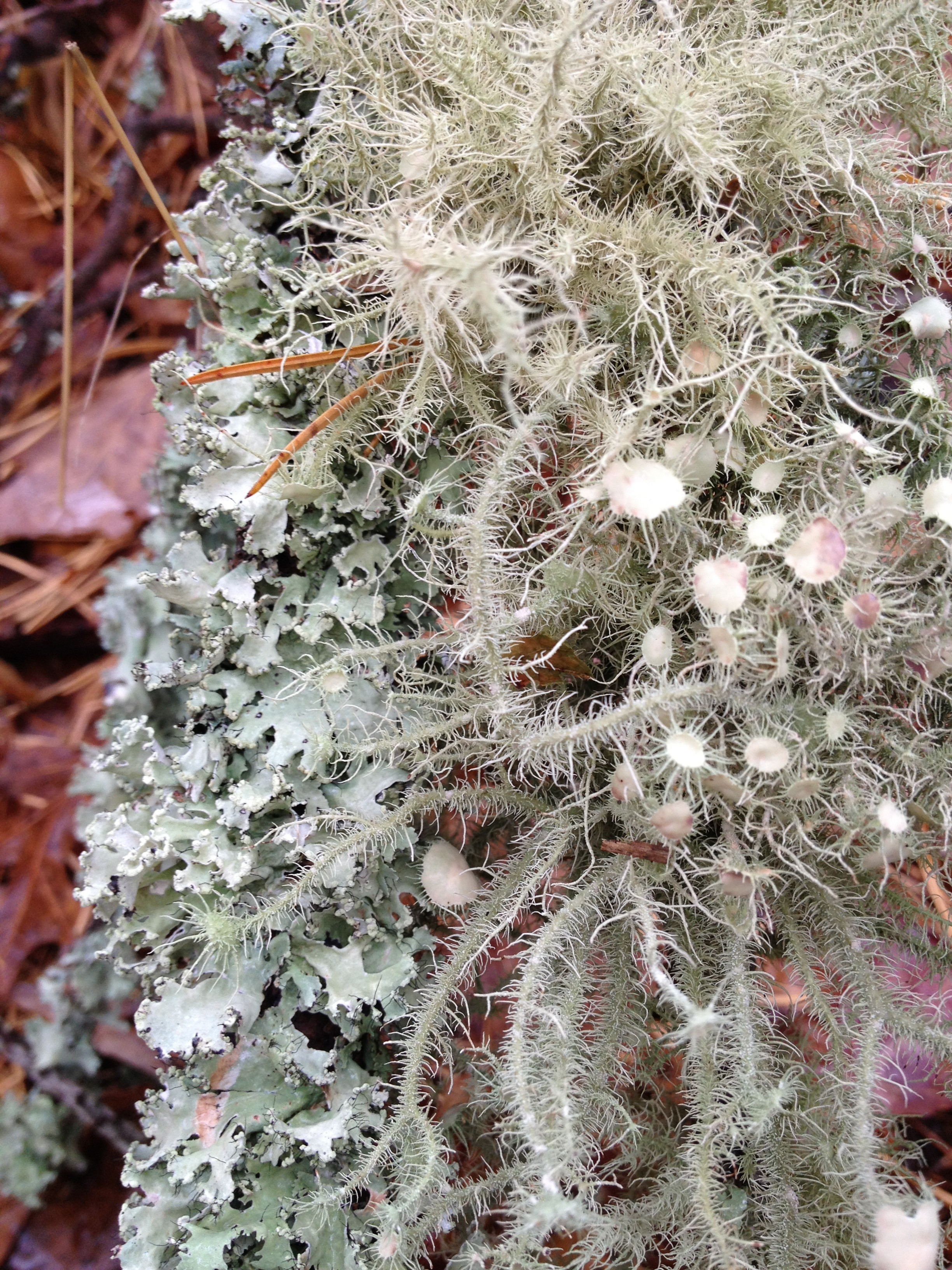
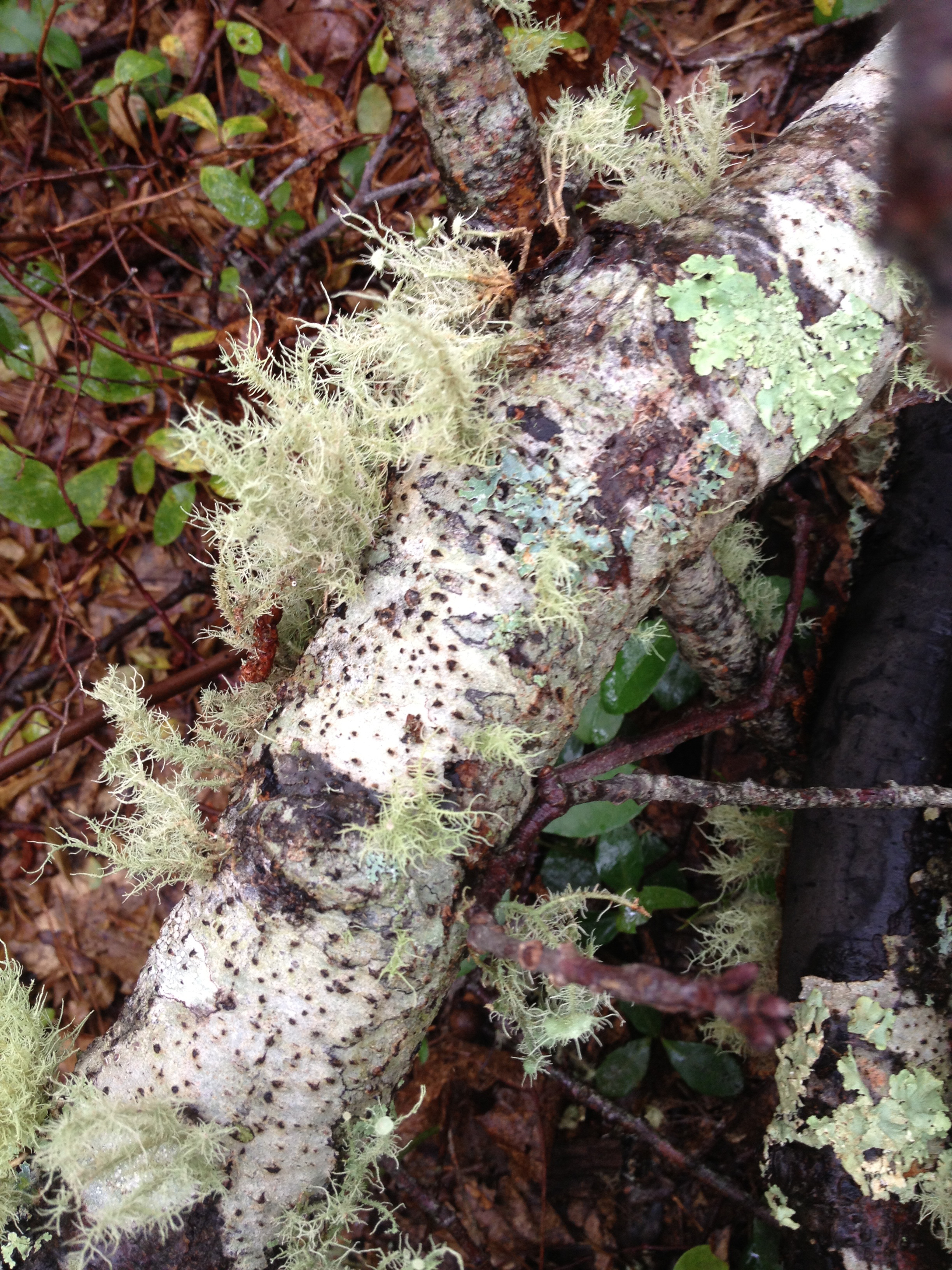
I have no studio on the Cape so I don’t accomplish serious weaving or dye work here but this place has introduced me to one aspect of natural dye: lichens. The woods behind the house are full of trees and those trees are laden with lichen. Each time I come here I pick up branches that have fallen from the trees. They are covered with both foliose and fruiticose lichens.
Recently someone told me that the lichen was “killing the trees” here. I don’t think that is the case. The trees are old and branches die. As the canopy diminishes, the light is able to penetrate, making it a more hospitable place for the lichen to grow. The lichen grows best on the old branches without foliage. The branches finally give way, falling to the ground covered with lichen. This is the only lichen dyestuff I gather.
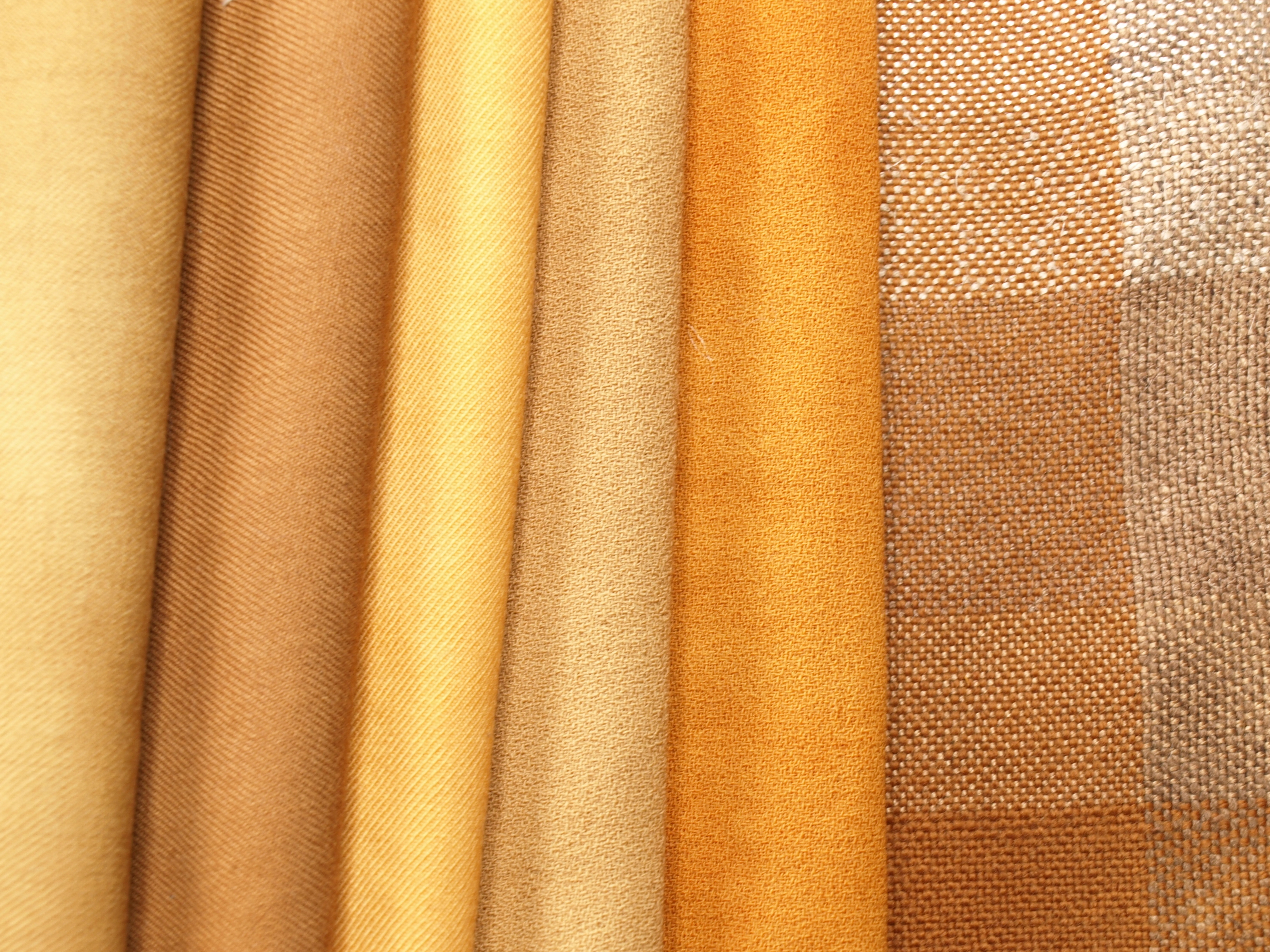
These are “boiling water “ lichens that, after simmering in water (no mordant), will dye wool (protein) various shades of yellow and gold. The dyes are extremely fast to light and washing.
Lichen is an indicator of clean air. They don’t grow where there is lots of air pollution or car exhaust. Lichens are complicated. They are both an algae and a fungus. Karen Casselman has written a good book about lichen dyeing, Lichen Dyes, the New Sourcebook. I have taken classes on lichens at our arboretum where we learned a lot of technical information about identification. There is more to know than I could ever hope to absorb.
Foliose and fruiticose lichenLichen attached to fallen birch branch
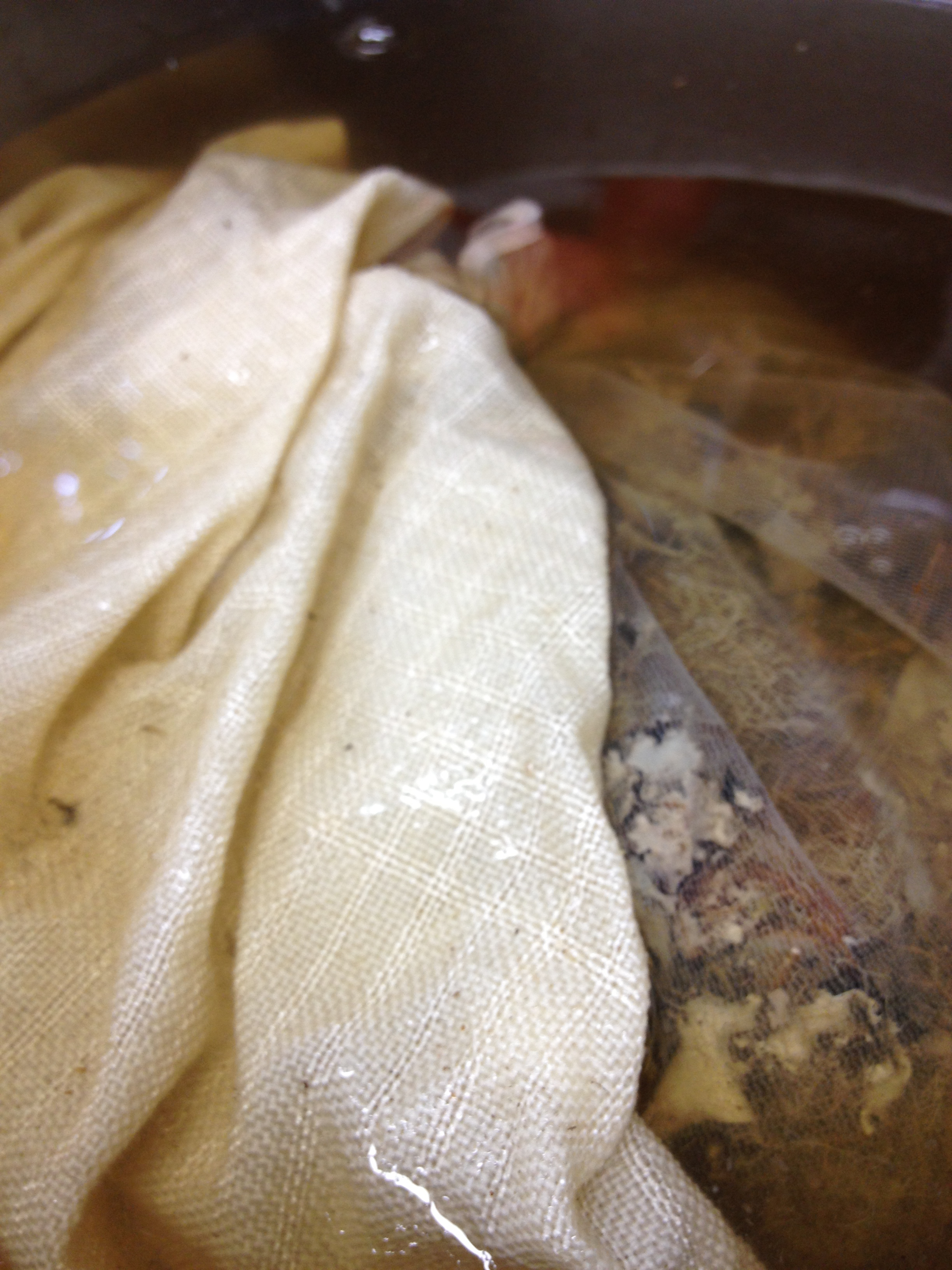
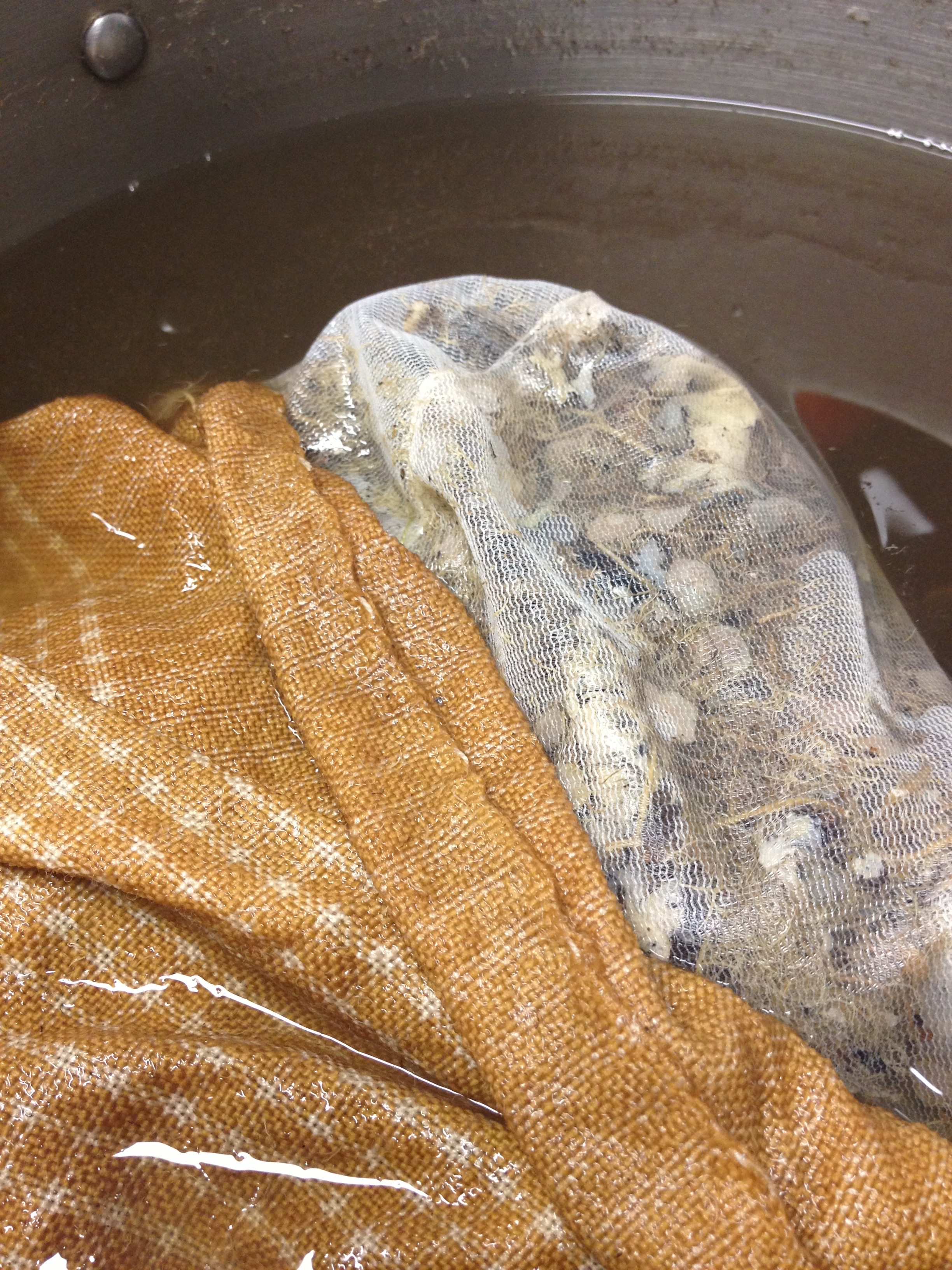
Mostly I like to walk in the forest on the Cape and pick up lichen that I find along the path. I bring it home and scrape it off the branches. I put it in a net bag, cover it with water, add some wool and then simmer for a good long time. The first sign that something is happening is the smell – deep, woodsy, and rich. That smell permeates the wool fiber and stays for a very long time in the wool. I have been told that lichens will leave a yarn mothproofed. I can’t prove that but I have yarns that were dyed years ago that still have that woodsy smell in them. The color is slow to come, but eventually a light beige color will appear, which will get darker and more gold with time and simmering. The various lichens will result in different shades of gold and brown.
Wool and cotton cloth at the start of the lichen dye bathWool and cotton cloth after 1hour in the dyebath
Lichen is very slow growing. I would not consider harvesting living lichen. But once it falls to the ground it will begin to deteriorate.
There is another class of dye lichen – the orchil lichens: Umbilicaria mammulata and Umbilicaria papalusa. They grow on rocks at high elevations where I live in NC. They are even slower growing and should never be harvested from the rocks. Occasionally I will find a piece that has fallen to the ground and bring it home for dyeing. This type of lichen needs to be fermented in ammonia for several weeks. It will dye wool an intense purple but the color is not lightfast and will quickly disappear.
I don’t use lichens as part of my regular dye production or work. They are a special treat. This type of dyeing is truly “play”. I use them for my own pleasure and to remind me of the walk in the woods that brought them into my path. They are too rare to be able to count on or be available commercially. The windfall gifts are my special pleasure from the woods.
I recently read a New Yorker magazine article by Jonathan Franzen entitled Carbon Capture (April 6, 2016). He begins the piece by talking about the new football stadium being built in Minneapolis and how the glass walls could spell the doom for thousands of birds predicted to fly into it each year. Requests to change the design by including specially patterned glass to prevent the collisions (raising the price of the stadium by one-tenth of one percent) were thwarted when the National Audubon Society issued a press release identifying the dangers of climate change. A local journalist responded by claiming that global warming was going to kill off many more than the few thousand birds the windows placed at risk.
Climate change is real, as are so many of our environmental issues. They are bigger than any of us and no one person can be held responsible or fix them. But Franzen makes a good case for each of us doing something. We do have the capacity to act and deal with the issues immediately in front of us – actions we can take right NOW to improve our environment.
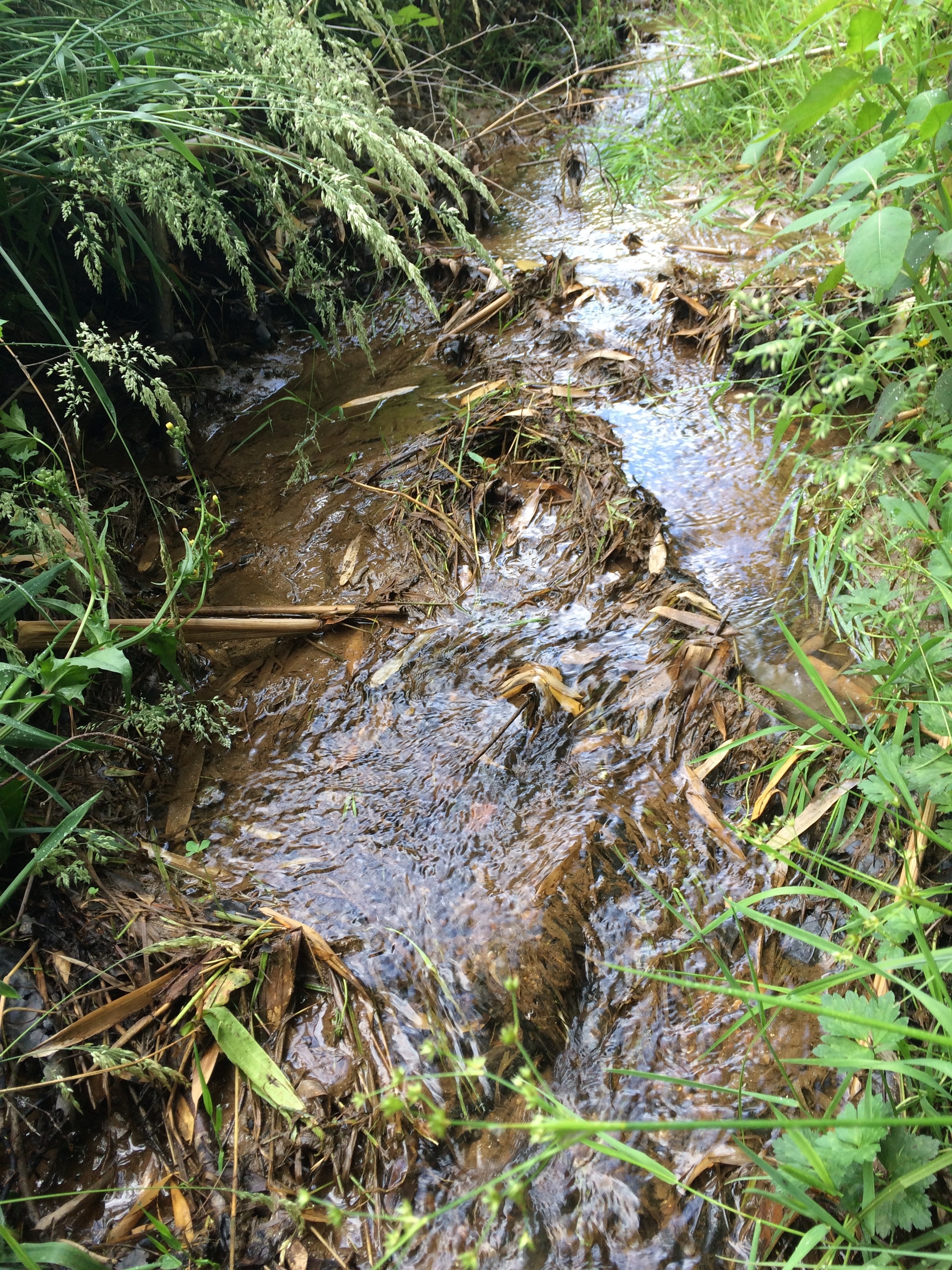
the creek behind my dye studio
The author visited a small, isolated, Peruvian community. With the help of the Amazon Conservation Center, the residents are engaged in re-foresting steep slopes by hand, operating an experimental organic farm, and running a small scale fish hatchery that raises native species. All of these ventures are employing local people and helping them raise a bit of extra cash. Yet the most important results are enriched soil, the mediation of erosion problems, and increased populations of native bird species.
Franzen also went to Costa Rica where a tropical biologist and his wife have created a Reserve of Pacific Dry Forest. The area hosts a complex inventory of hundreds of thousands of plant and animal species occurring within the space. This is “hands-on” science, engaging graduate researchers, school children, and local communities.
What struck him about both of these projects was the size of each of the component parts. They are small! Every one of them is manageable by individuals or small groups of people, yet the results are real and are making a tangible difference. Working at this scale reflects a meaningful engagement by a few in something that they love and believe in, yet the benefits affect many.
Eight years ago I made the commitment to study natural dyeing. I have investigated, learned, and integrated the use the natural dyes into my daily studio practice. I was motivated to make this change by several factors: my water source is a shallow well, I have a septic system, and my studio is right next to a small creek that feeds into a larger river – a home to local trout. The other incentive is a desire to learn and master new information.
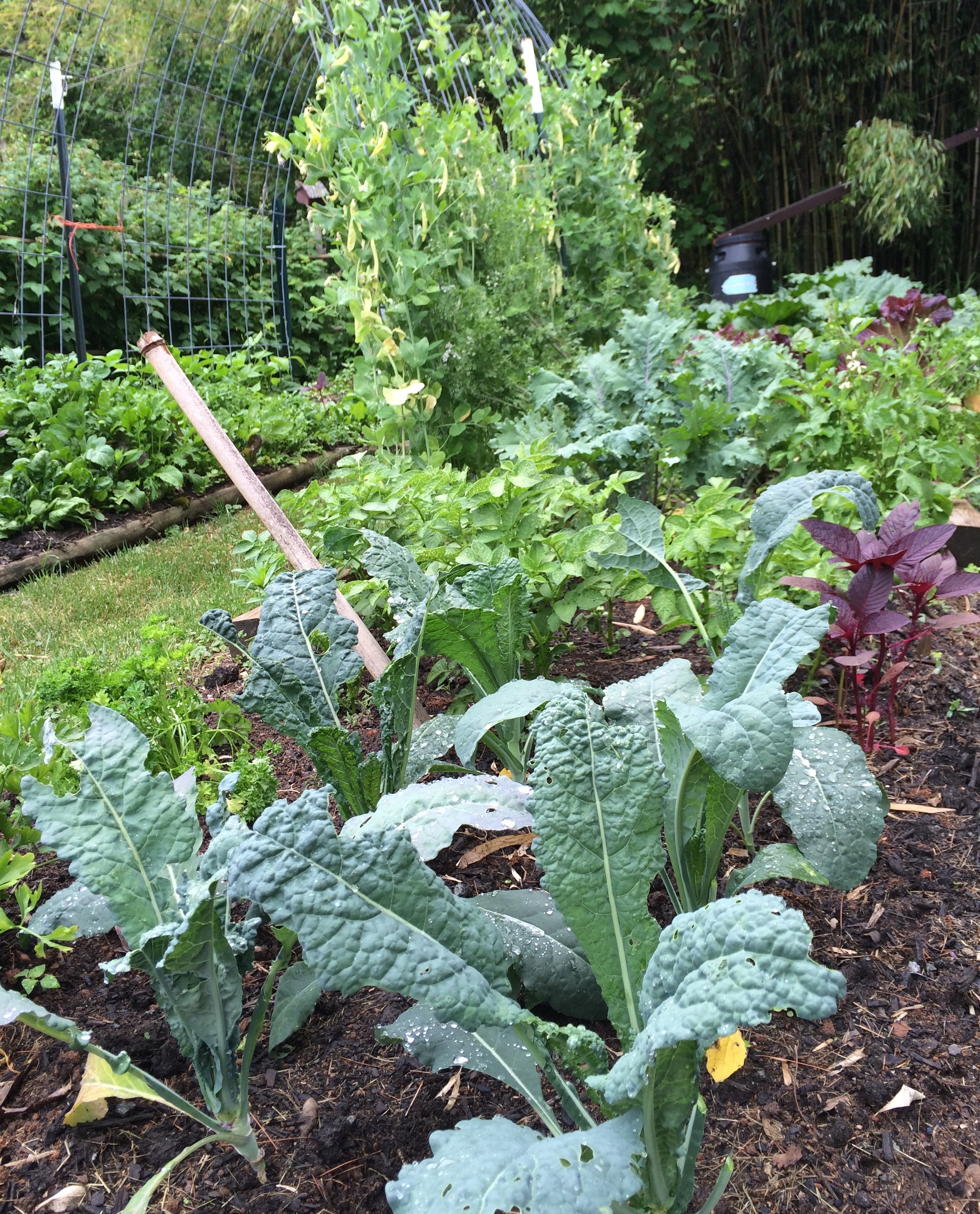
my vegetable garden
Last fall I had a special dye project that I thought would best be accomplished with a chemical vat dye. I decided to make an exception to my natural dye commitment. It had been many years since I used these dyes and when I had the bath ready, I was struck by the unpleasant chemical smell of the vat. Vat dyes had been a regular part of my studio practice in the past and I was never bothered by, or even much aware of the smell. Now I have become accustomed to the distinct and fragrant “natural” smells of the plant dyes: marigolds, weld, madder, and rhubarb root. Vat dyes are a petrochemical product, smell like one, and are notorious for the pollution caused in their manufacturing, not to mention their potential deleterious impact on the environment when the depleted solutions are discarded.
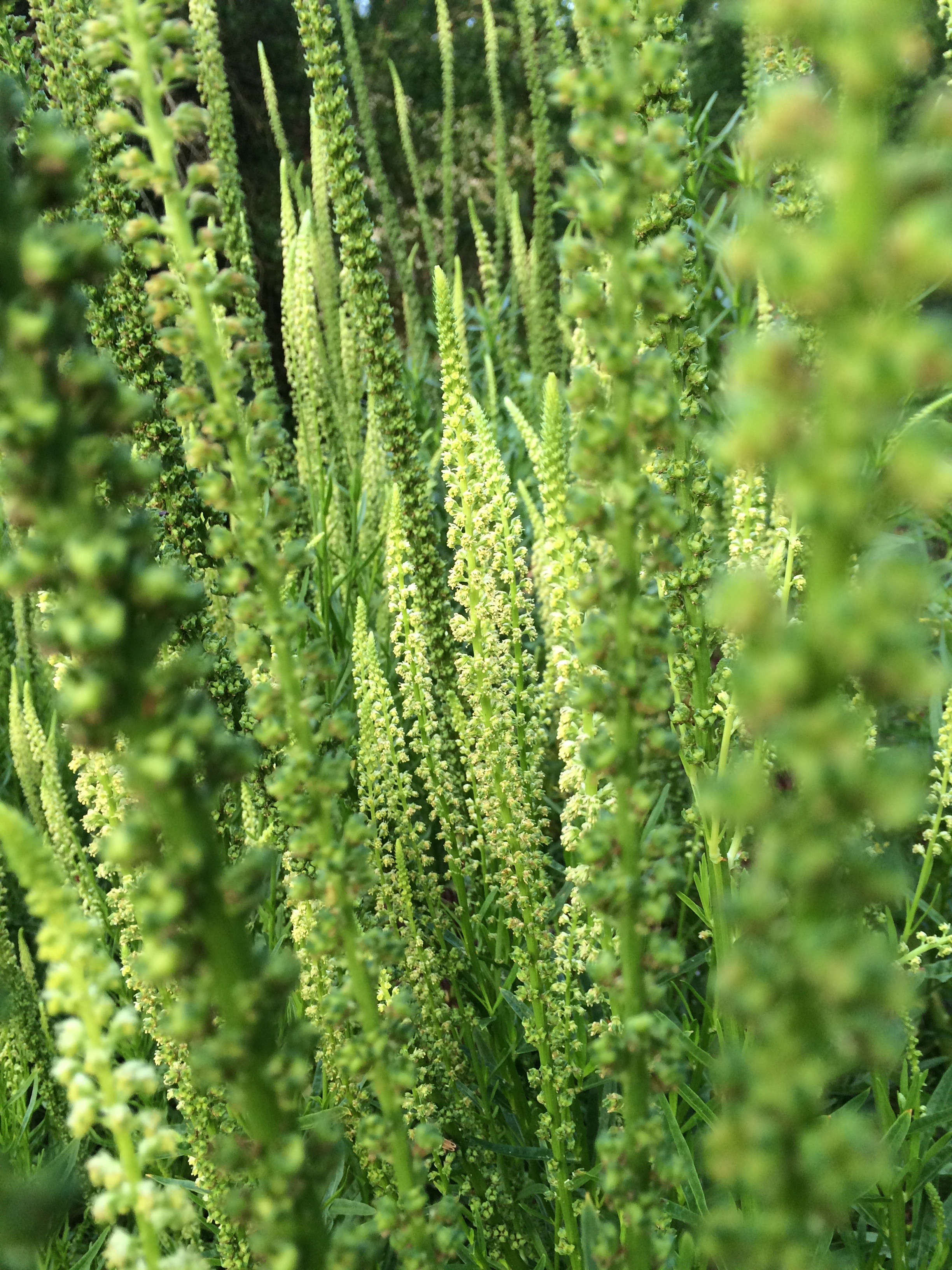
Weld in the garden, almost ready to be harvested
I have decided not to use the chemical vat dyes again. Instead, I will continue dyeing with plants and using colors that are of the earth. The only vat dye I will use is indigo, reduced with plants, plant sugars or minerals. I will engage in and support the use of something that I love and believe in.
Can we stop global warming by using natural dyes? That is not likely. But “one small step” can make a difference. My involvement takes the form of growing dye plants, using them in my textiles, and teaching others how to do the same. This is good for the creek that runs behind my dye studio, the compost pile that feeds my dye and vegetable garden, and for me. I care about these things.
I teach a great deal, which I love doing. Yet occasionally I relish the opportunity to learn from someone else – someone who has different experiences and who causes me to look at my own process in a different way. Last week I took a class in natural dyeing at Shakerag in Sewanee, TN with Charllotte and Sophena Kwon of Maiwa. When I immerse myself in a class such as this, I know that I will come away with new understandings but I can never be sure what the lessons will be.
Charllotte organized a week that included dyeing cellulose and protein fibers in many different dyes, combinations of dyes, and with some ferrous applications. The palette was extensive and yet I knew that we were just scratching the surface of what is possible.
Charlotte Kwon, laying out samples to dry
We used the classic dyes – those that have been tried and true over many years and used in production and industry in different parts of the world. When one invests so much time preparing and mordanting fibers, it’s important to have the best dyes possible and ones that will last as long as the fiber. All the dyeing was done using formulas that are easily repeated. Maiwa produces a line of naturally dyed clothing and as a result they have refined their processes and dye choices. We found plenty of inspiration in Maiwa’s collection of masterfully dyed fabrics from all over the world.
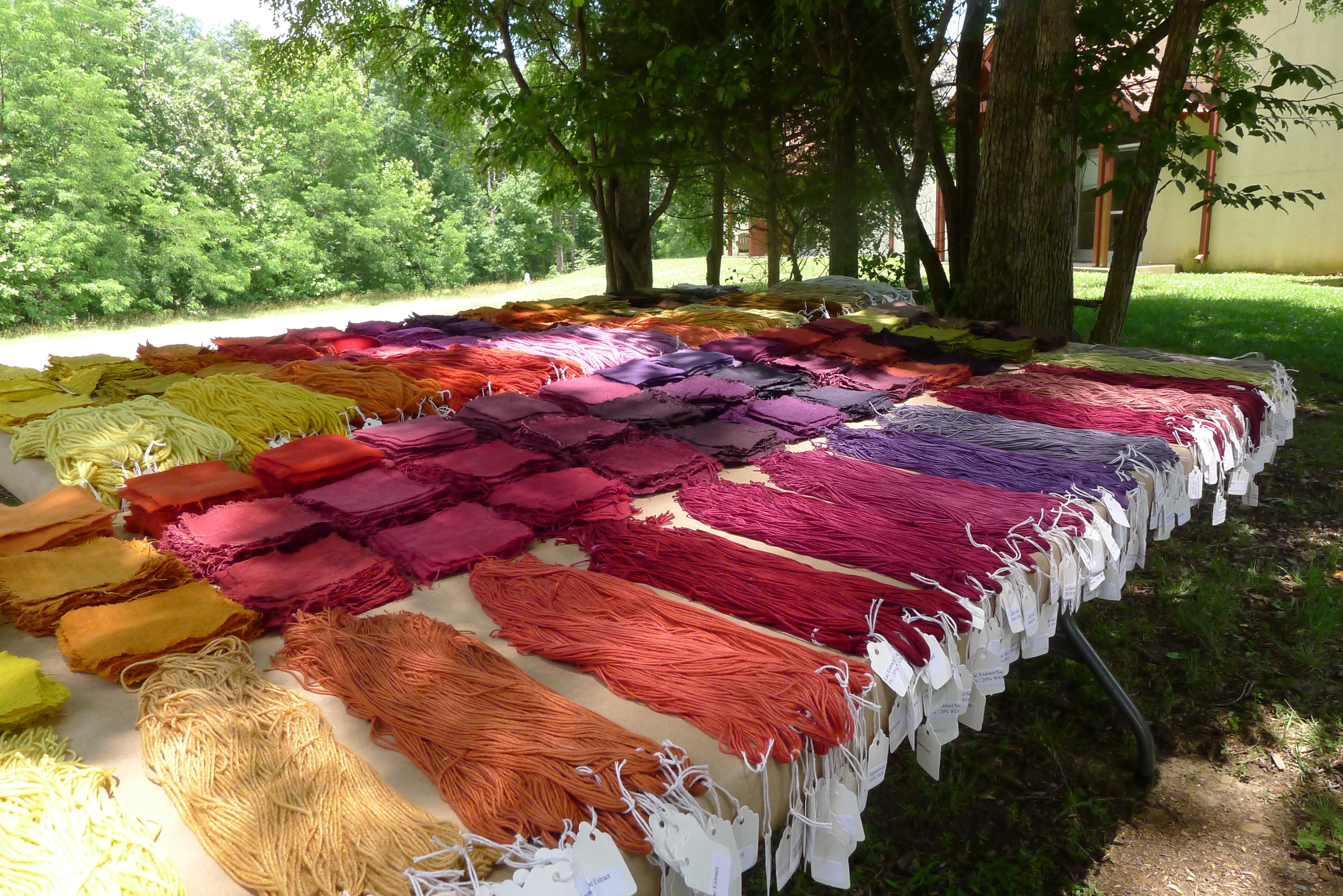
The “palette”
When it became time to dye with indigo, I was surprised that we used chemical vats reduced with thiourea dioxide. Both Charllotte and I learned the organic indigo vats from Michel Garcia, where the reduction comes from plants or fruit sugars. I have spent the last 8 years using only these organic vats in my studio work: how to start them, to read them, keep them alive, and dye successfully with them. I didn’t think I would ever return to the chemical vats.
Stock solutions, ready to be added to the vats
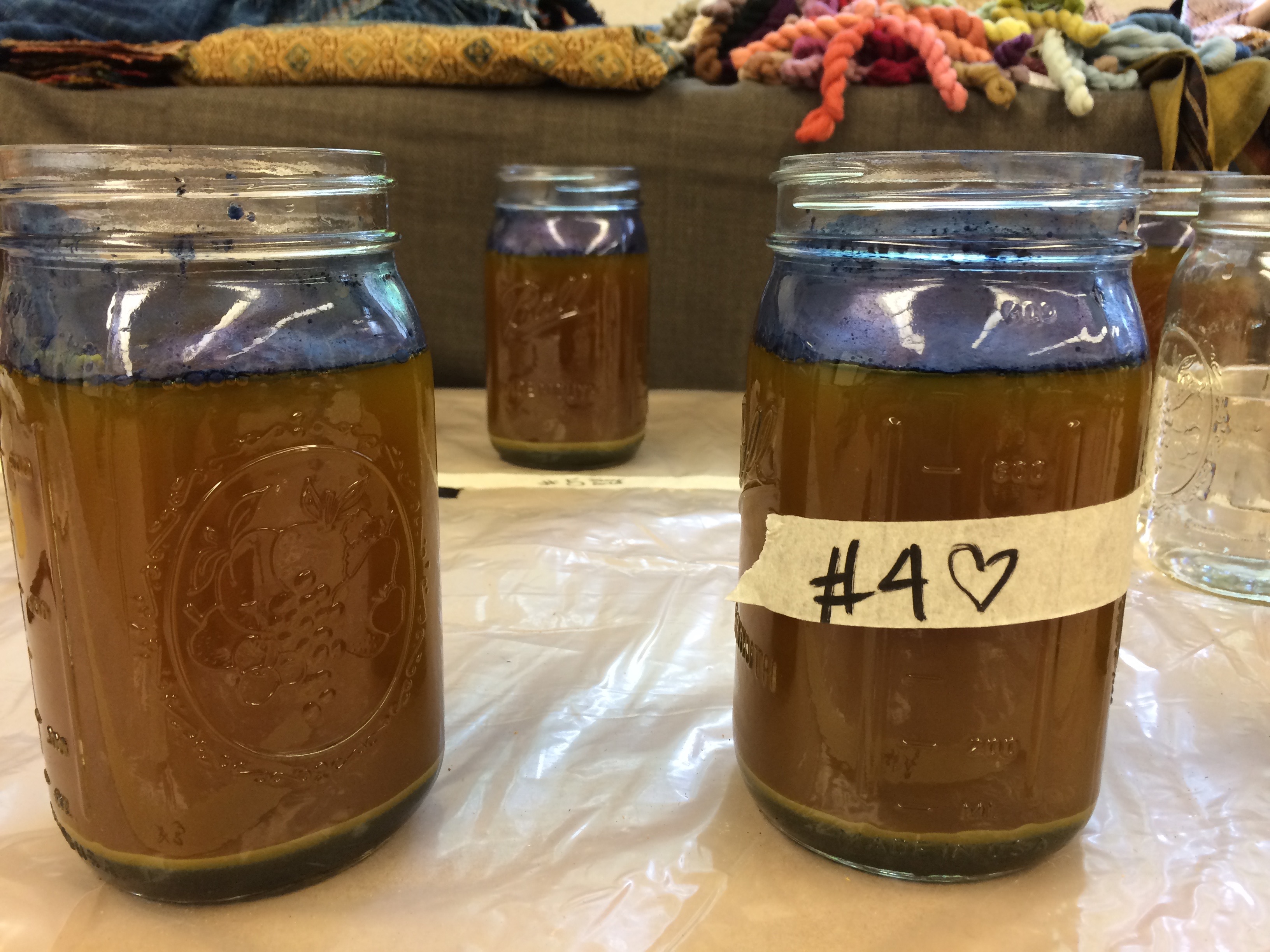
It was a revelation to be re-introduced to the “thiox vat”, a real “work-horse” indigo vat that is most appropriate for quick samples or when a hard-working vat is needed for a group of people or an intense dyeing period. I was pleasantly surprised to find that the dominant smell of the vat came from the natural indigo and not the reduction chemical.
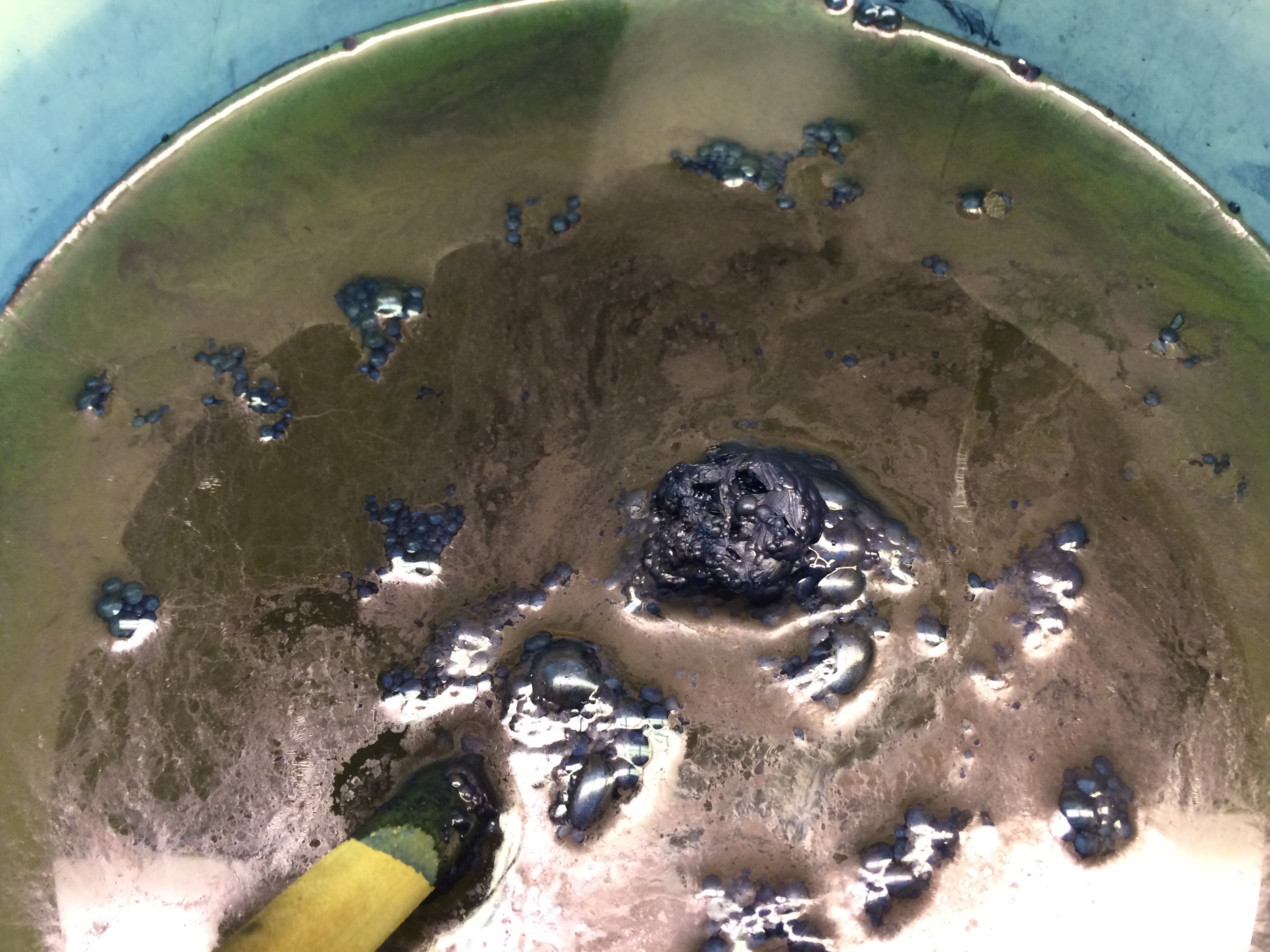
Indigo vat, fully reduced
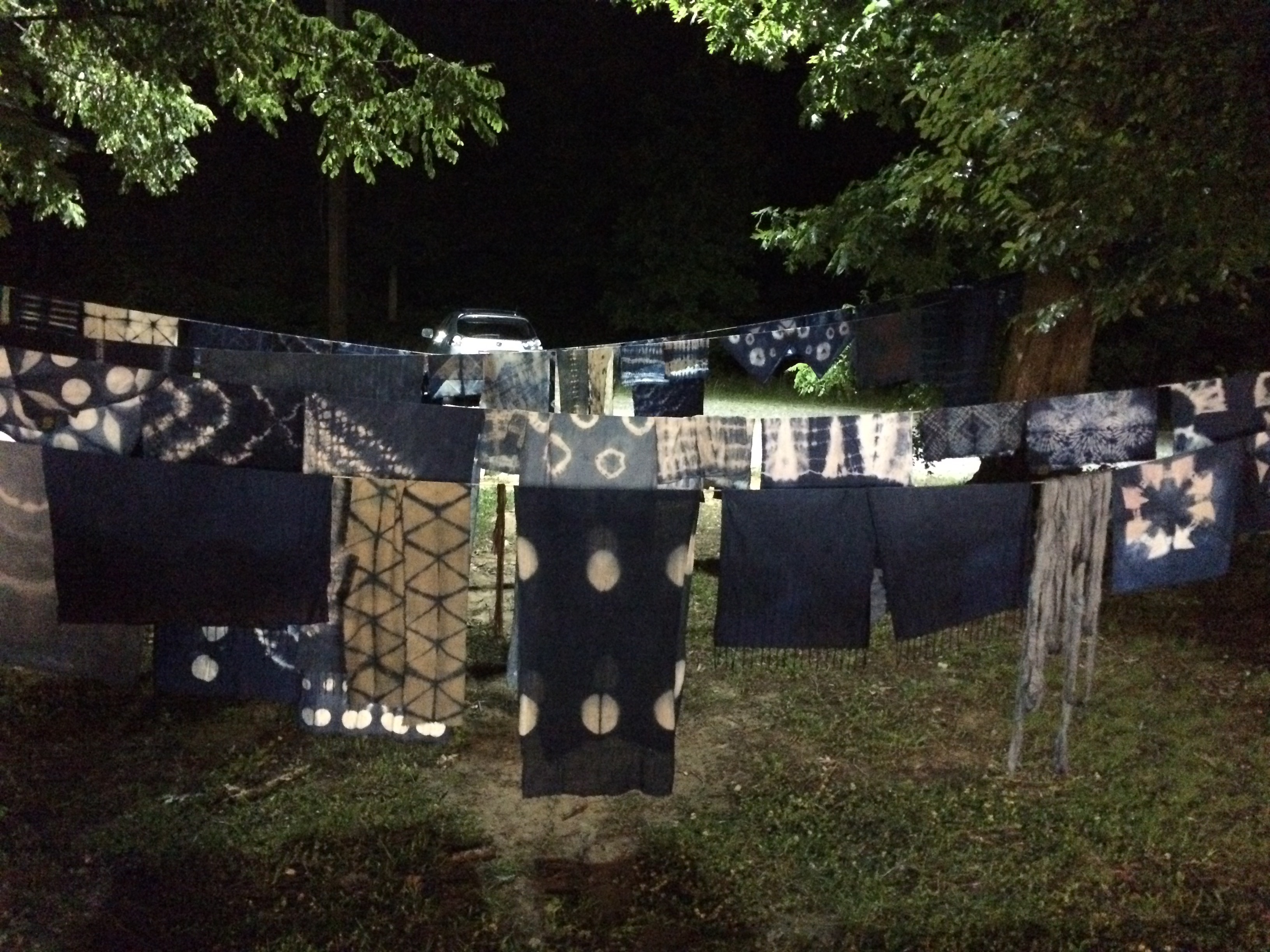
We made 8 indigo vats one morning and all the vats worked successfully well into the night. The organic vats would have required more rest time, more fussing, and ultimately may not have been as rewarding for the dyers in such a setting. The thiox vats were not without maintenance; we checked the pH, added thiox or lye water as necessary, and more indigo when needed.
Indigo dyeing into the night….
The lesson for me last week was to always keep an open mind. My studio practice will continue to include an organic indigo vat. Had I not spent these years committed to these organic vats, I wouldn’t understand them and they would not be an integral part of my studio. But I left last week’s class with a new attitude about choosing a process most appropriate for the setting. I am sure that there will be a few chemical indigo vats in my future.
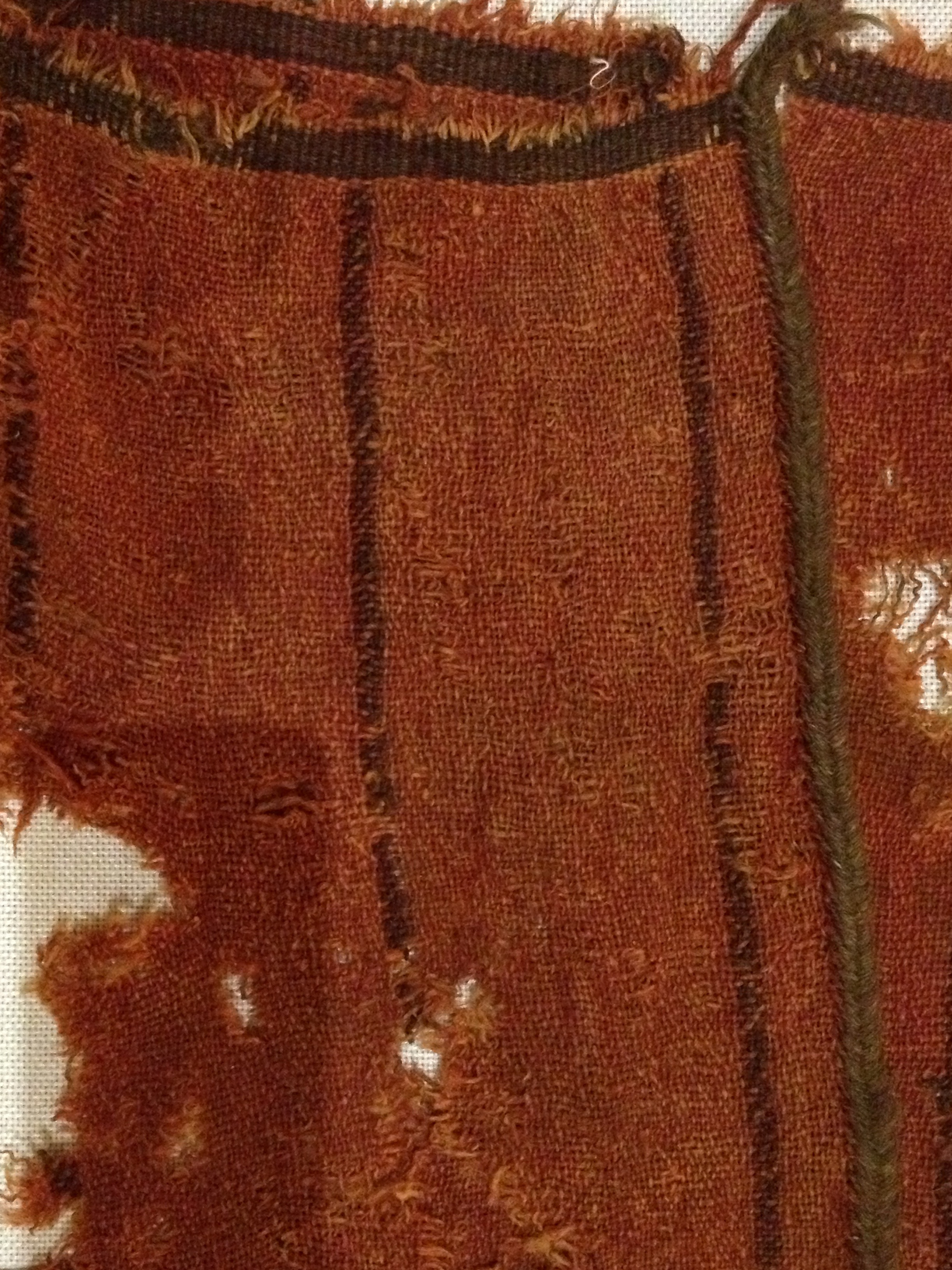
Last fall, I was in China for the 9th International Shibori Symposium (9ISS). Following the conference, I travelled with 20 other adventurers on a remarkable tour of the Silk Road in Xinjiang Province. We began at the Xinjiang Regional Museum in Urumqi. My first introduction to this part of the world was through Elizabeth Wayland Barber’s book, Mummies of Urumqi. We viewed these mummies and dozens of remarkable textiles dating back 2,000-3,000 years. I couldn’t help but think about the fibers, the colors, and of course the dyes: brilliant, deep reds that have truly survived the test of time. Madder is the dye. It has been documented. I have never seen such richness.
Wool textile, Xinjiang Regional Museum
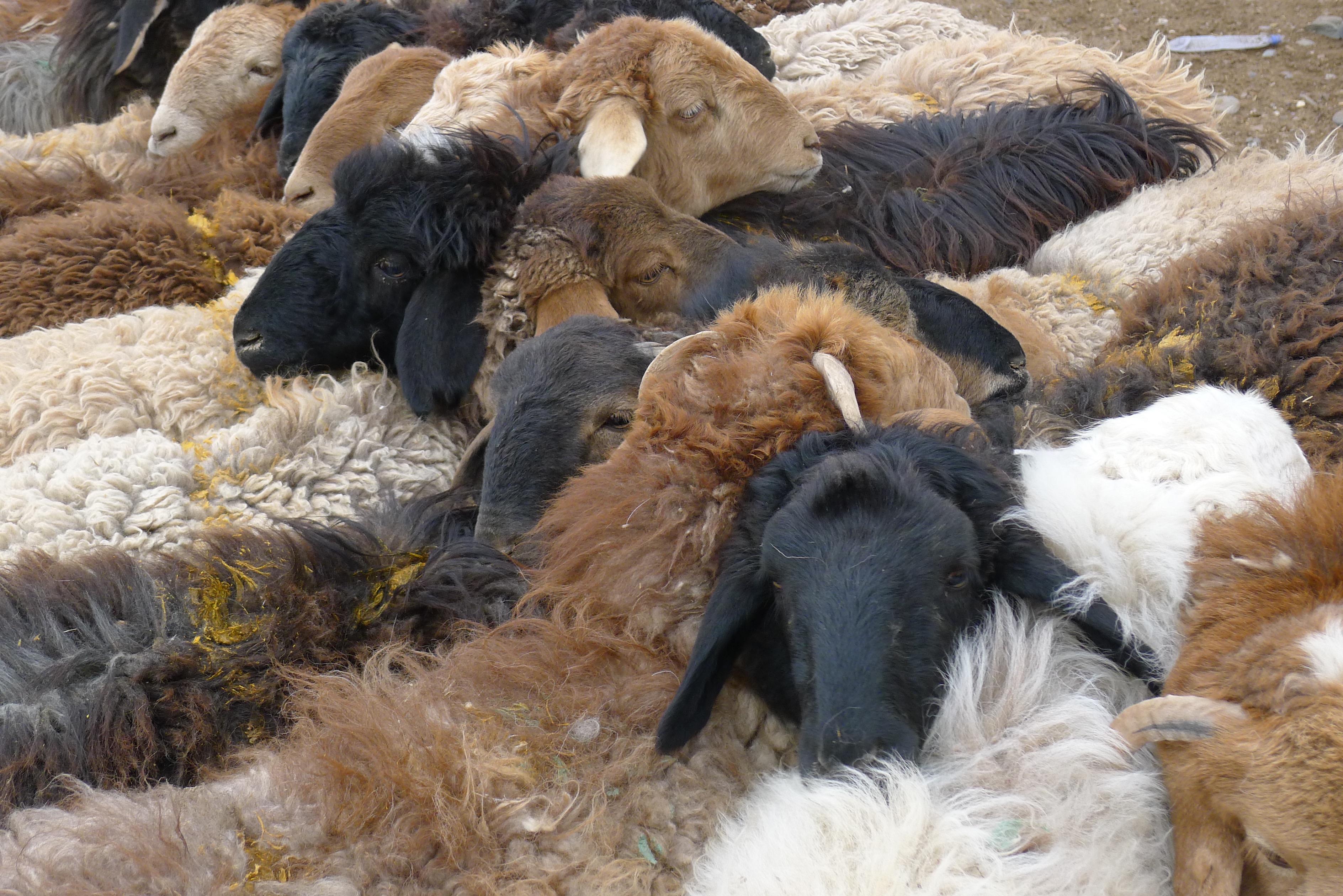
Early one morning we visited an animal market in Kashgar. This is where locals came to buy and sell camels, goats, donkeys, and of course sheep. What struck me as significant were the different colors of sheep. Today, in the larger commercial wool industry, nearly every color has been bred out, leaving only pristine white wool. White fiber is typically where we begin our dyeing.
Animal market, Kashgar
When the starting point for dyeing is already shaded with tones of brown, beige, and grey, the colors we dye will take on an added depth and richness. Michel Garcia refers to this the DVD, Colors of the Americas. He begins with dark colored wools to obtain near black with combinations of madder, cochineal and indigo. Two thousand years ago in China, it’s likely that there was very little white wool. Naturally, the question I ask is “what if I use different colors of animal fibers in my woven textiles and dye the fabric afterwards for various shades from a single dye bath?”
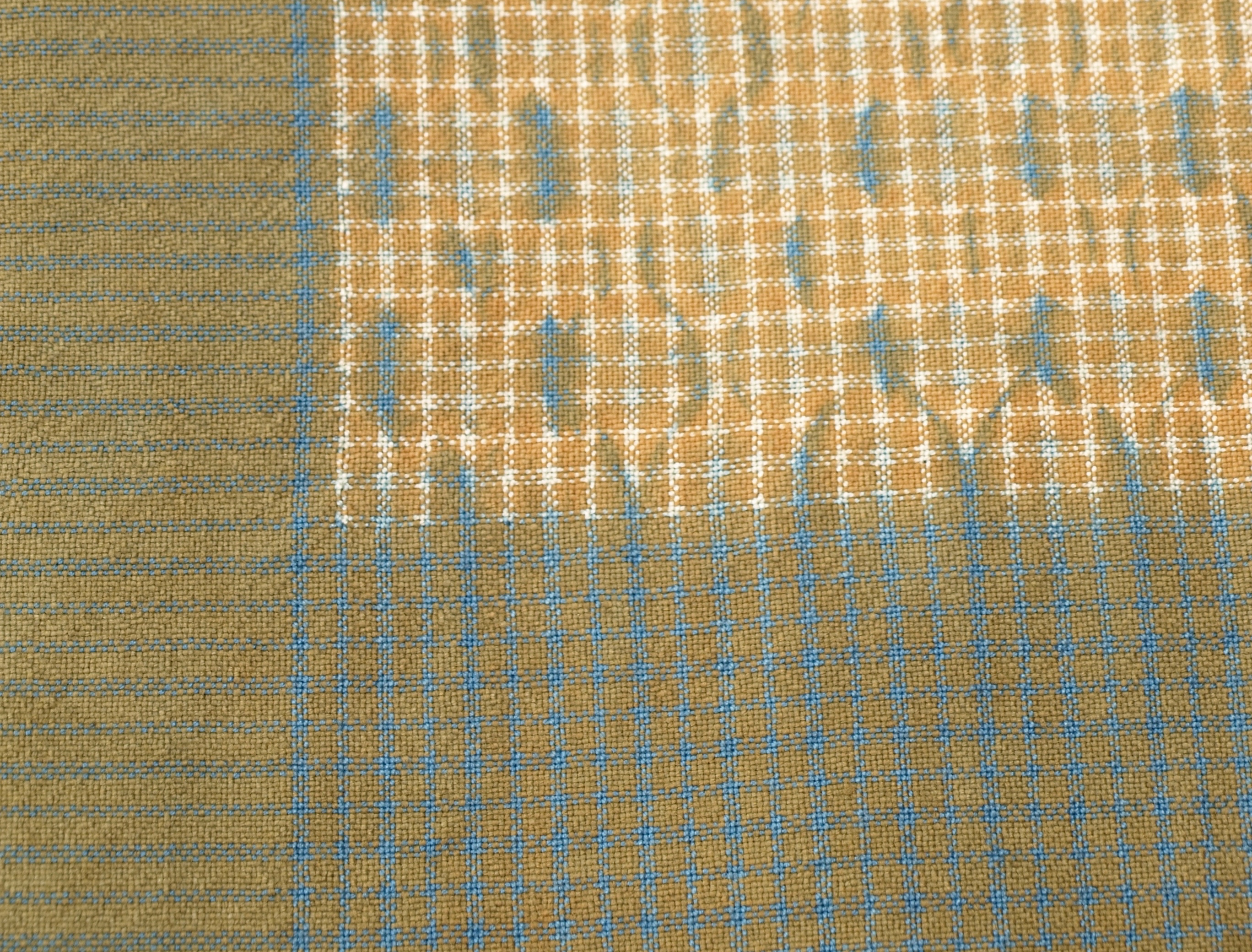
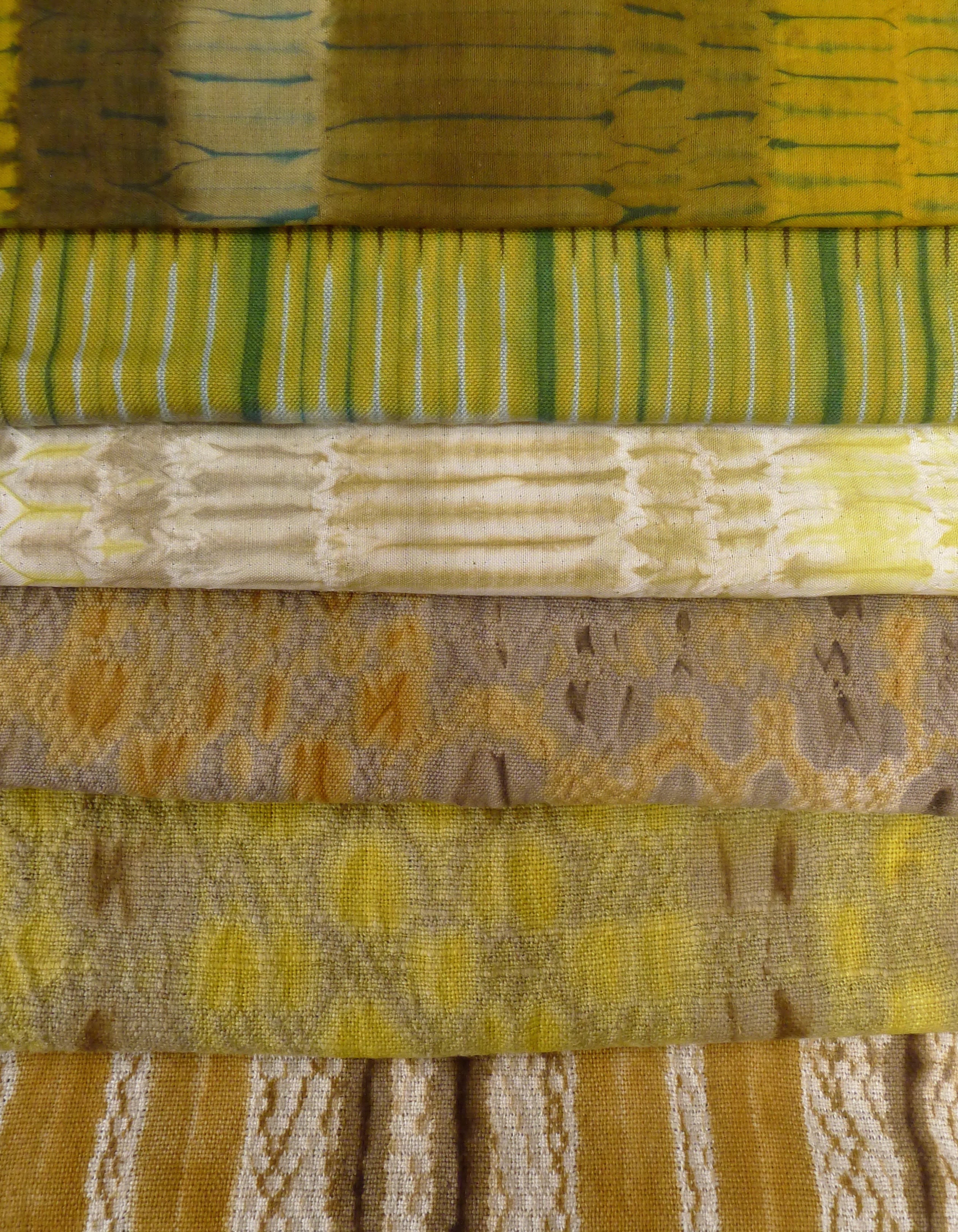
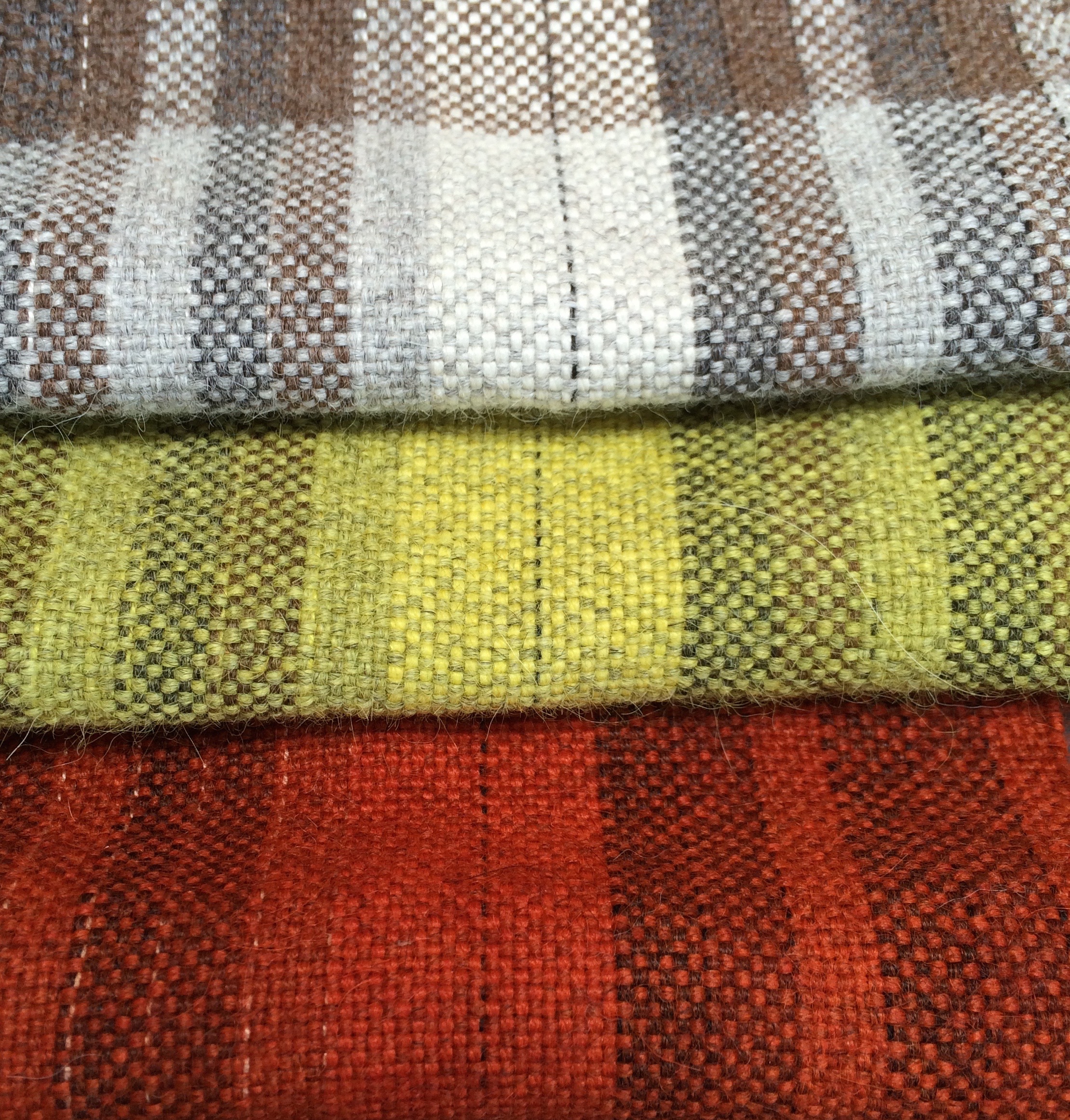
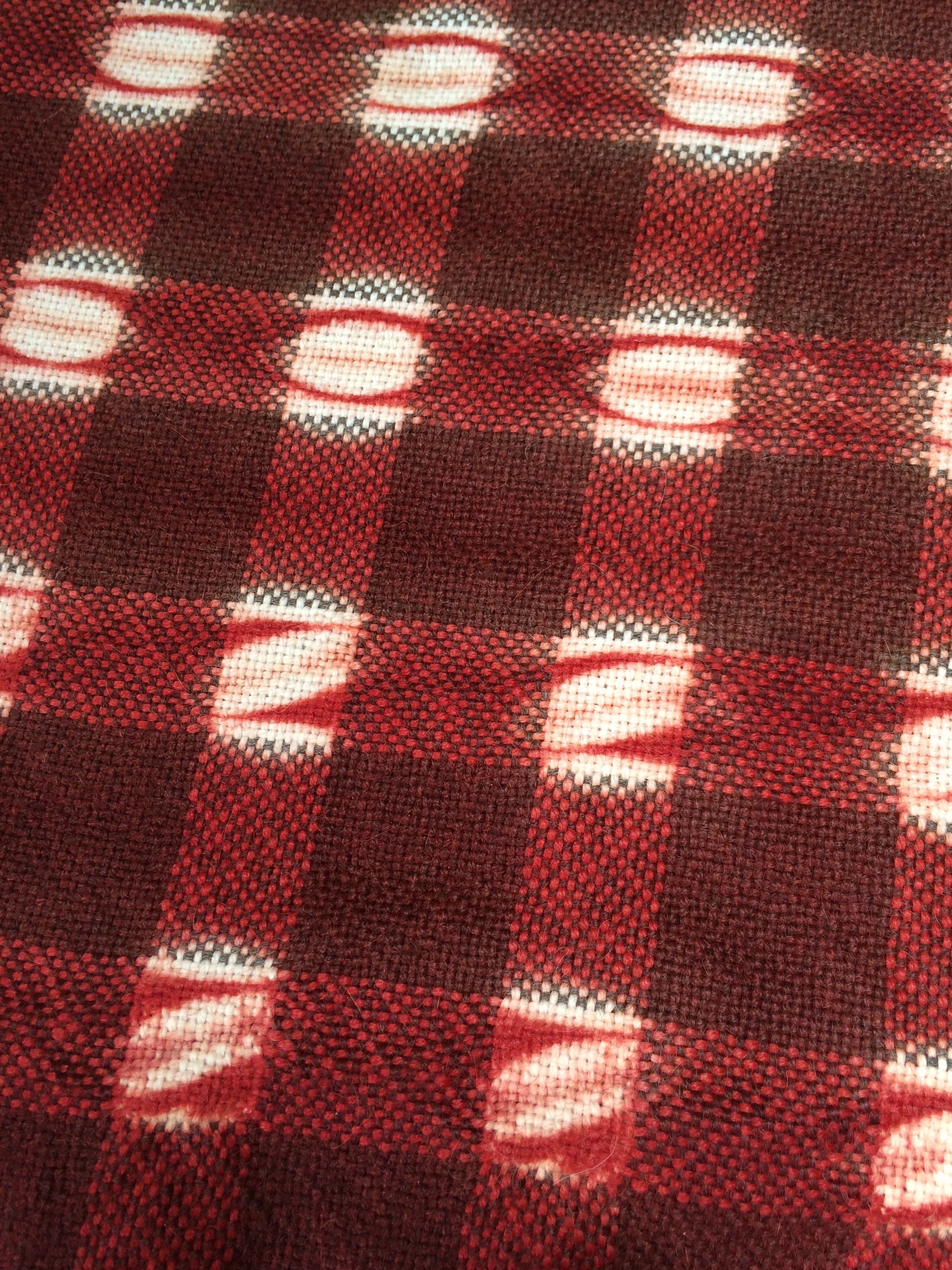
Alpaca, various natural colors in warp and weft, dyed with madder (rubia tincoria) and weld (reseda luteola)
It proved a challenge to find commercial sources of colored wools in a weight suitable for my weaving. I settled for alpaca, which was readily available in a variety of grey and brown, light to dark. I wove fabric with multiple shades in the warp, and then chose some of those yarns for the weft.
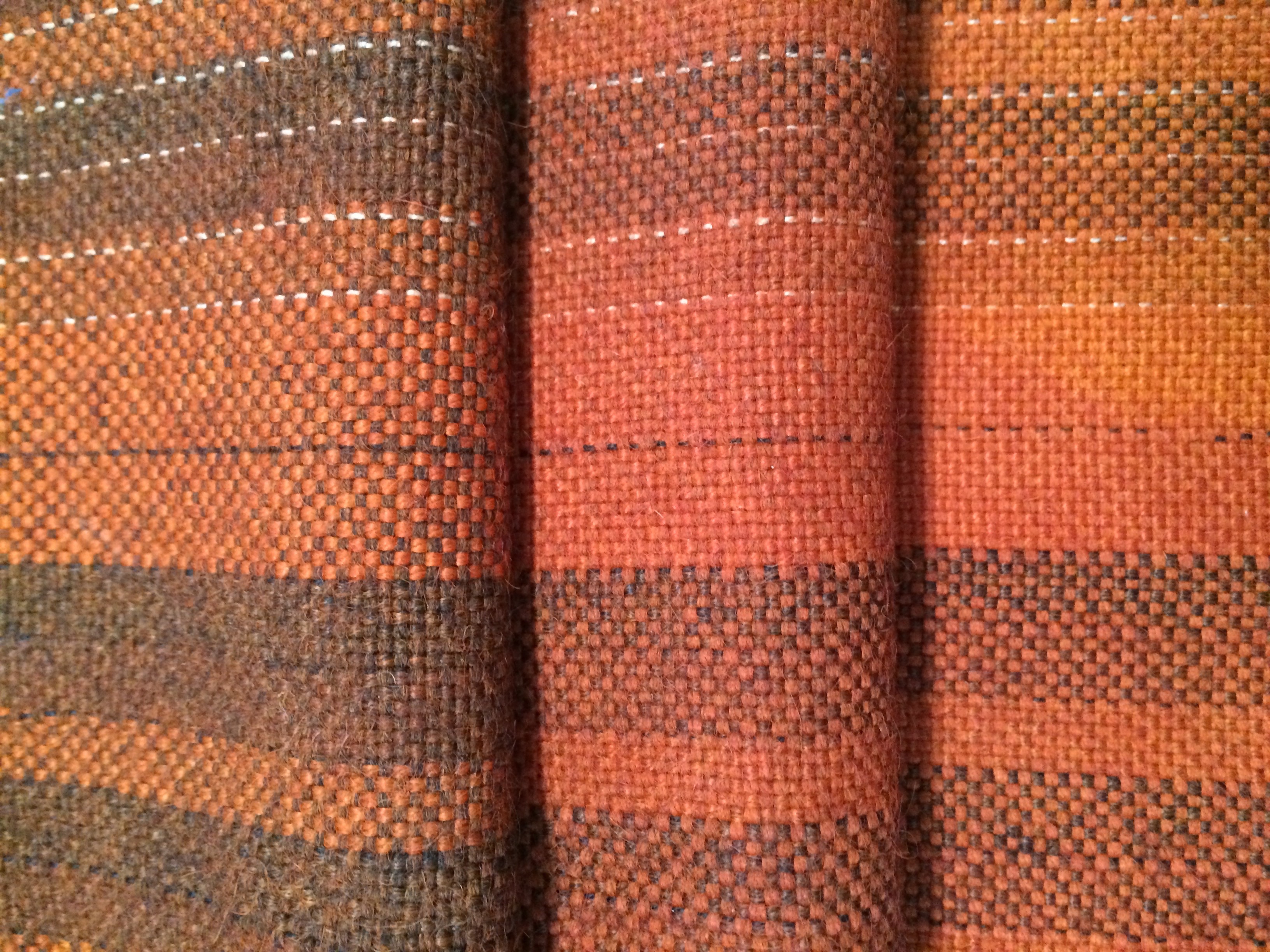
Alpaca, various natural colors in warp and weft, dyed with madder (rubia cordifolia)
I have grasped a deeper appreciation for fiber and natural color. Our starting point deeply affects the ultimate result. We’re not just dyeing cloth, but yarn and ultimately the fiber itself. I have a new appreciation for diversity of that fiber. Many of our local breeders raise naturally-colored sheep, but these wools rarely become commercially spun yarns. During the plenary sessions at 9ISS both Zhao Feng, Director of the China National Silk Museum and Alejandro De Avila, Director of the Ethnobotanical Gardens in Oaxaca Mexico, referred to similar historical fabrics, from their respective countries. Each of the fabrics was woven in a simple check pattern of natural brown and white fiber. The fabrics were resisted with similar tie-dye processes and then dyed red. Resourceful and creative weavers and dyers have used naturally colored yarns for centuries.
Alpaca, woven shibori resist, dyed with madder (rubia tinctoria), inspired by historical check patterned textiles from China and Mexico
The presentations by both Zhao Feng, and Alejandro de Avila, as part of the 9ISS proceedings, may be viewed here.








 Natural Dye: Experiments and Results