A Visit to Green Matters Natural Dye Company

We headed out recently for, what has become, our annual trip to New England. I always try to include a stop at a “place of interest”. Last year I contacted Winona Quigley at Green Matters Natural Dye Company in Pennsylvania. She was very welcoming and I was pretty much in “awe” of what she was doing there and, as a result, didn’t make a single note, or take a single picture. 

This year, I arranged to stop by again, with the idea of documenting her operation a bit and sharing her story. 

Green Matters Natural Dye Company is a small scale dye house that uses natural dyes exclusively to dye garments for their customers.  

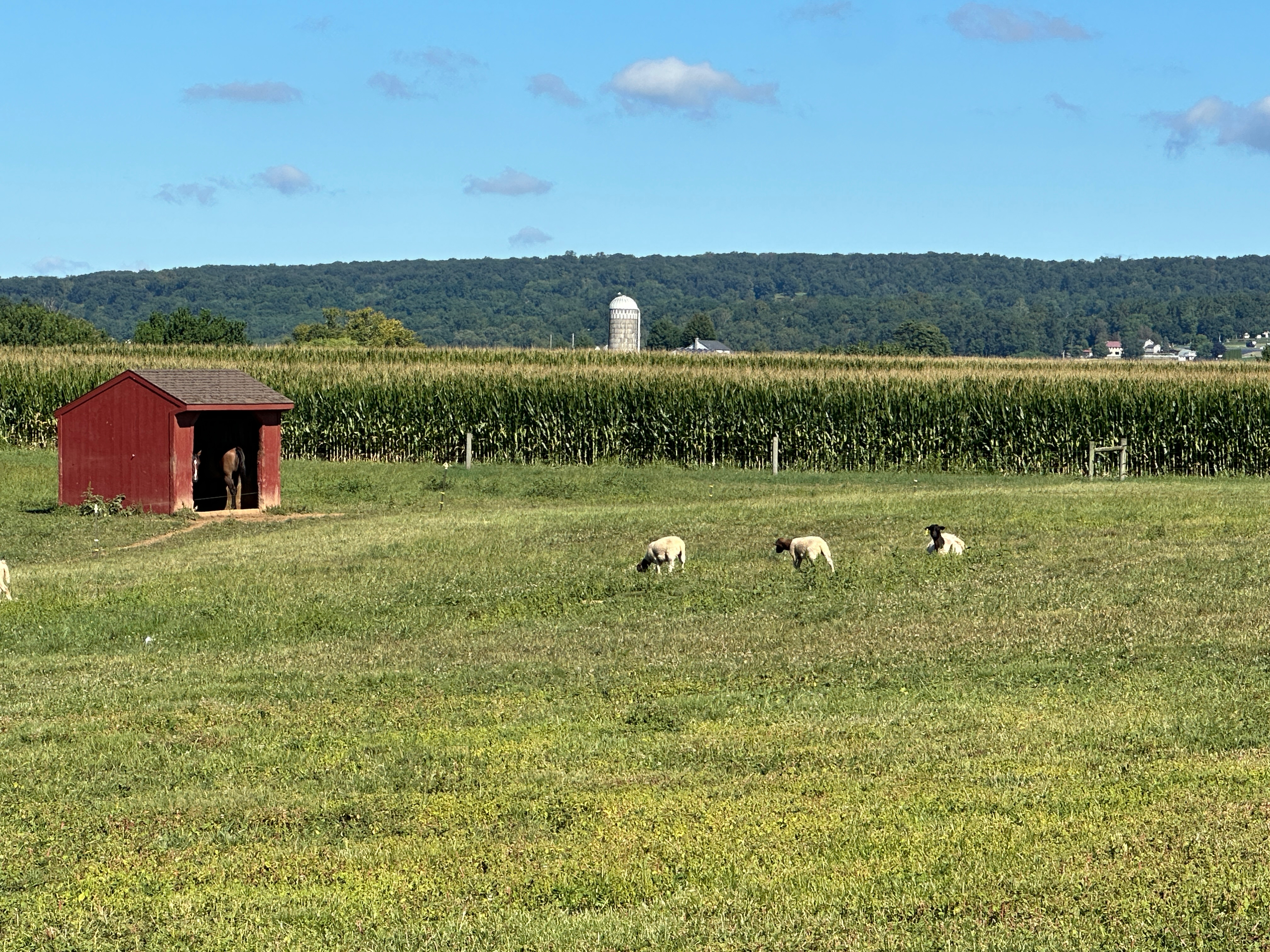
Winona Quigley, founder and owner of the company, studied fashion at Parsons but she has been thinking about sustainability and natural dyeing for a long time. When it came time for her to do a “capstone” project, she wanted to design a line of naturally dyed clothing. This eventually evolved into The Green Matters Natural Dye Company, which began its first dyeing in pots at Winona’s mother’s house in Lancaster County PA 10 years ago. The current location of the dyeworks is still in Lancaster PA, an area known for its beautiful farms and agriculture,  and where a horse and buggy is a common site on the road. But the dyeing here is all small scale industrial. 
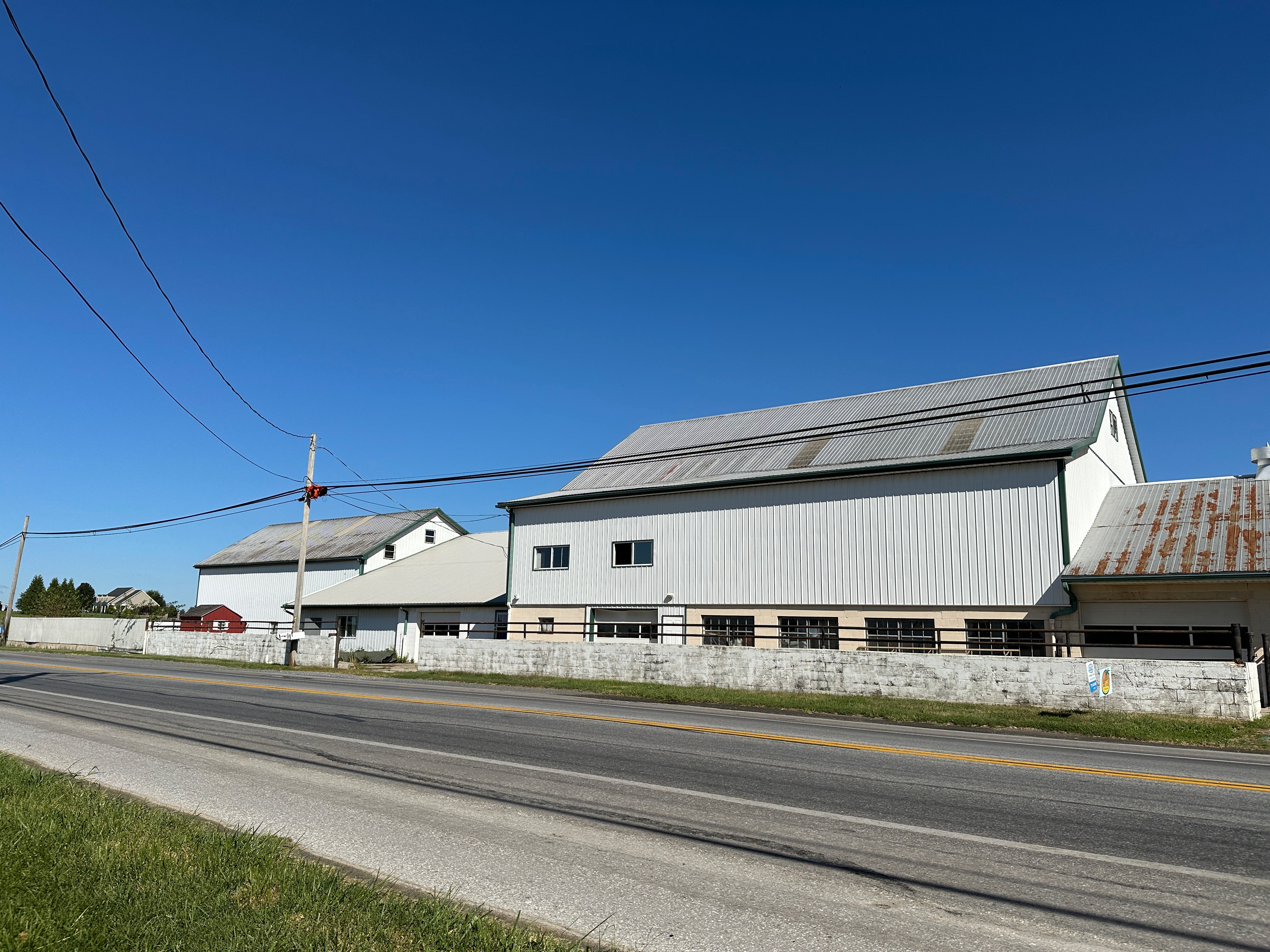
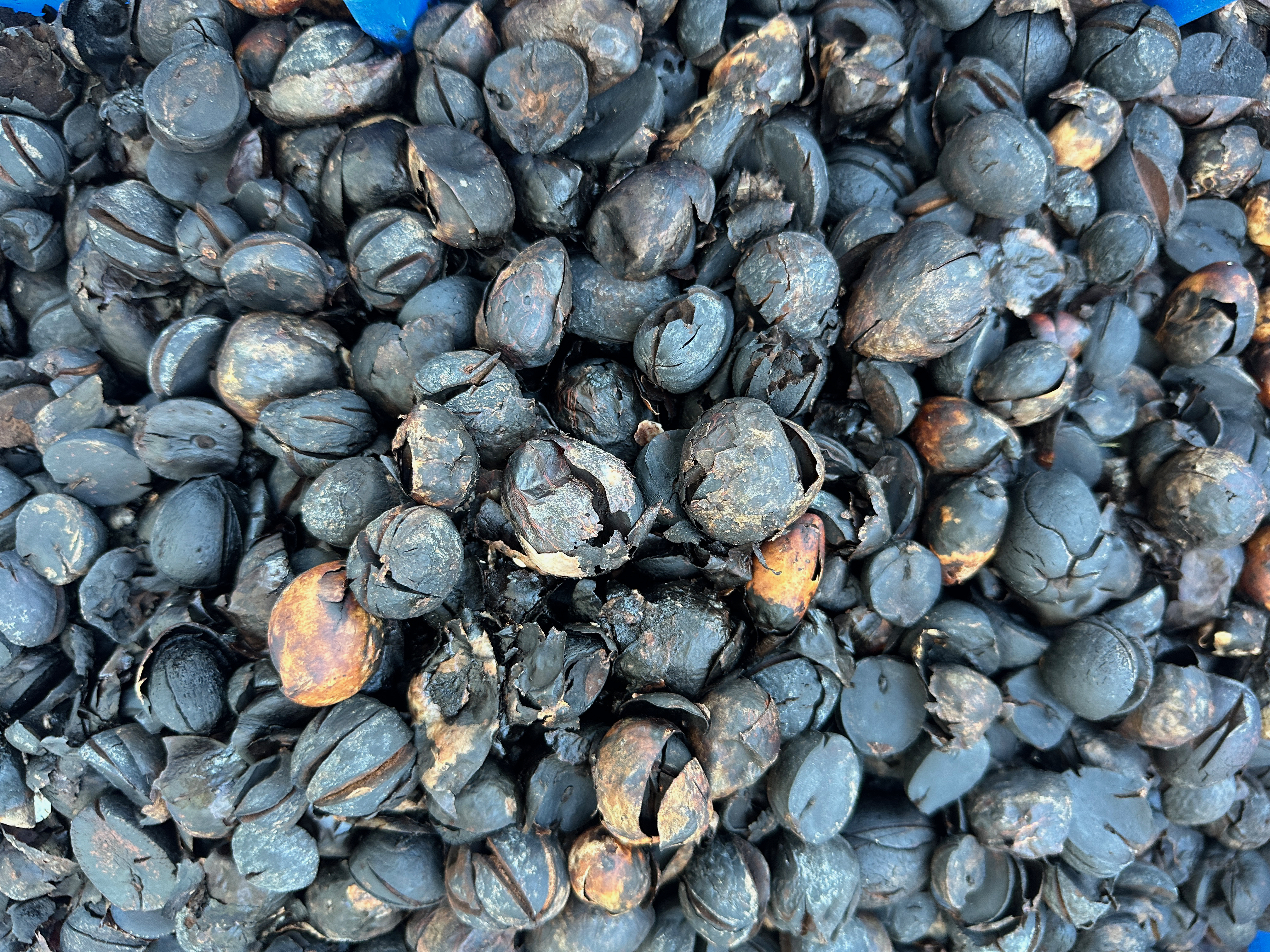
The Dye Works operation is approached from the back of the building and truly looks like a small industry.  The telltale sign that we had found the right place was the buckets of avocado pits, which looked like they’s been cooked to extract their color. 
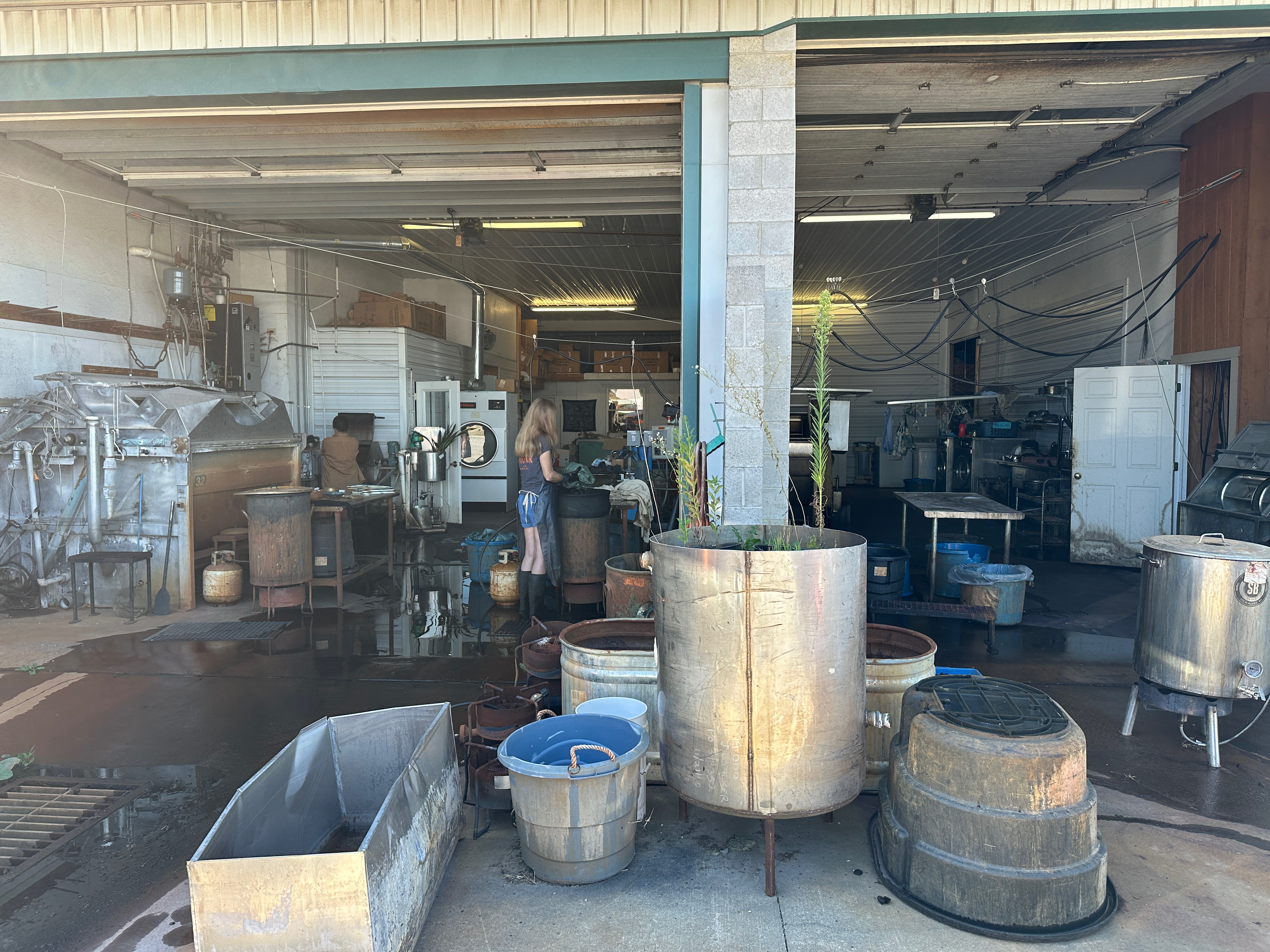
Entrance to Green Matters Natural Dye Company

The company does some work with designers to develop small lines of custom natural colored garments but a very popular and important focus is the “Dye Color of the Month” program. Dye color blends are developed by the dye team and are most often an interesting mix of more than one dye plant (such as “rum raisin” made from cutch and madder or “ochre made from cutch and weld). Customers send in their own clothing (and even bed linens) which can be given a renewed life with a fresh, naturally sourced color. The dye team will unpack the garment, mordant when needed, and then apply the chosen dye color(s). Colors are sourced from both plant materials and natural dye extracts. Tie-dyeing is also an option, either in the initial garment dyeing, or as a more subtle post dye process. 
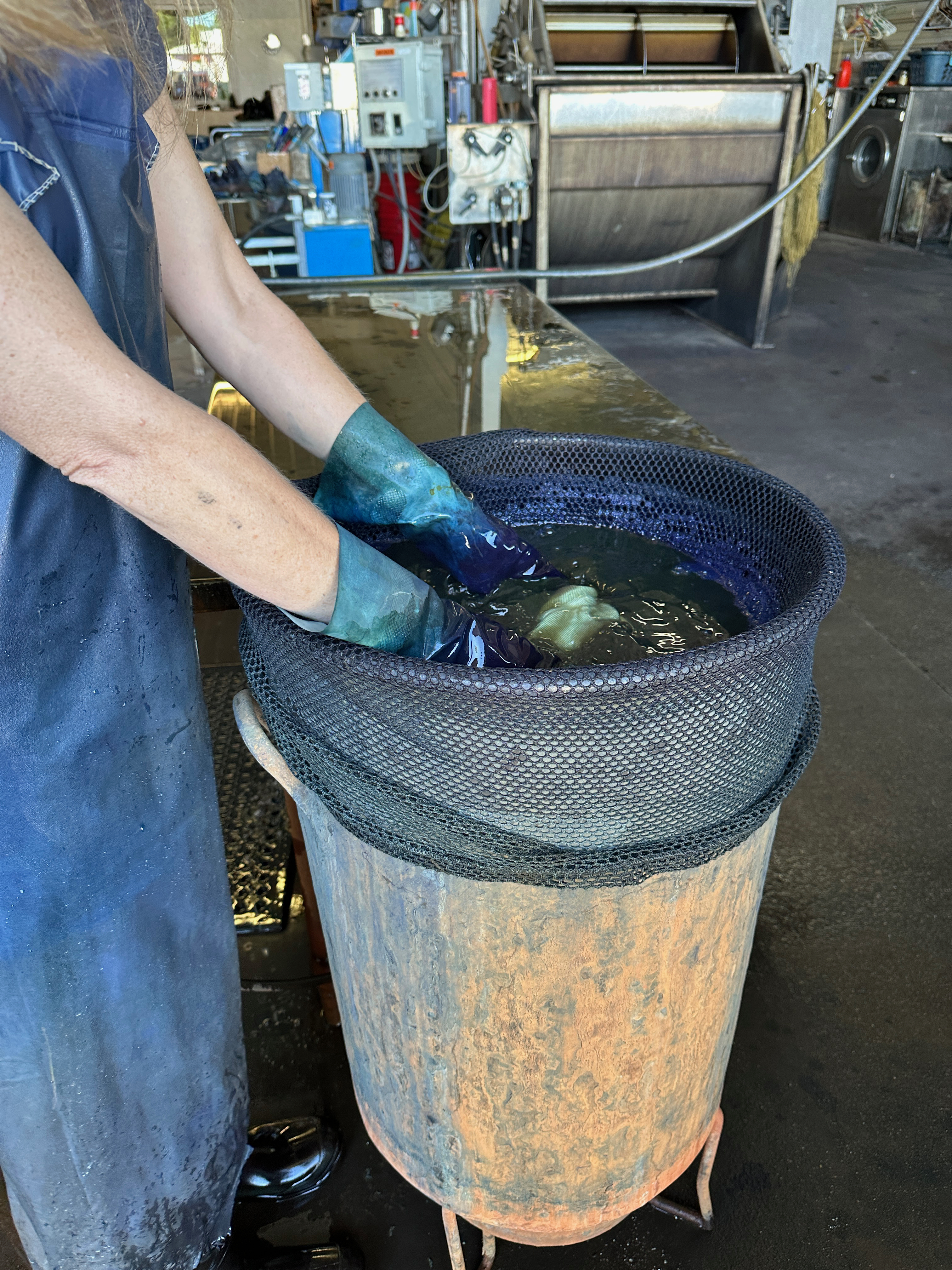
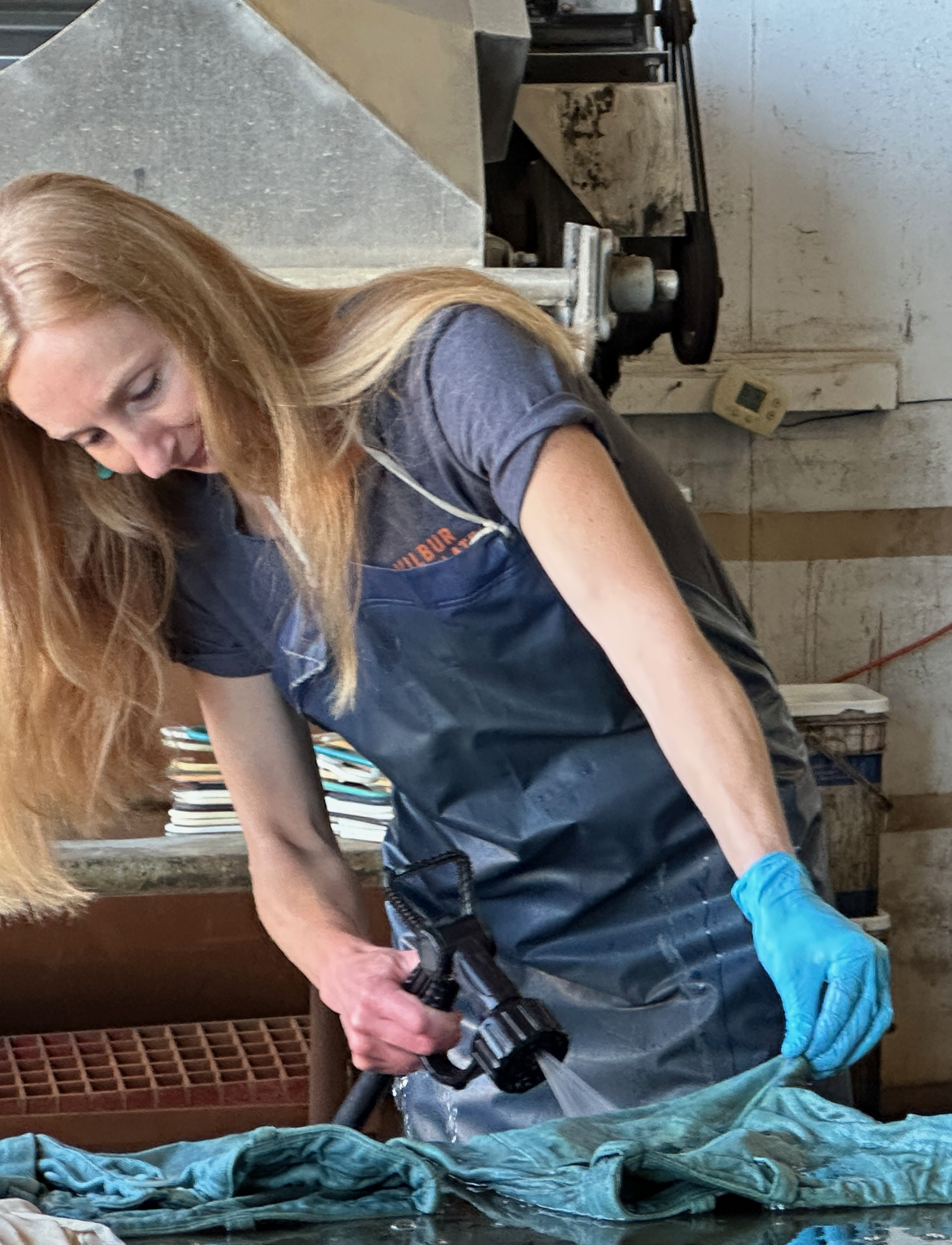
Each garment is dyed individually in indigo by Cara in an iron vat, and then carefully hosed off (with rain water) to rinse between immersions in the vat.  Color mixes often include very carefully dyed shades of indigo, followed by mordanting and subsequent dyeing.

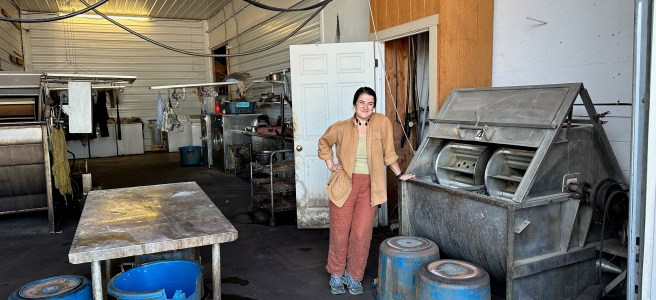
Mordants and mordant dyes are applied in small dyeing “machines,” like open top washing machines. These particular machines were custom fabricated for a small industry but were never used. Green Matters located them in storage when they were ready to expand from using dyepots at Winona’s mother’s home to their current location. The machines keep the garments in continuous motion, assuring the most even mordanting and dyeing possible. This kind of piece dyeing is impossible to do well in a studio dye pot. Much more sophisticated machines are used in industry today but these older machines do the job well. 
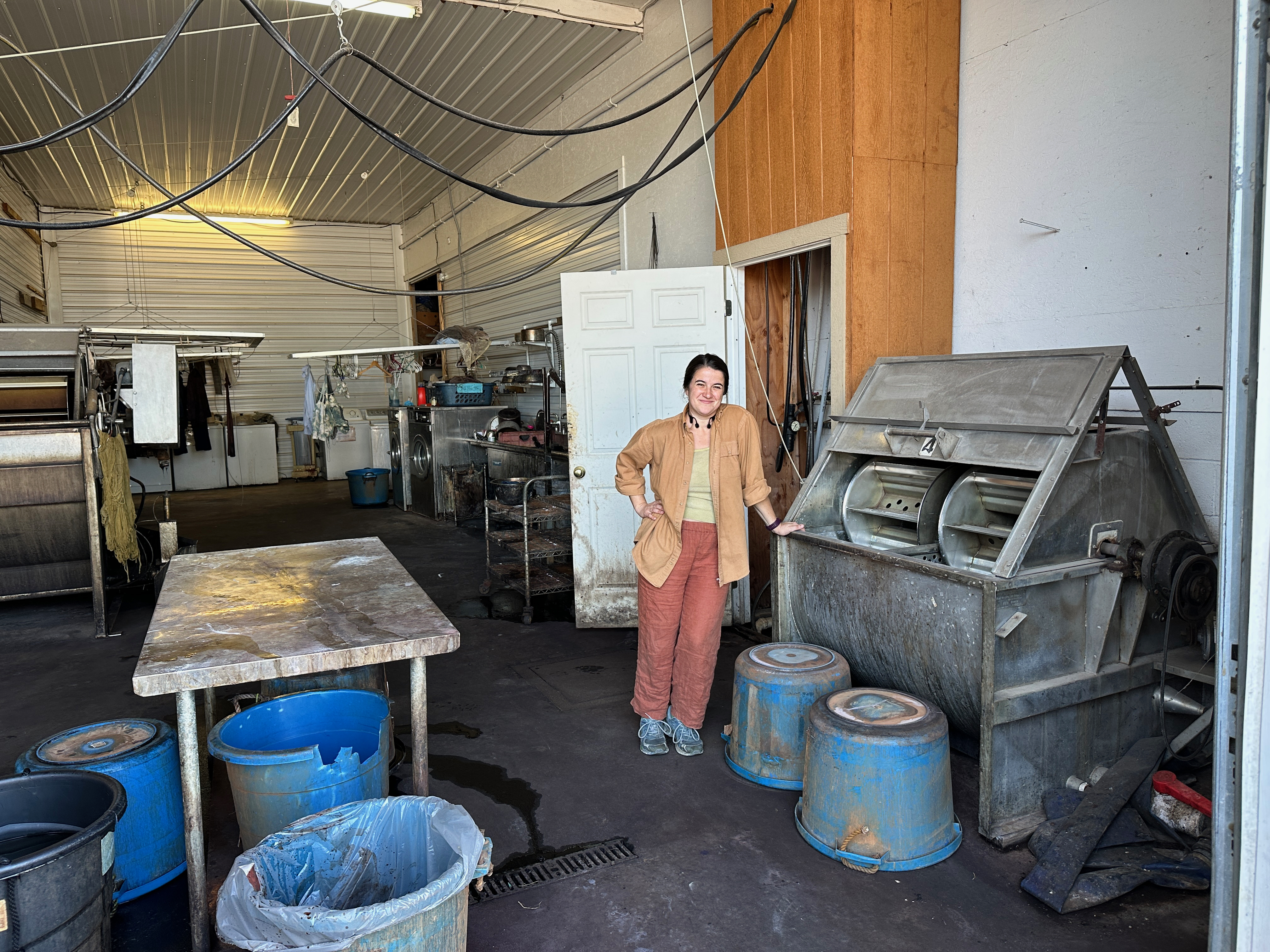
Winona Quiqley with one of the larger of the dye machines. The two paddles in the machine keep garments separated and moving evenly during the dying.

The concept of refreshing our old garments with color is smart. If you are like me, we all have too many clothes. Some of them are loved, and will continue to serve us with a little “tweaking”. You may have a well-made and cherished garment, but it’s faded, sun bleached, stained, etc. Perhaps its light color is not practical for gardening, farming, or working in the studio. Vintage garments can be given a new life with a contemporary color. Re-dyeing is making a conscious choice by countering the pervasiveness of fast fashion. I often re-dye garments myself but am always plagued by the issue of uneven dyeing, as I am limited to dyeing in pots.
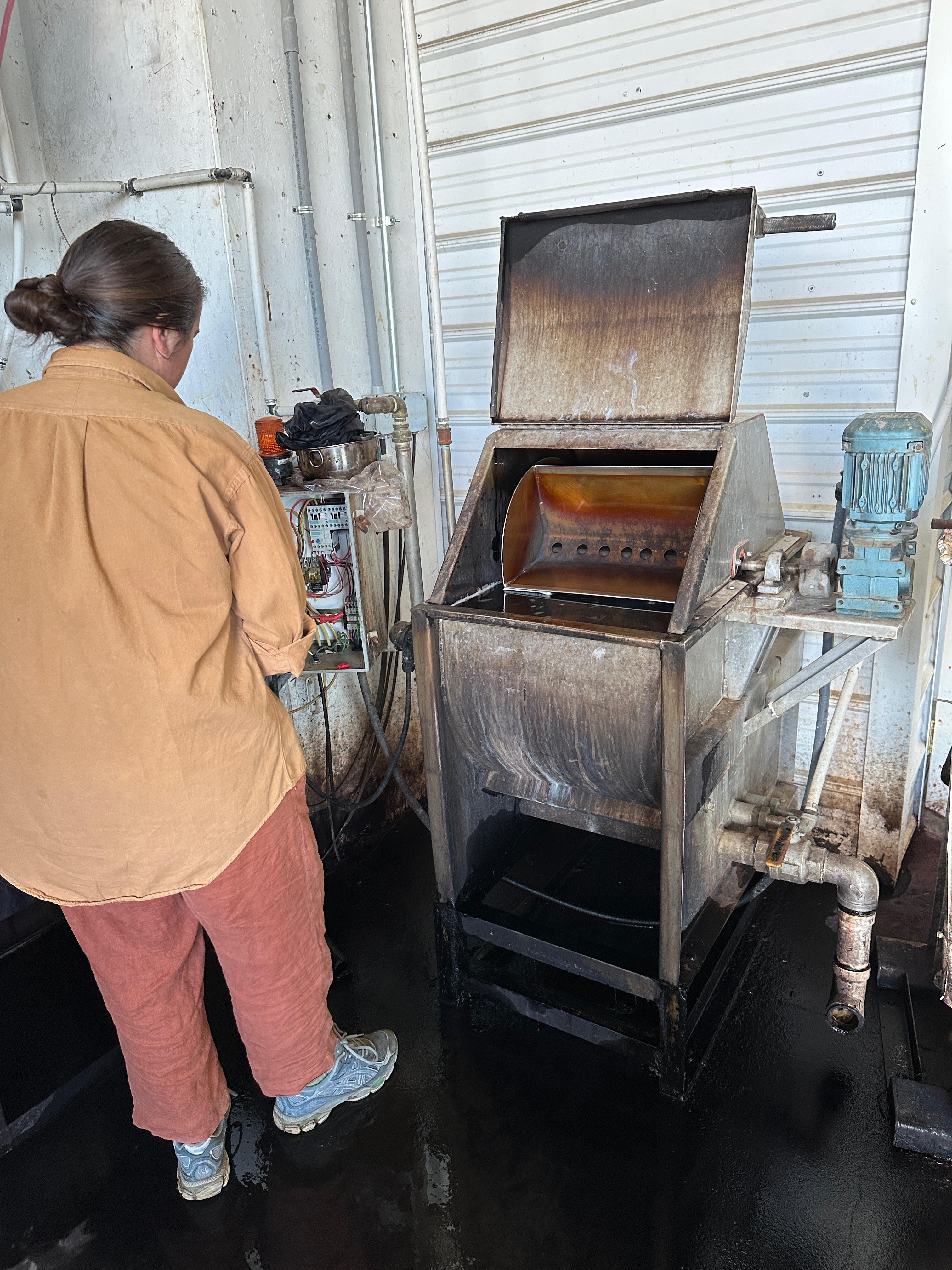
 

As I was leaving, Winona was getting ready to make some electrical repairs to the small dyeing machine. We learn to do EVERYTHING in our studios!

Water used for dyeing is all rain water, collected in cisterns underneath the building. The dye machines, which are energy efficient, use the same motor as a dairy mixer, and are easily maintained in a farming community.  

Several things that truly impressed me:

  • Choice of dyes. Green Matters seems to consistently make good choices about which dyes to use for the most long lasting colors. And they are combined in beautiful ways.
  • The use of rain water. We all know that dyeing requires LOTS of water at every step. Doing this using a renewable resource not only saves $$ but is just smart!
  • The re-purposing of dye machines and the ability to keep them maintained and working. 

So, do consider sending a favorite natural fiber garment to Green Matters for a “facelift”. Far better that we promote a company such as this, than purchase yet another garment. Here is where to learn everything you need to know. Invest in a new color for yourself! The ordering process is easy, the choices are clear, and they will send you a mailing label to ship off your garment. And occasionally, Green Matters hold in-person classes, where perhaps you can dye your own clothing.
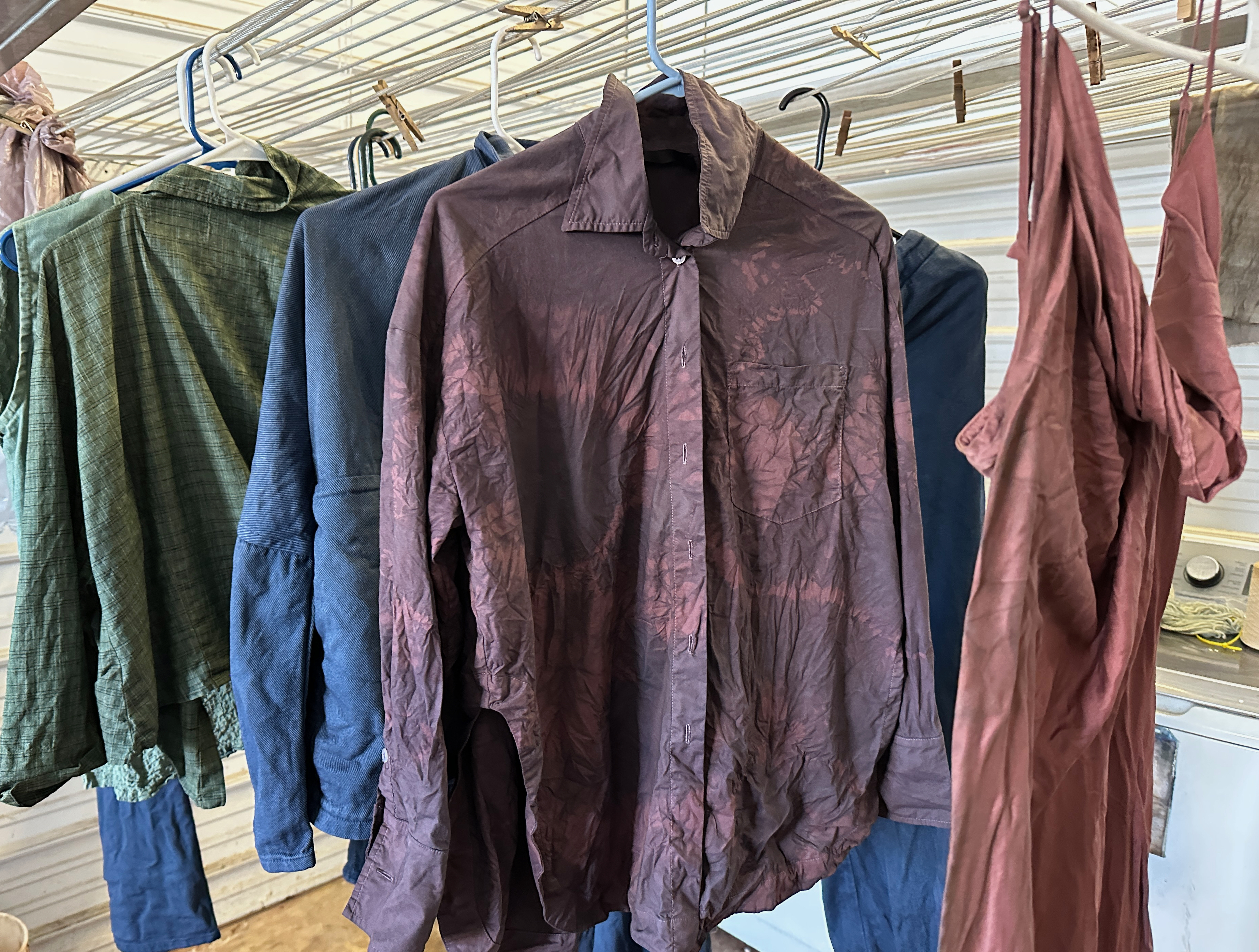
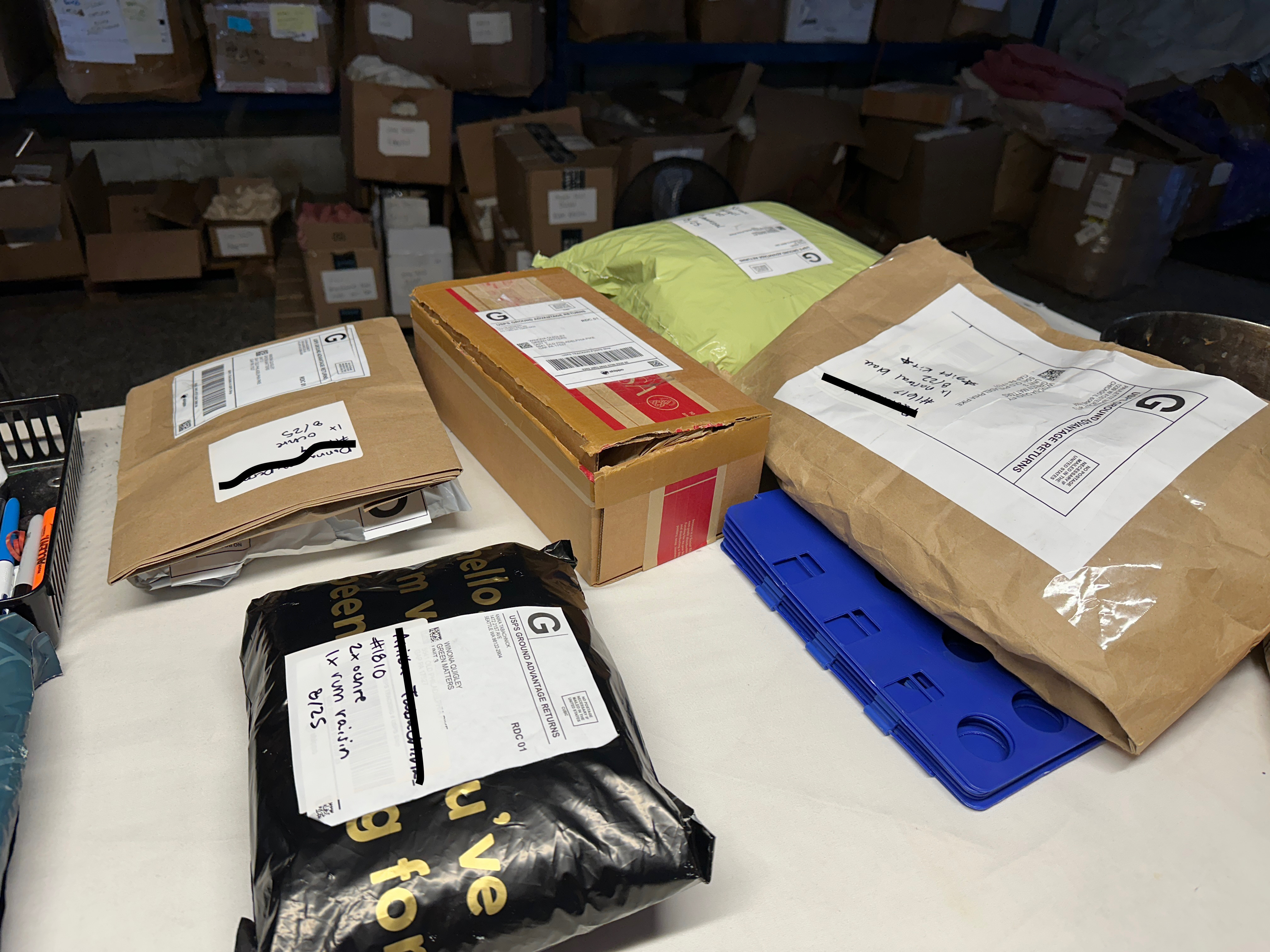
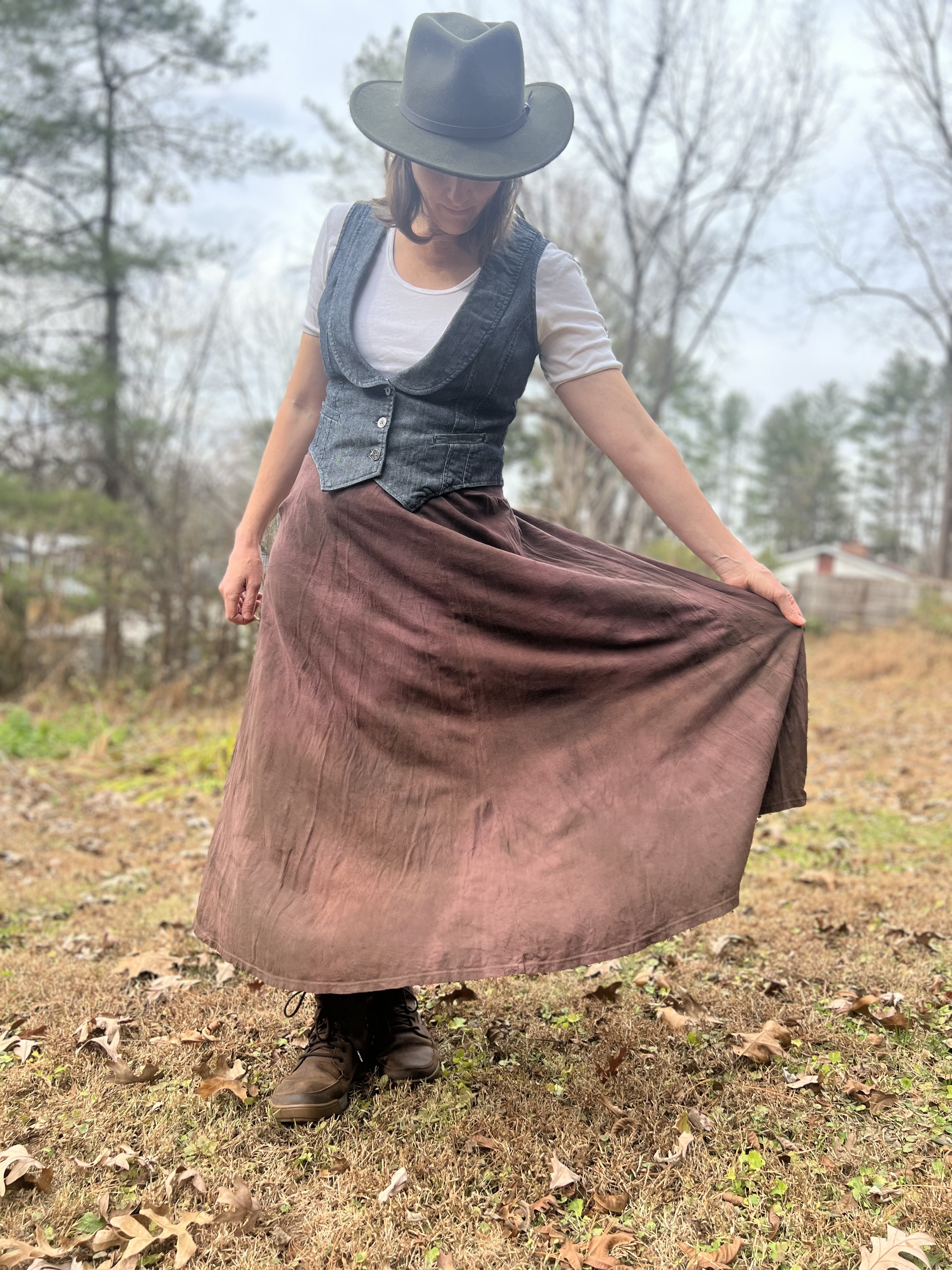
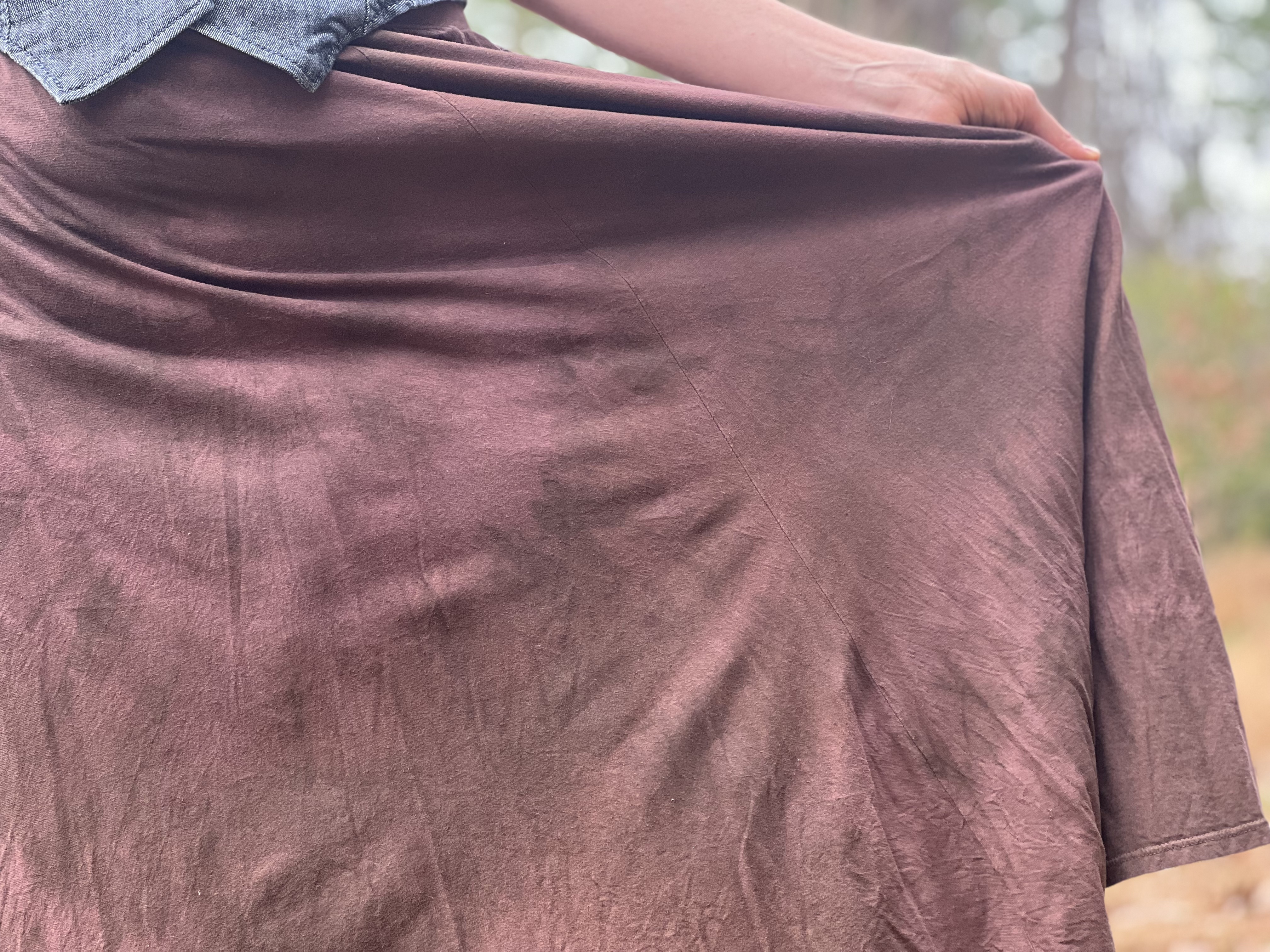
In order to truly understand how the process with Green Matters Dye Company plays out, I brought a favorite skirt of my daughters – it WAS pink and stained and thus she never wore it. She had asked me to dye it but I don’t have a pot big enough to even hope to get it dyed well. Green Matters Dye Company sent it back to us transformed, dyed in “rum raisin”, which is a combination of cutch and madder and lightly treated with iron in a “tie dyed” design, in order to further camouflage the original staining. This post dye treatment is an option. Now it’s a skirt that she loves to wear – and it even came with care instructions.
If you are looking for a sustainable gift for a special someone this holiday season, consider gifting a dye lot. It will come with all you need to ship off a garment and give it a new life.
Fermented Indigo Vat #1:  A Journey from Quick Reduction to Slow Fermentation

© Catharine Ellis, as posted to the blog: Natural Dye: Experiments and Results

On this blog site, I have previously written about the indigo fermentation vats in very general terms. I have been using these fermentation vats exclusively for over 5 years now and I feel strongly that it is the best approach to use for indigo dyeing. So, I have made the decision that I would like to share much more specific information regarding how to make and maintain these vats through a series of posts in coming weeks. I hope to roll a new one out every few days days or so.  

Since I began the transition to using ONLY natural dyes in 2008, I have continued to learn and to refine my practice. Dyeing with indigo has been one of the most rewarding, yet challenging adventures. Striving for, and practicing a level of mastery related to indigo dyeing, is necessary to achieve a full palette of color using natural dyes and having the ability to control shades of indigo blue is a necessary skill. 

In the 1970s, I did my first indigo dyeing using sodium hydrosulfite as a reduction agent for my vat. I never liked dealing with the reducing chemicals, such as sodium hydrosulfite or thiourea dioxide. The smell was off-putting and, more importantly, I had concerns regarding the safety of such chemicals.  I abandoned their use (and indigo dyeing) until many years later.

I was thrilled when I learned from Michel Garcia that indigo vats could be made using benign substances such as  sugars, plants, ferrous sulfate, and lime (calcium hydroxide) which I was able to purchase in the grocery store as “pickling lime”. Vats made this way are considered to be, or described as,  “quick reduction” vats. They reduce and are ready for dyeing within hours and can be maintained for an extended period with proper attention. I was very happy. These are the vats that Joy and I included in our book “The Art and Science of Natural Dyes”.  I believe that these are still the best vats for short term dyeing workshops and other situations where a working vat is required quickly.

Over time, though, I observed that there are issues and challenges with these vats.

Crocking (the rubbing off of color) was a problem, despite proper finishing and  washing, and especially when dealing with knitting or weaving yarns, which are handled a great deal.  All indigo dye seems to exhibit poor resistance to rubbing to some extent, but the quick reduction vats seems to crock more. What I understand is that excess calcium may react with the reduced indigo and makes it into insoluble compound. These vats depend on the use of large quantities of calcium (calcium hydroxide). I am now thinking that it is possibly the reason for the bad rubbing fastness or crocking.  

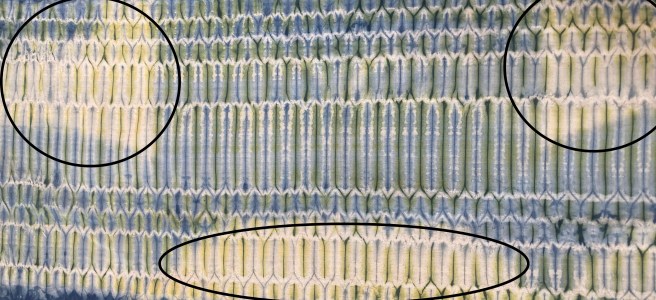
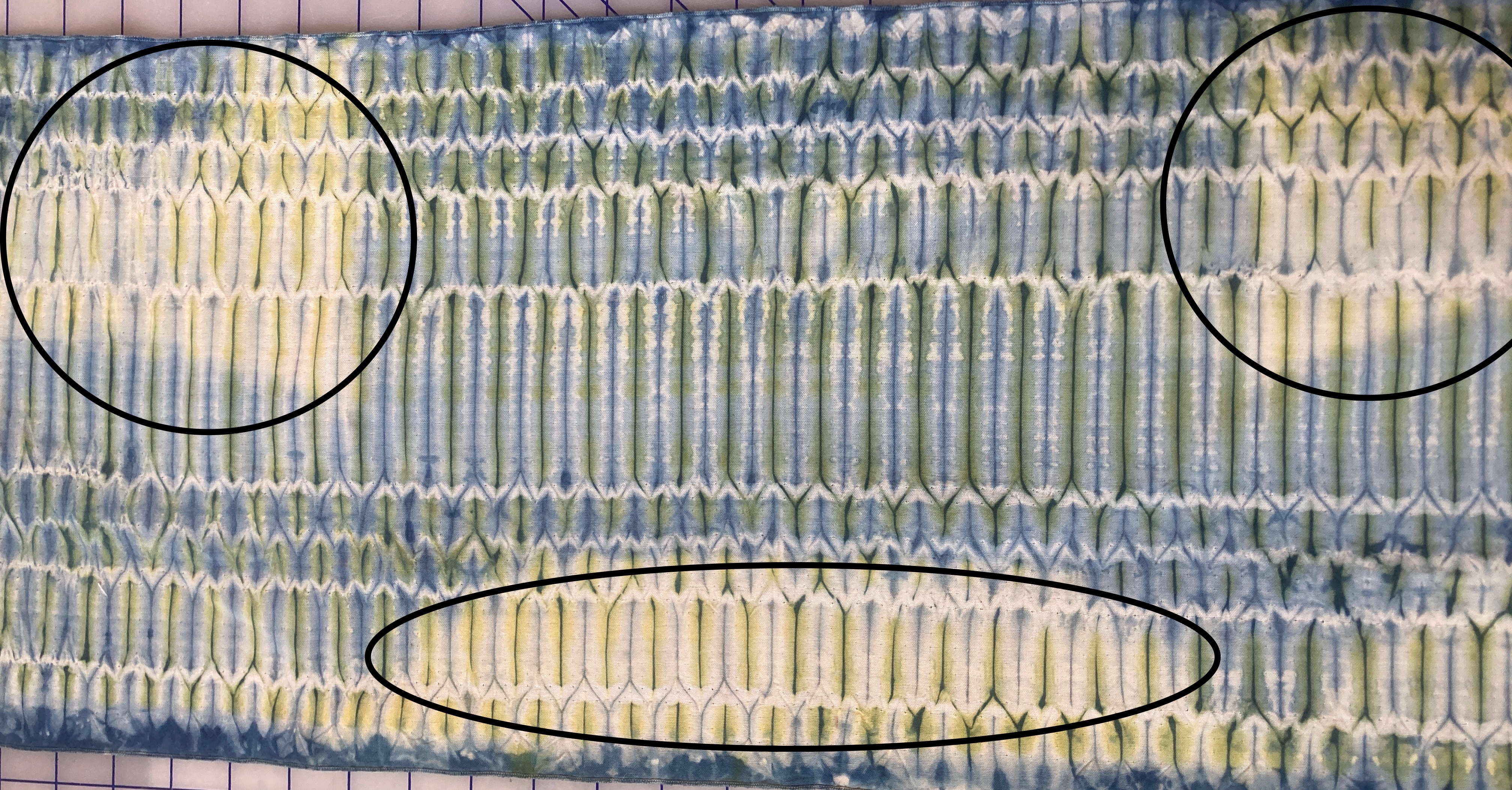
This shows the “fading” which occurred on the folded cotton cloth that was stored in a dark place for a number of months. The indigo blue has nearly disappeared in some places. The fading mirrors the actual folds that were in the cloth. It is NOT an intentional design element.

The color often faded inexplicably, turning pale and displaying washed out areas, or just completely disappearing.  I have observed this occurred where cloth was folded and put away on the shelf.  Even when a textile was rolled up and stored in the dark, I would find that the blue had literally disappeared in some parts of a textile despite careful finishing and neutralization. I’ve had discussions with other dyers who have also experienced this same phenomenon, so I know I am not the only one who took note. I always do lightfast test on the dyes that I choose to use for my work but this was something else entirely

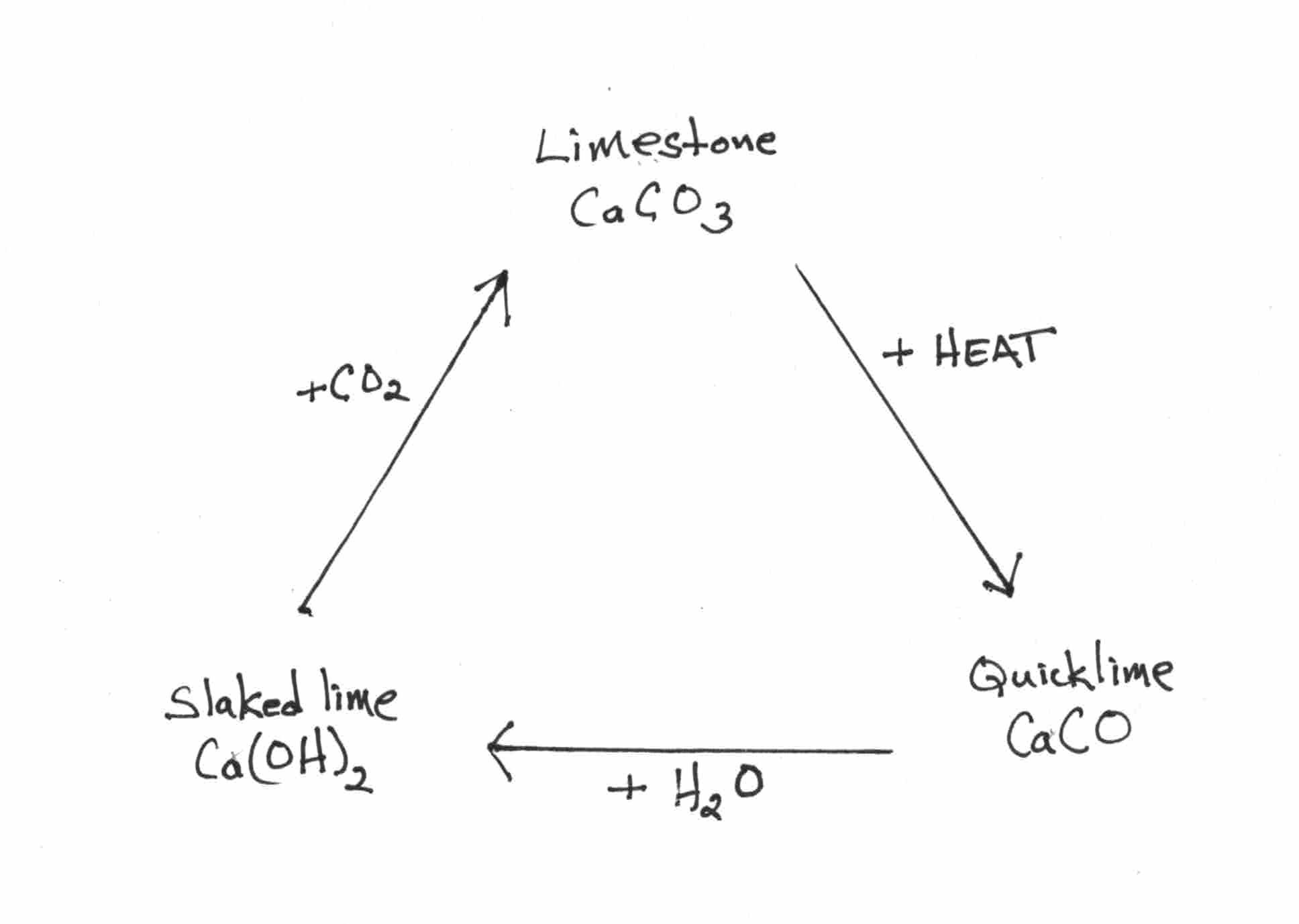
The “lime cycle” illustrates how limestone is heated to create quicklime. Water is added to make slaked lime. Does exposure to air/carbon dioxide turn the lime back into limestone again?

In 2017 I began my journey using indigo vats that reduce by the activity of fermentation  after meeting Hisako Sumi, Japanese indigo dyer and researcher. Hisako encouraged me, guided me, and even put together and gifted me a small “kit” which she mailed from  Japan, so that I could start my first fermented vat.  I began experimenting, testing, dyeing, observing, and never looked back. Hisako generously ‘coached” and mentored me from from her home in in Hokkaido and provided me with a much deeper understanding of my vats.

The COVID pandemic kept many of us home for long stretches of time, and during that period many of us learned new skills or honed old ones. That time provided me the opportunity and focus to tend indigo vats and to develop and refine an understanding of the fermentation process. My indigo dyed textiles have never been better! I no longer fret over potential “unexplained” fading. The quick fermentation vats require high alkalinity (pH 12). The fermented vats are able to be maintained at a lower pH than the quick reduction vats (pH 9.5-11). This is accomplished by the use of wood ash lye, soda ash, OR potash to achieve the correct pH. I have used all of these alkaline sources  successfully. Lime (calcium hydroxide) is used in very small amounts and only to “tweak” the pH maintain desired levels. The lower alkalinity of the fermented vats is more suitable for all fibers.  I will likely never return to quick reduction vats, unless specific circumstances require their use.        

In some of my previous blog posts, I have written about this process in general terms and also have given credit to Cheryl Kolander, whose online recipe was a good starting point for me, but until this time, I was not ready to publish anything definitive of my own. In fact, I have never published an “actual” recipe on my blog: Natural Dye: Experiments and Results

I am not a trained scientist/chemist, but through experimenting and multiple observations I have done my best to understand what happens in the fermented indigo vat so that I can use and maintain the vat. And now it is time to share that specific information and information about the process I have used. Over the coming weeks (and about a dozen blog posts) I hope to “walk through” the planning/making/maintaining of a fermented vat and to encourage and guide dyers to explore on their own. And, as we approach summer in the northern hemisphere, it is a good time to try these vats. But do keep in mind, fermentation vats may not be the best for a beginning dyer or for someone who does not have the time and focus for it.

One does not do this alone. I owe much to Hisako Sumi, Michel Garcia, Joy Boutrup, Dr. Kim Borges of Warren Wilson College, and to all my colleagues and students who have been willing to experiment with me. 

As a dyeing community, perhaps we can all help each other to learn, understand, and to work through the process of indigo fermentation. Your comments are most welcome. My goal is to start that process with a series of blog posts that might help you begin your own journey. By all means, if you have a “dye mentor”, do consult them! I don’t have all the answers but maybe we can get there together.