
It has been a while since I have posted here, but I assure you that I am staying busy, still learning, and have been developing some new projects and ways of working.
Last year, Schiffer Publishing Co. approached Joy and me about making the the recipes that are included in The Art and Science of Natural Dyes more accessible to the user. A we thought about how to accomplish this, I was reminded that in my household kitchen, I use the same recipes over and over again and used a recipe box and cards regularly. Maybe this would be a good idea for the dye kitchen as well.
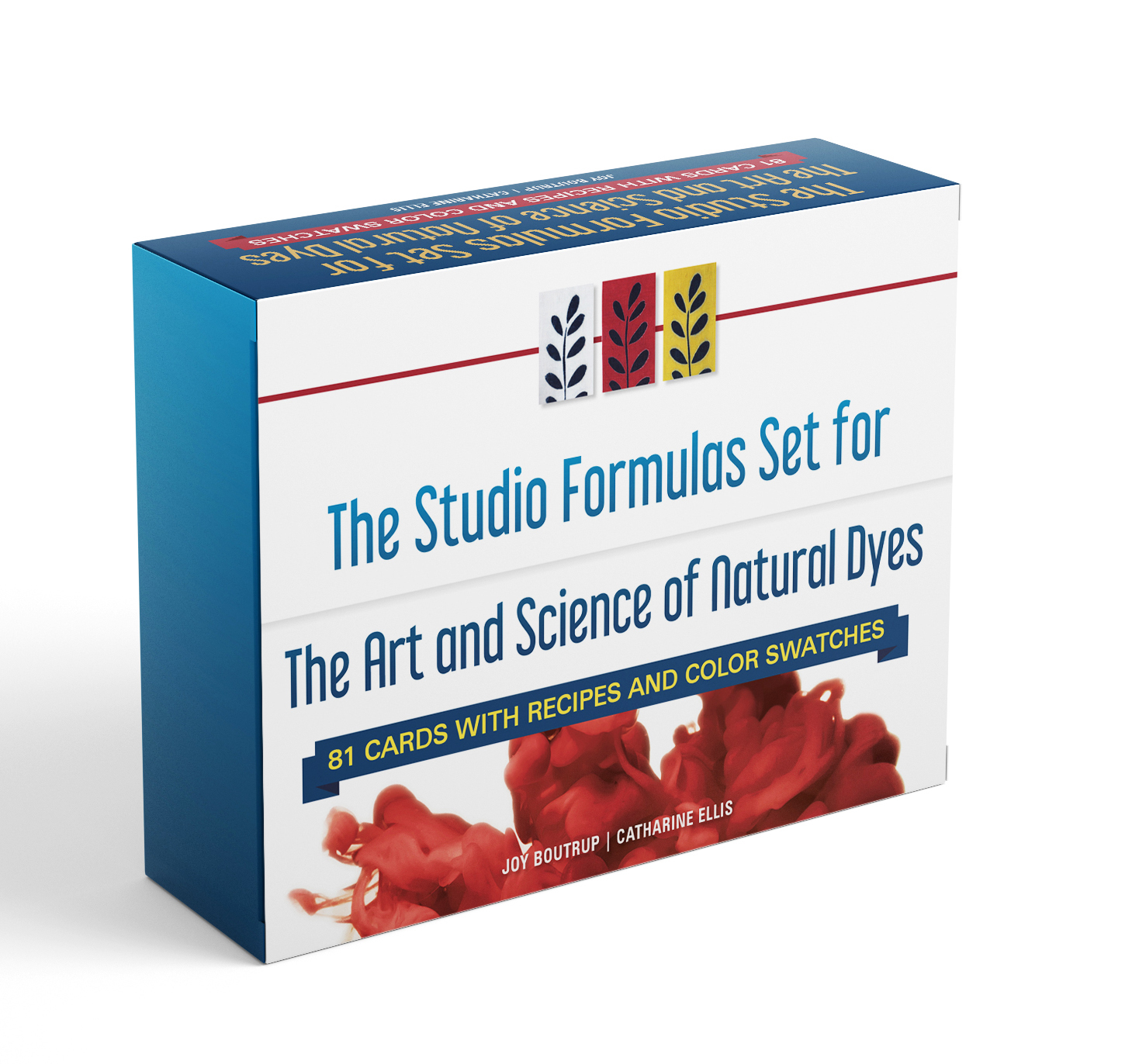
This invitation to increase the usefulness of the recipes seemed like a perfect opportunity to share the dye color work that I had been developing for many months in the studio and has finally resulted in The Studio Formulas Set for The Art and Science of Natural Dyes: 84 Cards with Recipes and Color Swatches. It is scheduled to be released by the end of June.
In 2020 I posted about Dominique Cardon’s newly published Workbook, Antoine Janot’s Colours. This little book has been a great inspiration to me. It was surprising and enlightening to find that Janot’s full palette of 55 colors was made with only 4 dyes: indigo, madder, cochineal, and weld. That bit of information has mostly changed the way I am now thinking about dyeing and color.
When I first began using natural dyes I thought it was important to have/use/stock every dyestuff and dye extract that I could get my hands on; I didn’t want to miss any opportunity! The large number of dyes on the shelf always led to confusion when I got ready to dye. At some point, I finally did lightfast tests on all the dyes on my shelf , making fastness to light a criteria for selection. Ultimately, I ended up with a much smaller number of dyes I was willing to use. Those are the dyes that we include in The Art and Science of Natural Dyes.
The documentation in Janot’s workbook helped me to take color and color mixing to the next step, which was truly learning to master my dye colors.
The first thing that I felt I needed to do was learn to control the various shades of indigo. Janot used 8 different shades of blue, each with its own name. I had to learn how to consistently achieve different shades with my fermentation indigo vats. My goal was 6 different values. Dyeing consistent blues is like capturing a moment in time, as the vats change over their life span. My first fermentation vat was over 2 years old before it finally gave me the pale blue that I needed for some of the color mixes.

The 8 shades of indigo blue used by Janot

The 6 values of indigo blue chosen for use on the cards and subsequent color mixing
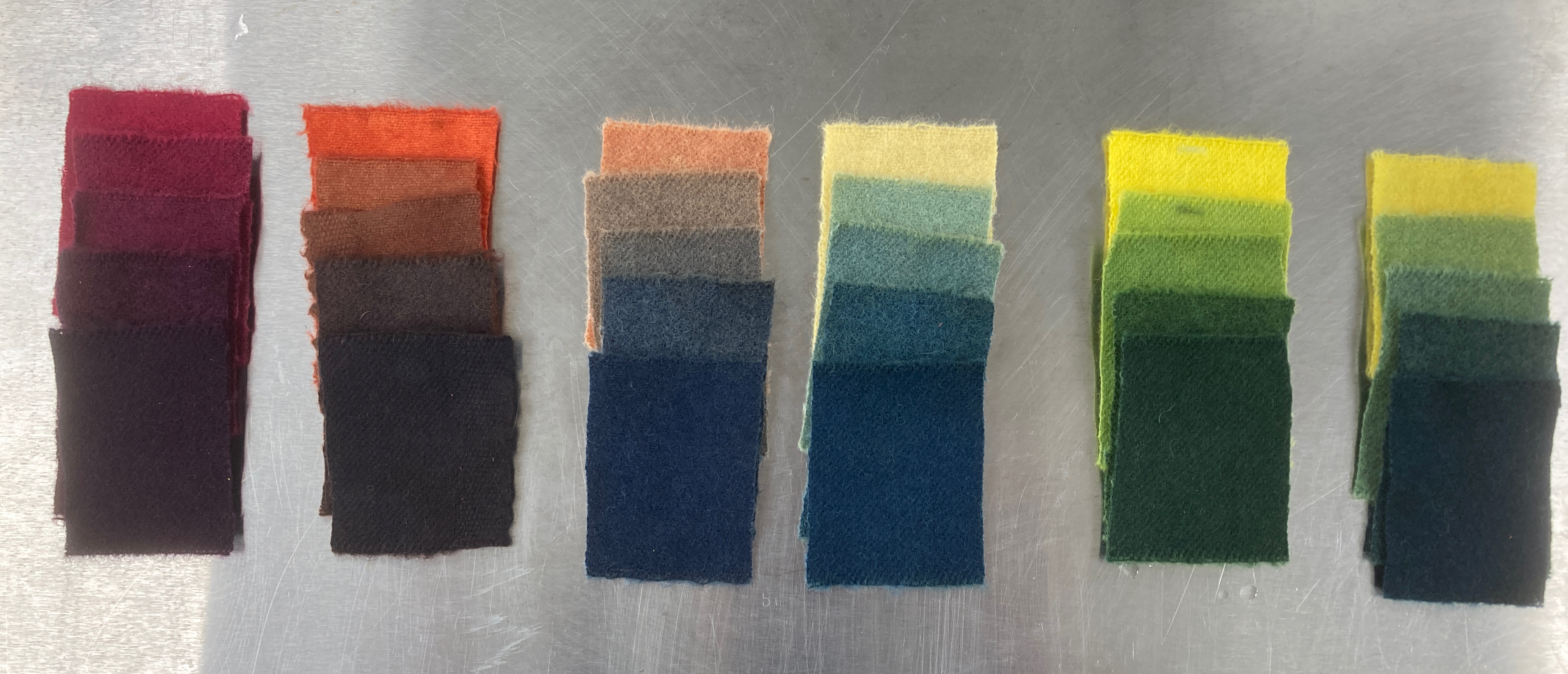
So, I began dyeing a series of predictable, repeatable color using indigo and a handful of other dyes using various depths of shade.

Various shades of yellow from weld
Various shades of indigo + a strong weld result in one set of green colors
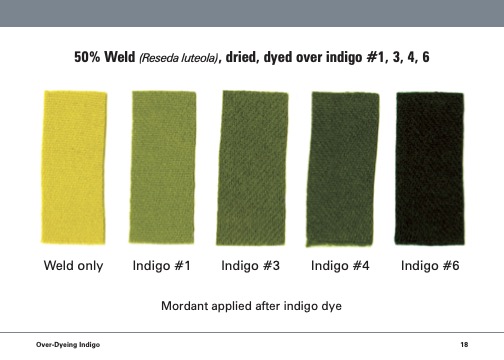

The same shades of indigo with a weak yellow results in a different set of greens.
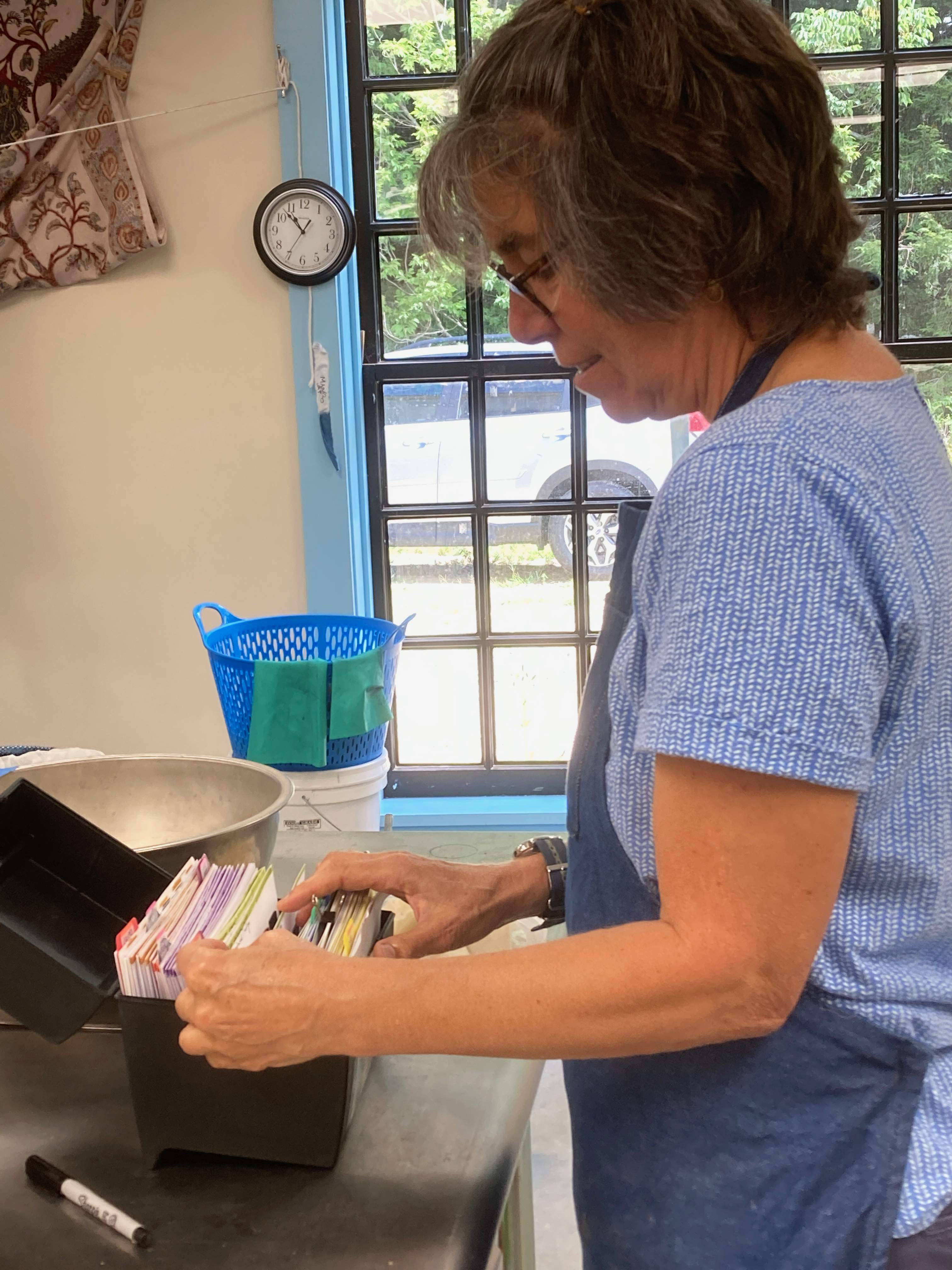
My lab notebooks are fabulous repositories of all of my testing (I am now on volume #10) but they are not always the most convenient place to go for a quick color reference. So, I began putting my color mixes and repeatable dye colors on cards – the kind that you can file in a box for easy reference. And then I began USING that reference. It was at my fingertips and ready to look at whenever needed
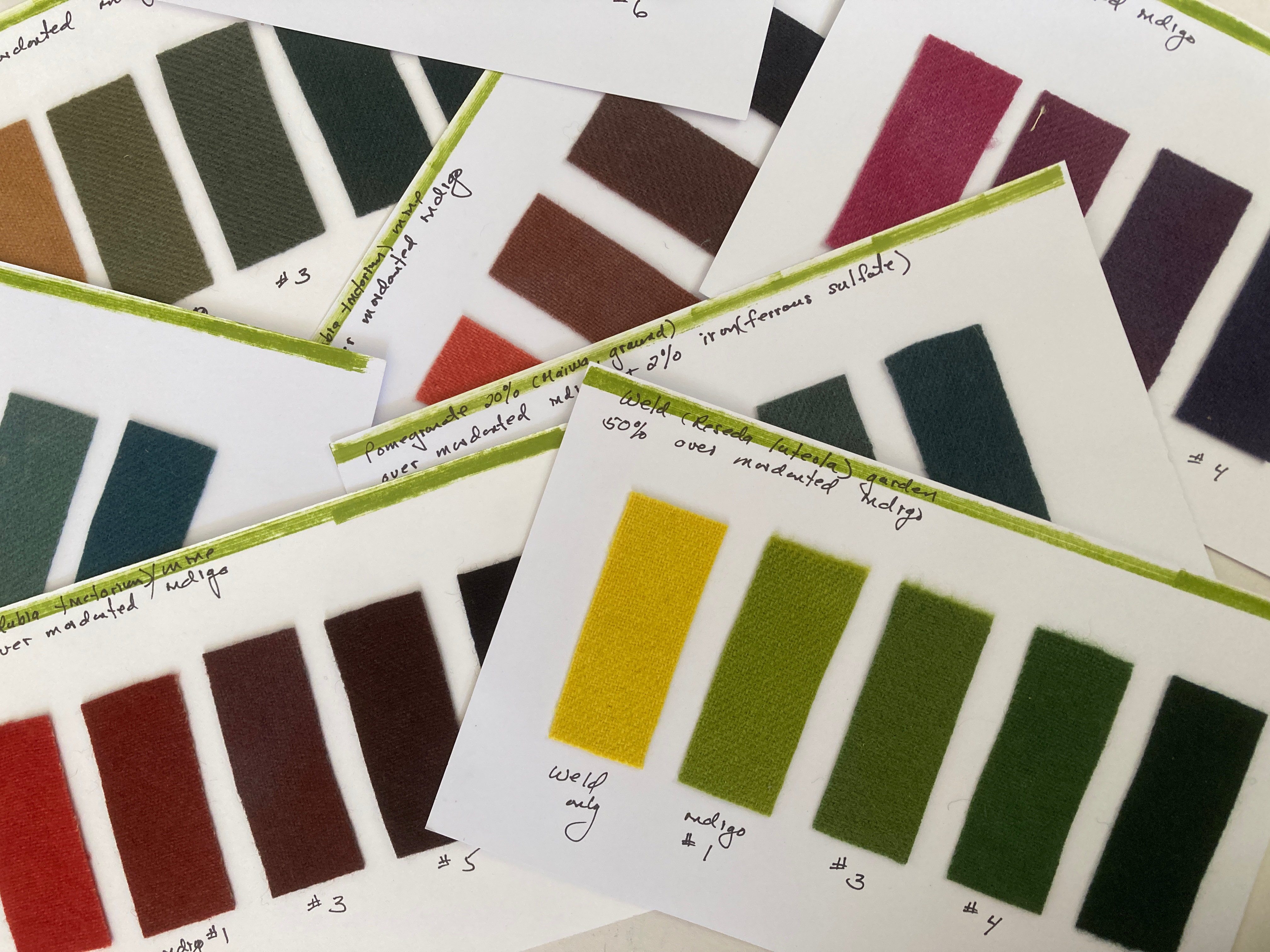
I realized that this was also a perfect opportunity to combine the recipes from The Art and Science of Natural Dyes with a set of color mix cards, that will give the dyer some basic color mixing information.
The dyes included in the color mix box are: indigo, cochineal madder, weld (and a little bit of the tannin dyes: pomegranate rind and cutch )
I have used my “box of colors” in teaching over the last months. It is rewarding to see students refer to the cards, make their own color choices, and their ability to achieve very similar results.
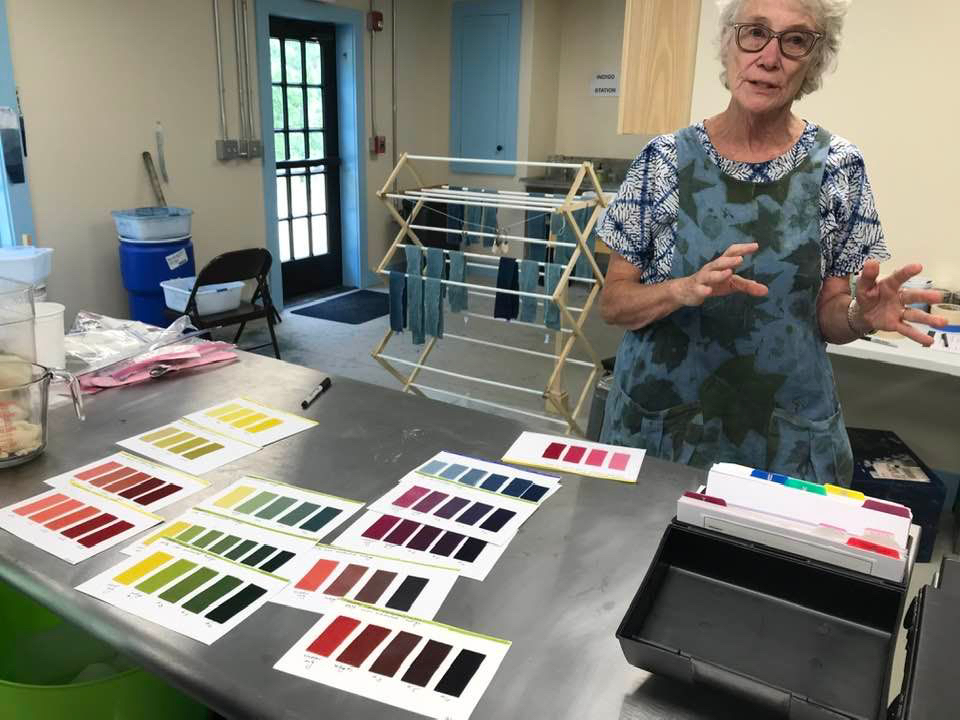
To follow soon: ideas of how to best use your own set of “Box of Cards” in your own studio dye practice.
 Natural Dye: Experiments and Results
Congrats on having this project ready to launch. The concept is brilliant.
Thanks, Sue!
Yay now a set on steps to get good results for Eco printing. 1,2,3 ways towards how to start and showing the outcome…I realise there are a lot of variables but just the basic main steps!
Thanks Catharine, I have recently been thinking about using card stock for samples instead of my three ring binder system.
Thank you for giving me a gentle push and your continued research.
Fantastic! OUR Yoshiko & tour was here at the studio today and while introducing the mid-8th ShÅsÅin-in Kasen felts I expressed the same understanding of use of a Wkspâs accessible and workable color system. I found a reprint of a 1804 handwritten notebook for Chinese felters in Japan which has limited info about their dyeing. 3 colors: indigo, sappanwood and a flavonoid like Sappanwood, Japanese Pagoda or weld to make a set of 5-color felt rugs! Dipping depends on indigo shades, reusing the sappanwood bath* gives 3-4 stepped reds to pink tones, and yellow is necessary to add zip to make the âshuâ punchy orange red and greens we need.
Hope we can all get back together at some symposium or another soon. Take care and keep up the great work! Best regards from Kyoto. Jorie
For the large felt rugs they were places in very large wooden basin for up to ten days until the red was absorbed BUT the residual yellow component of the sappanwood remained, removing the felts basically to re-fold and submerge them for even absorption of color.
I want to buy a set of cards. Congratulations.
Best regards from here to thereâ¦and have worn my alpaca front zip up sweater into oblivion, only to be worn when no one else is around! I would love to go back to Peru knowing what we know now.
Yoshiko-san picked up a SouSou shirt which is a fake Boro! I told her she had to at-least hand stitch over the inkjet stitchingâ¦which we all joked about. She said âof course she had to buy it!â
Wonderful to hear from you in Japan. The series you did for Slow Cloth was fabulous!
…and so interesting how we learn that professional dyers from history always worked in this way: limited number of dyes and mastery of those dyes and their potential. Thanks for sharing this, Jorie.
I own the book and would love to own the cards but will you ever offer a cheaper shipping option? Thanks, J Stone
Why not get your local bookstore to order it for you!
You just rocked my world!!!!! Im very excited to get the box in June
This approach makes sense from a historical perspective when dyers had mastery of their nmaterials. Today, we can buy “colour in a box” or one (big) step up, a full palette of natural dye colours from anywhere. Thank you and Joy for continuing to take us along on your fascinating explorations.
The recipe box is a fabulous idea!
Brilliant idea. Much more manageable than my binders! And much as I enjoy the experimentation and testing, it will be lovely to have your recipe cards at hand. How challenging was it to get good color matches in the printing process?
Schiffer did an excellent job with the color matching. They scanned the actual fiber samples, and then matched them to the printed version. I believe it took them several times to get it exactly right. Glad you asked about that!
Looking forward to this new recipe box.
Fabulous, indeed! My order has been placed, sadly from Amazon instead of the publisher due to the high fed-ex shipping charges. (2/3 the cost of the box of cards!)
Hi Catherine,
Wow! Thank you for all this great information and sharing. I have your book and this recipe box will for sure be a perfect addition to your already extremely good book. I am just dyeing for fun but enjoy growing plants and creating dye colors from them.
Merci!
Isabelle Langlois
Envoyé depuis mon appareil Galaxy
a very good idea, excited to see the Box of Cards
very excited to see this and will buy! Thank you.