A Visit to Green Matters Natural Dye Company

We headed out recently for, what has become, our annual trip to New England. I always try to include a stop at a “place of interest”. Last year I contacted Winona Quigley at Green Matters Natural Dye Company in Pennsylvania. She was very welcoming and I was pretty much in “awe” of what she was doing there and, as a result, didn’t make a single note, or take a single picture. 

This year, I arranged to stop by again, with the idea of documenting her operation a bit and sharing her story. 

Green Matters Natural Dye Company is a small scale dye house that uses natural dyes exclusively to dye garments for their customers.  

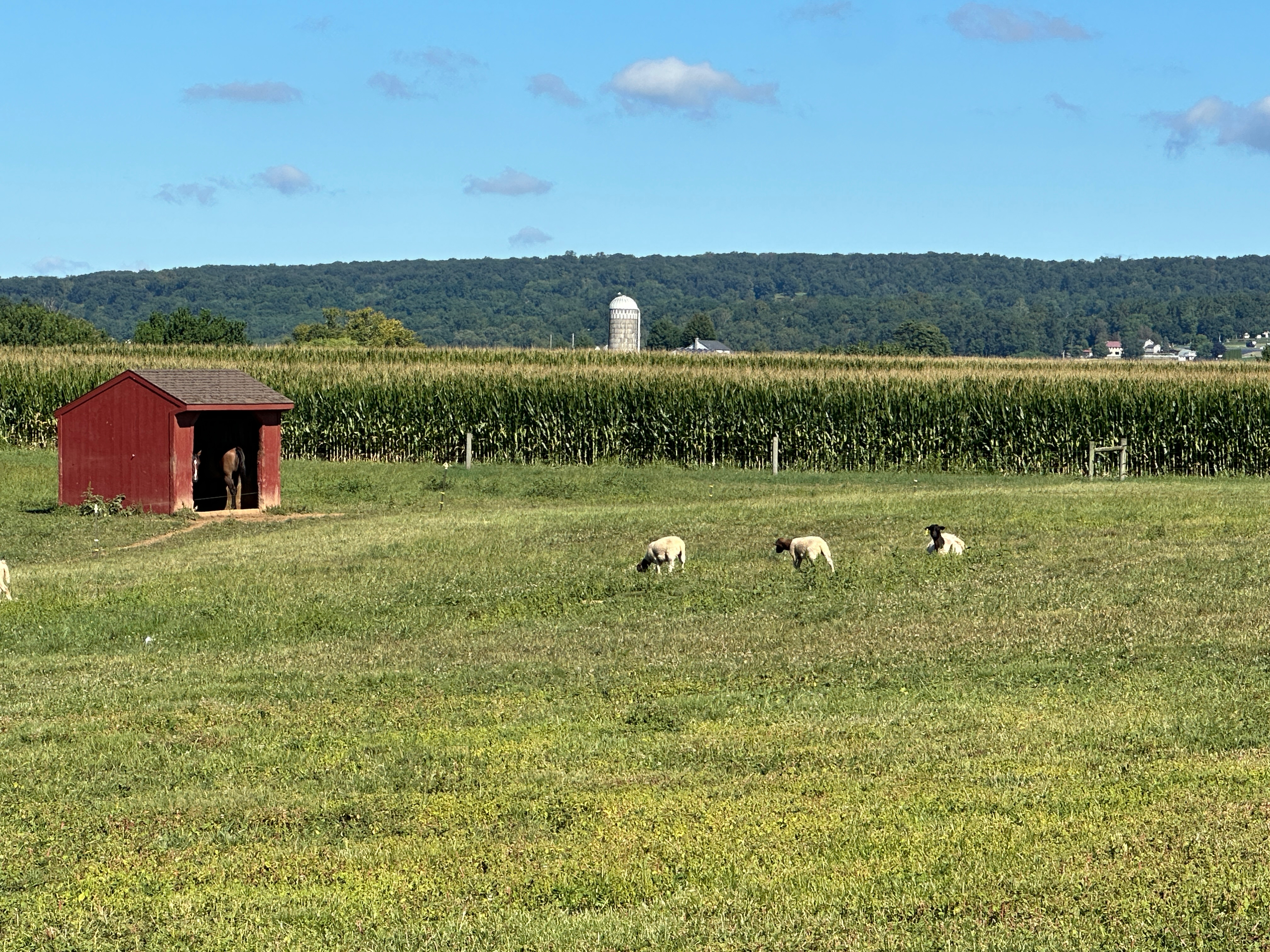
Winona Quigley, founder and owner of the company, studied fashion at Parsons but she has been thinking about sustainability and natural dyeing for a long time. When it came time for her to do a “capstone” project, she wanted to design a line of naturally dyed clothing. This eventually evolved into The Green Matters Natural Dye Company, which began its first dyeing in pots at Winona’s mother’s house in Lancaster County PA 10 years ago. The current location of the dyeworks is still in Lancaster PA, an area known for its beautiful farms and agriculture,  and where a horse and buggy is a common site on the road. But the dyeing here is all small scale industrial. 
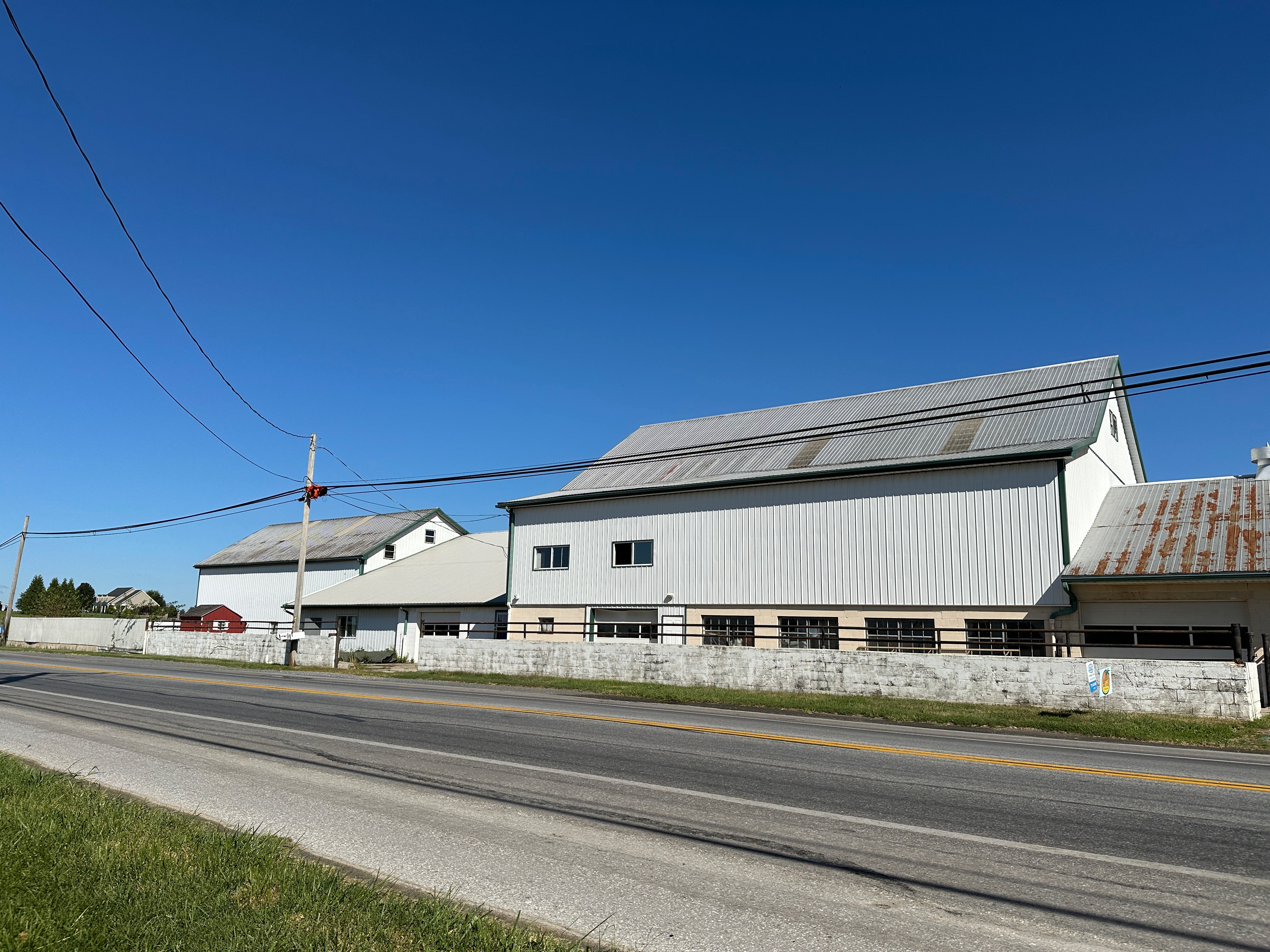
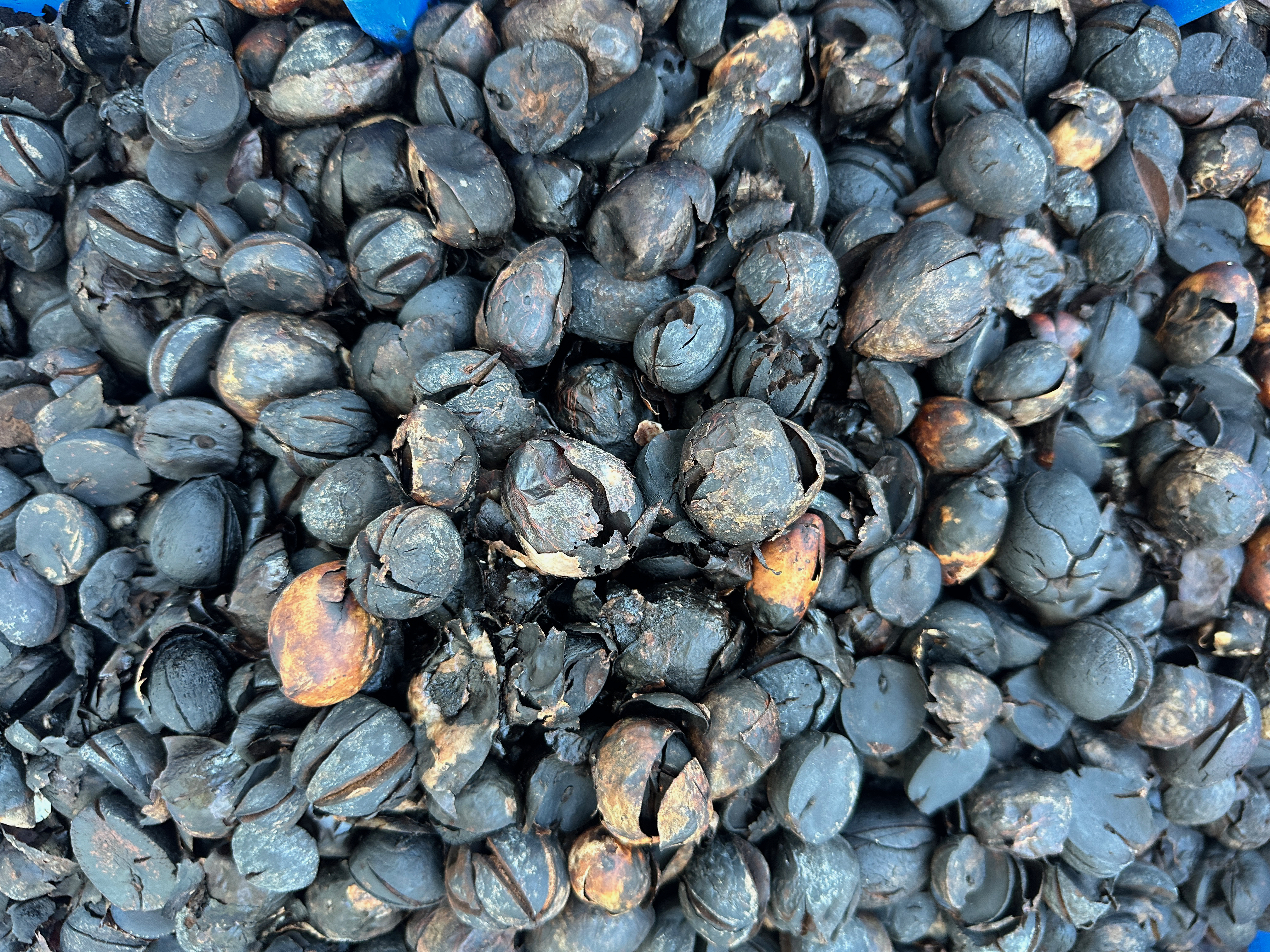
The Dye Works operation is approached from the back of the building and truly looks like a small industry.  The telltale sign that we had found the right place was the buckets of avocado pits, which looked like they’s been cooked to extract their color. 
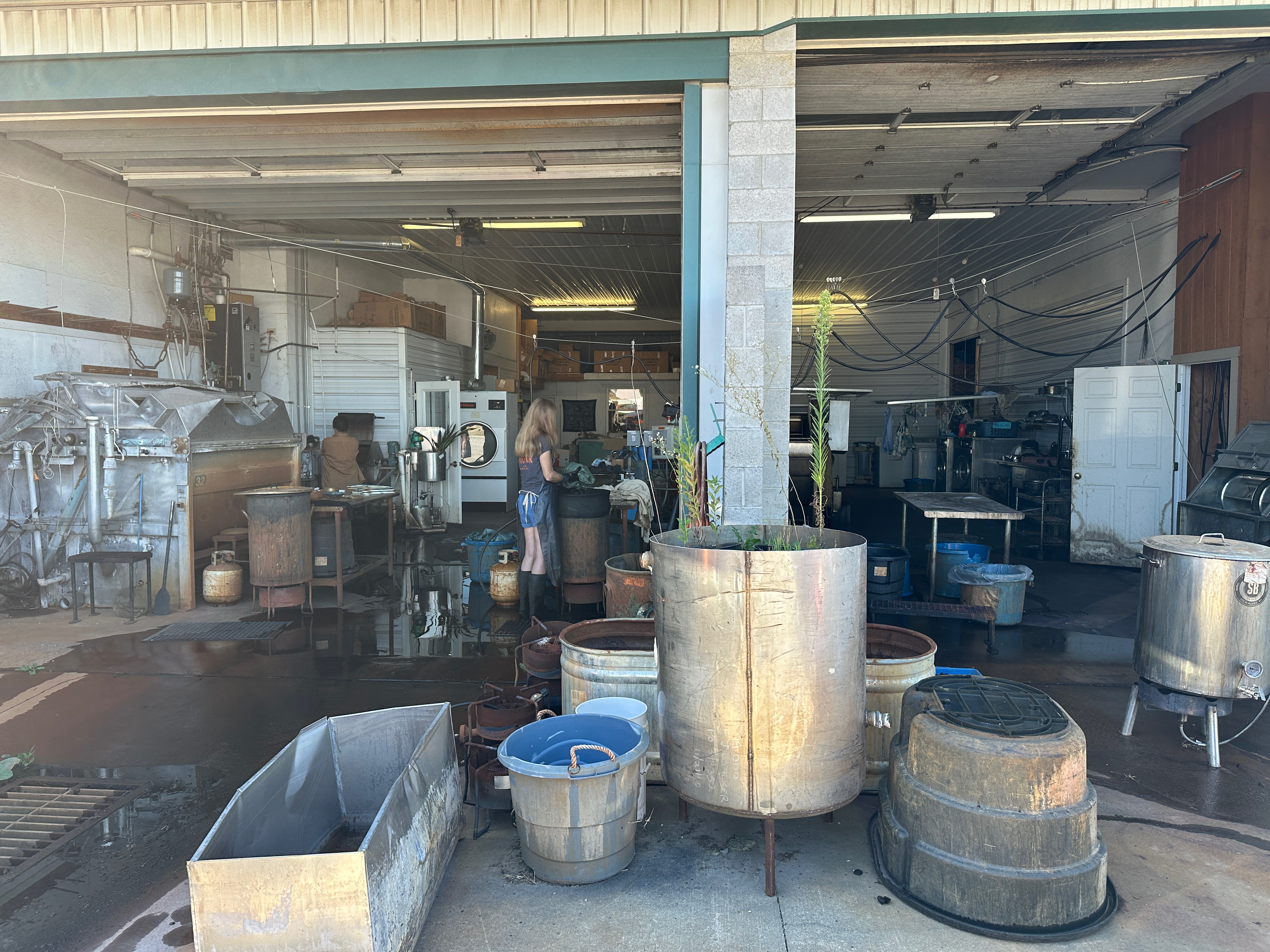
Entrance to Green Matters Natural Dye Company

The company does some work with designers to develop small lines of custom natural colored garments but a very popular and important focus is the “Dye Color of the Month” program. Dye color blends are developed by the dye team and are most often an interesting mix of more than one dye plant (such as “rum raisin” made from cutch and madder or “ochre made from cutch and weld). Customers send in their own clothing (and even bed linens) which can be given a renewed life with a fresh, naturally sourced color. The dye team will unpack the garment, mordant when needed, and then apply the chosen dye color(s). Colors are sourced from both plant materials and natural dye extracts. Tie-dyeing is also an option, either in the initial garment dyeing, or as a more subtle post dye process. 
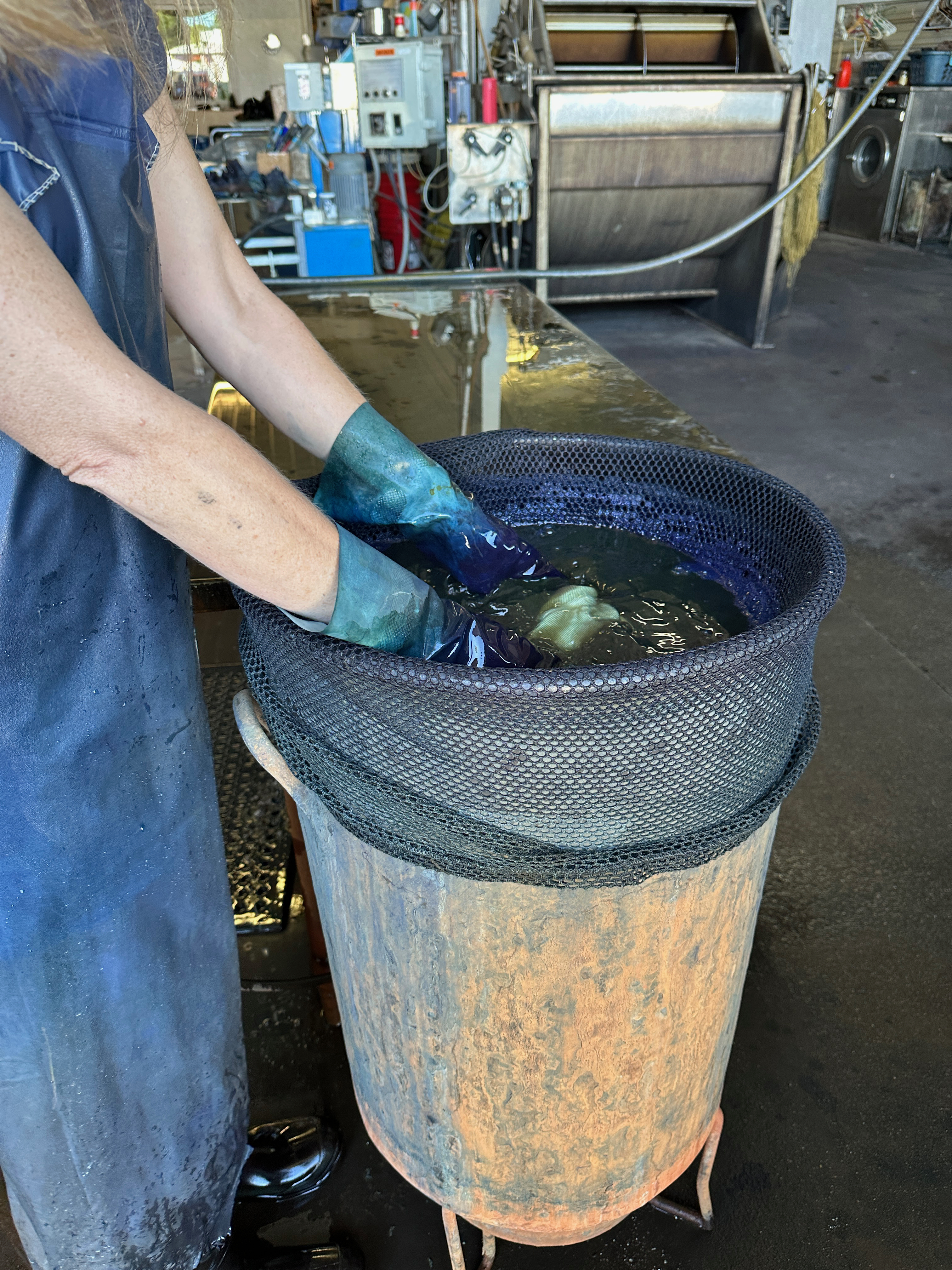
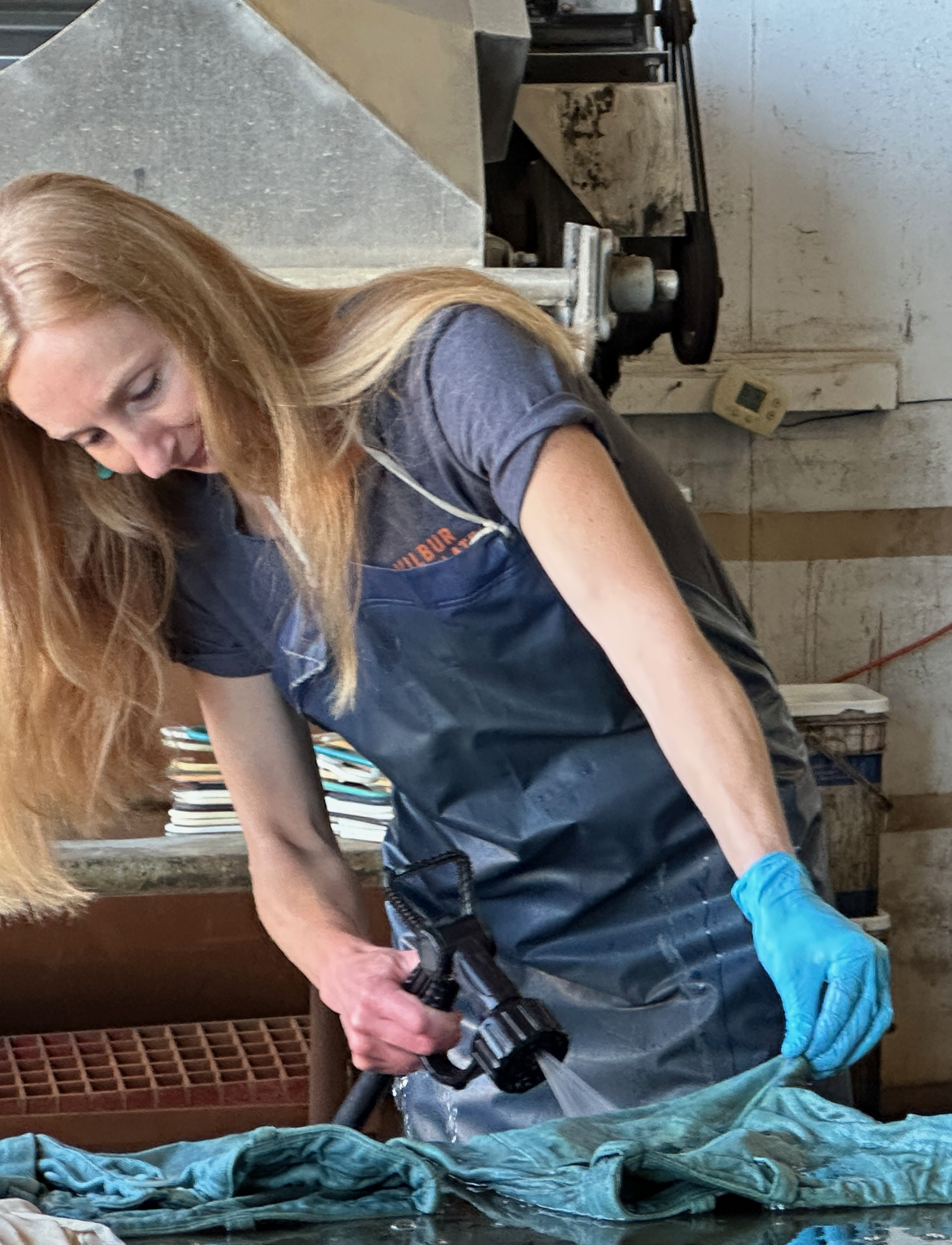
Each garment is dyed individually in indigo by Cara in an iron vat, and then carefully hosed off (with rain water) to rinse between immersions in the vat.  Color mixes often include very carefully dyed shades of indigo, followed by mordanting and subsequent dyeing.

Mordants and mordant dyes are applied in small dyeing “machines,” like open top washing machines. These particular machines were custom fabricated for a small industry but were never used. Green Matters located them in storage when they were ready to expand from using dyepots at Winona’s mother’s home to their current location. The machines keep the garments in continuous motion, assuring the most even mordanting and dyeing possible. This kind of piece dyeing is impossible to do well in a studio dye pot. Much more sophisticated machines are used in industry today but these older machines do the job well. 
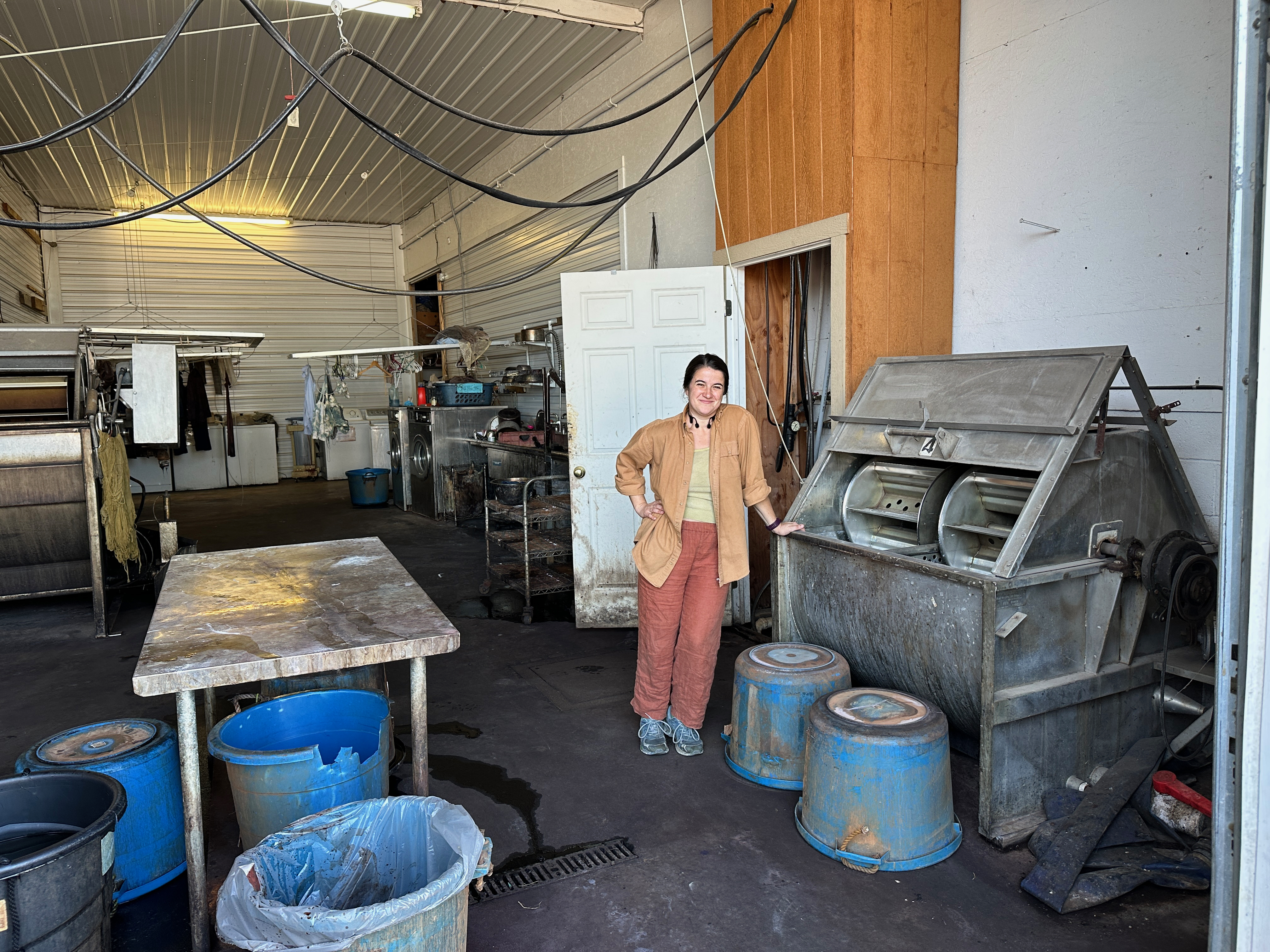
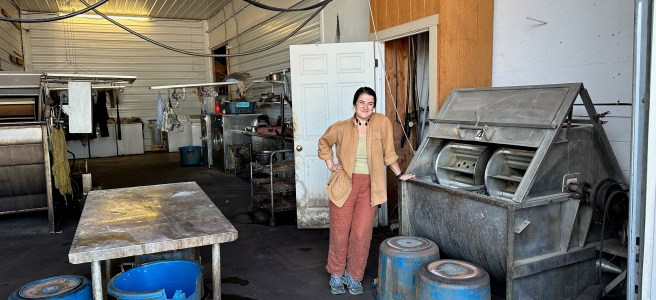
Winona Quiqley with one of the larger of the dye machines. The two paddles in the machine keep garments separated and moving evenly during the dying.

The concept of refreshing our old garments with color is smart. If you are like me, we all have too many clothes. Some of them are loved, and will continue to serve us with a little “tweaking”. You may have a well-made and cherished garment, but it’s faded, sun bleached, stained, etc. Perhaps its light color is not practical for gardening, farming, or working in the studio. Vintage garments can be given a new life with a contemporary color. Re-dyeing is making a conscious choice by countering the pervasiveness of fast fashion. I often re-dye garments myself but am always plagued by the issue of uneven dyeing, as I am limited to dyeing in pots.
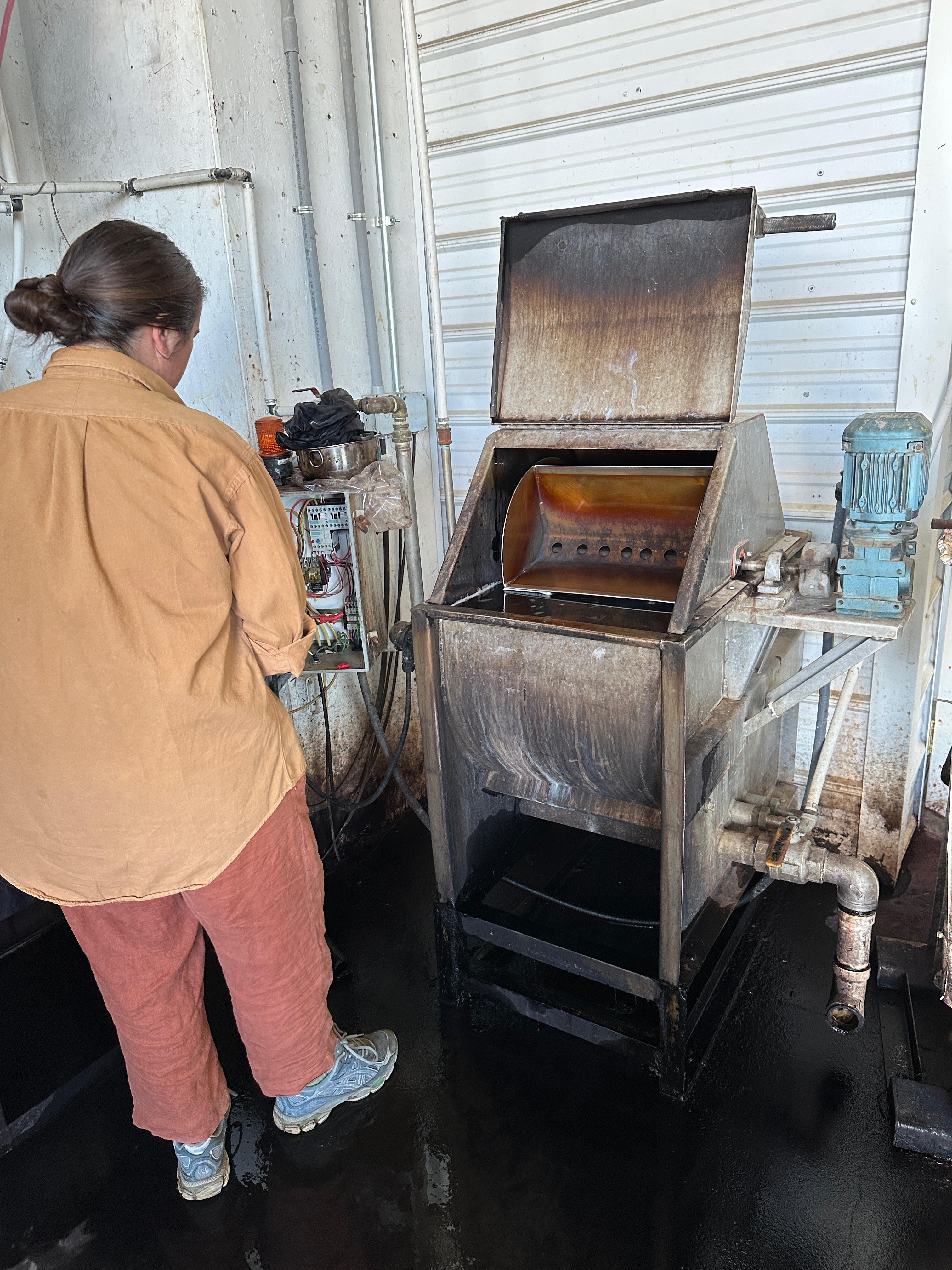
 

As I was leaving, Winona was getting ready to make some electrical repairs to the small dyeing machine. We learn to do EVERYTHING in our studios!

Water used for dyeing is all rain water, collected in cisterns underneath the building. The dye machines, which are energy efficient, use the same motor as a dairy mixer, and are easily maintained in a farming community.  

Several things that truly impressed me:

  • Choice of dyes. Green Matters seems to consistently make good choices about which dyes to use for the most long lasting colors. And they are combined in beautiful ways.
  • The use of rain water. We all know that dyeing requires LOTS of water at every step. Doing this using a renewable resource not only saves $$ but is just smart!
  • The re-purposing of dye machines and the ability to keep them maintained and working. 

So, do consider sending a favorite natural fiber garment to Green Matters for a “facelift”. Far better that we promote a company such as this, than purchase yet another garment. Here is where to learn everything you need to know. Invest in a new color for yourself! The ordering process is easy, the choices are clear, and they will send you a mailing label to ship off your garment. And occasionally, Green Matters hold in-person classes, where perhaps you can dye your own clothing.
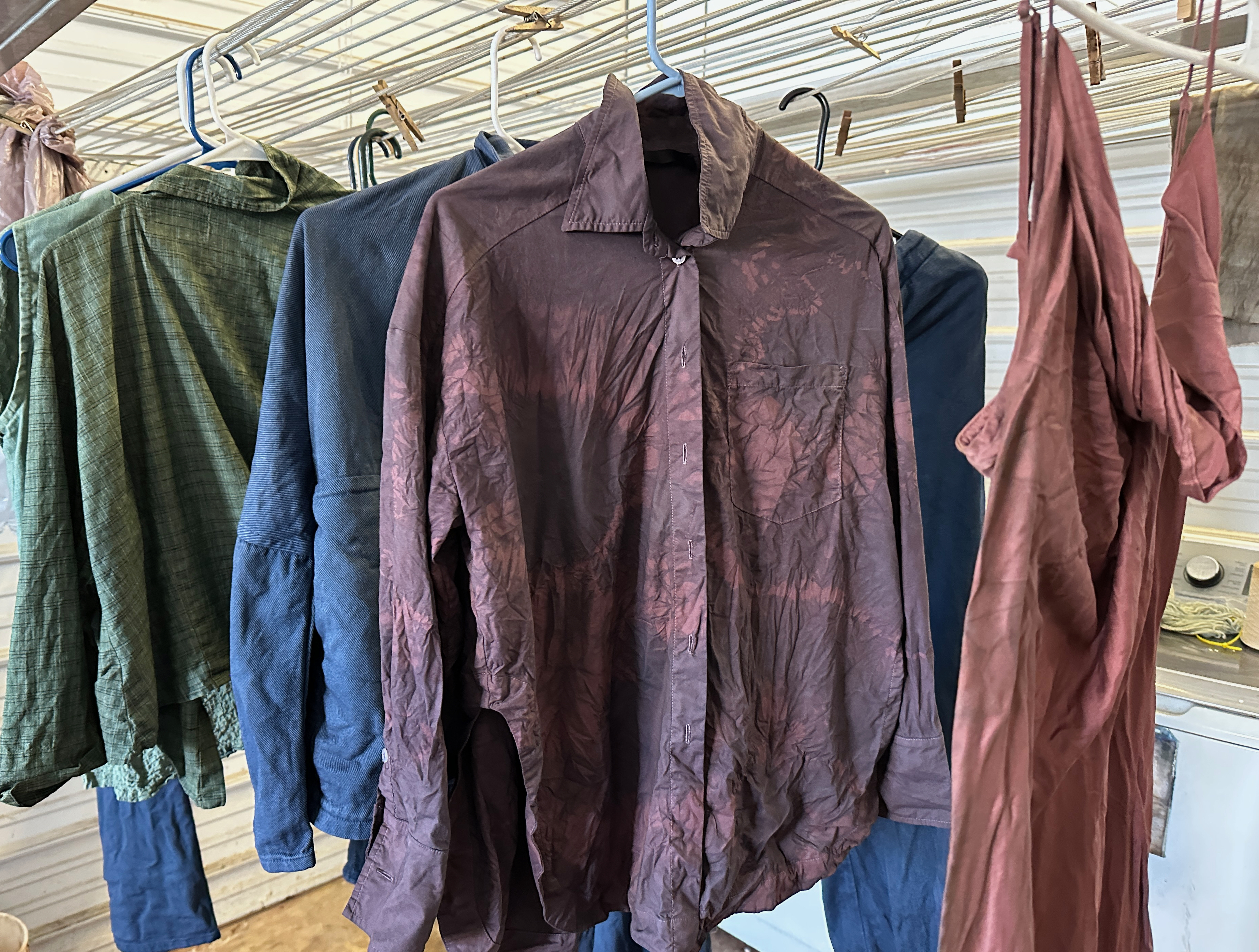
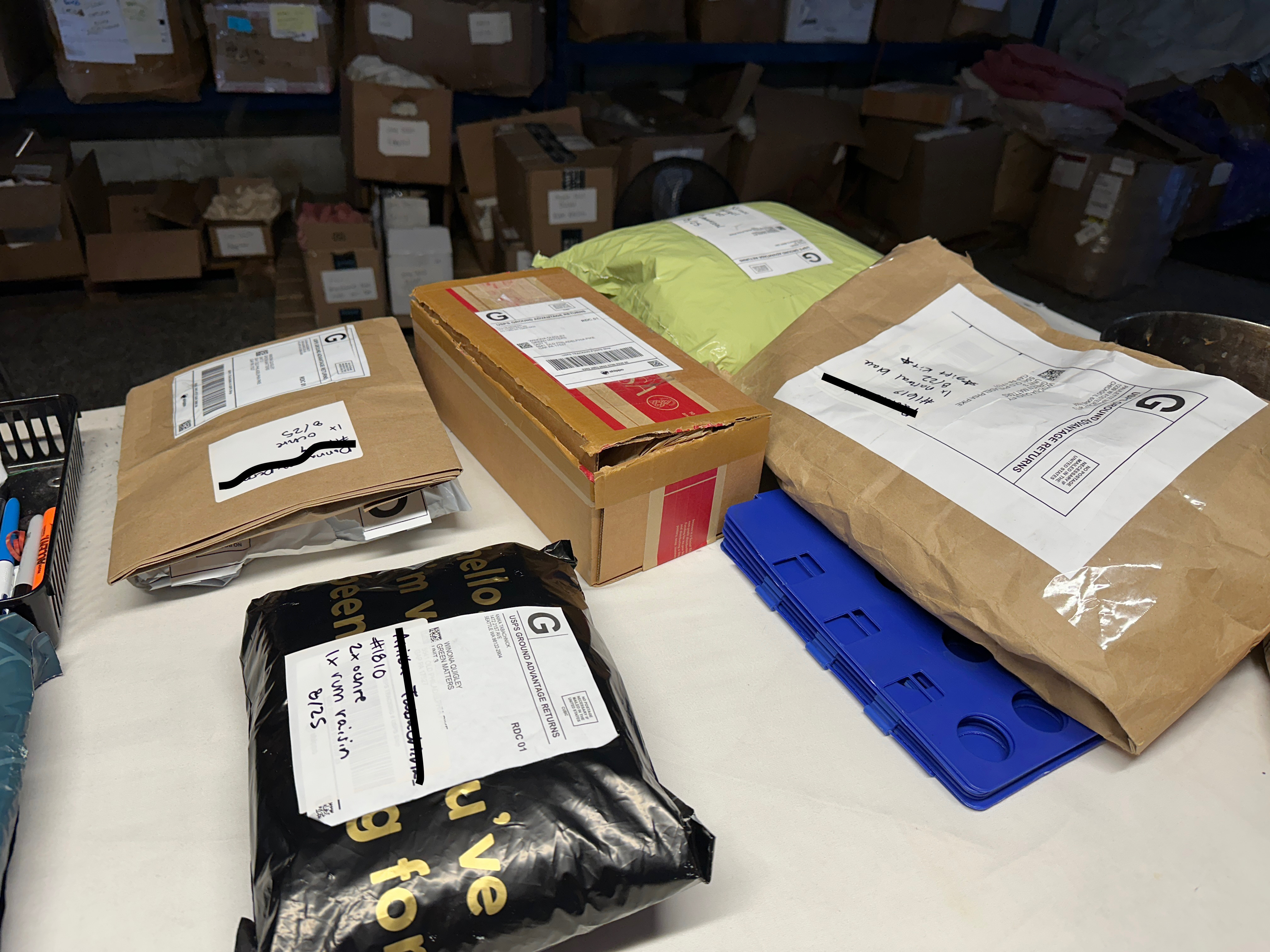
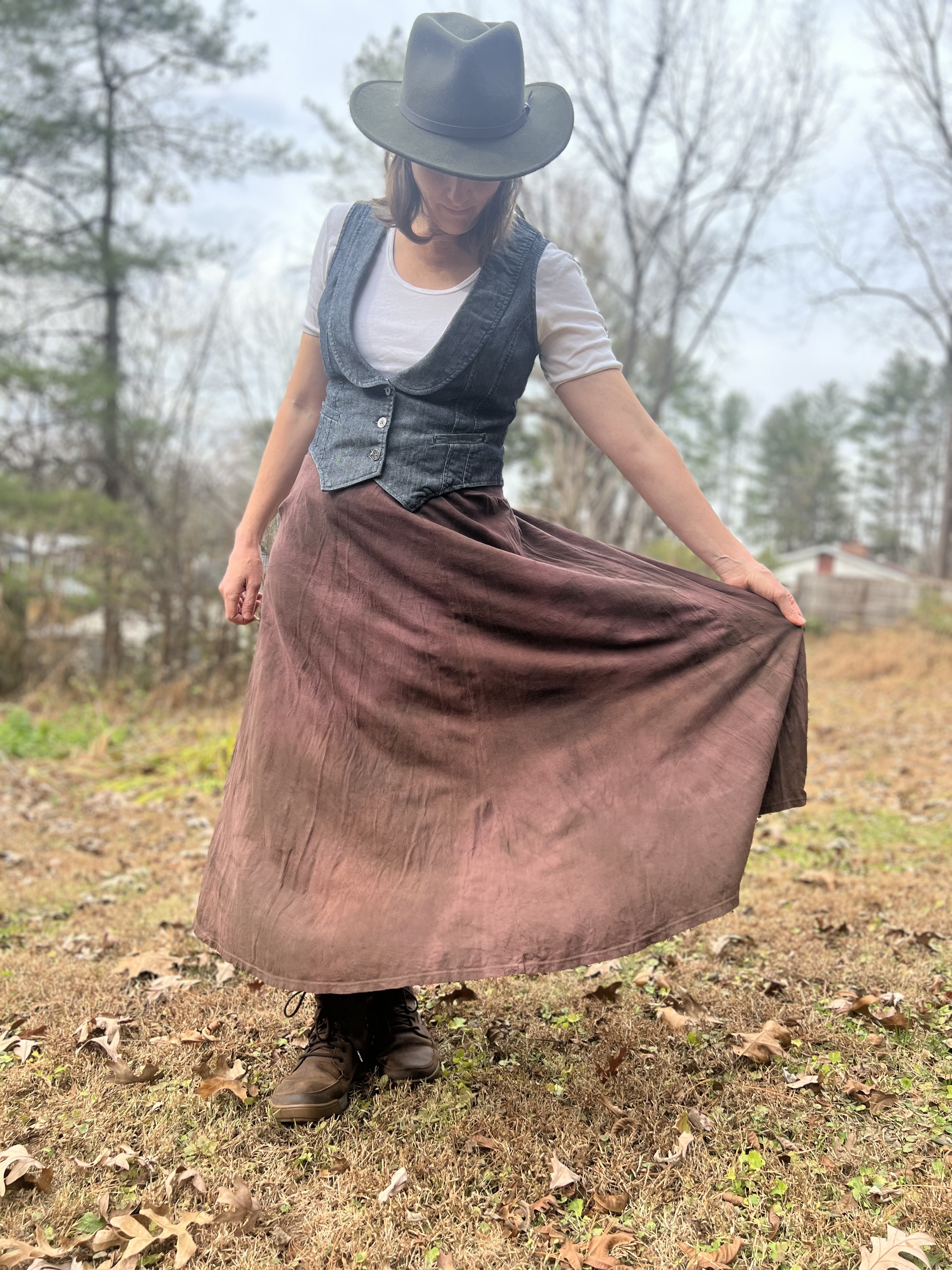
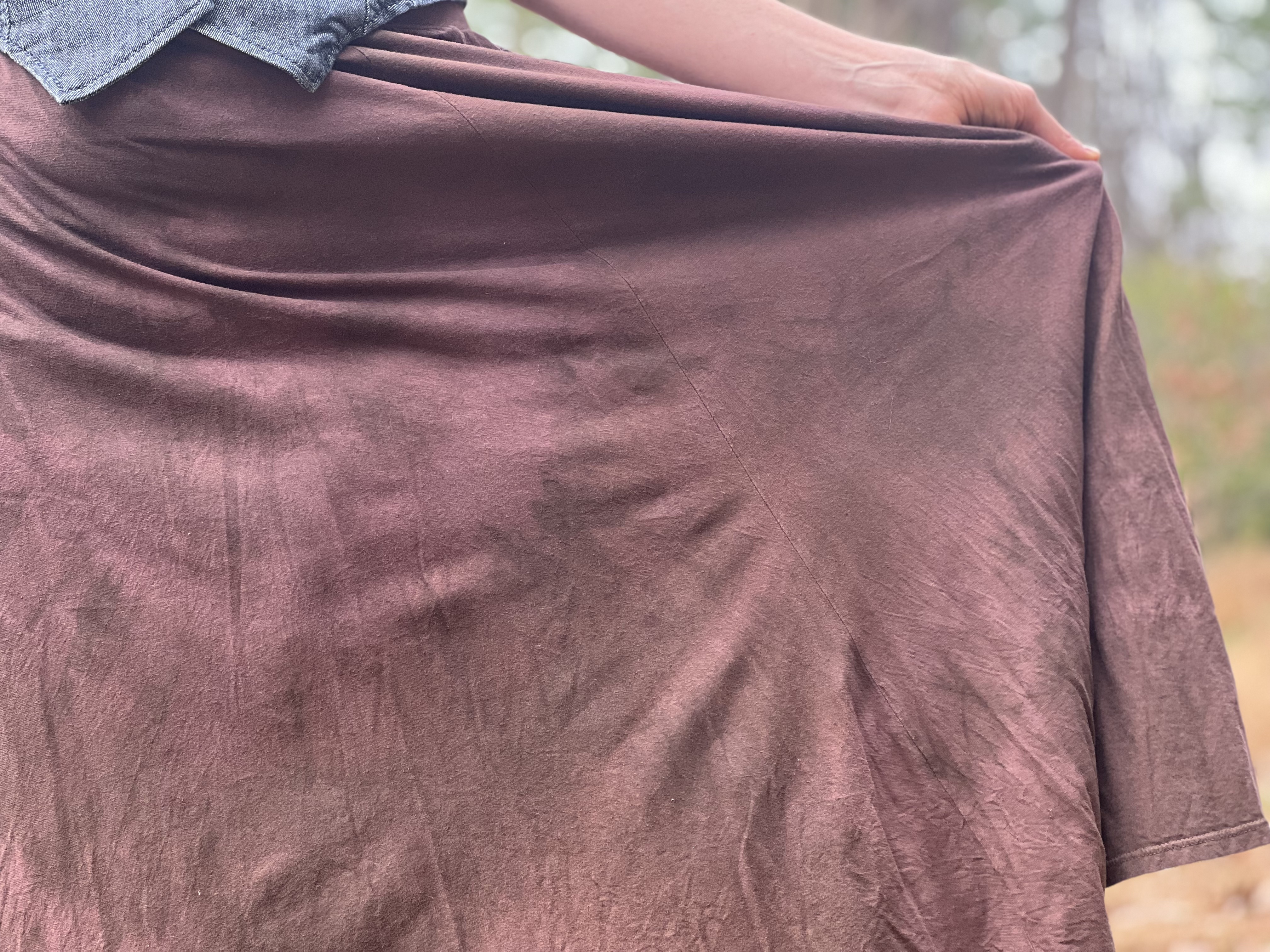
In order to truly understand how the process with Green Matters Dye Company plays out, I brought a favorite skirt of my daughters – it WAS pink and stained and thus she never wore it. She had asked me to dye it but I don’t have a pot big enough to even hope to get it dyed well. Green Matters Dye Company sent it back to us transformed, dyed in “rum raisin”, which is a combination of cutch and madder and lightly treated with iron in a “tie dyed” design, in order to further camouflage the original staining. This post dye treatment is an option. Now it’s a skirt that she loves to wear – and it even came with care instructions.
If you are looking for a sustainable gift for a special someone this holiday season, consider gifting a dye lot. It will come with all you need to ship off a garment and give it a new life.
Fermented Indigo Vat: Blog Post #13 –  A Wrap Up

© Catharine Ellis, as posted to the blog: Natural Dye: Experiments and Results

Over the last few weeks,  I have posted 12 “lessons” to help dyers who are interested in making their own fermented indigo vat. This is all based on my own experience from the last few years AND very importantly, the guidance I have received from others. These methods, procedures, and formulae have worked well for me over time. 

Now it’s up to you, dyers, to make your own vats, observations, and learn by doing. I do not have all the answers, nor do a consider myself an “expert” on fermented indigo vats and I am definitely NOT a dye or indigo chemist. But I am a dyer, who is curious, tenacious, and willing to try lots of things in the quest for learning and best practices for dyeing.

The world of indigo reduction, fermentation and dyeing is very complex.  There are so many decisions to make. Each dyer needs to think about and determine what works best for them. One of the comments made to the blog from Sophy Wong said: “root and rhubarb root.–Fructose powder: purified sugar.–Minerals: iron or zinc.–Microbes + fermented plants such as Tspecies in wheat/rice bran or sukumo indigo leaves.–Synthetic.” Yes,  Sophy, it’s a zesty mix of options!

So, please, share what you know and learn with others. We are a community of dyers. Although we may have different resources and varying opportunities, we are all searching for the best personal approaches to do our dyeing. It’s only through being generous with other dyers and sharing what we learn that our community will continue to flourish. This isn’t “goodbye” – this is “good dye!”.

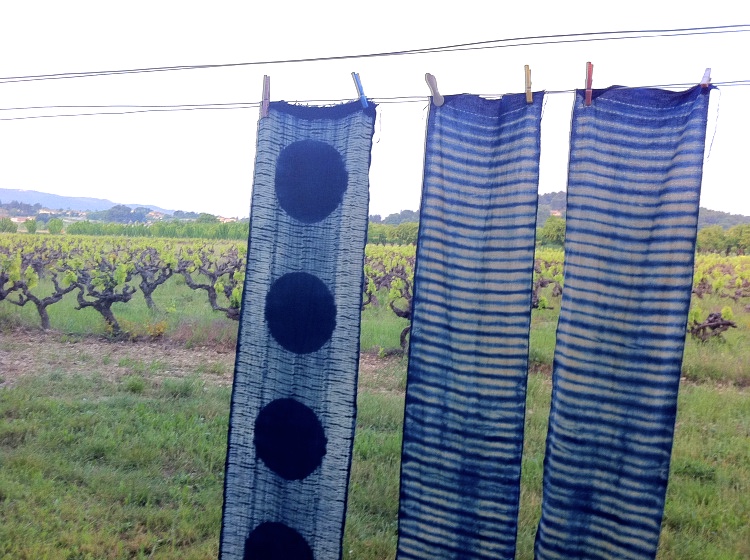
Early indigo dye work with woven shibori. Photographed in Lauris France by Elin Noble

Fermented Indigo Vat: Blog Post #12  Some further thoughts on the amount of indigo to be used in a fermented vat 

© Catharine Ellis, as posted to the blog: Natural Dye: Experiments and Results

When working with quick reduction indigo vats, it is quite easy to achieve pale colors using a weak vat by controlling the ratios. A fructose vat is made by using a certain amount of indigo per liter, and the other ingredients (fructose and lime) are proportional to the amount of indigo: 1 part indigo, two parts lime, 3 parts fructose. 

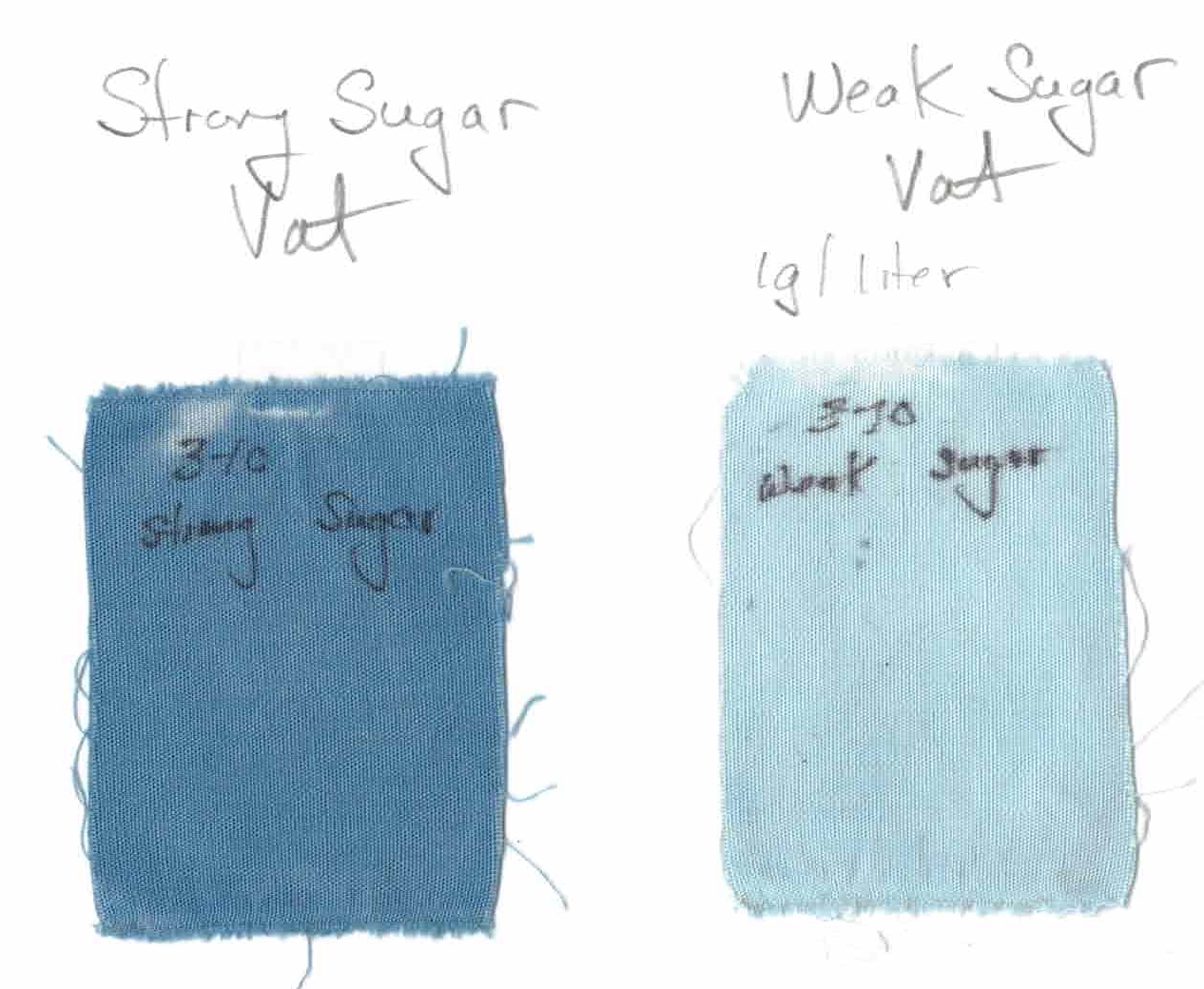
A fructose vat made with only 1 gram of indigo per liter will result in a much paler blue than a vat made with 8 grams of indigo per liter.  


Two fructose vats: The strong vat is made with 8 grams indigo per liter. The weak vat is made with 1 gram per liter

I have learned that the fermented vat does not work using that same logic, as was mentioned in Post #6. In order for the vat to work properly, there needs to be a certain amount of organic material to create adequatebacteria useful for fermentation.  The fermentation seems to be very efficient at reducing the indigo present in the vat. When I tried to make a “weak” fermented vat by using only 2 grams of indigo per liter, it did NOT result in pale colors. In fact, the shade of blue that it produced was almost identical to a vat that was made concurrently with 8 grams of indigo per liter.  The different concentrations of indigo in the two vats became obvious only over time. After several months of dyeing in each of the vats, the one with 2 grams/liter finally began dyeing pale blue shades. 

There is an additional reason why a weaker vat is valuable.  A vat that dyes a paler blue will invite long dips in the vat, and ultimately more “even” color.

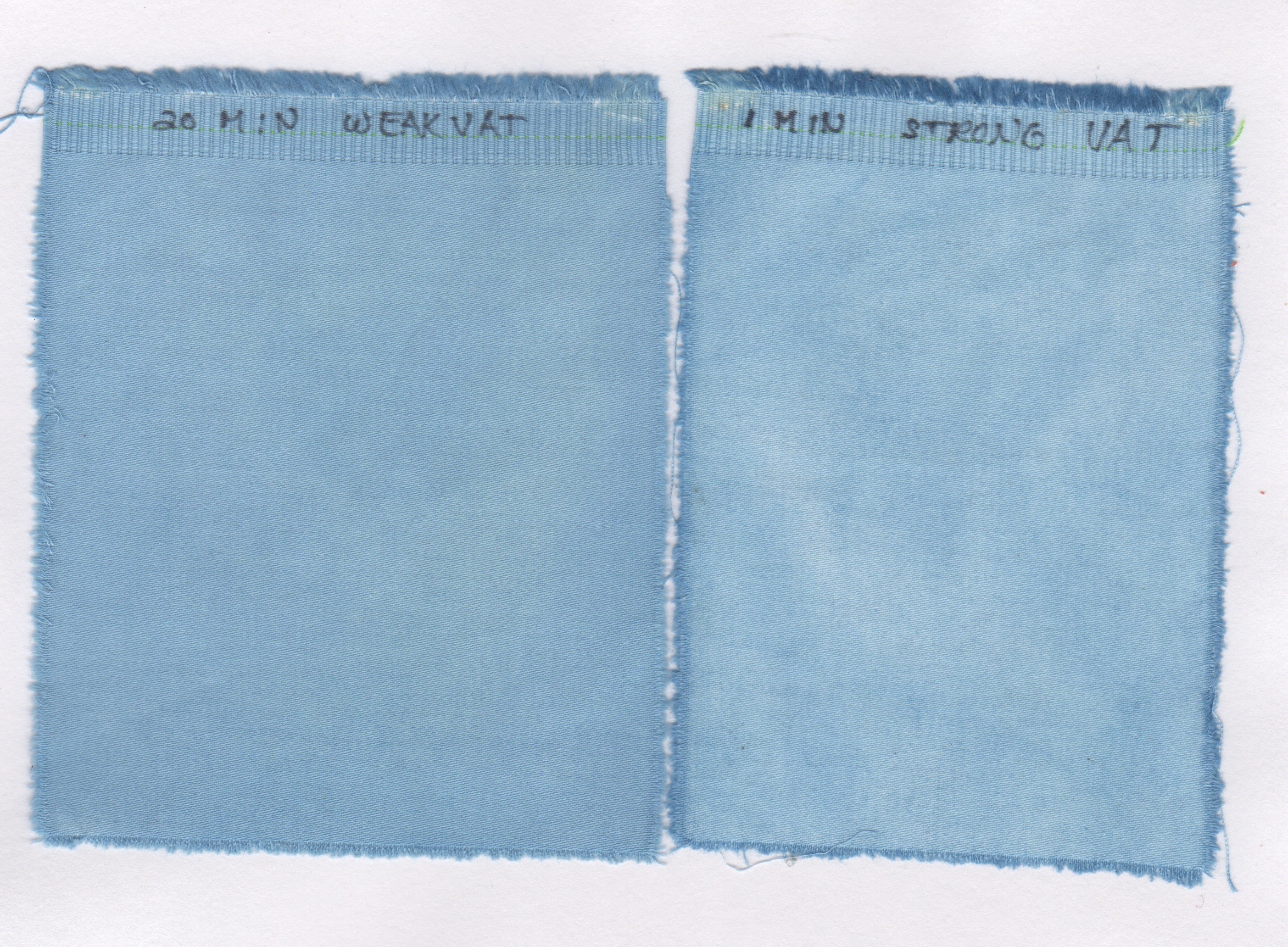
Both of these samples were dyed in fructose vats with a single dip. Sample on the left was dyed in a weak vat for 20 minutes. The dye has penetrated more deeply and is far more evenly dyed than the 1 minute dip in the strong vat.

I believe that the time required to deplete the amount of indigo in the vat is directly related to the amount of dyeing that is done, or how quickly the indigo is used up or exhausted. If I had been dyeing a larger quantity of textiles, the pale colors would likely have “come on” sooner. If at all possible, the dyer might want to keep track of the amount/weight of textiles that are being dyed. That may not always be feasible for the casual dyer but a production dyer could more easily track this information. 

The ability to dye pale shades of blue is important for any kind of color mixing. Think carefully about what you expect from your indigo vat when you establish it. 

Fermented Indigo Vat: Post #11   Problem solving and other practical stuff

© Catharine Ellis, as posted to the blog: Natural Dye: Experiments and Results

LOW PH

If the alkalinity of the vat falls too low, the vat becomes a good environment for water born insects. They may appear as small larva on the underside of the vat lid or at the “high tide line” of the dye vat vessel – just at the edge of the liquid volume. If the larvae are allowed to hatch, then small flying insects will appear at the surface. If this occurs, it is a clear indication that the pH has gotten too low and it’s important to rectify that immediately. Rinse off your lid to removed the larvae and wipe out the larvae from the sides. Then add lime, stir, and monitor the vat carefully.  Increasing the pH will create an environment in which these larvae cannot survive. The amount of lime required will depend on the size of the vat. Monitor the vat carefully for the next few days. 

Small larvae on the inside cover of my vat. This is a sure sign that the pH is too low and it’s time to add lime. If allowed to hatch, you will have small flying insects.

LARGE VATS

It’s best to place a vat of 50 liters (or more) onto a dolly with wheels so that it can be moved easily.

“SEEDING” OF VATS

Small test vats can be added to a brand new new vat in order to speed up the fermentation process.  I have successfully started 50 liter vat fermentation vats in less than 24 hours by adding 5 or 6 small test vats (fully reduced) in addition to all the other required materials for the larger vat.  This is an easy way to make a fermentation vat available for a workshop or class or  for building a vat more quickly in the studio. Think of it like a sour dough starter. 

CONTINUE TO EXPERIMENT

I often will mix up small test vats in order to learn, answer my questions,  and deepen my own knowledge:

  • Does soda ash work as well as potash? YES
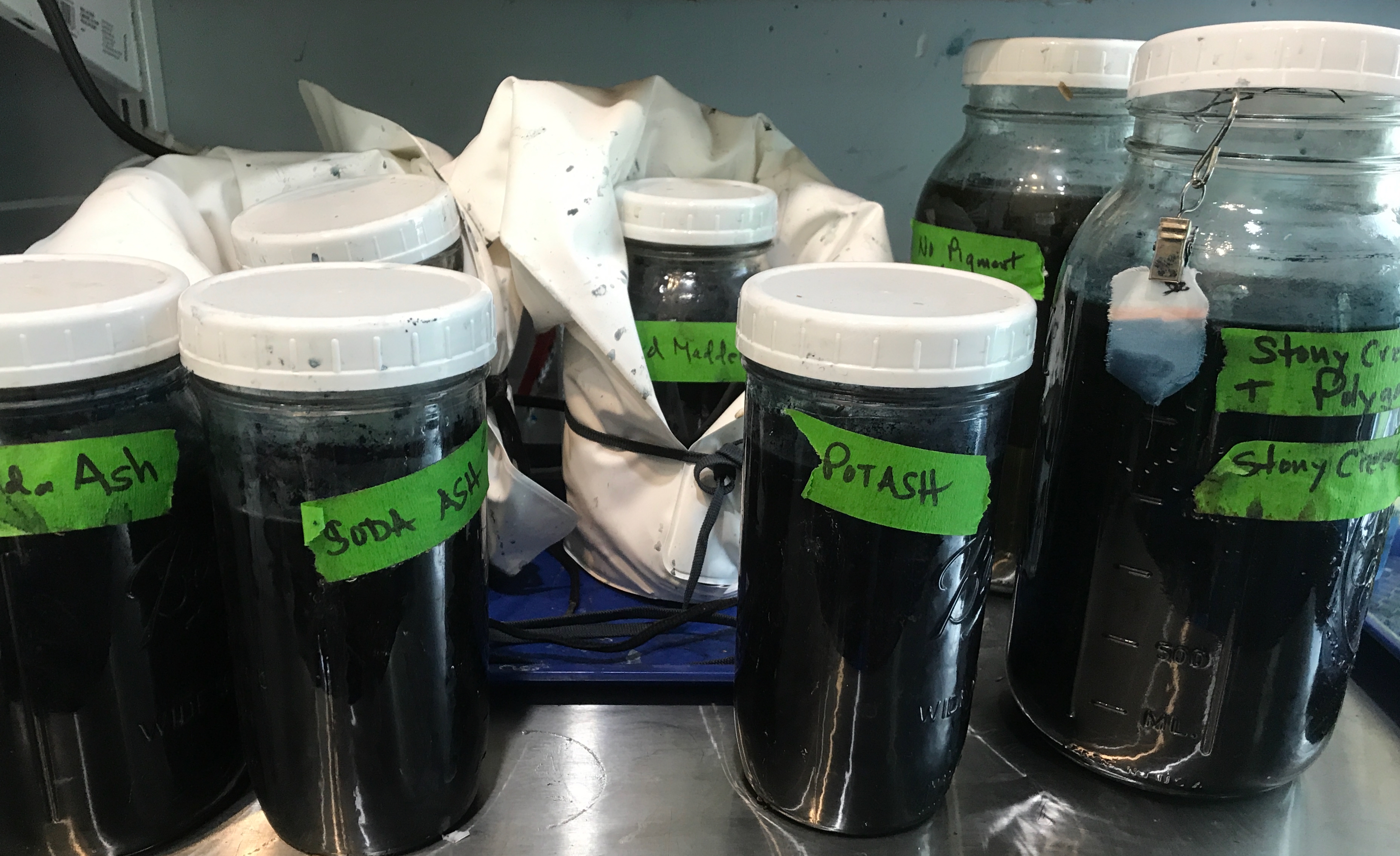
  • Will spent Rhubarb root work as well as spent madder root? YES
  • Will spent Dock root work as well as madder root? YES
  • Will a fermented vat work with synthetic indigo? YES
  • Etc. etc. This is how we learn!

Fermented Indigo Vat: Blog Post #10:  Vat Maintenance – Long Term 

© Catharine Ellis, as posted to the blog: Natural Dye: Experiments and Results

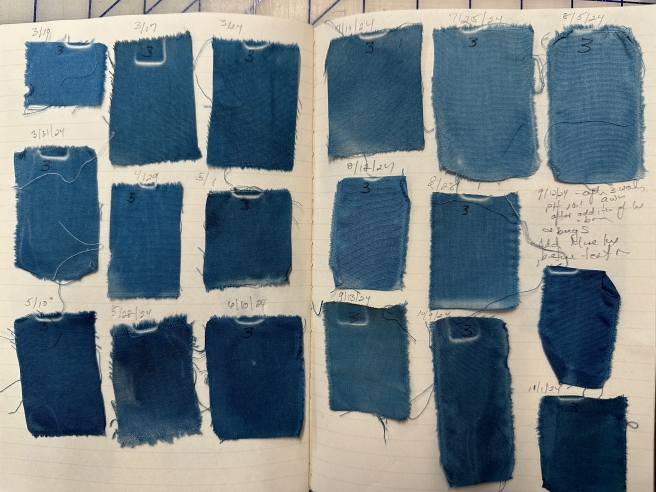
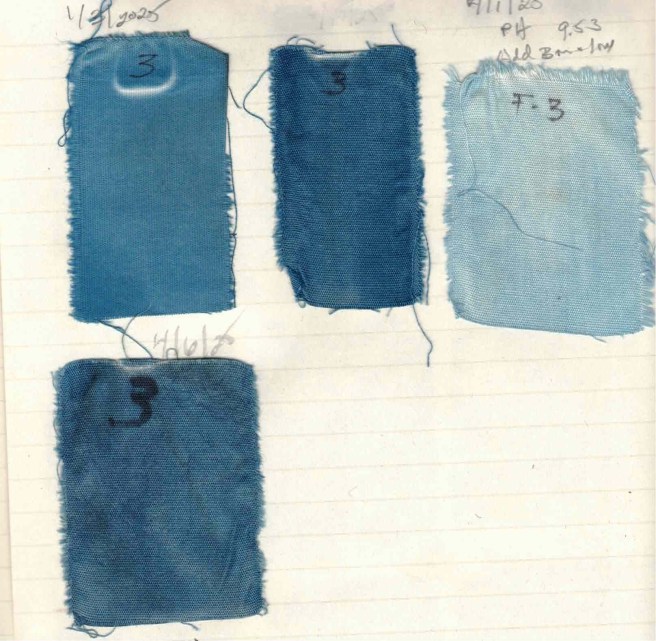
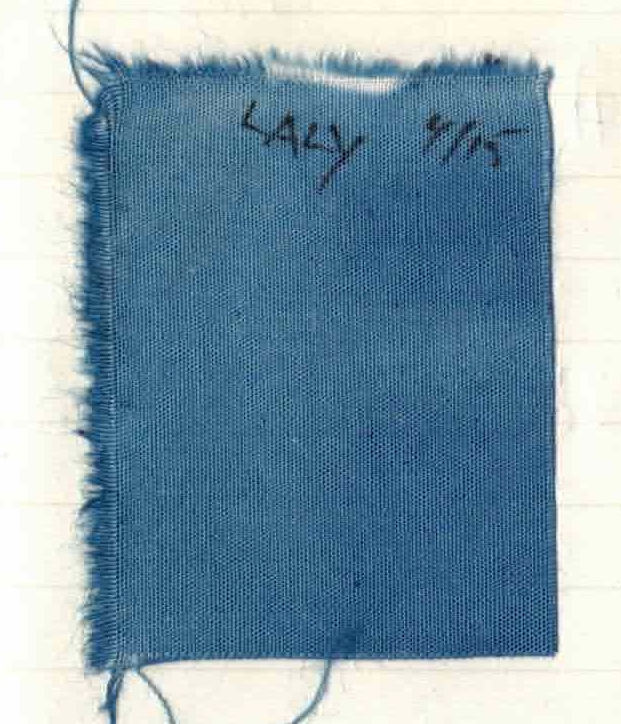
Set up a small notebook/logbook for each vat that you make. Record the ingredients included, their amounts, procedure, and dates. Use this book to retain samples of your initial testing to determine when the vat reduces.  Record any additions that you might make over time. Over time, this book is the “story” of your vat and will be a very valuable tool. I have books that I have maintained for months or even years.

These simple notebooks are invaluable in helping me to care for my vat and predict the dye colors I can achieve.
  •  Stir the vat daily, (see note below *)
  •  Measure and record the temperature and pH on a regular basis. Add this information to your log/notebook
  •   Record the  results of dye tests regularly: once a week or so. Add this information and the samples to your log/notebook
  •   Once a week, add a small amount of lime (calcium hydroxide) to the vat:  0.1 g/liter (that’s 1/10th of a gram/per liter). Document this in your vat log/notebook.
  •   Once a month, add a small amount of dry wheat bran that has been freshly cooked wheat bran to the vat. 0.5 gram dry bran per liter. Document. 
  •  Use a paper calendar, or any other method you find useful, to keep track of regular additions of lime and bran.
  •    If the dyed color suddenly becomes very pale, check the pH. If the pH is within range (9.5-11), the vat may need additional organic material to boost fermentation. Cook a small amount of bran (about 1-2 grams/liter) and add it to the vat. Stir, wait until the next day, and then dye another test.
  •    If possible or practical, keep a running record of the quantity of textiles that are dyed in the vat, either by weigh, yardage, etc. This will give you a sense of how much indigo you are using/depleting over time if that is important  to you. This may not be important to all dyers but a production dyer will benefit from this information. 
  •     If the pH of the vat drops below 9.5 add additional lime (calcium hydroxide) to boost the alkalinity.
  •     Measure and record the temperature of the vat. NOTE: once the vat has reached full fermentation, it can be maintained without supplemental heat. Do prevent it from freezing, as that can destroy the bacteria in the vat.  
  •     If the volume of solution in the vat decreases, (due to evaporation or dyeing) add warm water into which you have dissolved 25 grams of soda ash or potash per liter OR add wood ash lye. If you are continuing to make small test vats, then they can also be added to the vat to supplement the volume in the vat. 
  •     At some point the indigo in the vat will be diminished. These older vats are valuable for obtaining pale blue colors. You can begin a new vat for darker colors. 

 * You do not need to be a “slave” to your vat! I have gone away from home for as long as 3 weeks without tending the vats. On returning the vats were just fine, although they did need pH adjustment and an addition of cooked bran to revitalize them. 

A sampling of pages from my dye log:

 It’s always instructive to see how the vat becomes livelier after additions of bran. 

Fermented Indigo Vat: Blog Post #9 Dyeing

© Catharine Ellis, as posted to the blog: Natural Dye: Experiments and Results


Dyeing

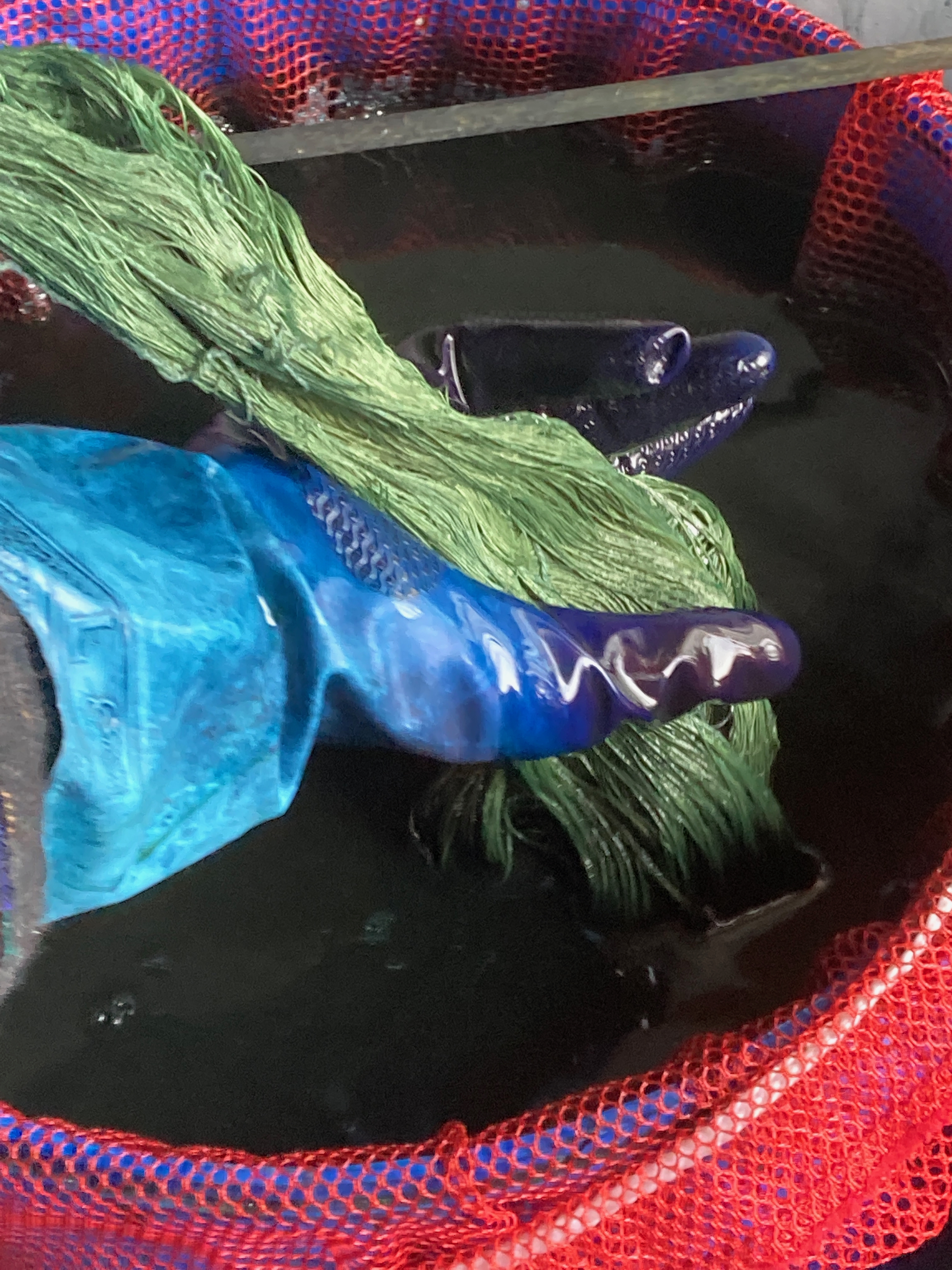
The leuco color of the fermentation vat will be green – not the yellow color that the quick reduction vats produce, as referred to this in blog post #3.

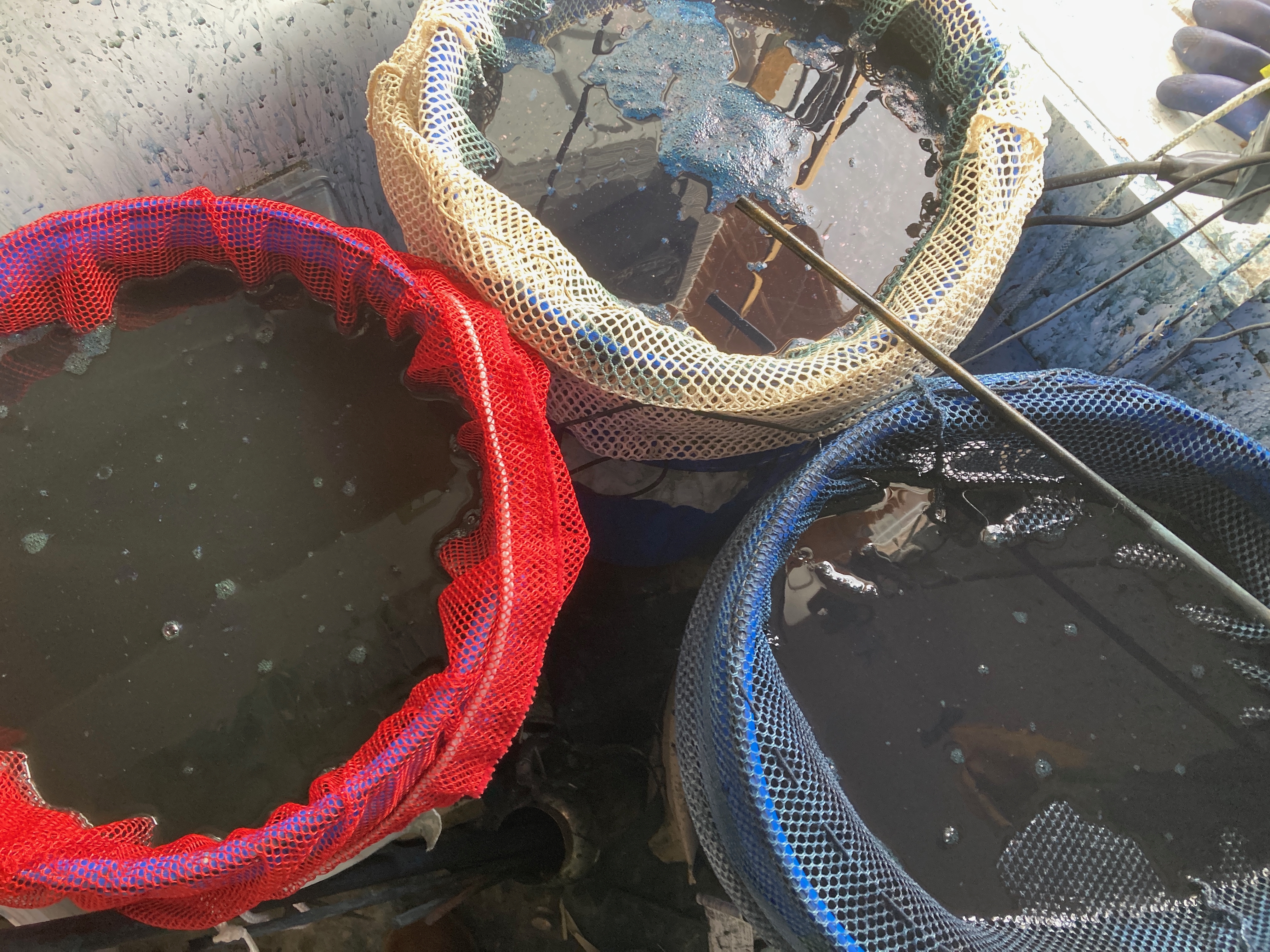
 When dyeing, keep all textiles in the upper portion of the vat, so that they do not come into contact with the plant material and lime that have settled to the bottom.  The quantity of these settled materials will increase over time. A net bag, such as a mesh laundry bag, suspended in the top of the vat is very flexible yet will contain the textiles and prevent them from getting “lost in the bottom”. It is easy to adjust how deep the bag sinks into the vat. Exposure to excess material at the bottom of the vat will result in uneven  dyeing. 

50 liter vats with laundry bags inserted. Bags are removed after dyeing.

Important: Always oxidize the textile thoroughly before additional dips into the vat. Unless oxidation is complete, indigo that has not been oxidized on the textiles will revert to leuco indigo when returned to the vat. 

Long dips vs. short dips in the vat – how many dips?

The ability to control shades of indigo, from light to dark, is one of the greatest challenges for the dyer. Some level of control is necessary to achieve a full range of blues, which also makes a palette of mixed colors such as greens and violets possible. 

Preparing the various shades of indigo for The Art and Science of Natural Dyes Studio Formulas Set was challenging. I used two different fermented vats: a weak vat and a strong vat.  I had waited many months for the “weak” vat to become “weak”. I wanted to achieve the most evenly dyed textile possible. 

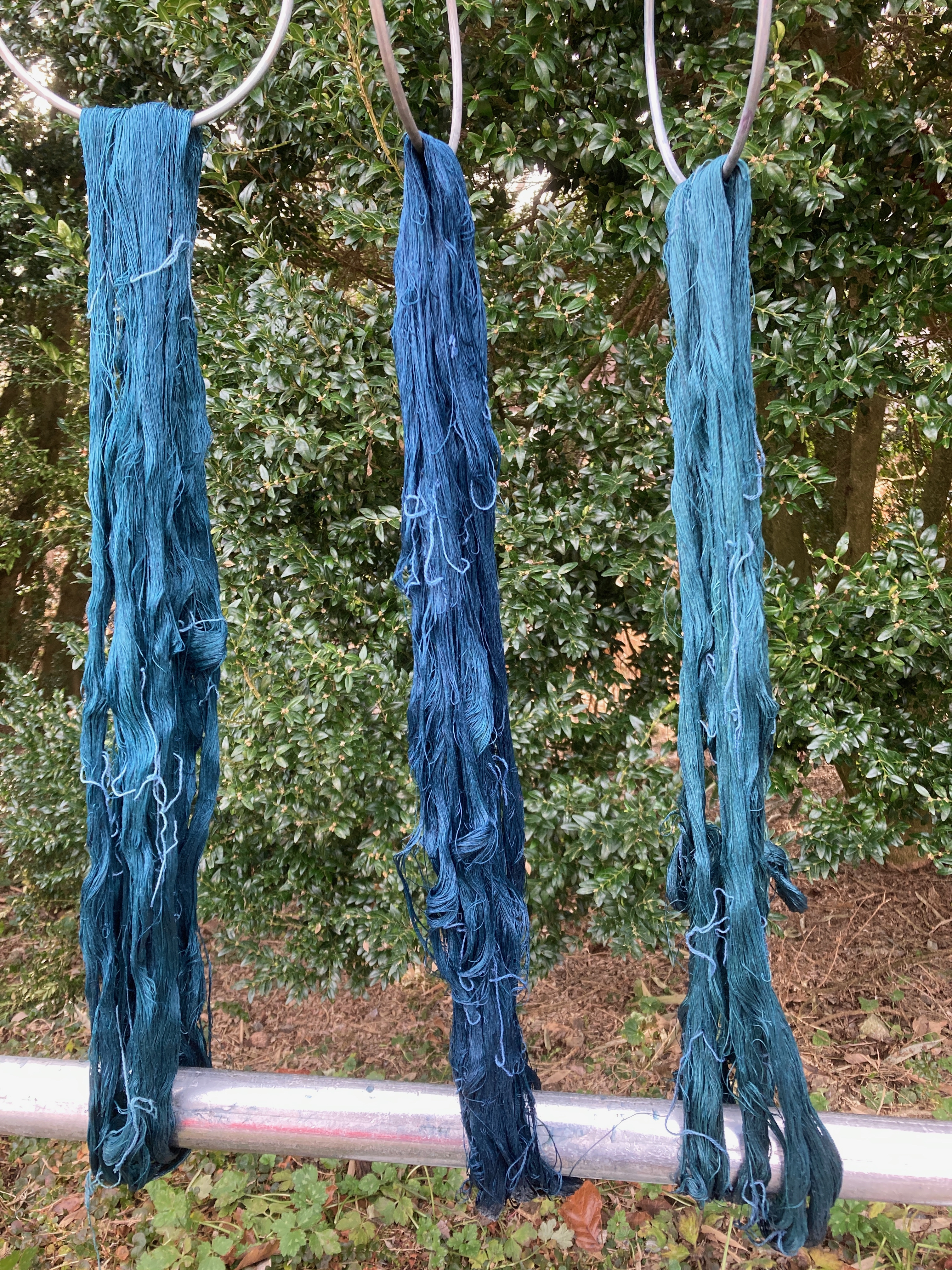
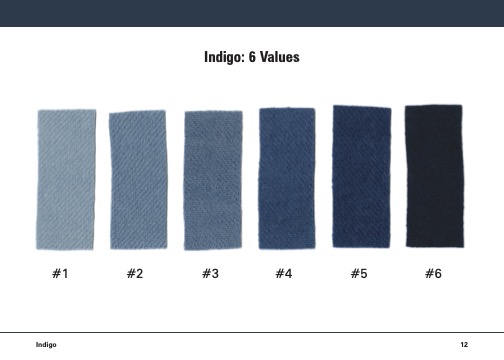
The palest of colors was dyed three times, for one minute each dip, in the weak vat. The darkest shade was immersed  6 times, 20 minutes each dip, in the strongest vat. 

Long immersions in the vat will result in colors that penetrate the textile the most. Additional dips will always result in more even dyeing. Darker shades will always be more lightfast than pale ones.

Finishing the indigo dyed textile

Once the dyeing is complete:

  • Allow the textile to dry completely before rinsing and finishing. 
  • Rinse in water – any temperature. The rinse water will be much browner than the rinse water from other vats. This is likely due to the organic materials (bran, etc.) suspended in the dye solution.
  • Rinse several more times until the water is no longer brown.
  • Soak in cold water overnight, then rinse.
  • Soak for an hour in water to which you have added vinegar to make a weak solution: (approx. 15 ml white vinegar to a liter of water)
  • Rinse again in clear water
  • Finally, boil cellulose textiles with a small amount of neutral detergent, such as Orvus, synthrapol or Dawn© dishwashing detergent for 10 minutes.  Protein fibers, which may be damaged by a vigorous boil, need to be gently brought to a near simmer 82°C / 180°F. The boiling expands the indigo molecule and also releases any unattached indigo on the textile. The final rinse should be mostly clear of any color.  

Photo of rinse water, sent to me by a dyer, with the following comment: “The four tea towels and three napkins were dyed with six ten-minute dips. They were dried. I then soaked them in water for several hours. Dumped the brown water soaked again and dumped brown water. Soaked overnight and the water was clear.”

Fermented Indigo Vat: Blog Post #8  Recipe: Basic Fermentation Vat using Wood Ash Lye  

© Catharine Ellis, as posted to the blog: Natural Dye: Experiments and Results

This recipe, which uses wood ash lye as the source of alkalinity, is an alternative to the one made with Wood Ash lyesoda ash or potash.  If you have access to hardwood ash, you may want to try this approach. It is said that the tannins in the ash may improve lightfastness of the dye. 

Wood ash lye is the traditional alkaline used for sukumo vats and will work well for any fermented vat. The first step is to make enough lye to build the vat. This requires sourcing hardwood ash. Do not try to make the lye with ash made from soft wood, such as pine, as those ashes do not contain enough potassium. I source my ashes from a friend who burns hardwood in her wood burning stove. Ashes could, perhaps, be gathered from restaurants that use wood fired ovens.

I also like to keep wood ash lye solution in the studio for topping up the liquid volume of all my fermented vats and for cooking the bran that is fed to the vat on a regular basis. This is also useful for vats made with soda ash or potash. So, don’t be intimidated by the need to make enough lye for an entire vat. You may want to start with smaller quantities and use it to simply top up your vat or use as a liquid for cooking your bran.


How to make sufficient wood ash lye solution for a 50-liter vat.

I make my lye using boiling water. Lye can also be made with cold water and a slower drip method. There are online sites that describe the drip method. 

The following recipe can be downsized to make a less of lye for a smaller vat or if a smaller amount of ash is available.

  What you will need:

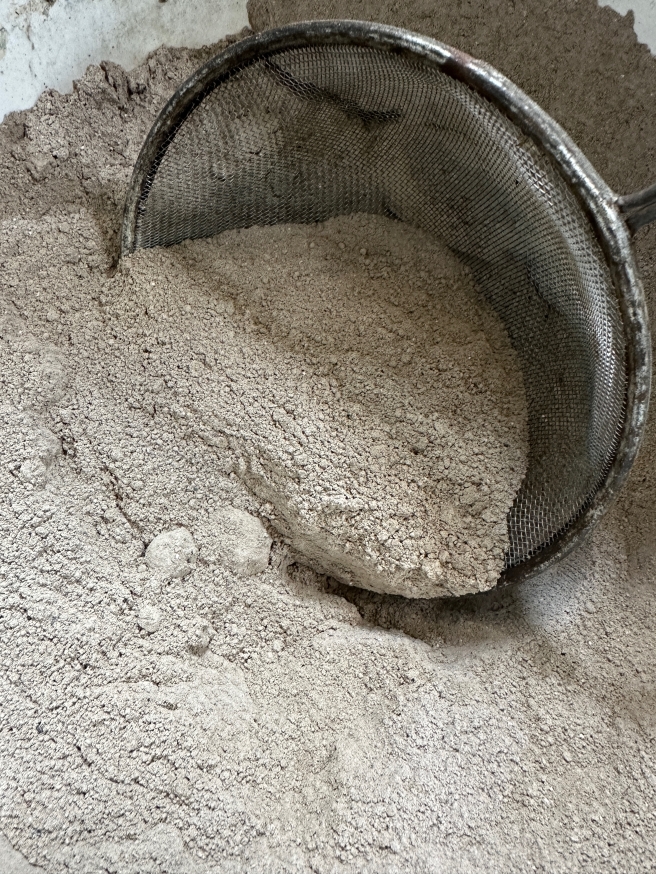
I use 3 kilos (about 6.5 pounds) hardwood ash, sifted. I sift the ashes through a coarse strainer/sieve to remove any large chunks. Fine ashes will make a more potent lye. 

  •  A large pot for heating water 

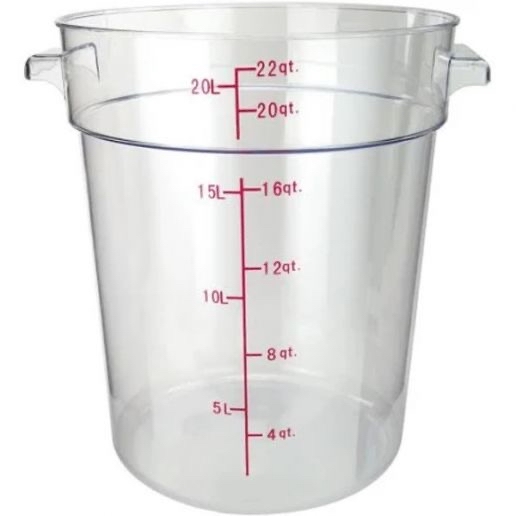
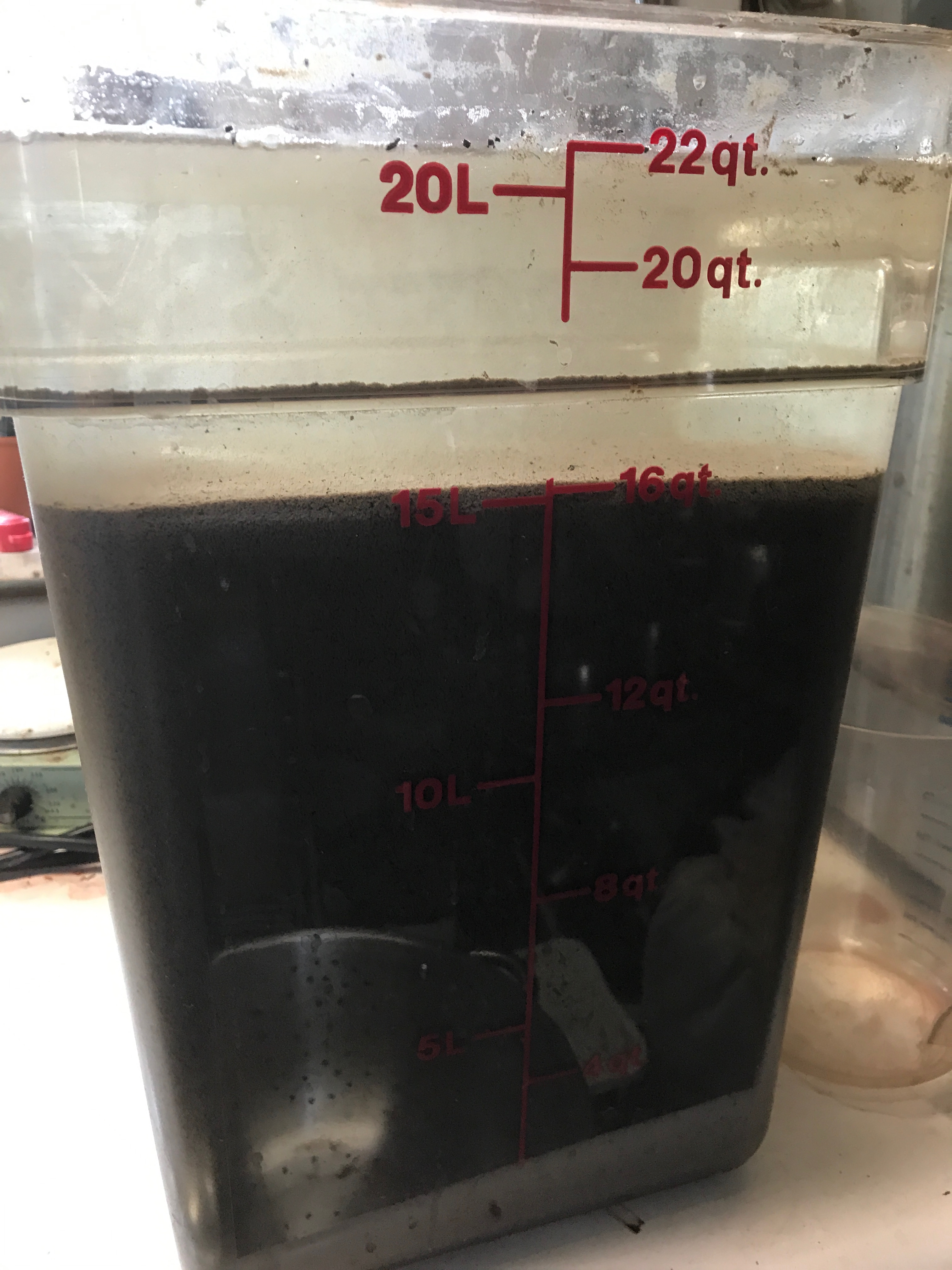
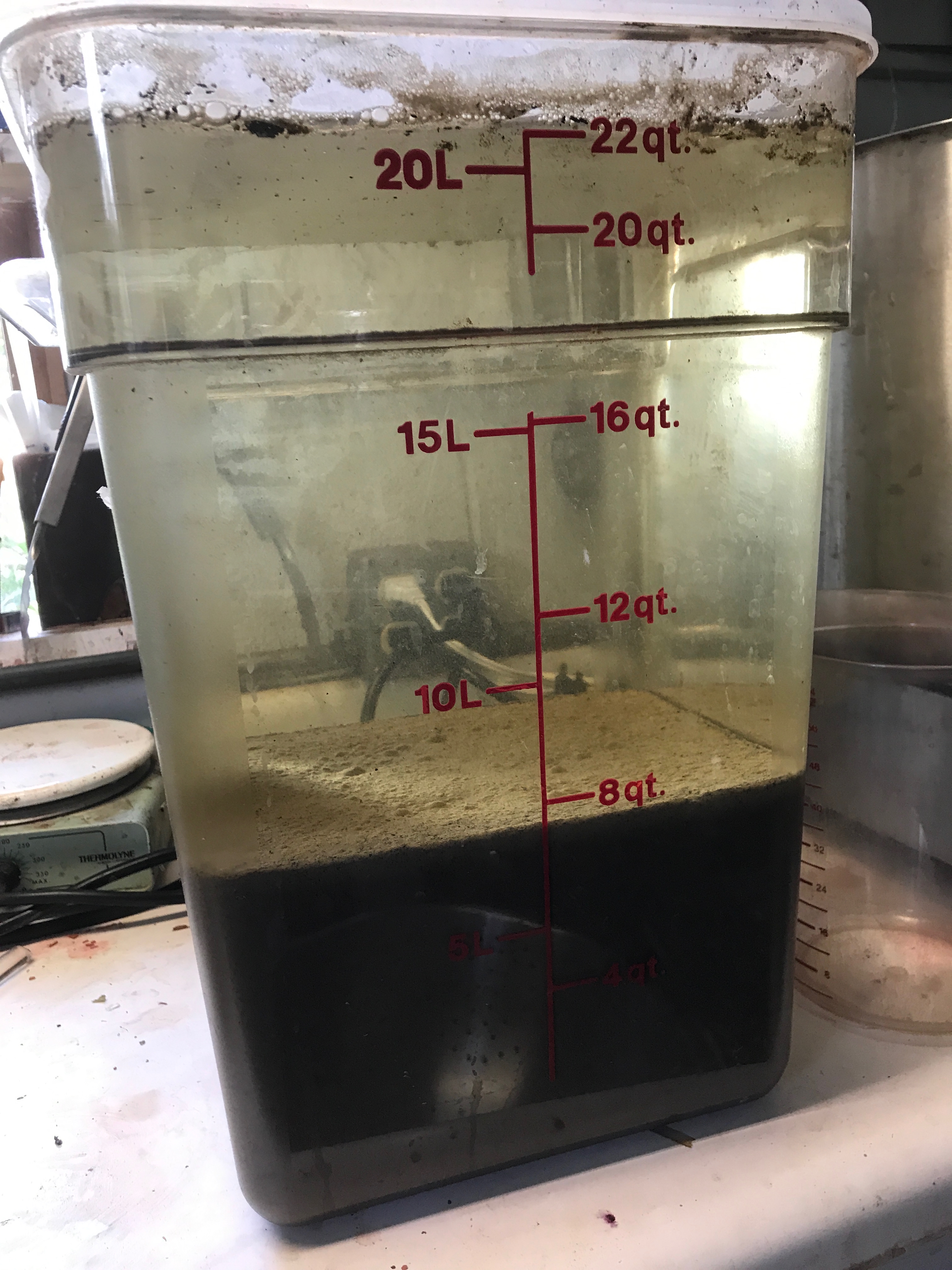
A vessel to hold the ashes and hot water – my preference is a 22-quart transparent polycarbonate container, as it makes it easy to see when the ashes have settled. A restaurant grade vessel, such as the one pictured here, can withstand the heat of the hot water and ashes. Stainless steel can also be used but it is not as easy to see when the ashes have settled. Do NOT use an aluminum vessel. The alkalinity of the lye deteriorates the aluminum. 

SAFETY NOTE:

Eye protection and gloves should always be used when making lye or working with it. 


PROCESS: 

1.    Place all of the ashes into the polycarbonate vessel, or the vessel of your choosing. 

2.     Heat the water in a separate container to the boiling point or close to boiling.

3.    Carefully pour the hot water over the ashes, nearly filling the vessel. Be sure to use eye protection and gloves for this, as there will likely be spattering and bubbling. 

4.    Stir the ashes in the water to completely distribute them. 

5.    Allow the ashes to settle for several hours or overnight. 

6.    Once the ashes have settled, remove the clear liquid lye solution from the top and place into a clean empty bucket. This can be done by carefully scooping out the liquid (without disturbing the ashes on the bottom) or siphoning with a small hose. Be sure to use eye protection and gloves for this as the solution is very alkaline.  The liquid can be filtered through a cotton cloth to catch any ash particles that may remain in the lye solution. This is your first “batch” of lye and may be somewhat discolored. 


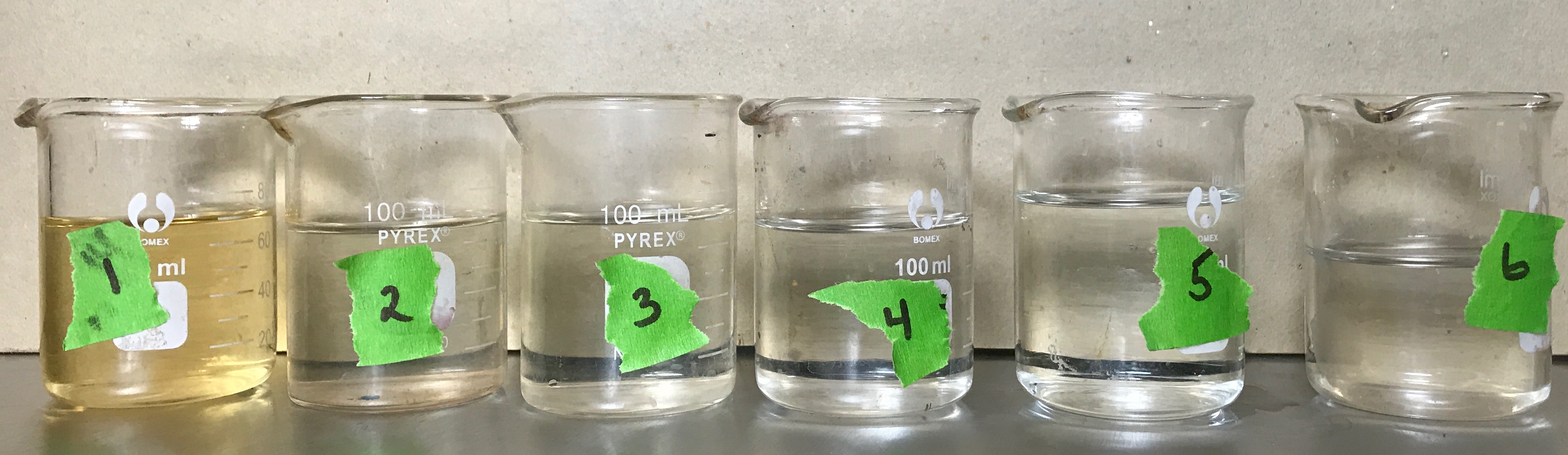
7.    Repeat this process (steps 2-6) five more times, using the same ashes in the vessel to obtain more lye solution. Subsequent batches will become clearer and more colorless.

8.    The lye will weaken with each subsequent batch (see table). It’s best to store the separate batches in different containers (labeled with their pH) so that you can selectively use the “weaker” or “stronger” lye as needed. Lye that is stored will slowly decrease in pH over time. 

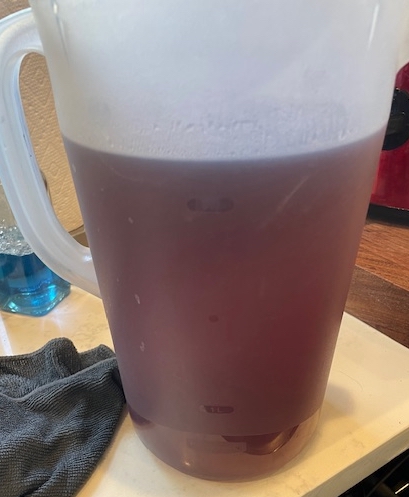
Early batches of lye solution will be colored, likely from the tannins present. 
Batch #pH
112.45
212.0
311.6
411.3
511.2
610.5

Building the vat: Although much of the process is the same as the vat made with soda ash or potash (Blog Post #6), and may seem repetitive, there are some differences when building the vat with lye. 

Ingredients:

  • Wood ash lye of various strengths
  • Indigo pigment: 2-10 grams per liter (see note #1 below)
  • Dried and ground Indigofera tinctoria leaves: 5 grams per liter (see note #2 below)
    OR
  • Ground, “spent” madder root: 5 grams per liter. (see note #3 below)
  • Wheat bran: 5 grams per liter. I typically use “feed-grade” bran sourced from my local farm supply store. 
  • Optional, if you have them: dried woad balls/patties or dried polygonum leaves etc., crushed: 5 grams per liter. (see note #4 below)

 Note #1: Deciding how much indigo pigment to put into a vat is a complex decision and largely based on:

  • The size of the vat
  • The amount of dyeing that will be done in the vat 
  • The amount of dyeing that will be done in the vat 
  • How long the vat is expected to last.

   The fermented vat seems to be very efficient at reducing the indigo available in the vat. I have observed that a vat with 2 grams of indigo pigment/liter can produce a blue that is almost identical to one with 8 grams per liter, but the vat with the smaller amount of indigo will not last as long. Fermented vats will result in pale colors only after much of the indigo has been used up and the vat becomes weaker. My 50-liter vat with 2 grams of indigo per liter took over 20 months to reach a point where it produced pale blues.  

Vats that are kept and used for a long time will build up solid materials on the bottom: mostly spent lime and wheat bran. When stirring the vat, you will notice more “stuff” on the bottom over time. I suspect that I have kept vats longer than might be recommended.

For all the above reasons, I would recommend using a smaller amount of indigo pigment in the vat. Use it up. Dye some pale colors and mix a new one. Ideally, the studio will have two vats: an old vat for pale colors and another, fresher one for darker colors. 

Note #2:  Spent madder has already been used for dyeing red. The alizarin and other dye components in the roots are not necessary for the fermentation. 

When dyeing with madder root, I place the ground roots into a fine mesh bag that is large enough for it to move freely. When the red dyeing is completed, I removed the ground root from the bag and dry it. This can be stored until it is needed for an indigo vat. Madder that has not already be used for dyeing red can be used but it would a waste of good red dye. Traditionally, the madder dyers would sell their spent madder root to the indigo dyers. 

Note #3: Dried and ground indigofera leaves are often sold as “black henna” and used, in combination with madder, to dye hair black. I source mine from Maiwa.

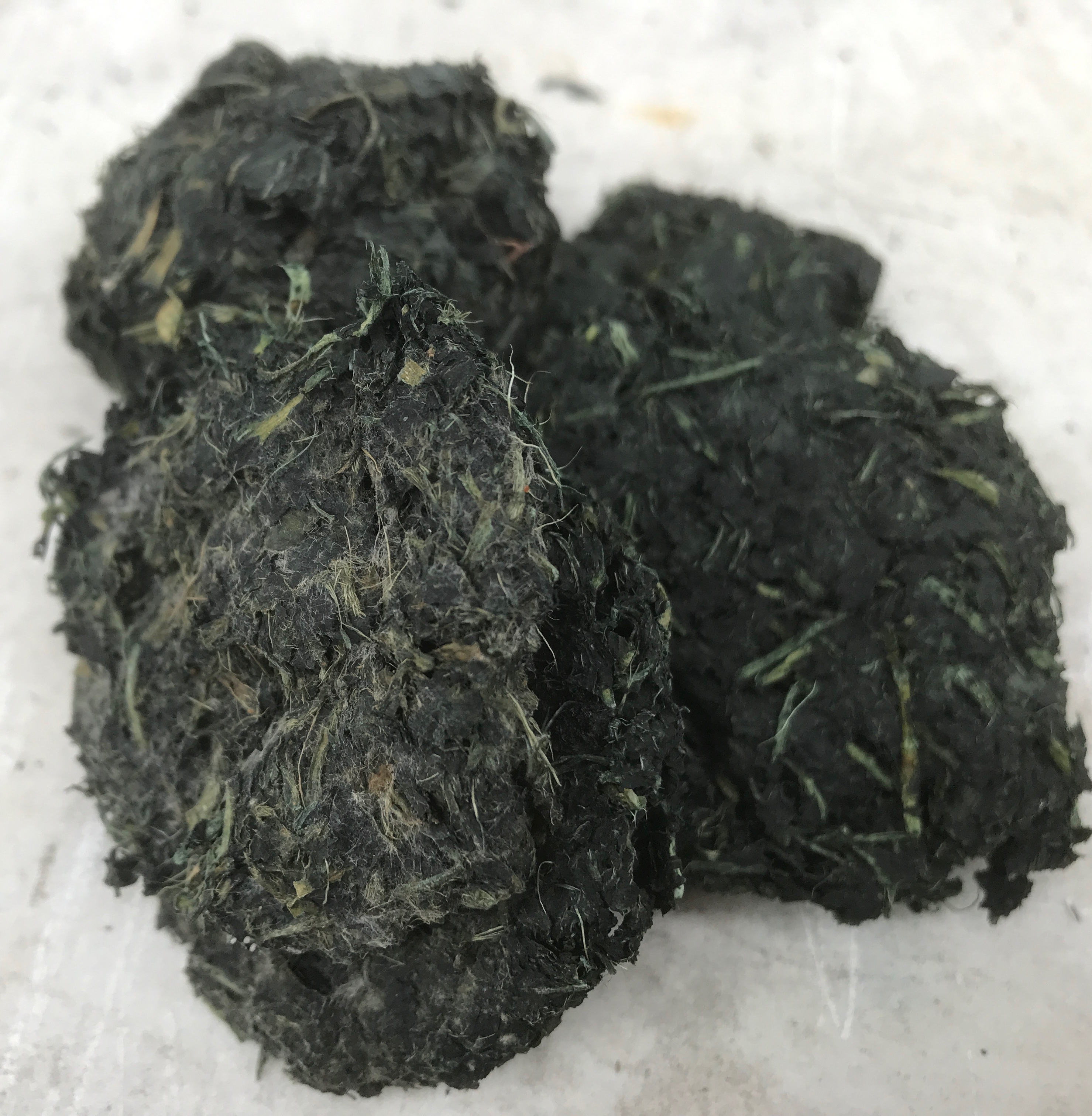
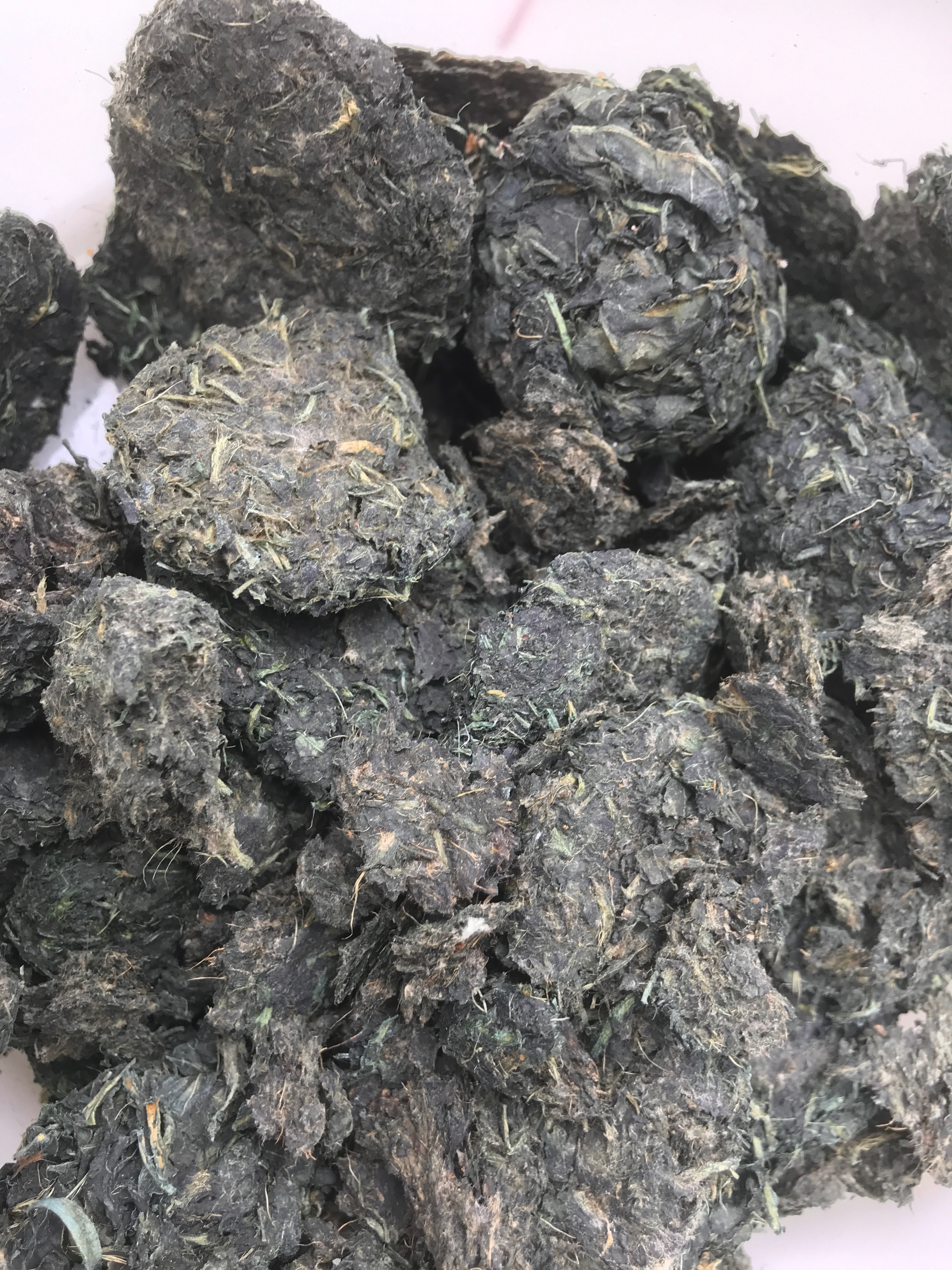
Note #4: When I have fresh indigo of any variety in the garden, I grind up the leaves, then form them into small “patties” and dry them.  The theory is that these will introduce another type of bacteria and nourishment for that bacteria to the vat. 

Procedure

1.        Fill the dye vessel about 1/2 full of the weaker lye. You will want to save the strongest lye to use for adjusting the pH, once fermentation begins and the pH begins to decline. 

2.        Hydrate the indigo pigment in water unless you are using paste pigment. Add to the vat.

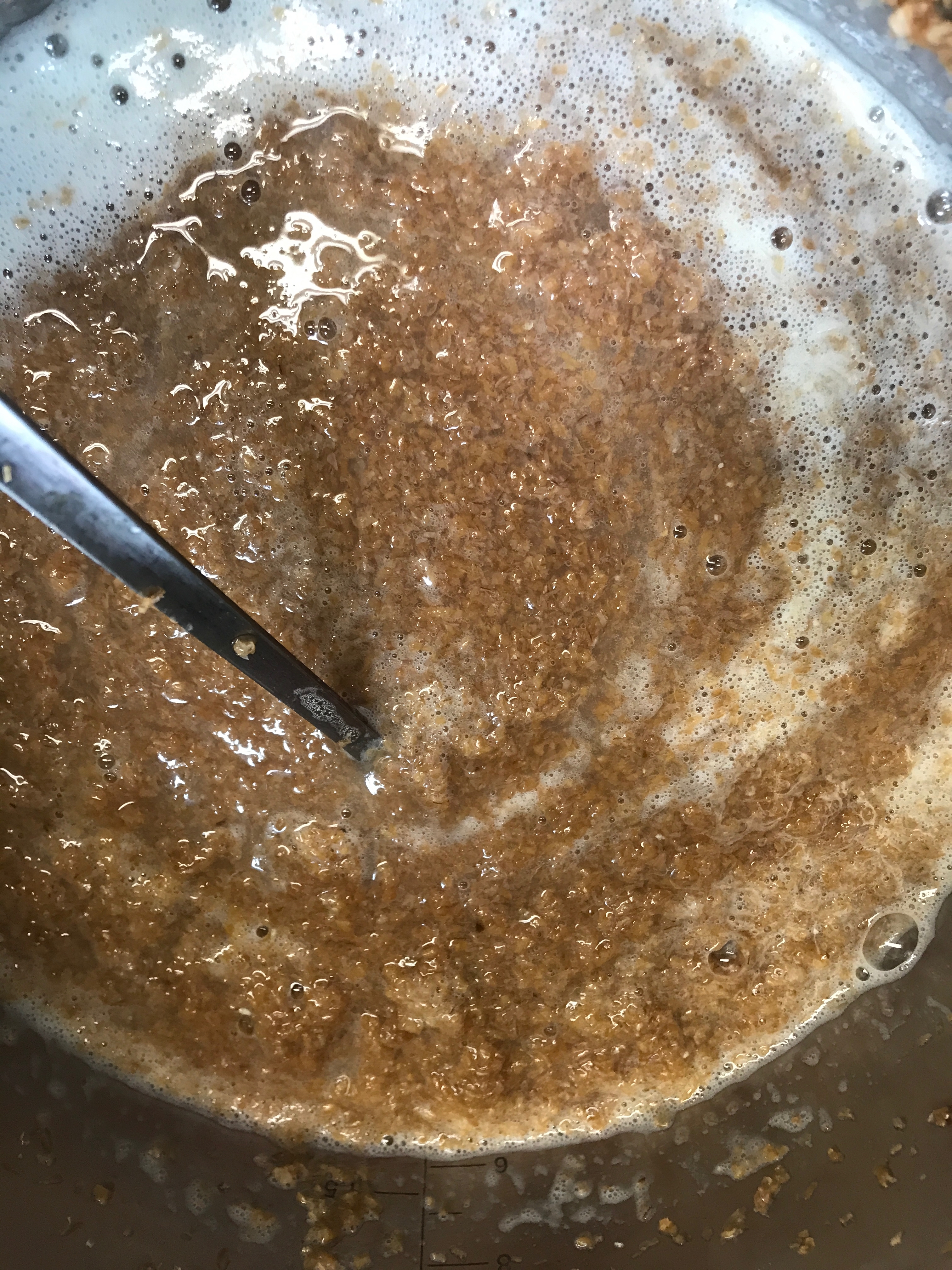
3.        Boil the bran in a small amount of water (or wood ash lye) for about 10 minutes. It should be the consistency of cooked cereal and emit a slightly sweet smell. Cool until just slightly warm. Add to the vat.

4.       Prepare the “food” for the vat. If using madder root, cook this briefly. It can be combined with the bran and they can be cooked together. Add to the vat.

5.        If using ground Indigofera tinctoria leaves, add warm water to make a smooth, watery paste. Add to the vat.

6.      If using dried indigo patties or woad balls, crush and add that material to the vat to the vat. 

7.     Stir the vat carefully with a centrifugal motion and cover loosely. 

8.     Apply heat to the vat, if required. Optimum temperature for bacteria growth is 30°C/86°F but it can grow between the temperatures of 10-50°C/50-122°F. Bacterial growth activity decreases at temperatures greater than 36°C/96.8°F

9.     Check the pH. It should be in the range of 9.5-11. Adjust as necessary, by adding some of the stronger lye.

Over the next few days, stir the vat regularly, a couple of times each day. Monitor the pH and begin to do dye tests. Expect the pH to drop as fermentation begins and lactic acid results. This is the time to add the strongest lye to the vat, filling the vessel to capacity. Continue doing daily dye tests until full reduction is reached. 

Some More Thoughts about Indigo Fermentation: Blog Post #7   What I Have Learned from a Biochemist

© Catharine Ellis, as posted to the blog: Natural Dye: Experiments and Results

It is one thing to put all the ingredients in a “vat” and hope for the best result: a reduced vat that will dye beautiful blues. It is a whole other thing to understand what happens in that vat. I am not a scientist, but the following is some of what I have learned from Dr. Kim Borges, biochemistry professor at Warren Wilson College in Swannanoa, NC. Dr. Borges uses indigo fermentation with her class to help students understand the basic concepts of bacterial fermentation. 

She states that “how the indigo reduction happens in the fermentation vat seems to be the big, unresolved question in the microbiology research world.” 

The quick reduction vat (made with fructose, iron, etc.) requires very high pH. The glucose (and/or a degradation product of glucose that is made at high pH) appears to donate electrons to the indigo molecules directly.

In the fermentation vats, the concentration of free glucose is much lower.  Many different microbes use glucose as a preferred fuel. It is suspected that much of the free glucose will be taken up by community microbes before it reduces indigo, though that is a guess. It is likely that cellulose, starch, arabinoxylans and other complex carbohydrates from wheat bran (and from other plant materials) are converted to simple sugars by some of the microbes in the community. But those microbes will shuttle most of the sugar into their cells for their own use, and so only some of the easily metabolizable sugars like glucose will stay in the fermentation fluid. 

It’s interesting that most kinds of bacteria can’t degrade those complex carbohydrates – only certain microbes specialize in that activity.  A functioning sukumo-based vat has Amphibacillus and Alkalibacterium, which are types of bacteria that degrade wheat bran carbohydrates to produce lactic acid as waste. Other kinds of bacteria seem to be able to use the lactic acid, which helps to keep the pH from falling too much. 

I think that one reason we stir the vat daily is to disperse the “pockets” of lactic acid that build up around the wheat bran fermenters and move it to the lactic acid users before the vat spoils. A network of microbes based upon use of hard-to digest complex carbohydrates will develop in a good vat. And somehow some of these microbes transfer electrons from proteins on the outside of their cells to indigo particles (probably carried by anthraquinones and other electron-carrying small molecules). There is still so much to learn!

Regarding the addition of sake (rice wine) or glucose (malt syrup, rice extract, etc.) to the sukumo vat: It doesn’t seem like the sake adds enough alcohol to kill bacteria that would de-rail the indigo reduction and spoil the vat. Perhaps those added sugars initially provide easy to metabolize “fuel” that starts the development of the bacterial community. The bacteria that dominate the sukumo vat initially don’t seem to be indigo reducers. But they do seem to be good at using up oxygen to create the anaerobic conditions preferred by indigo reducers. Maybe the added sugar helps to cultivate them, and it is worth testing.

As an aside: Rowland Ricketts once told me that he never saw a traditional Japanese dyer use sake in the vat. It is much better to drink it!

Fermented Indigo Vat: Blog Post #6   Recipe: Basic Fermentation Vat with Soda Ash or Potash 

© Catharine Ellis, as posted to the blog: Natural Dye: Experiments and Results

This recipe can used to make a 1-liter vat or can be scaled up to a larger vat. I typically make a vat that is 50 liters in volume. The recipe is intended as a starting point for the dyer who wishes to explore fermentation. 

Observe carefully.  Be flexible. Experiment. Keep records!

As stated earlier, please start with a small vat of 1-4 liters. Get comfortable with it and wait for reduction. Any successful test vat can be added to a larger vat, speeding up the fermentation/reduction time for the new vat. So, small vats are useful. 

Ingredients:

  • Indigo pigment: 2-10 grams per liter (see note #1 below)
  • Dried and ground Indigofera tinctoria leaves:  5 grams per liter (see note #2 below) 

   OR 

Ground, “spent” madder root:  5 grams per liter. (see note #3 below)

  • Wheat bran: 5 grams per liter. I typically use “feed-grade” bran sourced from my local farm supply store.
  • Soda ash (sodium carbonate) OR potash (potassium hydroxide): 25 grams per liter. Either soda ash or potash is effective. (see note #4 below)

Optional: If you have them: dried woad balls/patties or dried polygonum leaves etc., crushed: 5 grams per liter. (see note #5 below)

Note #1: Deciding how much indigo pigment to put into a vat is a complex decision and largely based on:

  • The size of the vat
  • The amount of dyeing that will be done in the vat and the size of the dyeable goods
  • The type of textiles that will be dyed: yardage requires much more volume that yarn.
  • How long the vat is expected to last. 

The fermented vat seems to be very efficient at reducing the indigo available in the vat. I have observed that a vat with 2 grams of indigo pigment/liter can produce a blue that is almost identical to one with 8 grams per liter, but the vat with the smaller amount of indigo will not last as long. Fermented vats will result in pale colors only after much of the indigo has been used up and the vat becomes weaker. My 50-liter vat with 2 grams of indigo per liter took over 20 months to reach a point where it produced pale blues.  

I have never added additional indigo to a vat. I have always felt that when a vat was “finished” it was time to start fresh again, although that might be something to consider.

Although the vat on the right uses 4x the amount of indigo pigment, and the the vats were equally reduced, they are close to identical in depth of shade.

Vats that are kept a long time will build up solid materials on the bottom: mostly lime and wheat bran. When stirring the vat, there is noticeably more “stuff” on the bottom. I suspect that I have kept vats longer than might be recommended – I guess I may not be dyeing enough!  

For all the above reasons, I would recommend using a smaller amount of indigo pigment in the vat. Use it up. Dye some pale colors and mix a new one. Ideally, the studio will have two vats: an old vat for pale colors and another for darker colors. 

Note #2: “Spent” madder has already been used for dyeing red. The alizarin and other dye components in the roots are not necessary for the fermentation. 

When dyeing with madder root, I place the ground roots into a fine mesh bag that is large enough for the dyestuff to move freely. When the red dyeing is completed, I remove the ground root from the bag and dry it. It will dry easily on a tray if left in the open air. Once  completely dry, the madder can be stored until it is needed for an indigo vat. Madder that has not already be used for dyeing red can be used but it would a waste of a good red dye. Traditionally, the madder dyers would sell their spent madder root to the indigo dyers. 

Note #3: Dried and ground Indigofera tinctoria leaves are often sold as “black henna” and used, in combination with madder, to dye hair black. I source mine from Maiwa.

Note #4:The stated quantity of soda ash or potash is ideal to achieve the desired pH (12.0) using MY WATER, which is acidic (pH 6). If your water is neutral, less soda ash might be required.  

Note #5: When I have fresh indigo of any variety in the garden, I will grind up the leaves, form them into small “patties” and dry them.  The theory is that these will introduce supplemental bacteria to the vat.  When I use them, my vats tend to reduce a little bit faster. If you do not have fresh indigo to make these, that is just fine. 

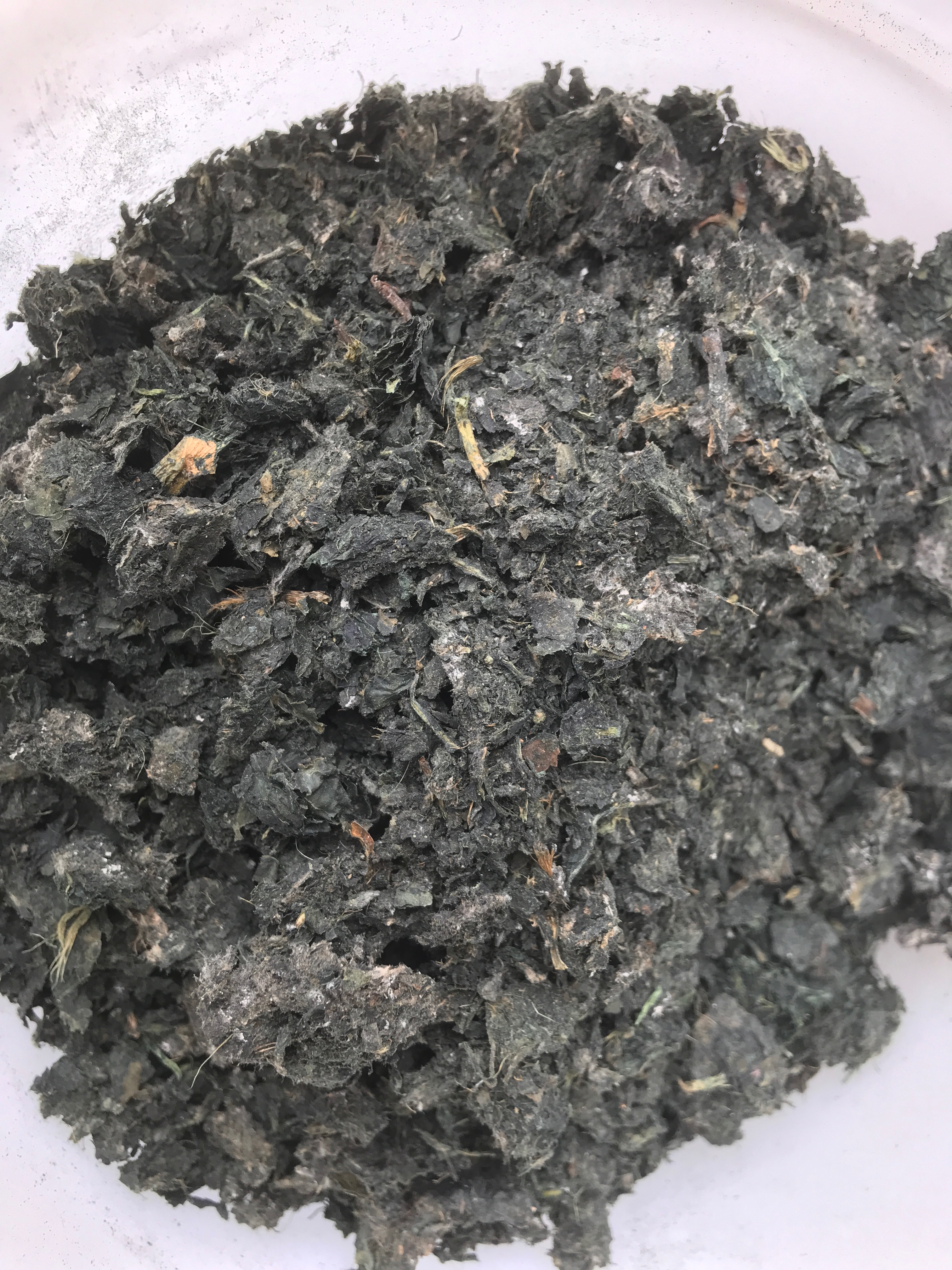
Indigo leaf patties, made from fresh indigo leaves (left). They are dried to preserve (right) and can be added to feed the vat and to boost fermentation. I have used all types of indigo leaves from my garden for this: Persicaria tinctoria, Indigofera suffruticosa, and Isatis tinctoria.

Procedure:

  1. Thoroughly hydrate the indigo pigment in water unless you are using paste pigment. 
  2. Boil the bran in a small amount of water for about 10 minutes. It should become the consistency of cooked cereal and emit a slightly sweet odor. Cool before use, until just warm.
  3. Prepare the “food” for the vat:
    • If using madder root, cook this briefly. It can be added to the bran and they can be cooked together for efficiency. 
    •  If using ground Indigofera tinctoria leaves, stir them into warm water to make a smooth, watery paste.
    • If using dried indigo patties, crush them up before adding to the vat
  4. Dissolve the soda ash or potash in boiling water. Cool before use until just warm.
  5. Add warm water to the dye vessel until it is approximately ¾ full. 
  6. Add the remainder of the ingredients to the dye vessel. 
  7. Wait a few days, to add the liquid to full capacity.
  8. Stir the vat carefully with a circular, centrifugal motion. Cover the vat loosely. 
  9. Warm the vat, if required. Optimal temperature for bacteria growth is 30°C/86°F but it can grow between the temperatures of 10-50°C/50-122°F. Bacterial growth decreases at temperatures greater than 36°C/96.8°F
  10. Measure the pH. It should be in the range of 10-11. Once the vat is at full capacity, add a very small amount of lime, (calcium hydroxide) and re-test the pH. 

Over the next few days:

  • Stir the vat in a centrifugal motion  2-3 times a day. 
  •   Monitor the pH – A good pH meter is an excellent investment. Alternatively, use pH papers that have multiple indicator zones. 
  • As the fermentation begins, lactic acid will be created, and the pH of the vat will fall. This is the time to completely fill your vat using warm water into which you have dissolved soda ash or potash (25 grams per liter).
  •  Measure the pH  It should be in the range of 9.5-11. Once the vat is at full capacity, test the pH and record this.  
  •  Add a very small amount of lime (calcium hydroxide), if necessary. Lime is a much more concentrated “fix” for pH adjustments. 
  • Watch for the vat to form an iridescent film on the surface. This is an indication that fermentation and reduction has begun. 
  •  Smell the vat. As bacteria causes the fermentation of the vat, the “odor” will be an indicator of activity. 

Concurrently, test the color: the best way to tell if the vat is reduced, is to test its ability to dye. 

  •  Starting on day two, begin test dyeing. Place a small piece of wetted-out cotton cloth into the vat for 10 minutes. Observe and note the results.  Continue to test the vat each day, maintaining a record of the dye tests.  
  • Once the test fabric dyes a clear blue color, the vat is ready to use for dyeing. Usually this takes about 8-14 days.
  • Dedicate a small notebook to each vat that you build so that the vat can be observed over weeks/months. Place the dyed samples in your notebook.  This will be an important resource tool to understanding your vat. 
  • Once reduced, the vat can be monitored by weekly testing.
  • From this point, follow the instructions in “Vat Maintenance” post, which will follow. 

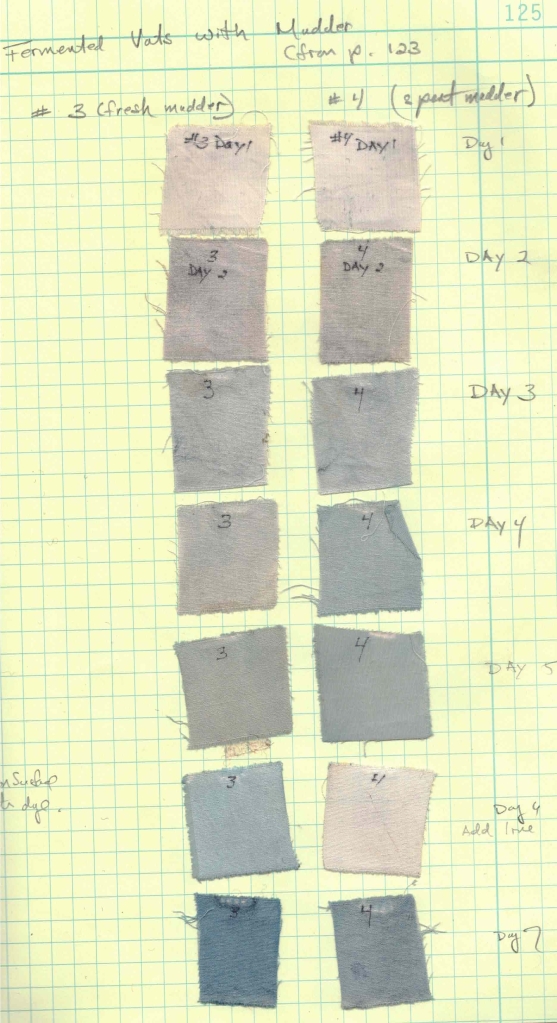
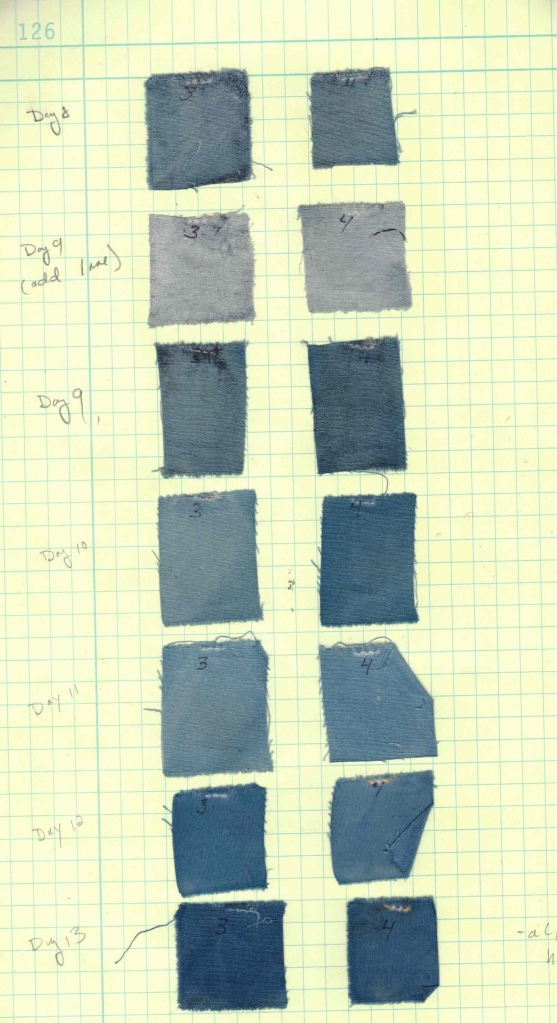
Day 1 – Day 13 of two vats made with madder root. One was made with “spent” root, the other was made with root that had not been used for dyeing. (I knew that they would both work, but sometimes I just need to prove it to myself!)

By day 6 the pH had begun to drop. The lack of color on that day is a great indicator that something is out of balance – and most likely it is the pH. A small amount of lime was added to both vats, and the color improved.

The same drop in pH happened on day 9. This illustrates how easy it is to read the condition of your vat from dyed samples. After day 13, I began using these vat for dyeing.

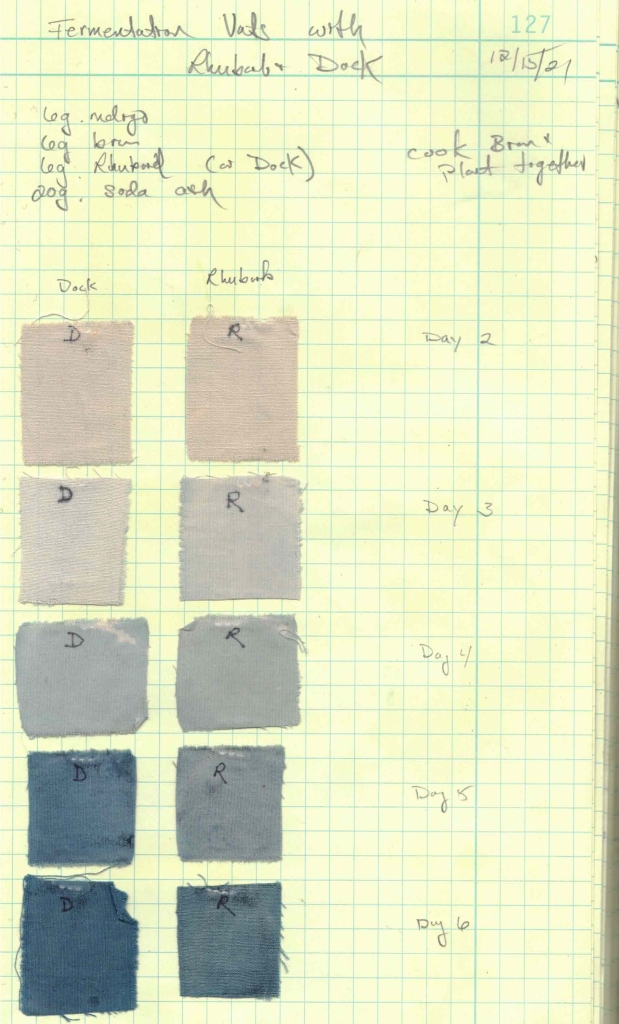
A similar test using spent dock root (Rumex crispus) and rhubarb root (Rheum palmatum).  Reduction came more quickly in these vats. Perhaps this is because the plant material was a finer ground powder and more easily accessed by the vat. I source dock and rhubarb that are prepared for medicinal purposes. 

Fermented Indigo Vat: Blog Post #5:  Getting Started with the Fermentation Vat and things to consider before making a vat

© Catharine Ellis, as posted to the blog: Natural Dye: Experiments and Results

Determine the size of your indigo vat: 

This decision is primarily based on your intended use of the vat. If the vat is made for only small scale test dyeing, perhaps a 1-liter jar is adequate. Larger test dyeing and the dyeing of small pieces can likely be done in a 5-gallon bucket (approximately 18 liters). If you wish to dye garments, multiple skeins of yarn, or fabrics, I think the minimum size for good dyeing is approximately 50 liters. 

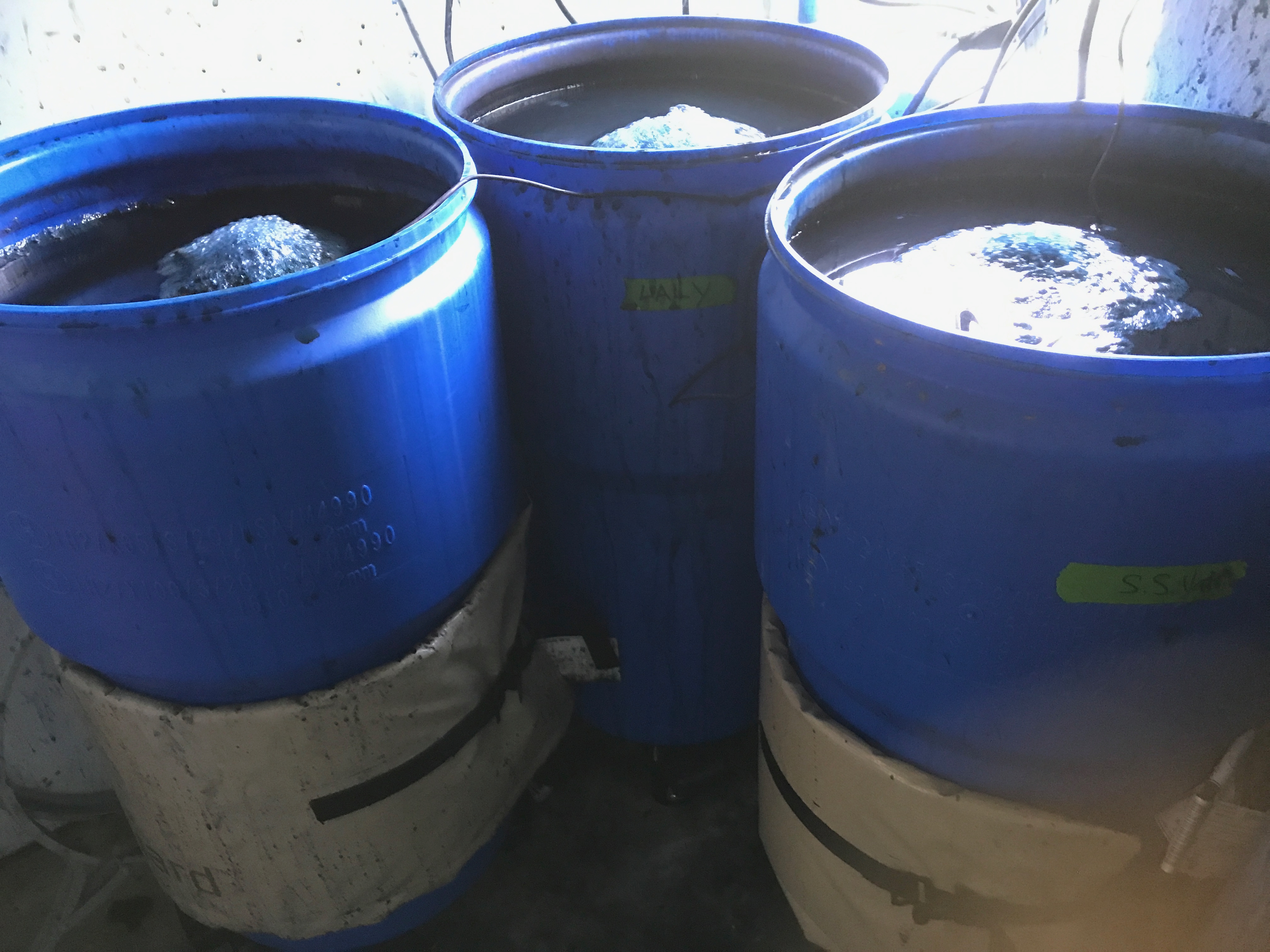
Importantly, undissolved materials (lime, bran, etc.) will build up over time in the bottom of the vat, leaving only the upper portion of the vat available for dyeing.  Fourteen gallon plastic drums can be sourced, from a variety of suppliers, which are significantly taller than they are wide, allowing plenty of room at the top of the vat for good dyeing, while allowing the solid materials to settle to the bottom half of the vessel.  

Three 14 gallon drum for indigo vats. Two of the vats are wrapped in a bucket heater band

It is highly recommended that the dyer who is new to the use of fermented indigo vats begin with small (one liter) test vats to become familiar with and confident with the process before moving on to a large vat. 

Once successfully reduced, test vat(s) can be used  to “seed” a larger vat when you are ready to build one for serious dyeing. “Seeding” a larger vat in this way will stimulate bacteria growth and can significantly decrease the time required for the larger vat to reduce. 

Small test vats can also be added to older vats that have decreased in volume from evaporation or just the process of dyeing.

My dye studio frequently has indigo testing going on, as I compare variations of the vats. Note that some of the vats are wrapped in heating pads in order to stimulate fermentation.

Water: 

It’s important to consider the source of your water. Is it acidic? neutral? City water may have chlorine incorporated, which will inhibit the growth of bacteria needed for the vat. The amount of chlorine can be influenced by the distance from the chlorination facility as chlorine will dissipate. If your water is chlorinated or smells of chlorine, there are three ways that can be used to remove it:

•       Boil the water for 15 minutes to release the chlorine. 

•       Leave the water in an open container at room temperature for 24 hours.

•       The use of filtration systems can also be used to remove chlorine. 

How long will it take for the vat to reduce and begin dyeing?

My vats will typically reduce and begin giving me a full, clear indigo blue after 7-14 days.  But I have seen it take as long as 40 days!  Much of this depends on how well the vat is tended; temperature, pH, etc.  You will only learn the length of time required for the vat to be ready by making that vat and by careful monitoring and testing. Trust me. You will know when it’s ready. Your test strips will be blue!

How long will a fermented vat last?

The life of a vat depends on:

  • how much the vat is used for dyeing  
  • how much indigo is in the vat 
  • vat maintenance 
  • organic matter in the vat

I have had fermented vats that lasted 3 years or longer, with careful monitoring and maintenance. Over time, though, the solids will build up at the bottom of the vat, decreasing the usable solution that is available for dyeing in the upper portion of the vat. For this reason, many dyers will plan to use a vat for about 6-12 months and then discard it. I usually dispose old vats on the compost pile, but, after neutralization, the liquids can be put down the drain but it’s best to strain out any solids on the bottom. 

The amount of indigo pigment used when making the initial vat will determine how long the vat can be used for dyeing. Counterintuitively, a vat that has 2 grams of indigo per liter will initially result in nearly the same depth of blue dye as one with 8 grams of indigo. I know that this sounds illogical but I know this from observation. Importantly, the vat with the lesser amount of dye will weaken sooner, as the dye gets used up, and result in pale blue colors. This can be very desirable, as the ability to achieve a pale blue is sometimes important for controlled color mixing.  For this reason, I would recommend using smaller amounts of indigo (2 grams per liter) when the vat is begun. As the vat becomes weaker and results in pale colors, start a second vat to produce darker shades.  

Does the fermented vat require heat?

I have found that the vat does best with supplemental heat (between 16°C/60°F and 30°C/85°F) in the initial stage while fermentation is starting. If the ambient temperature in the dye studio is warm enough, there is no reason for added heat. If supplemental heat is required, it’s best to use a heater that will surround the vessel.  Avoid immersion bucket heaters, which can get too hot very and concentrated high temperatures can kill the live bacteria. Some form of temperature control is ideal. A plastic covered household heating pad, set on low, will work well for small vats. For larger vats, a bucket wrap heater with a thermostat is ideal. For this reason I use a temperature controller with an immersible probe. This will automatically turn the heater on and off to maintain an ideal temperature.

Once fermentation has been established and the vat is in reduction, ideally, you would maintain those same temperatures. But, I have found that it is not always necessary to continue to apply supplemental heat to the vat.  I have maintained fermented vats successfully through the winter where the overnight ambient temperature in the studio is as low as 5°C/42°F. One winter I had two vats with heat and another without heat. All vats continued to dye well. But there may be better penetration of fibers with a warmer vat. 

What form of indigo is used for the fermented vat? 

The vats described here are made with extracted indigo pigment. I prefer to use natural indigo pigment, but the vat can also be made successfully using synthetic pigment. I have had success using dried indigo pigment or indigo paste pigment (pigment that has been freshly extracted and never dried). I assume that paste pigment may still contain bacteria that will aid in the reduction of the vat which is, obviously, a plus.

What is the source of alkalinity for the fermented vat?

These vats can be successfully made using soda ash (sodium carbonate), potash (potassium carbonate) or wood ash lye, which is made from hardwood ashes.  The processes of making wood ash lye will be described in a later blog post.  From my research, it is suggested that soda ash or potash was typically used in European production workshops vats of the 18th and 19th century. 

The maintenance of the vat requires the addition of very small amounts of lime (calcium hydroxide) to maintain the pH, since it is a much more potent alkaline substance.

What is the source of the bacteria used to reduce the fermented vat?

While composted sukumo is a source of indigo pigment, some of the bacteria, and of the plant material for bacterial growth, the vats made with extracted indigo pigment require additional organic material to begin and maintain the fermentation process. 

•       Wheat bran is a primary source of bacteria for the vat and is used for all fermented vats, including in the sukumo vat. 

•       In addition, the vat requires a source of “food” for the bacteria, which also contributes to the diversity of anaerobic bacteria in the vat. 

•       Traditional European dyers used “spent” madder root. This is finely ground madder root that has already been used for its red dye. 

•       Hisako Sumi, Japanese indigo dyer and researcher, recommends the use of dried indigofera tinctoria leaves as an alternative bacteria/food source for the vats. (I would speculate that these leaves also contain very small amounts of indigo precursors). The Indigofera tinctoria leaves are dried, finely ground and are often used for used as a dye for hair.  The ground, dried leaves are sometimes referred to (and sold as) “black henna”, since a combination of henna and indigo powder will result in a natural black hair dye. 

I have been successful using alternative plant materials and will go into that in more detail in a later blog post. Research and my own observation indicate that diverse sources of bacteria will help contribute to, and maintain, successful fermentation. 

In addition to the madder root and/or dried indigofera tinctoria leaves used during the construction of the vat, other organic substances can be added to the vat and will contributes to the fermentation process and include:

  • Woad balls can be made by grinding fresh leaves of the Isatis tinctoria plant, forming the balls and drying. These balls can also be “couched” or lightly composted by breaking them apart, adding a bit of water, and allowing them to ferment. 
  • Fresh leaves from Polygonum tinctorium or Indigofera sp. can be ground, formed into small “patties” and then dried. These also can be broken up and added to the vat.

Additional wheat bran is used on a regular basis to maintain fermentation throughout the life of the vat.

Does the fermented vat have an “odor”?

Yes! The vat has a distinct smell from the bacterial fermentation. The smell is also a useful indicator that the vat is “working”. This is not a sweet-smelling vat, such as a vat reduced with bananas or fructose. Personally, I do not find the odor unpleasant (once I got used to it!) but it is likely you will not want to keep this vat in a closed “living space” as you (or your housemate) may find it objectionable.

The NEXT post will have the first “instructions” for building a fermentation vat.