If the alkalinity of the vat falls too low, the vat becomes a good environment for water born insects. They may appear as small larva on the underside of the vat lid or at the “high tide line” of the dye vat vessel – just at the edge of the liquid volume. If the larvae are allowed to hatch, then small flying insects will appear at the surface. If this occurs, it is a clear indication that the pH has gotten too low and it’s important to rectify that immediately. Rinse off your lid to removed the larvae and wipe out the larvae from the sides. Then add lime, stir, and monitor the vat carefully. Increasing the pH will create an environment in which these larvae cannot survive. The amount of lime required will depend on the size of the vat. Monitor the vat carefully for the next few days.
Small larvae on the inside cover of my vat. This is a sure sign that the pH is too low and it’s time to add lime. If allowed to hatch, you will have small flying insects.
LARGE VATS
It’s best to place a vat of 50 liters (or more) onto a dolly with wheels so that it can be moved easily.
“SEEDING” OF VATS
Small test vats can be added to a brand new new vat in order to speed up the fermentation process. I have successfully started 50 liter vat fermentation vats in less than 24 hours by adding 5 or 6 small test vats (fully reduced) in addition to all the other required materials for the larger vat. This is an easy way to make a fermentation vat available for a workshop or class or for building a vat more quickly in the studio. Think of it like a sour dough starter.
CONTINUE TO EXPERIMENT
I often will mix up small test vats in order to learn, answer my questions, and deepen my own knowledge:
Does soda ash work as well as potash? YES
Will spent Rhubarb root work as well as spent madder root? YES
Will spent Dock root work as well as madder root? YES
Will a fermented vat work with synthetic indigo? YES
This decision is primarily based on your intended use of the vat. If the vat is made for only small scale test dyeing, perhaps a 1-liter jar is adequate. Larger test dyeing and the dyeing of small pieces can likely be done in a 5-gallon bucket (approximately 18 liters). If you wish to dye garments, multiple skeins of yarn, or fabrics, I think the minimum size for good dyeing is approximately 50 liters.
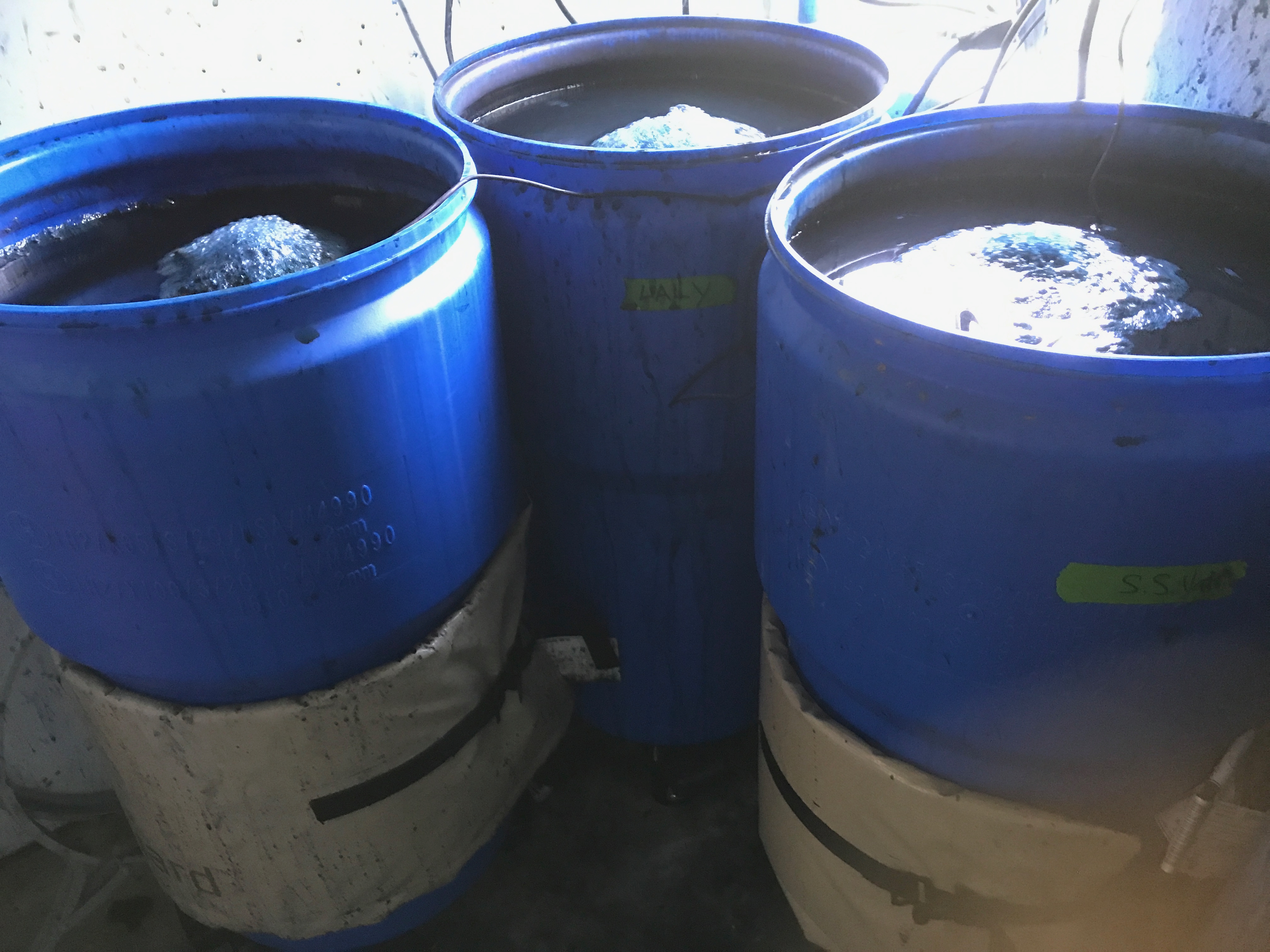
Importantly, undissolved materials (lime, bran, etc.) will build up over time in the bottom of the vat, leaving only the upper portion of the vat available for dyeing. Fourteen gallon plastic drums can be sourced, from a variety of suppliers, which are significantly taller than they are wide, allowing plenty of room at the top of the vat for good dyeing, while allowing the solid materials to settle to the bottom half of the vessel.
Three 14 gallon drum for indigo vats. Two of the vats are wrapped in a bucket heater band
It is highly recommended that the dyer who is new to the use of fermented indigo vats begin with small (one liter) test vats to become familiar with and confident with the process before moving on to a large vat.
Once successfully reduced, test vat(s) can be used to “seed” a larger vat when you are ready to build one for serious dyeing. “Seeding” a larger vat in this way will stimulate bacteria growth and can significantly decrease the time required for the larger vat to reduce.
Small test vats can also be added to older vats that have decreased in volume from evaporation or just the process of dyeing.
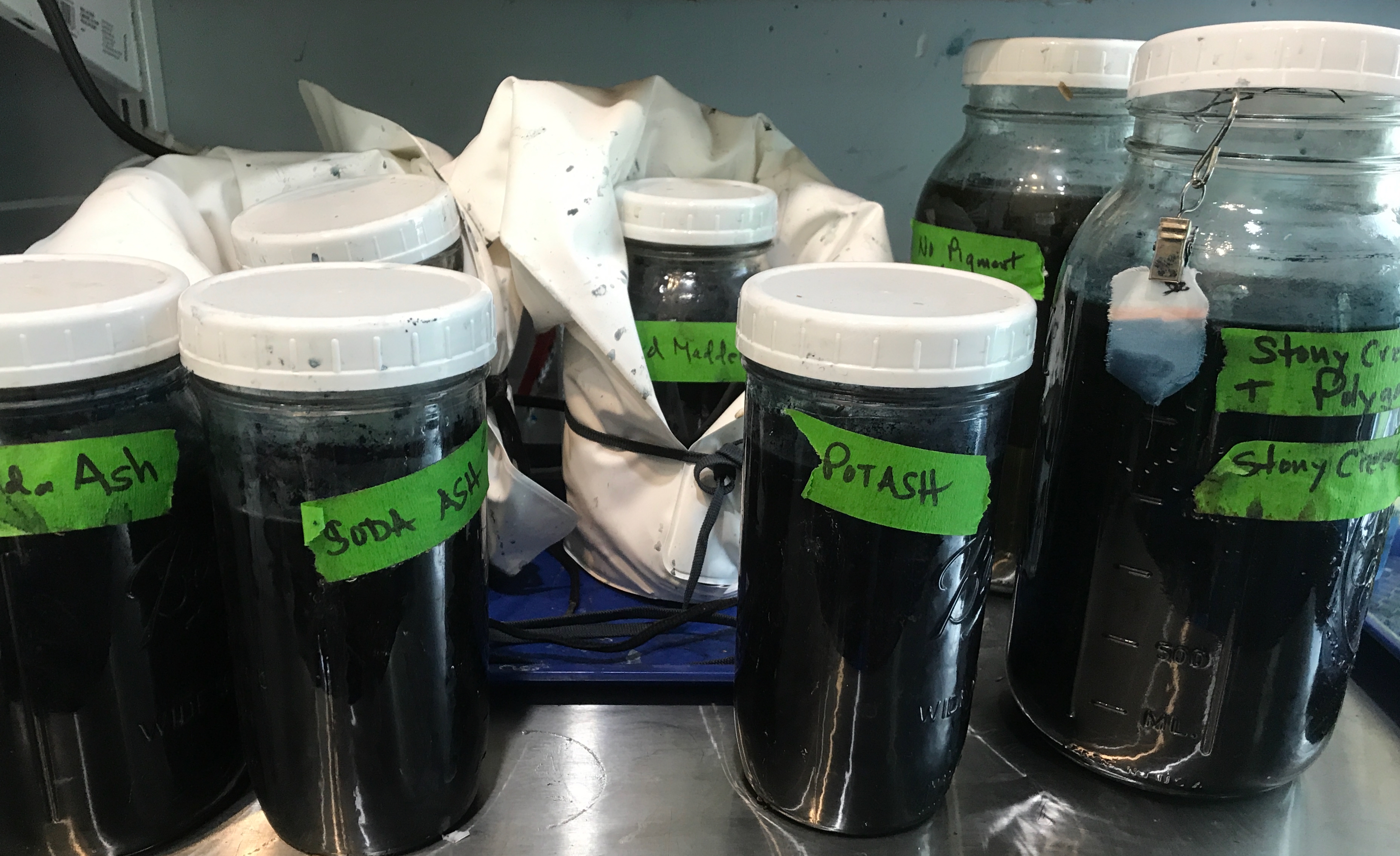
My dye studio frequently has indigo testing going on, as I compare variations of the vats. Note that some of the vats are wrapped in heating pads in order to stimulate fermentation.
Water:
It’s important to consider the source of your water. Is it acidic? neutral? City water may have chlorine incorporated, which will inhibit the growth of bacteria needed for the vat. The amount of chlorine can be influenced by the distance from the chlorination facility as chlorine will dissipate. If your water is chlorinated or smells of chlorine, there are three ways that can be used to remove it:
• Boil the water for 15 minutes to release the chlorine.
• Leave the water in an open container at room temperature for 24 hours.
• The use of filtration systems can also be used to remove chlorine.
How long will it take for the vat to reduce and begin dyeing?
My vats will typically reduce and begin giving me a full, clear indigo blue after 7-14 days. But I have seen it take as long as 40 days! Much of this depends on how well the vat is tended; temperature, pH, etc. You will only learn the length of time required for the vat to be ready by making that vat and by careful monitoring and testing. Trust me. You will know when it’s ready. Your test strips will be blue!
How long will a fermented vat last?
The life of a vat depends on:
how much the vat is used for dyeing
how much indigo is in the vat
vat maintenance
organic matter in the vat
I have had fermented vats that lasted 3 years or longer, with careful monitoring and maintenance. Over time, though, the solids will build up at the bottom of the vat, decreasing the usable solution that is available for dyeing in the upper portion of the vat. For this reason, many dyers will plan to use a vat for about 6-12 months and then discard it. I usually dispose old vats on the compost pile, but, after neutralization, the liquids can be put down the drain but it’s best to strain out any solids on the bottom.
The amount of indigo pigment used when making the initial vat will determine how long the vat can be used for dyeing. Counterintuitively, a vat that has 2 grams of indigo per liter will initially result in nearly the same depth of blue dye as one with 8 grams of indigo. I know that this sounds illogical but I know this from observation. Importantly, the vat with the lesser amount of dye will weaken sooner, as the dye gets used up, and result in pale blue colors. This can be very desirable, as the ability to achieve a pale blue is sometimes important for controlled color mixing. For this reason, I would recommend using smaller amounts of indigo (2 grams per liter) when the vat is begun. As the vat becomes weaker and results in pale colors, start a second vat to produce darker shades.
Does the fermented vat require heat?
I have found that the vat does best with supplemental heat (between 16°C/60°F and 30°C/85°F) in the initial stage while fermentation is starting. If the ambient temperature in the dye studio is warm enough, there is no reason for added heat. If supplemental heat is required, it’s best to use a heater that will surround the vessel. Avoid immersion bucket heaters, which can get too hot very and concentrated high temperatures can kill the live bacteria. Some form of temperature control is ideal. A plastic covered household heating pad, set on low, will work well for small vats. For larger vats, a bucket wrap heater with a thermostat is ideal. For this reason I use a temperature controller with an immersible probe. This will automatically turn the heater on and off to maintain an ideal temperature.
Once fermentation has been established and the vat is in reduction, ideally, you would maintain those same temperatures. But, I have found that it is not always necessary to continue to apply supplemental heat to the vat. I have maintained fermented vats successfully through the winter where the overnight ambient temperature in the studio is as low as 5°C/42°F. One winter I had two vats with heat and another without heat. All vats continued to dye well. But there may be better penetration of fibers with a warmer vat.
What form of indigo is used for the fermented vat?
The vats described here are made with extracted indigo pigment. I prefer to use natural indigo pigment, but the vat can also be made successfully using synthetic pigment. I have had success using dried indigo pigment or indigo paste pigment (pigment that has been freshly extracted and never dried). I assume that paste pigment may still contain bacteria that will aid in the reduction of the vat which is, obviously, a plus.
What is the source of alkalinity for the fermented vat?
These vats can be successfully made using soda ash (sodium carbonate), potash (potassium carbonate) or wood ash lye, which is made from hardwood ashes. The processes of making wood ash lye will be described in a later blog post. From my research, it is suggested that soda ash or potash was typically used in European production workshops vats of the 18th and 19th century.
The maintenance of the vat requires the addition of very small amounts of lime (calcium hydroxide) to maintain the pH, since it is a much more potent alkaline substance.
What is the source of the bacteria used to reduce the fermented vat?
While composted sukumo is a source of indigo pigment, some of the bacteria, and of the plant material for bacterial growth, the vats made with extracted indigo pigment require additional organic material to begin and maintain the fermentation process.
• Wheat bran is a primary source of bacteria for the vat and is used for all fermented vats, including in the sukumo vat.
• In addition, the vat requires a source of “food” for the bacteria, which also contributes to the diversity of anaerobic bacteria in the vat.
• Traditional European dyers used “spent” madder root. This is finely ground madder root that has already been used for its red dye.
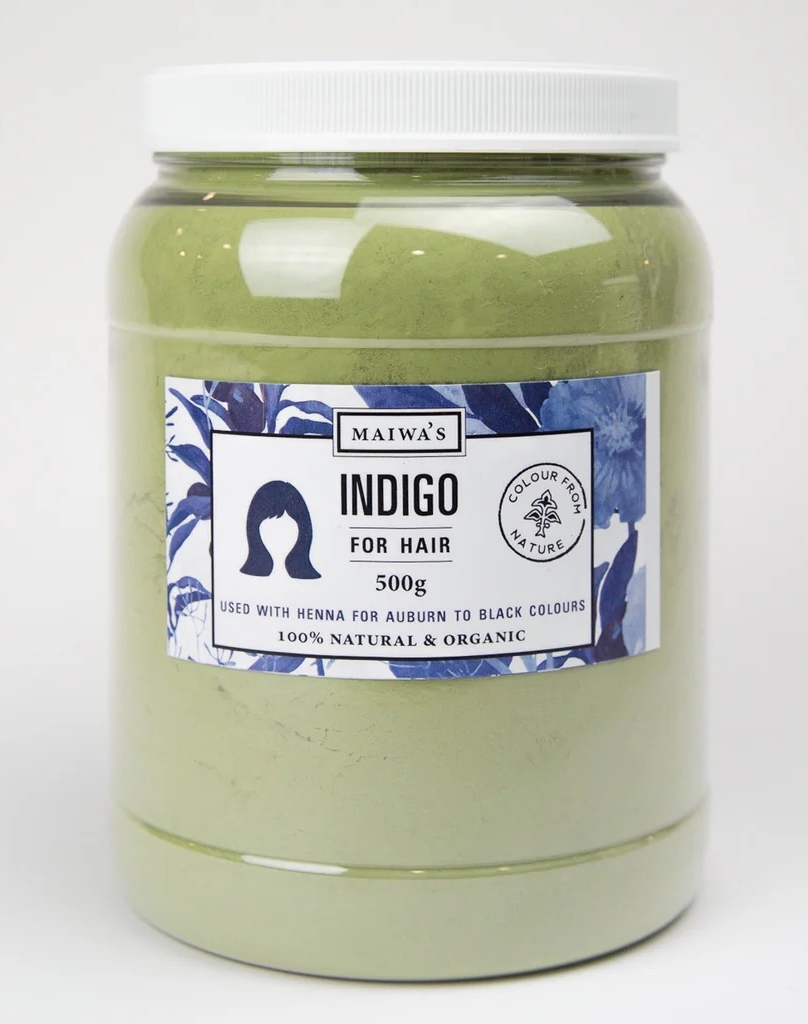
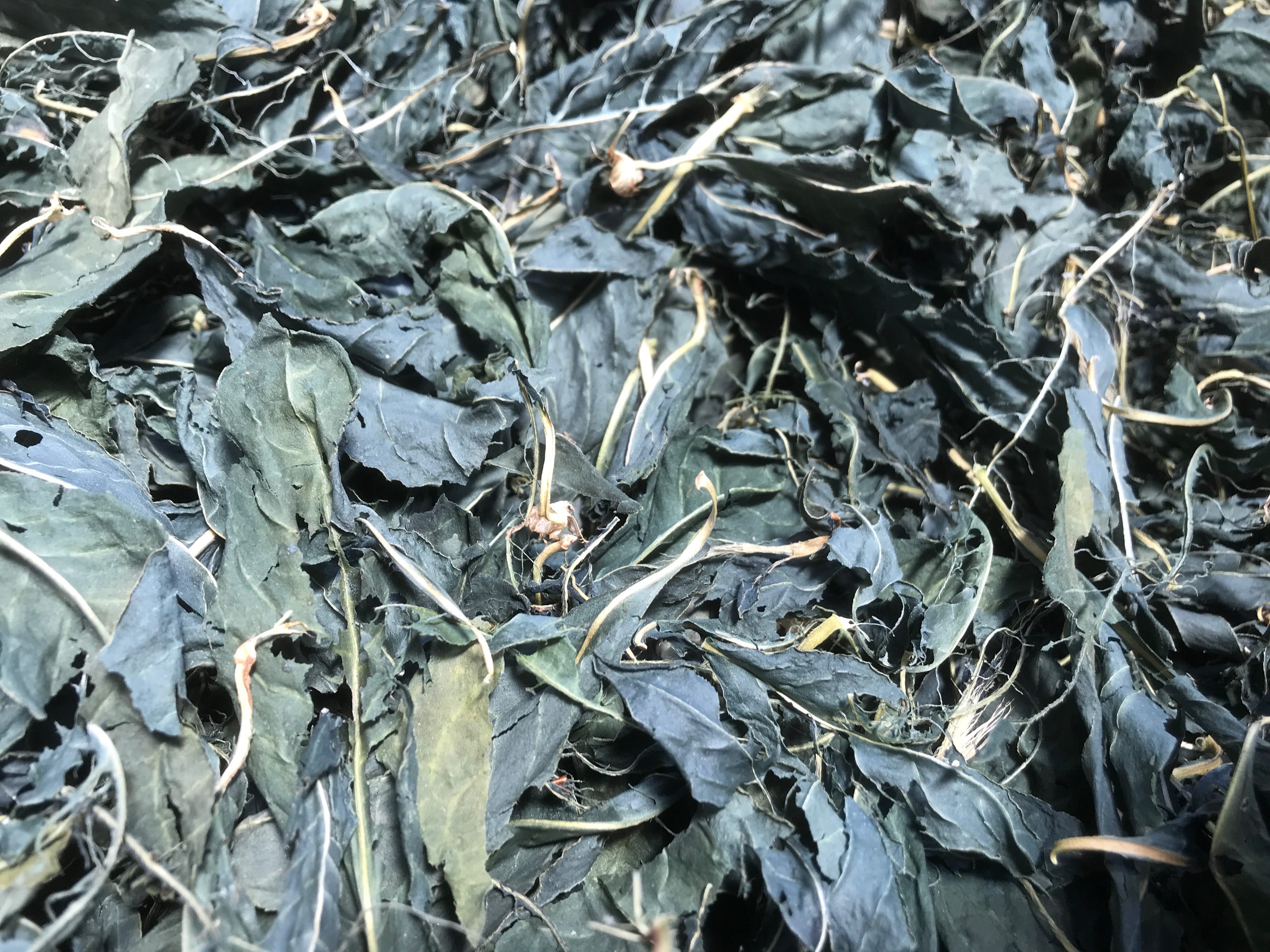
• Hisako Sumi, Japanese indigo dyer and researcher, recommends the use of dried indigofera tinctoria leaves as an alternative bacteria/food source for the vats. (I would speculate that these leaves also contain very small amounts of indigo precursors). The Indigofera tinctoria leaves are dried, finely ground and are often used for used as a dye for hair. The ground, dried leaves are sometimes referred to (and sold as) “black henna”, since a combination of henna and indigo powder will result in a natural black hair dye.
I have been successful using alternative plant materials and will go into that in more detail in a later blog post. Research and my own observation indicate that diverse sources of bacteria will help contribute to, and maintain, successful fermentation.
In addition to the madder root and/or dried indigofera tinctoria leaves used during the construction of the vat, other organic substances can be added to the vat and will contributes to the fermentation process and include:
Woad balls can be made by grinding fresh leaves of the Isatis tinctoria plant, forming the balls and drying. These balls can also be “couched” or lightly composted by breaking them apart, adding a bit of water, and allowing them to ferment.
Fresh leaves from Polygonum tinctorium or Indigofera sp. can be ground, formed into small “patties” and then dried. These also can be broken up and added to the vat.
Additional wheat bran is used on a regular basis to maintain fermentation throughout the life of the vat.
Does the fermented vat have an “odor”?
Yes! The vat has a distinct smell from the bacterial fermentation. The smell is also a useful indicator that the vat is “working”. This is not a sweet-smelling vat, such as a vat reduced with bananas or fructose. Personally, I do not find the odor unpleasant (once I got used to it!) but it is likely you will not want to keep this vat in a closed “living space” as you (or your housemate) may find it objectionable.
The NEXT post will have the first “instructions” for building a fermentation vat.
Fermentation is a biochemical process in which complex organic molecules are broken down into smaller molecules through the action of bacteria, yeasts, or other microorganisms.
In food production, it can broadly refer to any process in which the activity of microorganisms can bring about a desirable change to a foodstuff or beverage, such as the making of cheese, yogurt, sourdough bread, vinegar, fermented vegetables (pickles and kimchi), or beer, wine, or kombucha, in which sugars are transformed to alcohol.
In biochemistry (and specifically in indigo fermentation) fermentation is a process that occurs through the action of microbial enzymes under alkaline and anaerobic (in the absence of oxygen) conditions. The result is a reduction of the indigo dye molecule to make it soluble.
Many microorganisms and bacteria thrive in this unique alkaline/anaerobic environment. The most important are Alkalibacterium sp., which produces lactic acid as a biproduct. The lactic acid will also bring down the pH.
Many grains contain this lactic acid bacteria. When grains are dry, those bacteria are dormant. But when soaked in water (or an alkaline liquid as in the case of indigo) the bacteria become active and produces enzymes that are useful to the reduction process. Wheat bran is a substance in which the indigo reducing bacteria/organisms live. It is a key ingredient in the fermentation vat. Traditional recipes use wheat bran as an element of the vat, and it is added periodically to maintain the health of the fermented vat.
Sukumo is composted indigo (polygonum tinctorium) leaves. Though it might already contain some of the bacteria that are needed for fermentation, wheat bran is always added to this vat as well.
Extracted indigo pigment lacks the microorganisms necessary to initiate the fermentation. This is especially the case of any pigment that has been dried. Organic material MUST be added to the vat to stimulate and maintain fermentation. Since medieval times spent madder root (Rubia tinctorium) was added to the vat to maintain fermentation. This “spent” madder was a waste product from madder red dyeing after the roots had been used to extract the red dye. The fermentation delivers a constant supply of glucose by breaking down starches and celluloses from the organic matter (madder root).
Over the last few years, I have experimented with spent madder root and other organic substances to determine alternative plant materials that can be used in place of the madder root, or in addition to it. I have successfully used spent rhubarb root, dock root, and dried Indigofera tinctoria leaves.
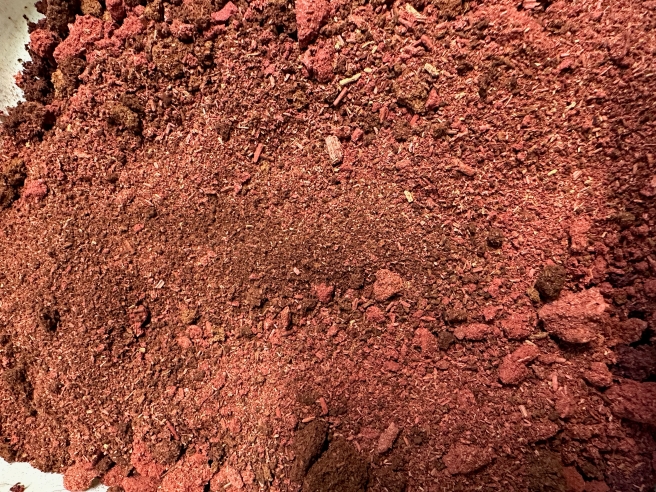
Ground madder root, which has already been used for dyeing, dried in a shallow tray. It will be stored and ready for use in an indigo vat.
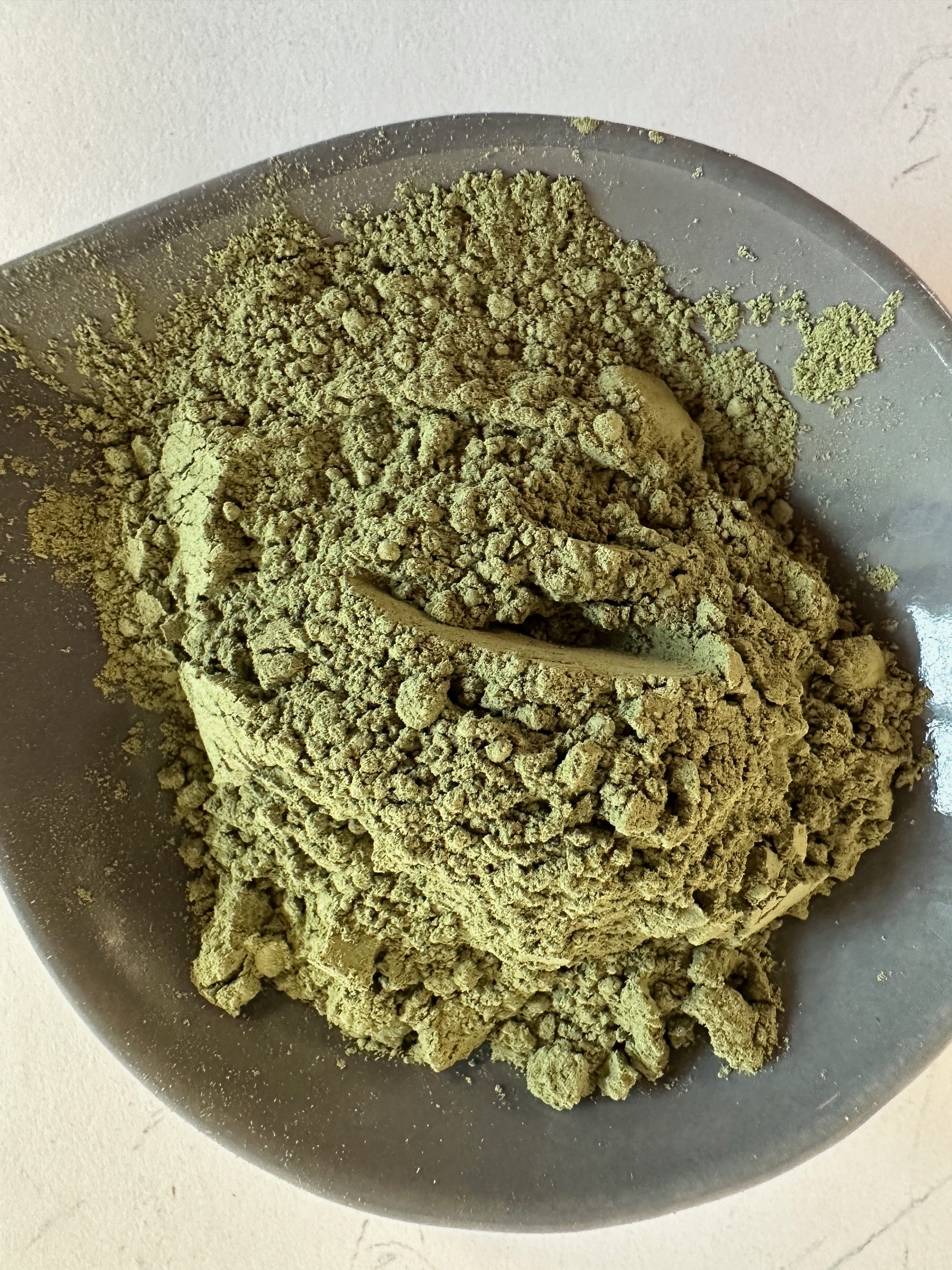
Dried, ground Indigofera tinctoria leaves (often sold as a dye for hair)
Some bacteria in the vat create lactic acid as a byproduct, which is a major reason for the decrease in pH that will naturally occur in the vat. For this reason, the pH of the vat must be carefully monitored and maintained on a regular basis. A fermented vat is a long-term investment. Be prepared to treat it as one and commit the time to monitor it by regular stirring, pH testing, feeding – and of course, dyeing in it!
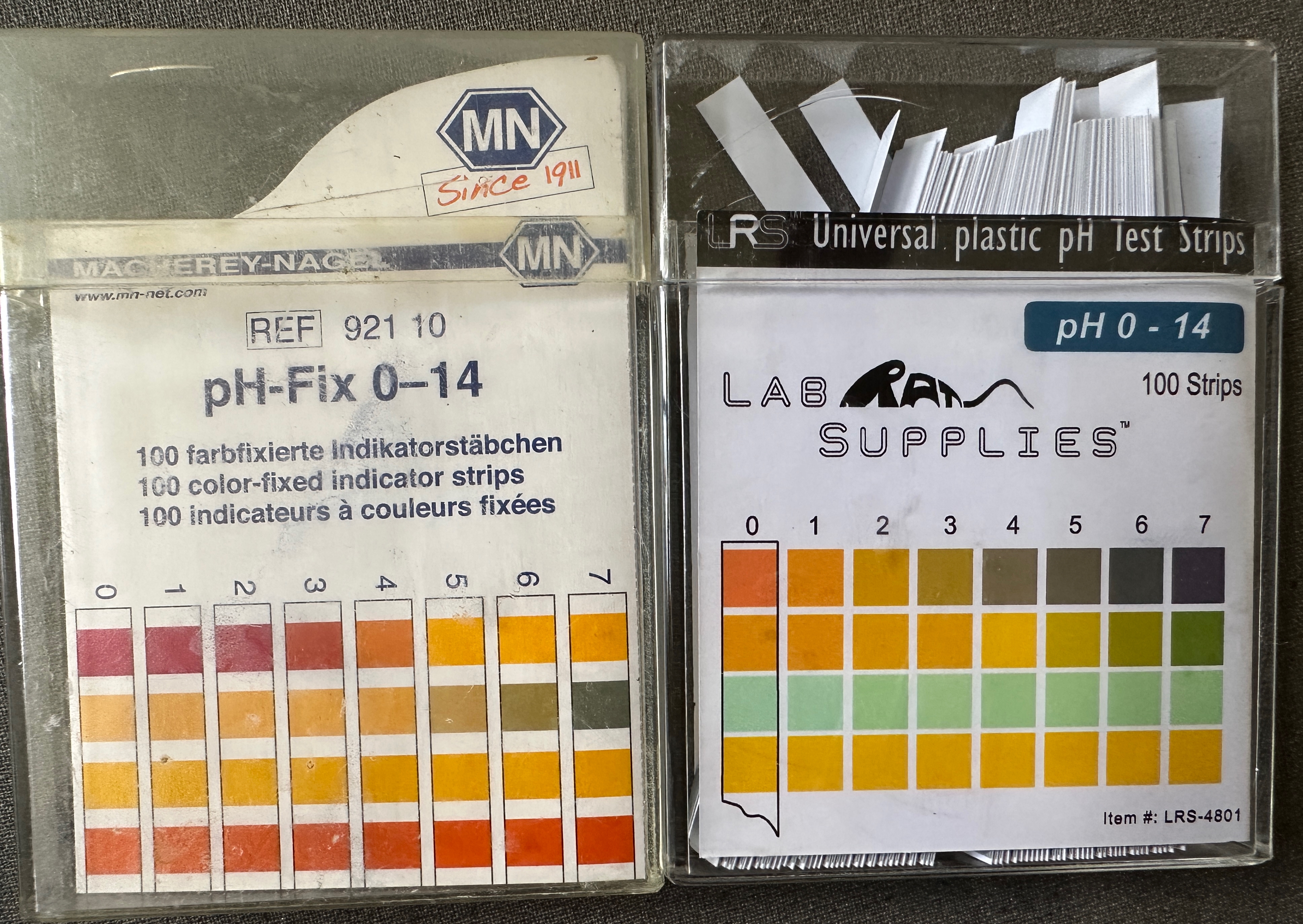
Having a good pH meter on hand is very helpful (This is the one I have) but pH papers with multiple pads for enhanced accuracy can also work well.
Full range pH papers with multiple pads for measuring increases the accuracy.
For further reading: This is a sampling of scientific papers (with links) that discuss the bacterial process of fermented indigo vats.
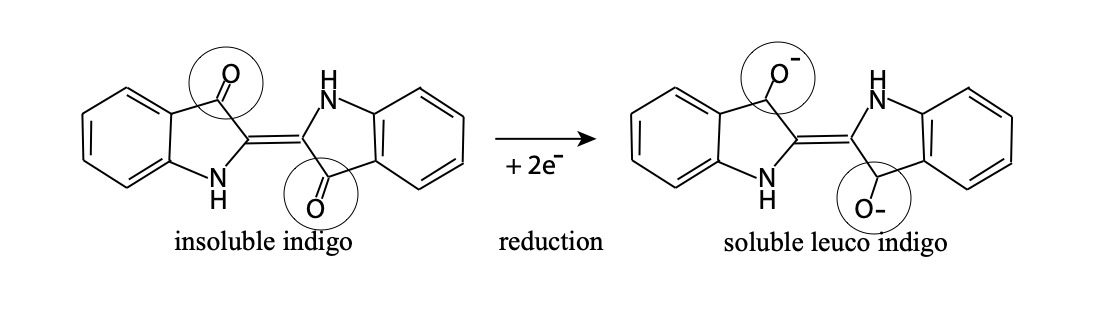
In the early days of chemistry, oxidation was defined as a gaining of oxygen atoms, and reduction was a loss of oxygen atoms. Indigo was said to be reduced because it lost an oxygen atom.
In actuality, there is no loss or gain of the oxygen molecule. The molecule of the insoluble indigo pigment contains double bonds to oxygen. During reduction, that molecule gains 2 electrons and, as a result, the bonds to the oxygen molecule become single bonds, thus making it soluble. This soluble indigo is referred to as leucoindigo or “indigo white”. Leucoindigo is the water-soluble yellowish molecule that soaks into and dyes the textile. This is one of the grand “mysteries” of dyeing and chemistry!
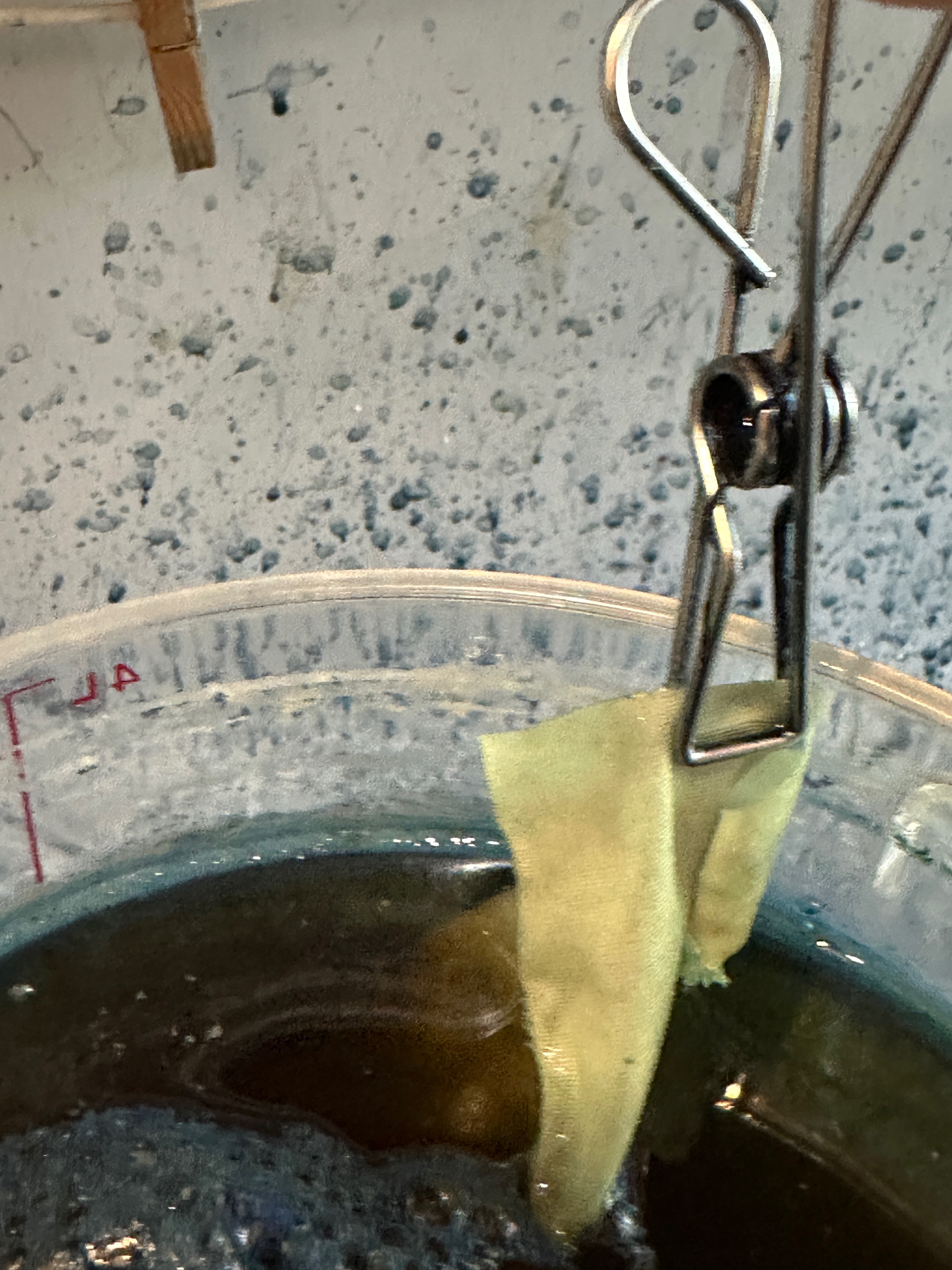
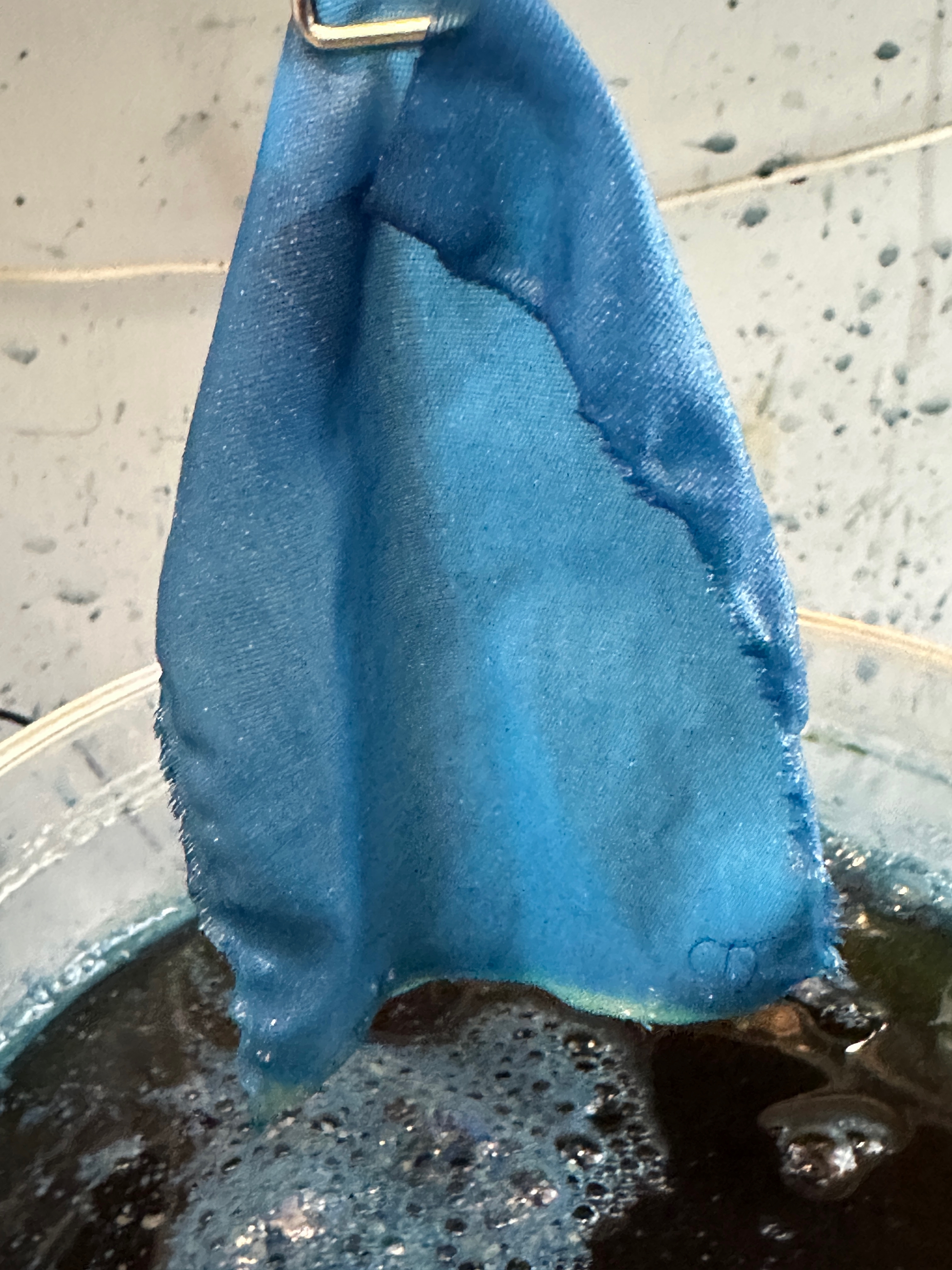
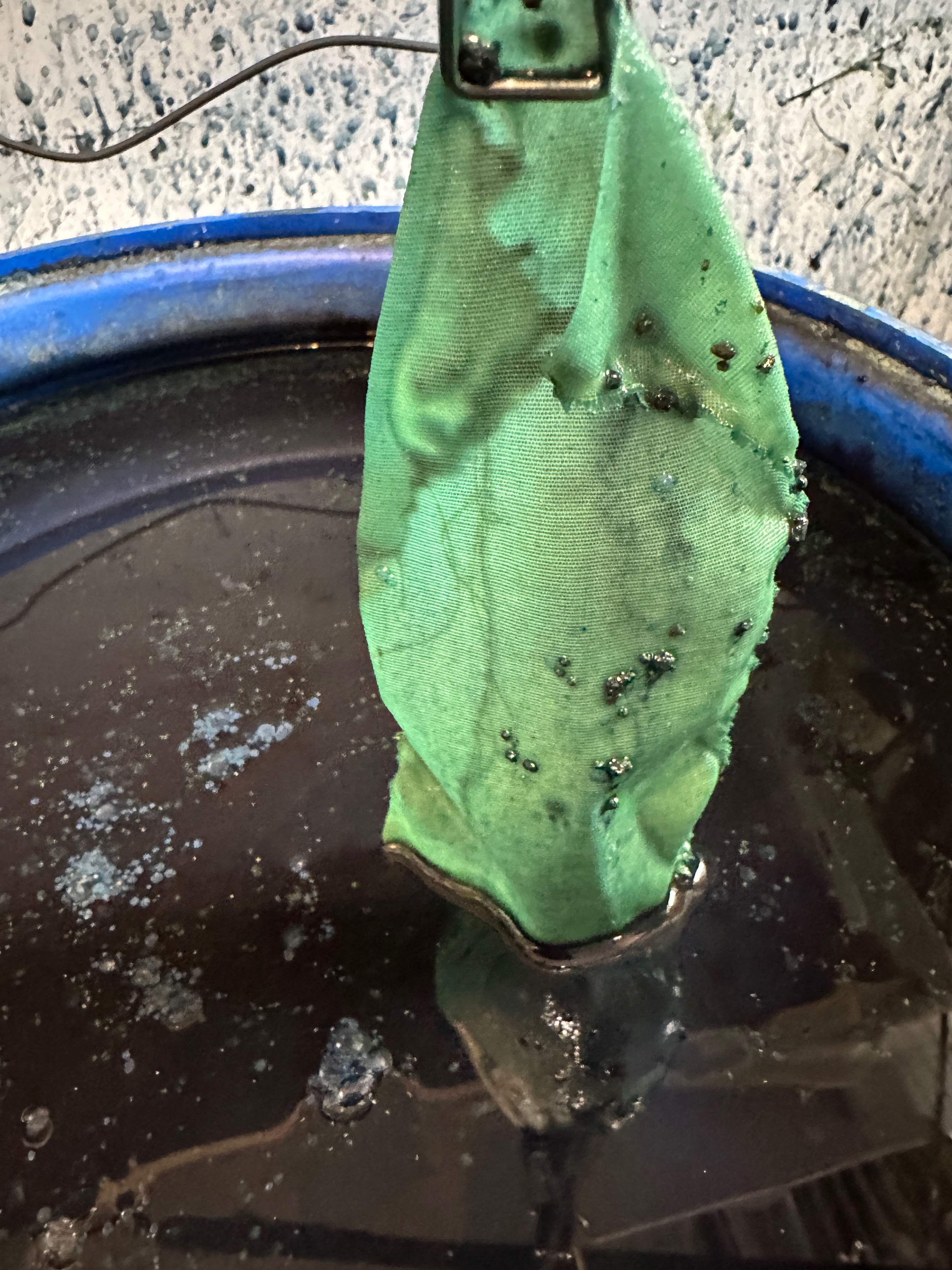
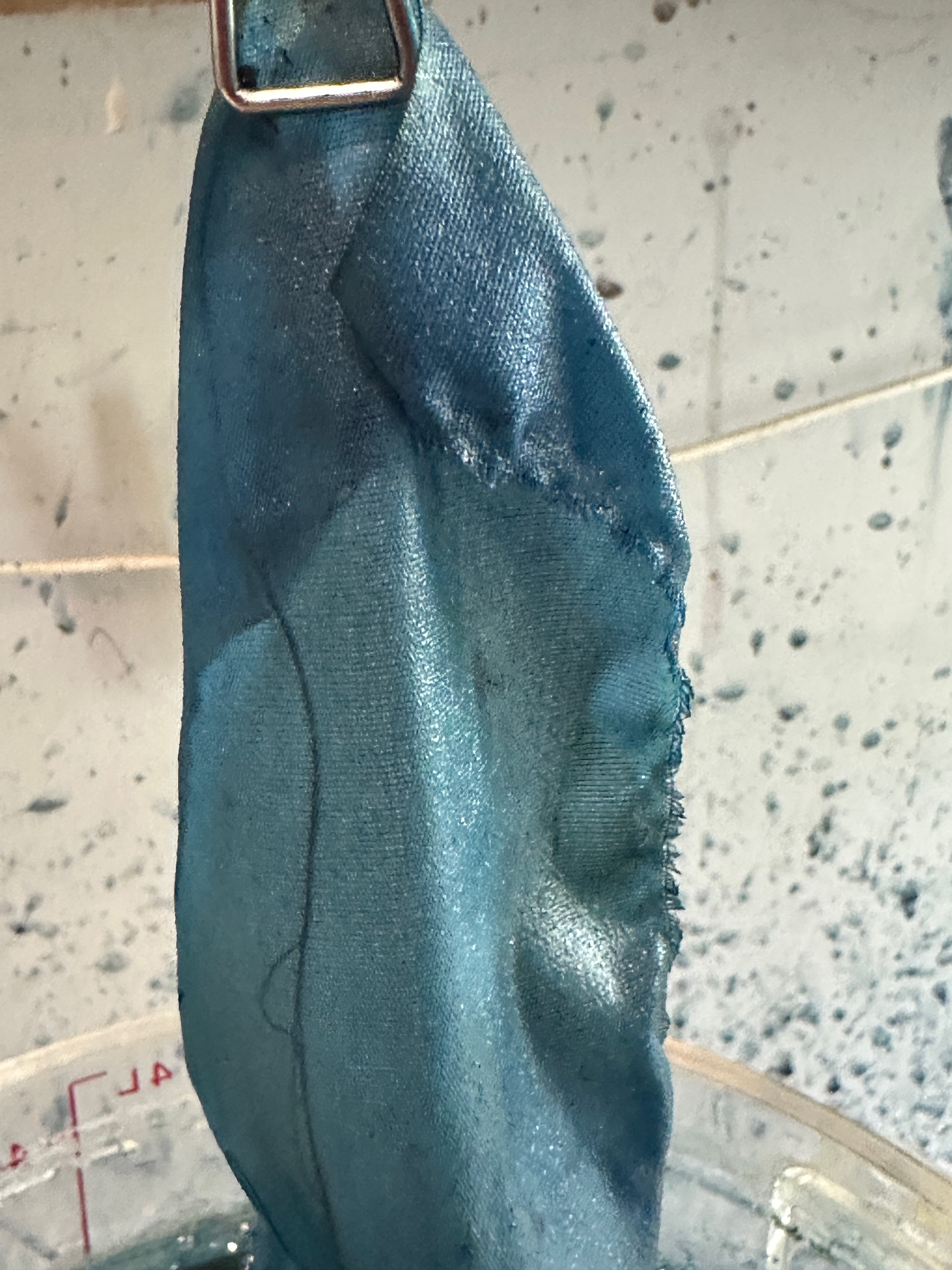
Leucoindigo is visible as the characteristic yellowish color below the surface of some vats. The leuco color of fermentation vat is more green than yellow. Once a textile is immersed in the vat it come out of that vat with the leuco color (yellow or green). The textile will turn blue through exposure to oxygen.
What is Redox? Redox is a chemical reaction that takes place between an oxidizing substance and a reducing substance. The oxidizing substance loses electrons in the reaction, and the reducing substance gains electrons. These two things happen simultaneously, and one does not happen without the other
All indigo vats require a high alkalinity (high pH) for proper functioning. The plants, carbohydrates, sugars, or minerals used for the indigo vat are reductive, which means that they oxidize and give off electrons. In the alkaline environment of the vat, reduction is even stronger. The indigo molecule is forced to receive the two negatively charged electrons, which is a reduction; this influences the oxygen bonds of the indigo pigment, making the indigo molecule attractive to the positively charged portion of the water molecule. In this way the indigo becomes soluble (leucoindigo). Once it is soluble, the dye can penetrate the textile. After dyeing, oxidation (exposure to air) will once again make the indigo insoluble in the textile.
Leuco color from fructose vatOxidized color from fructose vatLeuco color from fermentation vatOxidized color from fermentation vat
Fermentation vats are the oldest method of reducing indigo. These vats rely on the effect of bacteria present in an alkaline environment to cause the reduction that will allow the indigo molecule to become soluble. The bacteria existing in an oxygen-free environment is referred to as anaerobic. An indigo vat is reduced in anaerobic conditions.
A “sukumo” vat, traditional in Japan, is a fermented vat that uses composted indigo leaves from the polygonum tinctorium plant as a source of the dye plus cellulose plant material that will help feed the vat. A sukumo vat contains no added indigo pigment. The preparation of sukumo is a lengthy process requiring the composting of indigo leaves after they have been harvested and carefully air dried.
Dried Persicaria tinctoria leavesComposted sukumo, the result of composting the dried leaves. Photo by Debbie Ketchum Jircik of her “home made” small batch sukumo.
For those of us who do not have access to sukumo, it is important to know that a fermented vat can also be made using indigo pigment. This is the approach that was often used by 18th century commercial dye workshops in Europe. Since the pigment is inert, suitable sources of bacteria and “food” for that bacteria must be added to the vat.
• Advantages of the fermented vat: A fermented vat uses a lower pH (9.5-11) versus the quick reduction vats, which makes it suitable for both protein and cellulose fibers. The correct pH of a fermentation vat can be obtained using wood ash lye, soda ash, or potash. Only small amounts of lime are used throughout the life of the vat to maintain a correct pH. These vats are suitable for long-term use, provided they are maintained correctly. That is something that will be covered.
• Challenges of the fermented vat: Typically, the vat requires 7 -14 days to reach full reduction, but I have seen it take as long as 30 days. The vats must be carefully monitored and maintained by making regular additions of lime and organic material to maintain appropriate pH levels and insure a continuous source of bacteria.
Quick Reduction vats, though used historically, were re-introduced to contemporary dyers by Michel Garcia and have gained great popularity amongst contemporary practitioners. These are the vats that we presented in The Art and Science of Natural Dyeing. They are easy to make. They rely on the use of sugars, fruits, plants, or minerals and require a very alkaline environment (pH 11-13) to achieve reduction. This high pH necessitates the use of significant amounts of lime (calcium hydroxide) as an alkali.
• Advantages: These vats reduce quickly – usually in a day (or less). They use no harmful chemicals, though they do require working with a very alkaline substance and solution. Vats made with reducing sugars can be kept for several weeks and, with careful and regular maintenance, can be used for several months.
• Challenges: The high pH is not suitable for all fibers (a high pH will damage protein). The large quantity of lime (calcium hydroxide) used to achieve the pH builds up quickly in the vat. The lime is also very difficult to remove from the finished textile and can compromise the dye and color, possibly resulting in “unexplained” fading of the blue.
Chemical Vats use either sodium hydrosulfite or thiourea dioxide to reduce the indigo molecule. This process is used extensively in industry, and I know that some hand dyers also use this process, as it is very predictable.
• Advantages: Complete reduction takes place very quickly – usually within minutes. The pH of the vat is 10-11.
• Challenges: Reduction chemicals can potentially have a very detrimental effect on the lungs and health of the dyer. When used in combination with a high pH, they can also damage the tactile qualities of wool fibers. Personally, I do not like the smell of the chemicals.
Because reduction is so complete using reduction chemicals, it can be challenging to achieve pale colors when using chemical reduction. It is also difficult to use multiple immersions in the vat to increase the depth of shade, as repeated immersions will re-dissolve the indigo already incorporated in the textile.


 Natural Dye: Experiments and Results